


No strawberries in winter! It's a great achievement to have an all-embracing balconies plant, to choose varieties, to manage warm water fat, to be green eyebrows, to harvest hand-planted sweet strawberries, and to have four-season varieties even lasting。
Today we'll share a super-detailed plan for the balconies, and we'll do it with our new hands
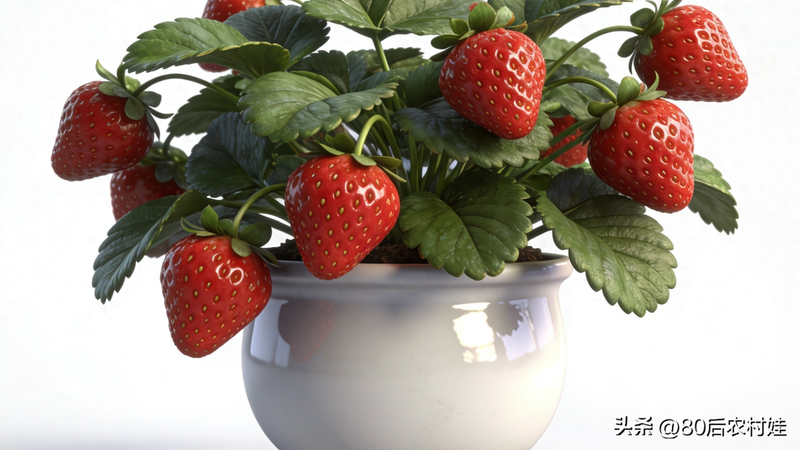
First, the first step is to choose the right species, and the winter results are unstable
The choice of varieties is the key to planting strawberries in winter
Preferred (new hands closed): four seasons of strawberry/day neutral species
Seva, alby, monterey are all good. They don't pick out the length of the sun. If the temperature is right, they can bloom in winter. The balcony has the highest value
Alternative (wanted to taste early): plain short-day strawberries
A variety of popular favorites, such as red-faced and zhang ji, have been sprung in the autumn, warmed up in winter and produced early spring, but output is less stable than four seasons of strawberry
Ii. Battery + container selection. Strawberry doesn't rot
Strawberry roots are shallow, the pelvis and the containers must not be allowed
Container selection: recognition of 2 key points
1. Size is large: at least 20 cm depth, 20 cm diameter, free of congestion in a single basin, scalable in root cells, multicropping in long growing boxes with a distance of more than 15 cm
2. Drainage is good: the drainhole must be brought! Gallen basins, green mountain basins are the first choice
Soil ratio: estuarine microacid is core (direct copy formulation)
Strawberry is afraid of slabs and needs to decompress fertile, micro-acid soil (ph5. 5-6. 5) and the formulation is directly used: peat: pearl rock: foliage (quality compost) = 5:3:2
Focus: don't use the outdoors, it's easy to carry the disease in winter
Cultivation + set: 2 small details, double the survival rate
Plantation point (newer)
Go straight to the strong strawberries, it's too fast for the seeds to grow. Remember, when you grow, the roots and the earth are flat
It's too deep, it's too shallow, it'll be dead outside
Place it. Just grab it all
Strawberry light, the best place to shine on the balcony, at least six hours a day with a direct light, the best south balcony, the best thing next; the light is not enough to produce a flower
Iv. Winter core management: temperature control, maintaining temperature, filling with light
In winter, the balcony grows strawberries, the temperature and the light are lifelines
Temperature management: warm by day and warm by night is key
Optimal temperature: 18-25°c during the day, 8-15°c during the night
Temperature protection (under 5°c):
1. Simple method: moving indoor warmth at night and returning to the balcony during the day
Practical approach: using pvc + transparency plastic film to build a mini arch, or putting a transparent cover in a foam incubator, with super-heating effect
3. Sheltering from pits: if the balcony is heating indoors, don ' t let the heat blow out the plant and dry the leaves
Small knowledge: normal strawberries require 5-7°c low-temperature cumulative buds, four seasons of strawberries are almost non-existent and warm
Lights: lights are weak in winter and light is important
1. Prioritization of natural light: as much as possible to keep strawberries in the sun all day long, light for the fruit and sweetness and flowers
2. Rainy day light: led full spectral light for continuous cloudy days, 4-6 hours per day to effectively promote flowering results
V. Fertilizer management: stop it, rather than get wet root
The winter evaporates slowly, and the water is never used to the frequency of summer
Watering principle: dry and wet, timing
1. Criteria for judgement: 2 cm dry on the surface of the pelvis and water again until the discharge hole comes out
2. Key details: clear morning water is best to avoid night water and leaves are prone to sickness; winter water is cut in half, rather than wet, and water is strewn with bad roots
Fertilisation techniques: bounty and hard work, low-temperature diet
1. Fertilizers for the flower season: high phosphorus potassium, low nitrogen fertilizers, such as potassium dihydrophosphate (reduced by instruction book), liquid fertilizers for the fruit, 10-15 days once, and flowers promotion
2. Time of manure loss: temperatures below 10°c, strawberry growth slows, fertilization is directly reduced or stopped, fertilization cannot be absorbed and root burned
Vi. Artificial pollination: a critical step in the winter outcome, remember
The balcony is closed, the bee butterflies are pollinated, the flowers are blooming and artificial pollination must be done
The method of pollination: with dry little quills/tampmarks, the yellow male in the middle of the flower is painted with pollen, then the female in the middle is painted with every flower
Best time: 10 a. M. To 3 p. M. In the middle of the day, when pollinator activity is high and pollination success doubles
Vii. Plantation management: cut and trim, with a concentration of fruits
Winter strawberry nutrients are limited and timely to avoid loss of nutrients
1. Intense cutting: removal of leaves, sick leaves and runners at any time (over-drive nutrients in winter) and retention of 5-6 new healthy leaves per unit
2. Plumbing fruit: small seedlings grow first, removing the first one to two pairs of buds; the result is the removal of deforming fruit, with 4 to 6 healthy fruit per plant, concentration of nutrients and greater and sweeter fruit
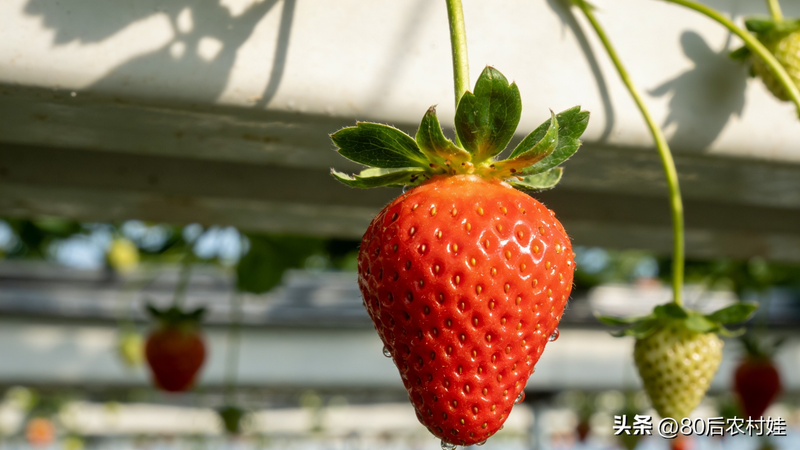
Viii. Catalyst guide: 6 attentions, less curves for newcomers
1. Freezing first: strawberry blades below 2°c are frozen, roots are damaged for a long period of time below 5°c, heat on the balcony is observed during the winter and temperature is maintained in time for the cold
2. Tight and cold-proof environment: low temperature plus high humidity = bad root + grey silt, water must be watered with restraint and more ventilation avoided
3. Ventilation and disease prevention: during the day, window ventilation and wetting at high temperatures, periodic inspection of the back of leaf blades, dry, red spider-prone, high-wet-prone powder disease, timely extraction of leaves and prevention by biological agents such as impostorin
4. Respond to strawberry hibernation: ordinary strawberry short-day hibernation notes are long, and if you want to do so, you can break the hibernation; if you want to rest, you can stop watering and fertilize and wake up in spring
5. Vegetable prevention: when the fruit expands, it is covered with clean straw and wood chips to avoid exposure to wet soil rotten
6. Calm down: winter temperatures are limited, strawberries are not as strong and productive as spring and summer, enjoy the planting process and occasionally pick a few
Final summary: five cores of the winter balcony strawberry success
1. Matching: four seasons of strawberries are the preferred winter, saving easy results
2. Temperature retention: at night temperatures above 8°c are key to the outcome
3. Flowing light: the light rises when the light rises in the south towards the balcony and rain
4. Controlling water fertilizers: rather than wet, low-temperature diets, and hard-working bouquets
5. Artificial pollination: the balcony must be done, not the result of the pollination
In winter, we grow strawberries on the balcony, look at green leaves, white flowers, and then go to the fruit of the red twilight, and we'll have a little home, and we'll have no extra strawberries. (part of this is a summary of web searches and ai generation, for reference purposes only, with technical expertise on specific issues requested)



