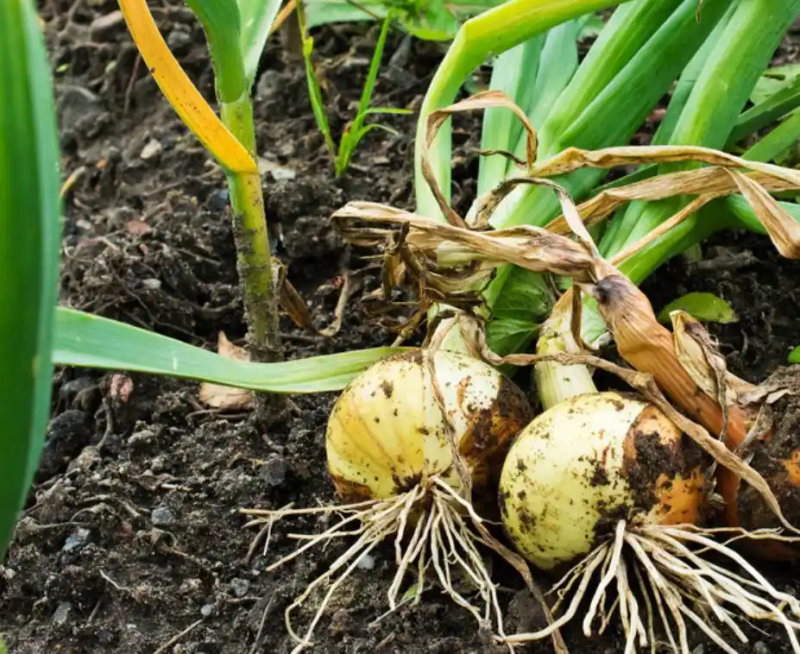
Onions are more resistant to cold and damp, highly adaptable, resilient to transport and high production, and therefore cost-effective. However, since onions are grown underground and the requirements for water fattening are stringent, a detailed high-yielding plant management technique is needed to improve the quality and yield of onions。
1. Land selection
Soils suitable for onion cultivation, with sand and light clay, require a flat, easy to drain, suitable structure, well-regulated, deep and organic content。
When onions are planted in the autumn, arable land needs to be cultivated in a timely manner after the harvest of the front crop, at a depth of about 15 centimetres. Once arable land has been cultivated, it is torn apart, and its specifications are to be determined by the local climate and by the irrigation conditions of the plot, with a width of about 2 metres in width and 10 metres in length, which can be effective in increasing land utilization and onion cultivation density. If there is a need for a condominium, the appropriate width of the thallium will be determined according to the requirements of the crop。
2. Child birthing in due course
Onion breeding beds should select plots with fertile soil that have not grown garlic crops for at least three years. The length of the bed is 20 metres and the width 1. 5 metres, and the soil of the bed should be prepared using high-quality decomposition fertilizers, based on a 1 to 10 soil ratio. The seedbed should be soaked with water at 2 kg of an acre before sowing, after which a 2 cm thick sifting soil will be required to cover the straw or film in time for temperature protection and humidity. After a week, the cover is removed when the sun is weak. Once the onion is seeded, the specific management of the fatty should be adapted to the growth situation in order to keep the nursery wet, which is the most suitable place, after which a small water can be poured one more time and another in about 20 days。
3. Reasonable planting
(1) saplings
When the onion is sprouts, it is required that it be spadeed or peached, and that it not be dialed with the hand, lest the roots be damaged. Before onion planting, the selection of injured seedlings, pests, decomposed seedlings, etc., should be based on large, medium and small classifications and managed by seedlings, which can be properly controlled, and which need to increase fat water to facilitate the rapid growth of seedlings。
(2) plantation density
Because the roots of the onions are weak, the leaves are straight, they are wax powdered, they are cylindrical, they require only medium-intensity light and they are suitable for dense planting. As density increases, yields are gradually increasing within a given range, but single ball weights are decreasing. The highest yield occurs when the typical suitable plant is 14 centimetres and 13 centimetres, with 30,000 to 35,000 land per acre。
4. Fertilizer management
Some 20 days after the onion was planted, it entered a slow sapling period and, as a result of low temperatures at the time of planting, it was not possible to pour water in large quantities, but overwatering would significantly reduce the temperature and slow the growth of onion seedlings. At the same time, new seedlings have been planted, as new roots are not yet available and there is no shortage of water, so more onions are being watered at this stage and less each. The principle that needs to be understood is not to inflate seedlings, not to dry the ground and to promote the rapid growth of seedlings. Thereafter, water will generally be required every 10 days to dry and wet the soil, with the effect of promoting the growth of onion plantations and preventing the growing of plants. However, seven to eight days before harvest, water needs to be stopped in time。
Onion requirements for fertilizer require 15 kg nitrogen, 10 kg phosphorus and 10 kg potassium for an acre. It's not usually possible to catch fat until after the onion is planted. The winter onions require a combination of winter watering, with 1,000 kg of human urine per acre. When returning to youth in the spring, the water will be poured back together and the fat will be applied once。
5. Pest management
At present, onions suffer from common diseases such as frosting, asphyxia, purple spots, atrophy, etc. Therefore, in field management, careful observation of the occurrence of a variety of pests and insects is required, in a timely manner, through a combination of physical, biological and chemical control, which fully ensures the healthy growth of onion seedlings for the purpose of a double yield of good quality。
Onion frosting: at the beginning of the disease, 90 per cent of the aluminum triethyl phosphate powder 400-500 times the fluid, 50 per cent of the copper methadone 800-1,000 times the fluid, and 72. 2 per cent of the prick water agent 800 times the fluid were sprayed, usually at intervals of 7-10 days and 2-3 consecutive treatments。
Onion asymptomosis: rotating the spraying of more than 500 per cent of the fungus or more than 500 times the methyl sulphate at the onset of the disease, with the option of 50 per cent crackling or 50 per cent pistoling and 50 per cent of the non-inline 1,000-1,500 times liquid spray, if necessary, would be more effective。
6. Timely collection
Onions are generally collected at the end of may or early june. As onion blades gradually turn yellow from bottom to bottom, the mantle becomes softer and starts to fall. When the tubers stop growing, the skins enter the hibernation phase, which marks the maturity of the rods and the need to harvest them in time。
After onions are harvested, three days of drying are required in the fields. If sold directly on the market, the roots can be cut and cut short on the top of the penis. If onions need to be stored, they cannot go to the leaves, and when the leaves are dried up to 70%, they can be made into braids and stored in cold, dry air。