I. Selection of park
The choice is easy, with an average annual temperature of over 18°c and an average coldest monthly temperature of over 8°c. In the winter, areas that are virtually frozen are grown with a slope of less than 20°c, fertile soil, rich in organic matter, deep earth, well-watered and sun-fed plots。
Ii. Selection of varieties
The most economically grown species are tanon 1, violet and gold. The regions of guiang and guixi recommended that priority be given to the cultivation of taipei no. 1 and other cold-resistant varieties。
Iii. Selection of seedlings
(b) the choice to plant non-virus healthy seedlings or saplings, bearing in mind that, in the case of old gardens that are replanted by the taipei 1 or violet species, the use of graft is necessary to prevent and control the occurrence of tubular disease。
The quality of the seedlings requires that the seedlings be well developed, 20 cm tall and 5 to 8 full leaves; the seedlings are well-developed, with 3 to 5 full leaves, and the logs are 20 cm tall and the ears have grown new。
It is recommended that a glass of 50 cm-80 cm-high primordial fruit be replaced in the shed and then moved to daejeon。
Iv. Cultivation patterns
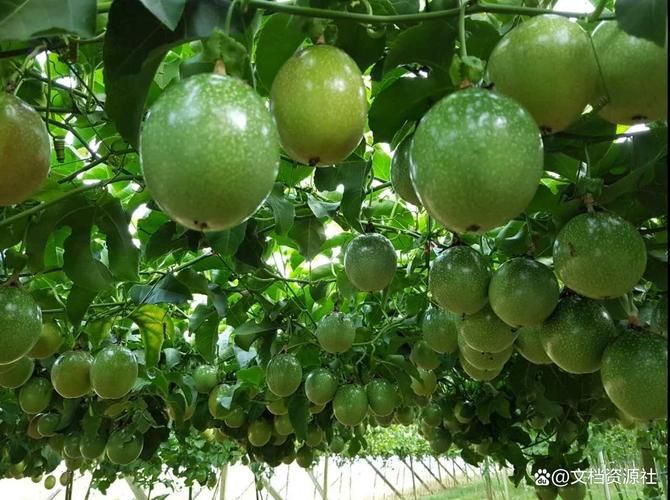
A one-year method of planting virus-free healthy seedlings after planting plants and garden weeds after the full elimination of orchards in spring is recommended。
V. Testing
Choose different configurations according to economic capacity and park slope。
T-type sheds: 10 cm x 12 cm x 270 cm concrete poles at 5 to 6 m planting line range, buried in the soil at about 70 cm, 100 cm long cross-coated or steel strips at 30 cm above the top of the cement pole, a aluminium-packed steel line of 8 at the top of the cement pole, two toddles of 2 aluminum-packed steel-line 10 at both ends of the aluminium-coated steel line, to be placed in the ground for no more than 30 m long。
Horizontal three-lined pillars: a concrete pillar with a specification of 10 cm x 12 cm x 240 cm per 3 m around the orchard, and 4 12 cm x 12 cm x 270 cm per corner, which is tilted into the soil at the bottom of each pillar, and is positioned at a vertical height of 210 cm at the top of the pillar, surrounded by a stainless steel rope of 1 cm in diameter at the top by 2 cm. In each row, a steel rope with a diameter of 0. 5 cm ~ 0. 6 cm is drawn from the north to the south, with two ends fixed vertically on the top of the cement column and on the top of the bull; and a string with a diameter of 0. 3 cm each on both sides of the main line, from 40 cm ~ 50 cm, which is connected to the surrounding steel rope. The other side is a rope with a diameter of 0. 5 cm ~ 0. 6 cm every 6 m。
Cultivation intensity
150 or 110 plants per 667 m2 with a range of 1. 5 x 3 m or 2 m x 3 m。
Vii. Preparation for steping
New gardens: 1 to 2 months before planting, removal of weeds and weeds from the garden, a rise of 0. 2 m and 1. 2 m wide of ladders after more than 15 days of tillage, determination of the location of the planting areas to dig up a den of 0. 6 m x 0. 6 m x 0. 5 m deep, 5 kg ~ 8kg ~ 8kg ~ 0. 5-1. 00 kg ~ base fattening of phosphorus ~ 10 cm - 15 cm higher than the ground。
Old gardens: in february, all the previous year's plants in orchards were cut off, weeds were removed from and around the park, branches, leaves and rags were destroyed centrally, and 0. 8-1-percent thioperate or 500-800-fold copper chloride was sprayed throughout the garden, the ground was re-structured as required by the new park and organic fertilizer was used to replace the planting grounds。
Viii. Cultivation
Digging a slightly larger den of a nutrition cup at the planting site, removing the light containers of the seedling into the planting grounds, filling the roots of the tree with concrete soil 2 cm to 3 cm above the original nutritional cup surface, pressurizing, preparing the tree plate and pouring down the water。
Ix. Whole trim
Roast chicken: it is advisable to plant bamboo poles next to seedlings, to tighten them with plastic tape and to seduce the main chicken。
Smash sprouts: select the sky to remove it when it grows to 3 cm-5 cm。
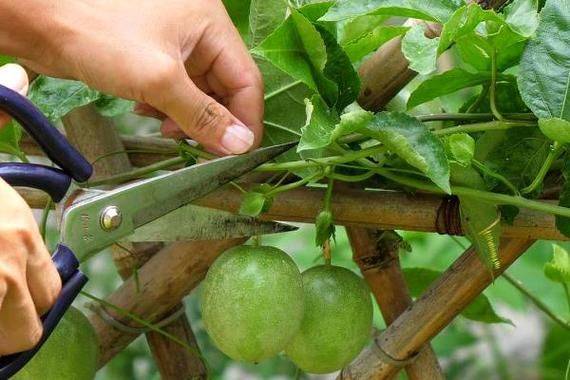
(b) cutting: the main chicken leaves two sides sprouts on the top of the shelf, grows on both sides, cuts the top of the side branch as long as 1. 5 m - 2. 0 m, leaves a second chicken on the first chicken every 20 cm - 25 cm, and a third chicken on the second chicken every 20 cm - 25 cm - 1 cm, and nurtures the third cranium as the parent of the result. The branches are trimmed at any time, and they are cut down at 30 cm above the ground。
X. Fertilizer management
(c) fertilizers: 10 d after planting may be combined with irrigation or shower, with urea or potassium nitrate solutions at concentrations of 0. 3 to 0. 5 per cent at intervals of 7 to 10 d。
Fertilizers: a parallel ditch of 50 cm, 15 cm, depth and width ~ 20 cm, each applying compound fertilizer (n: p2o5:k2o=15:15:15) 0. 25 kg, potassium sulphate 0. 2 kg, soil cover, rain and refilling。
Fertilizers: potassium sulphate applied in each of the open parallel ditches after the first flowers were cut up to the larvae composite fertilizers of type (n:p2o5:k2o=15:15) 0. 4 kg, potassium sulphate 0. 2 kg, soil cover, after rain or irrigated。
Periphery fattening: 1 application of 0. 2% borate + 0. 3% potassium phosphate on the front of the shelf, during the bud and in the early fruit。
Xi. Pest management
The main pests that occur in the spring are viral diseases, aphids, leaf mites and ants, with a focus on prevention。
Virus disease: the following preventive and preventive measures should be coordinated on the basis of the recommendation to plant a healthy seedling without the virus: the first is to eliminate the strains before planting in a uniform and comprehensive manner, and to plant the virus-free seedlings; the second is to remove the strains immediately if they are present before the roof; the third is to restrain each other from producing the strains in a cooperative or village manner; and the fourth is to prevent aphids in a timely manner。
Aphids: especially in the event of drought, close attention is paid to the observation of insects and early detection of the early use of drugs, with the option of 25% of aphid aqueous dispersants from 4,000 to 6,000 times the liquid or 20% of aphid aqueous powders 5,000 to 6,000 times the liquid spray is sprayed once every 5-7 days and two to three times in a row. It's better after 3:00 p. M。
Ethylene: reinforcement of insecticidal screening with local treatment, with 1. 8% of avilium emulsifiable concentrates of 2000-2500 times, or 20% of dicofrinable humid powder 1,500-2,000 times sprayed, 10 d at intervals, 1 at rotation, 2-3 successive times.
Ants: reinforce insect screening and, when the hazard occurs, use 48% of the poison emulsion, 1,500 times the fluid, to spray directly in the root of the plant or to sow on it。