


Watermelon cultivation technology
6 visits by yiyang, gyantian biotech, ltd., hunan province
The watermelon is the main summer fruit-cutting fruit, which is frowned, sweet and juicy and rich in mineral salt and multiple vitamins, and is the bulk of zui fruit sold in our summer and autumn. To improve production and quality, watermelon cultivation techniques are described below:
I. Biological characteristics
1. Form characteristics
(1) the roots of the watermelon are deep and deep at more than 1 metre, with a horizontal extension of 4-6 metres, and the main roots are distributed within 10 to 40 centimetres of the earth, with a high capacity for fattening. Roots have weak regenerative capacity, are not easily recovered from injuries, are frequently live in production and, if seedlings are moved, care is taken to protect them。
(2) roasts and melons, also known as chickens, grow directly before the five to six leaves and over 30 centimetres over a certain length, and grow on the ground as a result of a lack of mechanical organization that cannot support its weight. The branching capacity of the truncheon is strong, with a three-to-four side branch, but it is stronger with a side branch from the three-to-five blades of the main chicken. Watermelons are highly susceptible to the creation of volatile roots on their stairwells, and the use of chicken-crushing methods can lead to the formation of unstable roots, increase the area of absorption, fix the plant and prevent rolling. The leaves interact with each other in the form of deep cracks, shallow cracks and full edges。
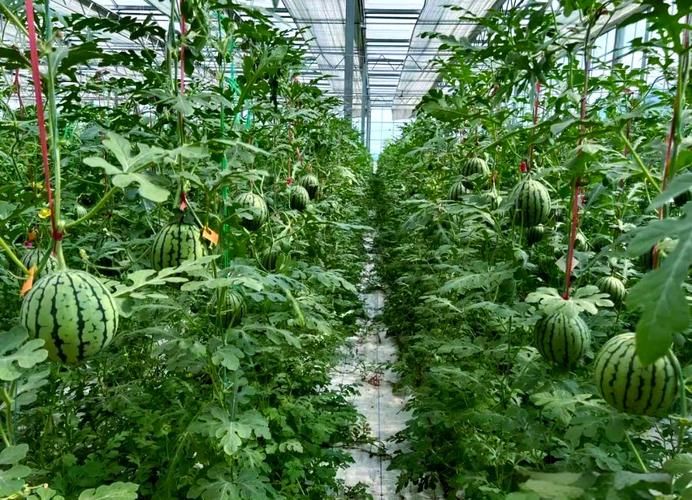
(3) flowers, fruits, seeds, small yellow watermelon flowers, with different species of females and males, born alone in foliage. Pre-cooked varieties produce the first female in the sixth and seventh parts of the chicken, and the first female in the middle and late-cooked species occurs after section 10. Female spacing is 7-9. A small number of both sexes can be found during the flowering season, with morning openings closed in the afternoon。
The fruit is elliptical, spherical in colours of dark green, light green, or with black and green bands or stripes. There are red, yellow, white, etc. Seeds are black, white or red. Watermelon can also be divided into large-seed, small-seed-like and non-seed-free watermelon species by the size of its seeds, 100 to 150 g for thousands of significant seed types, 40 to 60 g for medium type and 20 to 25 g for small seed types。
2. Birth cycle
The full reproductive period can be divided into four periods of gestation, nursery, chicken and outcome。
(1) the gestation period is spread from seed to leaf, and the gestation period is visible. When the seedlings come out of the soil, it is necessary to prevent the growth of the roots and leaves。
(2) the period of seedling is shown from the real leaf to 5116 leafs. Small growth during this period should be accompanied by good conditions for cultivation, promoting seedlings and organ separation。
(3) the chicken-smoking period begins with 5-6 leaf-spill-spill-spill-spill-to-spill-spill-spill-opened by the female. The growth rate is fast and high. Cultivation is designed to promote the growth of the leaves and to form a certain nutrient ... System, while controlling the growth of the macros and ensuring the formation of the flowers。
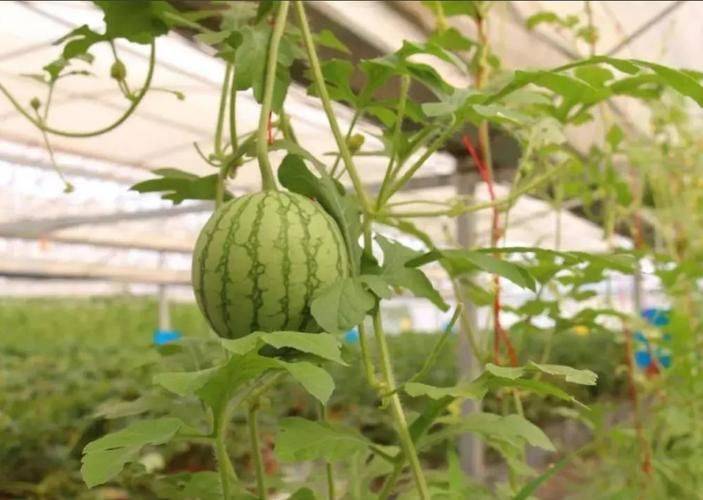
(3) the outcome period shall be open from the female with her bouquet until the fruit begins to flourish. It can also be divided into three periods, one during which the fruits flourish and one during which the fruits grow。
The fruit period is open from the leftover female until the fruit begins to flourish. The photocolumn begins to enter into the fruit. Cultivation regulates, inter alia, the balance between nutritional growth and fruit development in order to guarantee sit-in。
The fruit flourishes in the long term from the fruit to the size of the fruit that is almost fixed. This period is a critical period for yield generation, with large crop growth and more nutrient absorption. Cultivation should be accompanied by fatty and water, and promote the rapid growth of fruits。
The transformation period, from the size of the fruit to the maturity period. During this period, the sugar is rapidly transformed and its appearance is inherently coloured. Cultivation should prevent the premature decay of the leaves in order to protect yields and quality。
Requirements for environmental conditions
(1) temperature of watermelon, warm, dry climate, intolerant, growth and development of zui at a temperature of 24-30 degrees, root and growth of zui at a temperature of 30-32 degrees and root hair at a low temperature of 14 degrees. Watermelons require a high-quality watermelon with high-temperature temperatures during their growth and development。
(ii) watery watermelon is drought-resistant, intolerant and wet, and when the rain is heavy, it is wet and it is susceptible to disease, low yield and poor quality。
(3) the light of the watermelon, with high yield and good quality under conditions of adequate sunlight。
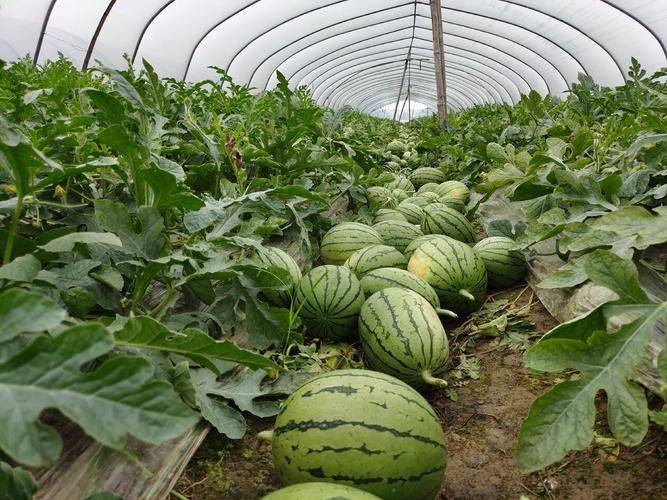
(4) a watermelon has a long reproductive life and a high yield, thus requiring large amounts of nutrients. About 0. 19 kg of nitrogen, 0. 092 kg of phosphorus and 0. 136 kg of potassium are required for each 100 kg watermelon production. However, there are significant differences in the intake of nutrients between gestation periods, with 0. 01 per cent during gestation, 0. 54 per cent during seedlings and 14. 6 per cent during chickening, with the result that watermelons absorb zui nutrients during the period when they flourish, accounting for 84. 8 per cent of total nutrients. As a result, watermelon is growing with growing plants, the need for fattening increases to the high value of zui when fruits flourish。
(5) soil, watermelon is highly adaptable, with soil estranged, deep and well drained sandy soil. Weak acid, ph5-7。
Ii. Appropriate time frame for seeding
Watermelon field cultivation is cultivation without protective equipment. It usually ends with local frost, and the temperature stabilizes the suitable time to sow at about 15°c. The timing of seeding should also be determined on the basis of such conditions as varieties, planting seasons, cultivation patterns and consumption seasons. In general, seedlings were planted in mid-march and late, in mid-april and late, and harvests began to take place in late june, while harvests began in mid-july and harvest in late september。
Iii. Full application of base fat
The cultivation of watermelons is based on the selection of plots of soil laxity, deepness of the soil, soil fertility, good drainage, sufficient light and tan; watermelons are not suitable for succession and usually rotate over a period of 4 to 5 years. Otherwise, it's a serious atrophy; it's used to be rice, corn, etc. Undergraduate crops are followed by vegetable crops such as potatoes and cabbage, but the former melon species are seriously ill and do not lend themselves to choice。
The melon fields must be deep-drived, and the ground must be turned over during the winter. In plots that have been or have a deep cultivation base, drains are opened around them, with a distance of 2. 4 to 3. 0 metres (0. 5 metres wide) from cultivation, and fertilizers are applied on the side of the puddle, with 2500 to 3,000 kg of farm fertilizer per acre, 15 to 20 kg of phosphorous fertilizer and 45 per cent 20 to 25 kg of compound fat



