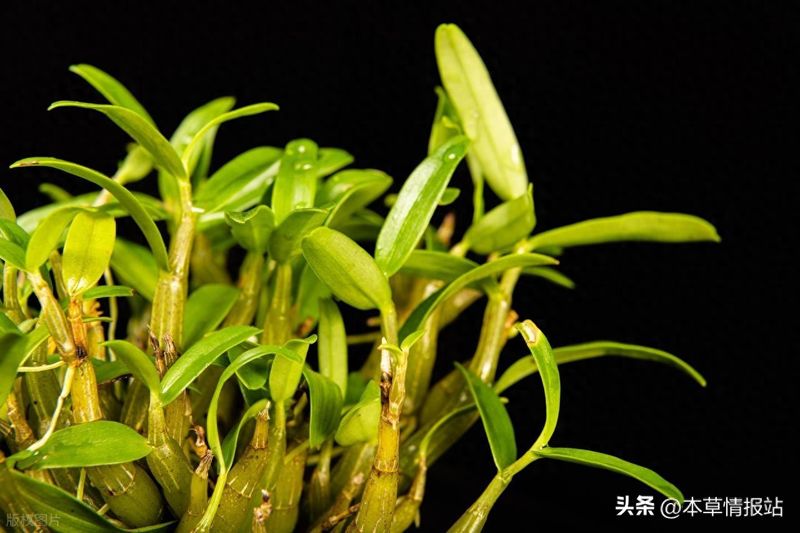
# how can the stone # grow fast #
Cedar conservation master plan: scientific management doubles growth speed
As a valuable drug in ranko, the unique growth habits and medicinal values are of great concern. However, many growers are slow to grow or even die as a result of poor environmental control and poor management of water fertilizers. In the light of the latest scientific findings and planting practices, the core code of rapid growth of the pebbles has been removed from the four dimensions of environmental regulation, management of hydrofertilizers, reproduction techniques, pest control。
I. Environmental regulation: building a micro-ecological “unlike wild”
The pebbles are born in tropical rainforests 600-1500 metres above sea level, attached to trunks or rock cracks, and are rooted in gas and highly sensitive to the environment. Key parameters are as follows:
Scattered light needs: 2-4 hours of light per day (e. G., morning sunlight), with the rest under shade or sunnet. Summer shade rates are 70-80 per cent and can be reduced to 50 per cent in winter. Optical optimization: use of blue led patches (wavelength 450-470nm) for sugar synthesis to increase the value of medicines. Experimental data show an 18 per cent increase in the sugar content of the quartz for 30 consecutive days compared to natural photogroups. Temperature control temperature threshold: growth at 15-28°c and night and day temperature at around 10°c to contribute to nutrient accumulation. During the summer period, more than 35°c is required to activate the curtain cooling system and less than 5°c is required to be moved to the greenhouse or to cover the two layers of the membrane. Humidity balance: air moisture needs to be maintained at 60-80% and matrix moisture at 40-50%. Wetting by ultrasound mistifiers avoids foliage. Numerical formulation classic combination: pine bark (40%) + charcoal chip (30%) + coconut (30%), ph controlled at 5. 5-6. 5. Pine bark needs to be evaporated by high temperature of 120°c, charcoal can adsorbed heavy metals and coconuts provide water conservation. Innovative options: the addition of 10 per cent of the biocarbon matrix can significantly increase the sugar content of quartz. Studies have shown a 22 per cent increase in the platinum content of the bio-carbon matrix, which is grown by thylene. Water fertilizers management: hard work, precision supply
The stone root is thin and rootless, and fertilization is based on the principle of “low concentration, high frequency” to avoid root burning。
Watering strategy see dry wetness: 2 cm by hand, drying up water and avoiding water accumulation. In summer, sprays are damp every morning and evening, and water is poured every 7 to 10 days in winter. Water quality requirements: priority is given to rain or river water, while piped water requires 48 hours of static chlorine. Add 0. 1% lemon acid to regulate water quality ph to weak acidity. Fertilizer programme long-term (march-september): 50-fold thinning of corrosive corrosive corrosive water every 15 days (2:1 potassium nitrogen phosphorus compared to 2:1) and application of 0. 2% potassium phosphate solution to the leaf. Precipice (october-november): increased application of high phosphorus potassium fertilizer (e. G. 15:20:25 formulations) to promote thawing. Hibernation period (december-february): stop fertilization and keep only the base moist. Case references: an “integrated water fertilizer” drip irrigation system was used at a base in yunnan to control the concentration of fertilizers at 0. 1-0. 2 per cent, and the annual growth of quartz increased by 40 per cent compared to traditional fertilization methods. Iii. Reproduction techniques: choice of the right method, rapid expansion
Cedar reproduction is dominated by separate strains and grouping, which allow for scale production。
Operational elements: in the spring, three to four years of motherhood is selected, the roots of the aerobic root (three to five stubs per series) is extracted, and the seed is impregnated with multibacterium for 20 minutes. Increase in survival rate: a third of the tuber base is shown during planting, avoiding embedding deep enough to cause rote. Using the method of “substantial cultivation”, i. E. Shallow cultivation before gradually covering the matrix. Process optimization: the combination of 75% alcohol + 0. 1% mercury chloride for eight minutes can be used to sterilize the implants and can be reduced to less than 5%. Refinery techniques: before a group breeds a bottle, it is necessary to adapt to the natural environment for 7-10 days in the nursery, gradually increasing the intensity of light to 3000lux. Iv. Pest and pest control: prevention is the main focus, integrated management
Common diseases of quarries include molluscs, anthrax and pests dominated by red spiders and aphids。
Environmental regulation: keeping ventilated light and keeping humidity below 70 per cent can reduce the incidence of asymptomatic diseases. Varieties selection: iron platinum is more resistant to foliage and suitable for new breeders. Biological control and natural enemy use: release of dictums to control red spiders, 50-100 head per square metre, and reduction of the post-verbal mouth of up to 90 per cent for 10 days. Plant-source pesticide: the application of 0. 5 per cent of the bitter alkaline water agent can effectively combat aphids without pesticide residues. Chemical control safe medicine: no more than 30 days before the harvest, priority being given to biological pesticides (e. G., chronin). Molluscosis can be treated with 72 per cent of agro-chain carcinin 2000-fold spray, and anthrax can be treated with 25 per cent more than 1,500-fold mesh cream. Conclusion: scientific conservation to achieve efficient cultivation
The rapid growth of quarries is dependent on precision control of the environment, water fattening, breeding, pests and diseases. By modelling wild ecology, introducing integrated hydrofertilizer techniques, optimizing reproductive processes and constructing integrated control systems, growers can significantly improve the growth rate and the quality of medicinal use of quartz. In the future, with the diffusion of smart greenhouses and the technology of connectivity, the quartz industry will move towards a new phase of standardization and scale-up that will bring more dynamism to the health industry。