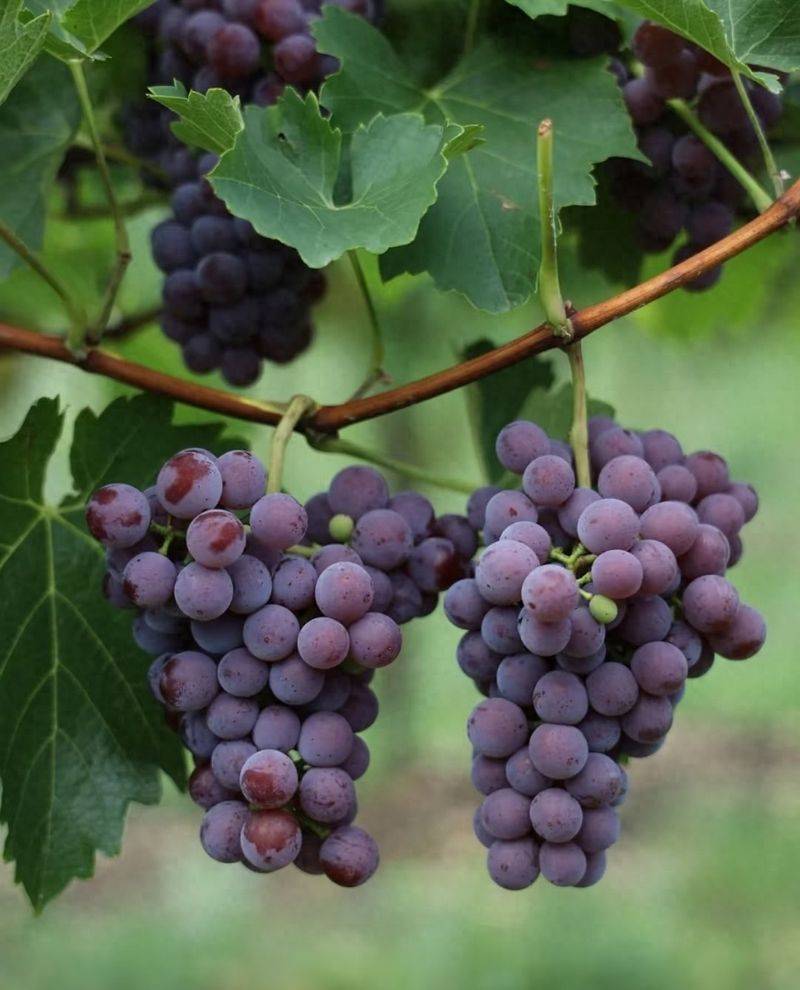
Rural families now grow grapes, either sporadically in their own yard or in large areas of open-air orchard farming, in the hope that the vines will crawl and a string of grapes will be covered with branches that will allow them to taste at home and be sold in fairs and subsidized。
The reality, however, is that many of the fruit-farmers, many of whose grapes are so extravagant, water soared, fertilizer soared into the ground, ploughed up in the day, vines so thick and green, and long-looking, have little or no fruit for years, and little fruit, small head, bitterness, and little harvest for a year。
For decades, too many farmers have been engaged in fruit-planting and have been seen to plant fertilizing grapes. Most people either have to give or are blindly fertilizing, making mistakes from choosing to using time to applying, wasting their money and energy. Unlike ordinary crops, where fertilizers are highly knowledgeable and the right methods are found to bear fruit, today we speak to the country of the vast variety of grapes in which the grapes are fertilized correctly, avoiding all faults and easily achieving high productivity。
I. Avoiding the great mistakes: only nitro-fat is preferred, and it's too long to sit
This is one of the most vulnerable mistakes of the nine outcomes farmers and one of the most important causes of grape failure. Many farmers believe that fertilizer is much more diffused, that seedlings grow fast, and that only nitrogen fat is allowed on average, regardless of the stage of growth, to be applied individually。
It is true that nitrogen fertilizer can quickly feed the vines, and in a short period of time the vines will grow mad, the leaves will be thick and green, far from being strong and strong, and there are great dangers. The vines are fully fed, their nutrients are overstretched and there are no extra nutrients to produce flowers, and in the end there is a growing phenomenon, the branches are so thin, the leaves are so thin, the flowers fall, and it is difficult to sit on the fruits。
It is also too thick, with poorly ventilated light under the shelf, dark and humid fields, which are particularly susceptible to the breeding of various strains of bacteria and pests, yellow foliage, and the weakening of vines and vines, which, even at the end of the day, are prone to bad fruit and fallows, which significantly reduce overall production。
Proper management
A small amount of nitrogen fertilizer can be applied to pre-graine seedlings during their growth, helping the tree seedlings to plant their roots in the vine, immediately reducing or even stopping the single nitrogen fertilizer once it enters the flowering period. Fertilizers are used evenly, branches are controlled, vines and vines are suppressed, nutrients are concentrated in the lumbers, and more flowers are divided, and the problem of long-lasting growth is addressed from the root。
Ii. Avoiding the second major error: mistimed fertilization, missed optimal lifetime
Grapes tend to catch up with time, and there is regular discipline about when to supplement and when to lose weight, and many farmers use it entirely in their own mood, when they are free to spread fertilizer in the field, when their work is simply put on hold, when fertilization is in chaos and when nutrients are not absorbed。
The spring sprouting of grapes comes at a time when there is an acute need for nutrients. Many farmers are slow to catch up with fat, have inadequate seedlings, are thinner and have few flowers. By the critical period of the flowering outcome, it would have been easy to conserve, to follow up heavily, and suddenly to excess fertility, directly causing flowers to fall off, young fruit to fall, and the amount of hanging fruit to be halved directly in a year。
There are also many farmers who are used to waiting until fall leaves to think of their fatting, the lateness of the hour, the lower temperatures, the halting of the growth of the grapes, the deterioration of their absorptive capacity, the accumulation of fertilizers in the soil, which is not only a waste of money, but also the erosion of the roots, the weakening of the tree seedlings and the constant decline in production over the next year。
The correct fertilization period
1. Spring lumber
In spring, when the temperature rises, grapes begin to sprouts, to catch up with basic fertilizers in time, to help the bud grow robustly, and the branches grow robustly, and to lay a solid foundation for later flowering。
2. Fluidity of the flower season
A small amount of compost is provided in the pre-flower period, the nutrients are steadily supplied, the flowers are avoided, the quality of the flowers is improved and the seating rate is increased。
3. Nuts and fats
When the flowers are finished, they are a critical period for the rapid expansion of the fruit, in time to catch up with the fruit, so that it can grow up and be full of fruit and meat。
4. Autumn bottom fat
Following the completion of grape harvesting, a basic fertilizer is applied as early as possible to supplement nutrients consumed throughout the season, to conserve root systems, to accumulate nutrients and to guarantee normal flowering results in the coming year。
In strict compliance with the four phases, fats are followed in a timely manner, with no early or late application, nutrients are supplied on demand and grapes are full of branches。
Iii. Avoiding the third major error: the way in which fertilizers are applied is wrong and the roots are not absorbing nutrients
Many farmers use fertilizers to make it easier to spread them directly to the soil surface or to dig holes in the root of the grapes, both of which are wrong and unwelcome。
Fertilizers are laid directly on the ground, the wind and the sun are blowing, most nutrients are blown away, while rains are followed by rainfall, and the root systems simply do not absorb nutrients, and fertilizer amounts to waste。
Fertilisation is more hazardous at the core of the main stem, with high fertilizer concentrations, which directly burn the root system, cause damage to the root system and cause the seedlings to abate gradually, grow worse than a day, and reduce production less, causing severe direct death to the whole tree。
Scientific fertilization methods
The root systems are mostly located in the outer edges of the tree canopy, where fertilization is done away from the main trunk, and where they are dug on the outer side of the vine branch, which is controlled at depths of about 15 centimetres, so that the fertilizer is ploughed into the gutter, buried in the ground, and then watered again。
The application of fertilizers is thus far from the root system, where fertility is slowly permeating the soil, and the root system is able to absorb nutrients in a smooth manner, without the occurrence of root burning, and where the use of fertilizers has increased significantly, saving much of the cost of farming and doubling its effects。
Iv. Avoiding the fourth major area of error: long-term single application of fertilizers and soil variation in tree growth weak
Many farmers use only one fertilizer year after year, do not change the type of fertilizer year after year, and the soil is severely unbalanced in terms of nutrients, with the soil slowly becoming rigid and less ventilated。
Gravity roots are not freely spread in rigid soils, with shallow roots, reduced absorptive capacity, poor resistance of tree seedlings to disease, low age growth and fewer and fewer flowering results. The soil lacks a variety of trace elements, even if the result is marginal, with rough, low sweetness and bad taste, low market prices and reduced earnings。
Rational use of fertilizer techniques
Cultivation of grapes to remember the mix of fertilizers, mainly organic fertilizers, combined with formal compound fertilizers, to supplement trace elements according to the stage of growth. Organic fertilizers can defusing soil, improving soil quality, preserving root systems and providing long-lasting nutrients; composite fertilizers are quickly replenished to meet short-term growth needs。
Rational combinations of use, lax and fertile soil, well-developed roots, smoothing of grape trees, fruit symmetry, sweetness and juicy sauce, and high price。
V. Avoiding the fifth big mistake: the flowering blindly fertilizing the water and making it easy to fall
This is the most easily neglected key point for all fruit-farmers, who during the flowering of grapes are themselves fertilized, particularly sensitive to water fertilizers, with many farmers less aware of common sense and often watering for fat。
The fragrance of the bouquets, the abundance of fertility, the disruption of the normal growth of grapes, the disruption of the nutrient supply, the insatiability of the delicate flowers, the loss of large quantities of flowers, the lack of fruit and the lack of fruit at the end of the branches。
Strict administration of the period
During the official flowering of grapes, it is sufficient to keep the soil dry without water or fatting. When the flowers are all destroyed and the young ones sit firmly, the water will be fertilized normally and the fruit will be preserved in a stable manner, avoiding a large drop in fruit。
Six, four-season precision fertilisation program
1. Spring lumber
Prior to the onset of the spring, a small combination of compost, dominated by decomposed farmers, was applied evenly and in the right amount per acre, which led to the fresh and strong, large and full of flowers and increased numbers of flowers。
Pre-flower fertilizers
One week before the flowering, a small amount of potassium phosphorus fertilizer was replenished, nitrogen fertilizer was reduced, it was effective in bulging and stabilizing, increasing the resilience of the flowers, reducing the problem of falling flowers and significantly increasing the seating rate。
3. Inflation and fertilizer
Following the fruit, the focus was on supplementing potassium fat, combining calcium fat, promoting the rapid expansion of the fruit, preventing the cracking of the fruit, smoothing the skin, increasing the sweetness of the fruit and doubling production。
4. Clothes and sweet fattening
The fruit is about to mature in the colouring phase, stopping the application of nitrogen fattening, fully replenishing potassium fattening, promoting the rapid colouring of grapes, the smoothing of the colours, the fragrance of the fruit, and the higher sweetness and quality of the fruit。
5. Reproduction of tree-based fertilizers
Grapes have been fully harvested, with the first application of base fertilizer, mainly on the basis of consumable organic fertilizer for farmers, full supplementation of tree nutrients, restoration of damaged branch roots, safe winter, and early and growing growth in the coming year。
Vii. Routine care techniques, supporting grapes with multiple outcomes
First, rational cutting of branches, timely cutting of long branches, twigs and thin branches in the spring, reduction of nutrient consumption, concentration of nutrient supply branches, thawing of branches, ventilation and light for flowering。
Second, early prevention of diseases and pests, regular inspection of orchards during grape growth, early prevention of frost, as well as grey and various pests, and healthy seedlings can stabilize high yields。
Thirdly, rational fruit-fixing, cleaning of deformity, small and dense fruit after the fruit sits, preservation of a strong fruit, concentration of nutrients, and the growth of grapes, large and good。
The old farmer's good advice
Grapes, in order to produce a high yield, have never been the higher the production of more fertilizers, the key being to use fertilizer, to choose the right time and to find the right way. Most farmers are unable to grow grapes, and the year after year is not successful, all by way of fertilization。
Change the old habit of blindly fertilizing and avoid all the above-mentioned mistakes, manage them according to scientific methods, at no high cost, with a string full of annual harvests on their own grape racks。
It's not a bad idea
Don't rush the grapes
We'll catch up on time
It's a good year's harvest