


The prevailing cold in the guangdong region and the importance of catching up with the current production of vegetables are important for ensuring the supply of vegetables throughout the province during the winter, promoting the development of vegetables in the north and achieving efficiency gains。
In recent days, the provincial agricultural technology extension centre has been working together with guangdong winter vegetable practical, issuing technical advice on production management and learning

01
In the winter and spring, we'll run the greens
Watch the weather
Timely follow-up of weather changes through radio, television, text messages from mobile phones, tweets, etc., to increase safety awareness and risk awareness and to prepare early responses to adverse weather events such as cold temperatures, rain and wind。
Choose the most resilient species
Depending on the market location of the product and the different seasons, highly resistant varieties such as cold, damp and disease resistant, such as those adapted to the marketing market, are selected。
Keep it warm
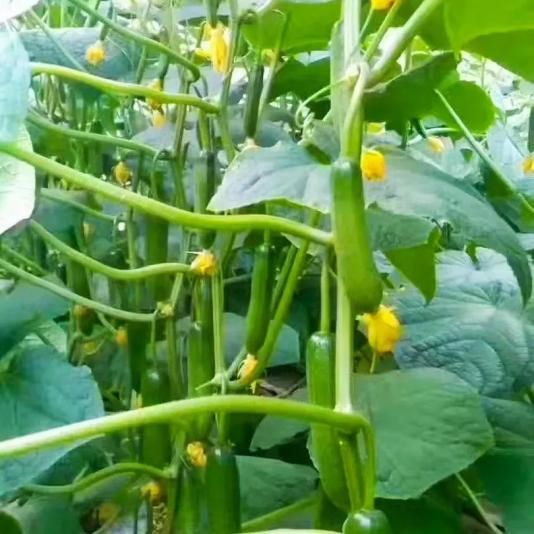
When cold, frozen or cold flows, the soil is strengthened to prevent the freezing of roots, to safeguard their vitality and to promote the growth of plants。
Scientific irrigation, which selects clear weather for irrigation before cold tides and cooling attacks, increases soil heat capacity and mitigates low temperature effects。
In order to reduce the impact of bad weather on vegetable production, it is recommended that protected areas be used for seeding, and that cover materials such as plastic sheeting, swirling or sunnets be used to protect against cold and to prevent freezing of vegetables, depending on their growth characteristics。
In the event of extreme cold weather, a conditional base or farmer can use fire, such as wood and grass, to keep the field warm and reduce production losses。
# de-wetting stains #
The high water level in the spring and the frequent occurrence of rain-fed weather tend to result in soil wetness and rooting. In the spring, affected by the wet and cold weather, vegetable plantations are vulnerable to freezing, resulting in the death of ground vegetables。
In the spring, planting requires the use of high-strength cultivation to prevent the accumulation of water on the ground and in trenches。
Water management
Vegetable water management
For uncultivated vegetables, given the long growth cycles of fruit and vegetables, and in order to avoid inadequate or late availability of nutrients during production, which affects the normal growth and production of plants, the use of organic fertilizers should be emphasized and strengthened to safeguard the availability of nutrients that may be affected by bad weather。
In the case of vegetable fruit and vegetables in the course of their growth, the management of fatty must be improved in the context of growth and weather, with the adaptation of scientific plants, the promotion of the growth of the plants, the improvement of their resilience and the guarantee of smooth production。
In general, three-dollar complex fertilizer is to be followed every 15-20 days depending on the growth, with an acre application of 75-150 kg, and the application varies depending on soil fertility, plant growth and results。
Leaf and vegetable fatty water management
Vegetables need to be managed in a manner that combines the duration and growth of the planting season, the short growth cycles of vegetables, the stricter requirements for fatty water, and, in the case of unfinished cabbage, the principle of hard work, which can be applied in small quantities because of the underdeveloped roots of the plant and the weak absorptive capacity。
For slurry-like vegetables, fattening should be based on the application of organic fertilizers, during growth, in accordance with the stage of growth, increasing the application with long-term extension, and re-fertilizing before ending the ball。
Vegetables are more demanding for nitrogen and can be fertilized using triple-composite fertilizers such as high nitrogen (e. G. 17), low phosphorus (e. G. 5), medium potassium (e. G. 12), depending on soil fertility, varieties, plant growth and weather. General amphibious leaves fertilization 3-5 times and acres 30-50 kg. Four to six fertilisations of kale and 50 to 80 kilograms of acre。
Water was stopped 5-10 days before the harvest to avoid excessive water content and unsustainable storage。
Vegetable water management
Vegetables are more demanding for fattening, and the flower ball formation period is the focus of the fertilization period, which is larger, accounting for more than 70 per cent of total fertilization, which varies depending on soil fertility, plant growth and weather。
In general, a three-dollar compound of 50-80 kg weight can be used to catch up with three-to-five times based on sufficient organic fertilizer。
In order to reduce the amount of space and improve the quality, it can be combined with the pursuit of 0. 2 per cent of the fertilized boron sand。
Vegetable water management
Vegetables, which are vegetables with straight roots as the organ of the product, are formed underground and should therefore be reinforced during their growth. During the beginning of the expansion of the “breeding” of the body root, the intake of fat water was higher, and the application varied depending on soil fertility, varieties, plant growth, weather, etc。
Generally, on the basis of sufficient base fattening, the acre was applied 50-75 kg of compound fattening, absorbing more than 60 per cent during the expansion of the meat root, which took place 3-5 times。
Water was stopped one week before the harvest to increase sustainability。
Integrated pest control
In line with the “preventive, integrated management” approach, the following techniques can be used in combination:
Agriculture
Ecological control
Biological control
Physical control
Chemical control
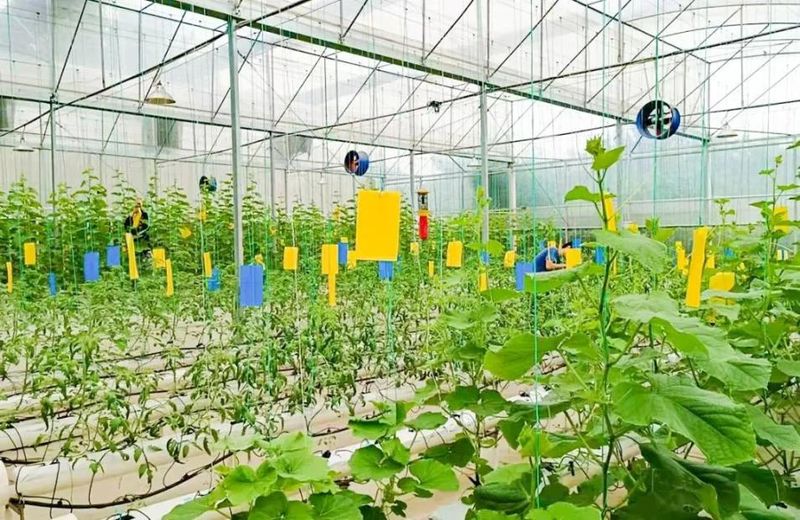
The field leaves focus on the prevention of pests such as yellow stripe, small tigers and moths, and the promotion of biopreventive techniques such as yellow blueboard, black light and sexual bait。
The disease focuses on the prevention and treatment of molluscs, frost, viruses, ailments, etc., and the promotion of high cultivation and prevention of flooding。
Scientificly rational use of chemical pesticides, strict control of the safe interval between application and safe consumption of products。
# strict implementation of disease control policy in production #
Strict implementation of provincial and municipal requirements for disease prevention and control and screening of all park staff, especially those arriving in medium- and high-risk areas, to ensure that outbreak protection is in place。
It is necessary to wear masks throughout the production or management process and to change them on a daily basis, and to avoid, to the extent possible, “stacking” during the course of the work, maintaining the necessary distance between staff。
02
Front management of vegetable sheds
# the old sheds are fixed #
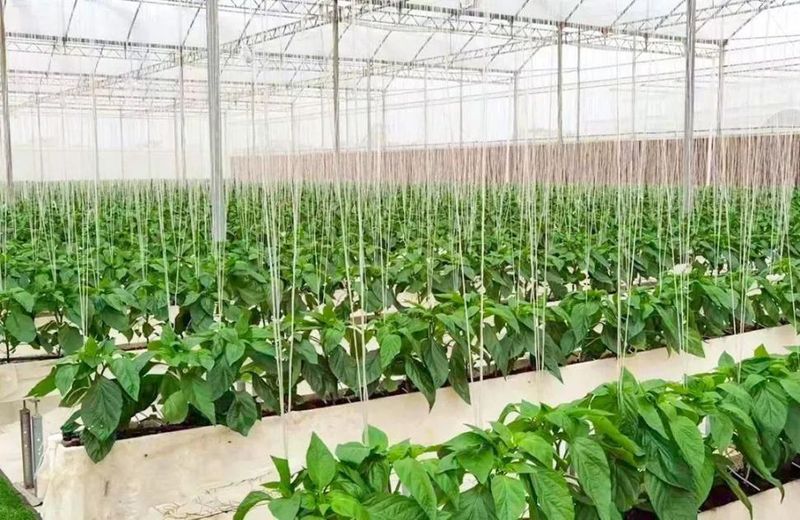
The first is covering thin films that are warm and radiant。
The second is to improve wind protection, rationalize poles and increase the weighty capacity of the skeleton。
Third is to prevent pests from flying. In advance, greenhouses, large huts, etc., are shielded by insecticide-resistant nets to prevent white ticks, aphids, etc. From being moved to shelters with higher temperatures。
Fertilize the whole place
• introduce fine-tuning and fertilization. Combining the whole area with fully decomposed organic fat, with a deep flip and a rise to the ground。
# i'll grow #
In accordance with the different vegetable planting mouths, proper and timely nursery work for winter and winter and spring-spring vegetables is being carried out, efforts are being made to improve nursery techniques and conditions, with a view to providing a sound breeding base for winter and winter-spring vegetables production。
# move the plant #
The timing of planting is determined on the basis of different vegetable types and different listing times。
Vegetables in the shed should not be established at too high a density, with dripping, irrigation and full membrane coverage to reduce evaporation, lower humidity and reduce disease。
In case of high weather temperatures, the tectonic membranes can be removed and air flow enhanced to improve the adaptability of vegetables and ensure their growth。
When temperatures are low, the sheds should be closed in a timely manner to ensure high temperatures and appropriate temperatures within the sheds and to increase resilience and productivity。
03
Technical measures for early spring vegetable production
# choosing resistant varieties to grow strong #
Starting in november, the southern sub-region of china entered the winter spring vegetable production nursery season. To the extent possible, intensive seedling is used to sow in a timely manner, to enhance light, temperature and water management, and to foster healthy, disease-free, appropriate and high-quality seedlings。
Field management
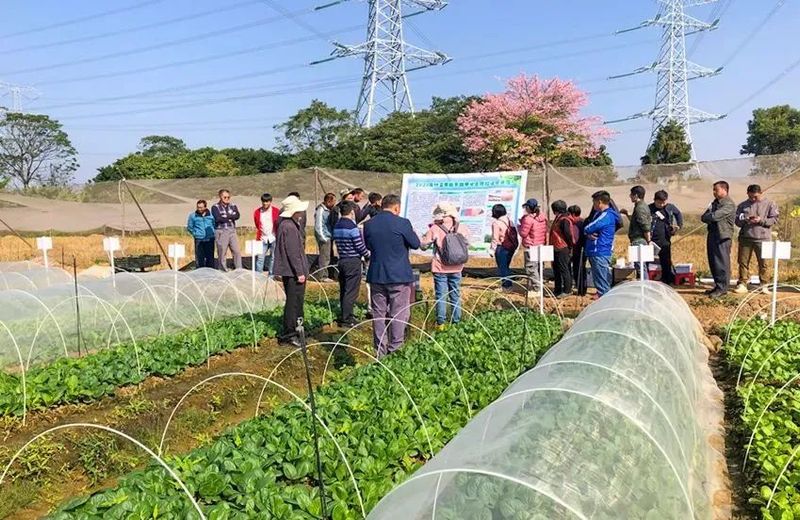
Early springs are prone to weather conditions such as cold, cold and cold, with increased field protection for sowing or planting。
Large shed cultivation can take four-week, multilayered internal coverage。
In the field, low-temperature wet cold injuries can be prevented by measures such as simple small arch sheds and membrane cover。
Avoiding water accumulation in the fields, conducting scientific management, introducing chemical fertilizer reduction efficiency techniques and green control techniques for pests and diseases, ensuring normal growth of vegetables and increasing yields。
Emergency reserve
(c) strengthen market supply monitoring and early warning to expand the area where fast-growing, short-lived vegetables can be grown, such as cabbage, cabbage, cabbage, etc., to rapidly replenish the market supply, while at the same time making it possible to store some of the durable reserves of vegetables。



