Green planting techniques for perfume and lemon
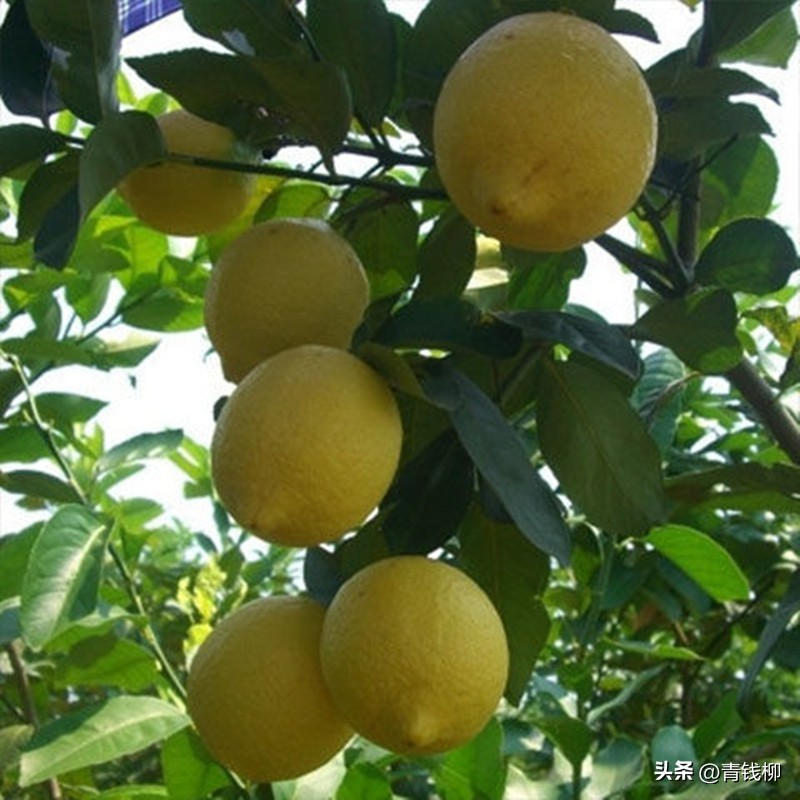
The lemons of perfume are fragrances of citrus plants, small chords, strong trees, open branches, relatively straight dry branches, jabs; the elliptical shape of the leaves, thick paper of the leaves, sawn teeth of the leaves, round of the leaves; the green leaves and buds of dark purple reds, single mackerel or less peanuts; the fruit elliptical or egg shape, and the fruit juice acid. The perfumed lemon fruit (leaf) is unique, rich, priced, and growing area is growing faster。
1 park selection
(1) geographical conditions. Water is secure, electricity is available, transport is easy, the slope is below 25° and the backwind is towards the sun。
(2) climate conditions. The average annual temperature of 15. 6 〜19. 0°c is essentially frostless, with an extremely low air temperature of 3°c, an average annual precipitation of 600 ~1,000 mm and an effective temperature of 5500 ~7000°c per year at 10°c。
(3) soil conditions. The earth layer is deep, the soil is lax and fertile, the soil is micro acid or neutral, the drainage is good, and the groundwater level is less than 1 metre。
2 construction
2. 1 campus planning
(1) park roads. The park shall be made into a network of park roads by topography, terrain, main roads, sub-channels, and operational tunnels. The main main channel is 5 metres wide, the branch is 4 metres wide and the main channel is 1-2 metres wide。
(2) parks for drainage。
The size of the water supply, storage, drainage facilities, depending on the size of the park and the terrain, shall be determined by local conditions to ensure that drought and flooding are discharged. It is generally appropriate to use 3 hectares as a unit, with the condition of a combination of high-efficiency water-saving (drop) irrigation facilities. The slope reservoir could be built at the height of the park。
(3) park support facilities. Depending on the size of the park, the necessary carehouse, farm bank, farm house, medicine pool, fruit-handling swing space, etc. Shall be provided. Cultivation should be planned in an integrated manner。
2. 2 tree selection
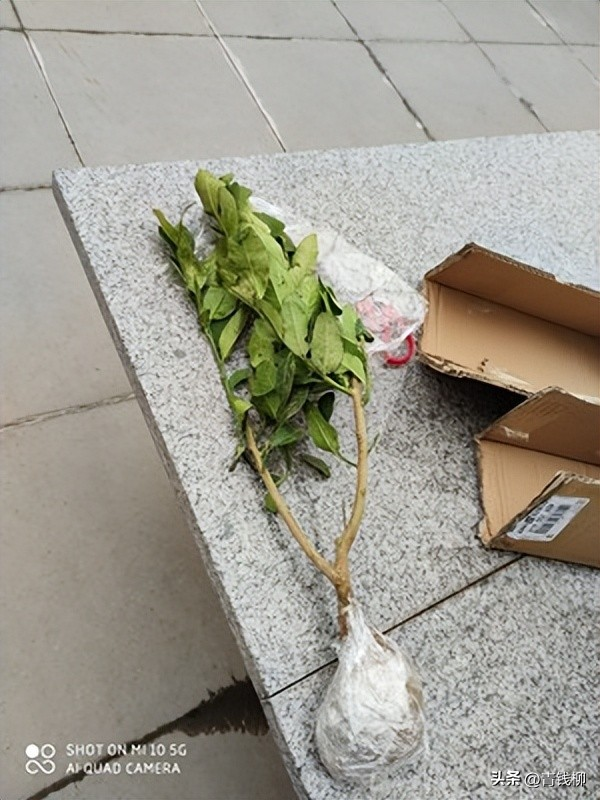
The perfumed lemon is mostly accelerator. When selecting a tree, care should be taken that no more than 0. 8 centimetres in diameter from an incision, no more than 55 centimetres in height, no more than 1 piece of wooded side root from the roots, and no less than 10 months in age。
2. 3 whole ponding
A steep slope of 15° or more requires a horizontal ladder (platform) to be constructed with an equal line to dig up a cave, the floor of the ladder (platform) is not less than 3 m wide, the terrain of the same ladder (platform) is controlled within 0. 5 m, and the position of the hill (platform) is better at 2/3 above the surface; the slope below 15° is lower, and the slope or flat ground is below 15° to open a cave according to the line distance. According to the planting density, dig a cave from the center of the plot by the word "ten". Sets the length, width, depth specification of 80 cm x 80 cm x 80 cm, and separates the topsoil (precursed soil) from the ground soil (live soil) when digging. Conditional digs can be dug into a defined ditch。
2. 4 plantation
(1) planting time. A perfumed lemon is a regular green fruit tree, and a conditional area can be planted on an anniversary. In order to improve the quality of seedlings, it is good to move trees before spring rises in march。
(2) plantation density. The routine plant is 4 m by 3 m. The line range can be adjusted to the topography and 55 acres can be planted. The distance of the dense branch can be adjusted to 4 m x 1. 5 m and 110 acres。
(3) the method of planting. Before the tree is laid out, proper seedling will help the tree to survive. Fertilizers 30 ~ 50 kg or commercial organic fertilizer 2 ~ 5 kg + compound fertilizer (15: 15) 0. 2 ~ 0. 3 kg before planting, equilibrate fertilizer and topsoil fully and then refill it at 20 ~ 50 cm depth. When planting, remove the nutrition bag and place the seedlings in the established den, and correct the woody soil, cover the soil, protect the roots of the soil, lay the ground on the floor, and produce the soil, and make sure that the roots are in close contact with the soil. Upon completion of the land cover, round discs should be constructed in a radius of 30 cm, which should be 10 ~15 cm above the ground. After planting, fill the root water in time, and absorb it with thin film (dew) and weed protection, while covering the mouth with thin soil, reducing the evaporation of water and preventing the burning of seedlings。
3. Post-plant management
3. 1 soil management
(1) deep-spread dens. Usually after the fall has stopped growing, starting at the tree canopy line, digging out the caves year after year, with the condition that the garden can be run over. Digging can be combined with the pursuit of base fattening, refilling harmless organic and compound fat along the canopy line, laying the ground floor, laying the surface layer of the heart soil, then pouring water. Deep-spreading caves will help to fertilize soil and improve soil quality。
(2) between. Reasonably effective soil management to reduce weed hazards while increasing land use. The lemon garden crop should be adapted to the lemon-free symbiotic pests, such as green fats, soybeans and soybeans, with shallow roots and troughs. Leave enough space for lemons to grow in between. Plants that affect the growth of lemons, such as pyrotechnics, vines, etc。
(3) soil fattening. New orchards can be grown year after year through rational construction, increase of farm or commercial organic fattening, slurry-returning, etc。
3. 2 fertilizer management
(1) fertilizer principle. Fertilizers, mainly organic fertilizers, are properly combined with inorganic fertilizers, and are targeted to supplement middle and trace element fats with inputs that meet the criteria for the use of green food fertilizers。
(2) fertilisation methods. Traditional fertilisation is applied by garters, by ditches, by radiation, by caves and by sowing. Dig a ditch outside the canopy drop line, 20 - 40 centimetres deep and then refill it. The facility 's orchard is fertilized by micro-jet or dripping, which requires the choice of water soluble or liquid fertilizer. Micro-element fertilization is mostly combined with pest control for leaf spray。
(3) fertilizer water management. The management of juvenile fertilized water is mainly about growing roots and expanding the canopy. The fertilisation of juvenile trees is dominated by organic and nitrous compound fertilizer, with the option of using a monetary nitrogen of the potassium sulphate type or a nitrophosphate high nitrogen compound fertilizer, determined by the size of the tree and the amount of chemical fertilizer used. Fertilizers in general range 0. 1 ~0. 2 kg, organic fertilizer of 2 ~5 kg each, with the appropriate number of three water fats。
(4) vegetable water management of the tree. The principle for management of the adrenaline fertilizer for first-time production is to promote fresh start, and to supplement the tree with nutrients in a timely manner. The pursuit of fat should be heavy with potassium phosphorus, and the control of nitrogen fattening, thereby contributing to the splitting of buds, avoiding the occurrence of spring and summer flowers and empty flowers. Precipice (pre-flower) fattening, dominated by nitrogen and phosphorus fertilizer; plumbing, which increases pollen fertilisation rates; steady (strength) fattening, dominated by nitrogen and potassium fattening, with phosphorous fertilization; picking (basic fat), with organic fertilizer, with balanced application. Fertilizer application should be determined by the size of the tree and the content of the selected fertilizer nutrients, generally 0. 5 ~ 1. 0 kg per fertilizer and 5 ~10 kg per organic fertilizer. Most of the citrus areas of the hae-hye river home rule are located in the dry-hot valley along the hae-hui river, where lemons grow on the anniversary, and flowers grow, and the management of fertilizing trees should be adjusted in due course according to the timing of the marketing of fruit。
4 integrative cuts
4. 1 integration
Lemon tree shape appropriate for natural round head. Precious cursors of perfumed lemons can be used to opt for a polydry happy shape based on growing tree shapes, adjusted to a natural round head as the tree canopy grows。
4. 2 cuts
The order of triming is usually as follows: first down, then up, first in, then out, first out, first out, first out, first out, first out, first out, first out; triming requires “large and thin, small and small”, small space is not empty, left or left uncrowded, leaves are not folded, leaves are thick, ventilated, and the result area is increased; the main task of triming is to prepare the bone branches, balance the tree, adjust the affiliation, and develop the good outcome branches. A perfumed lemon, because it is critical of seedlings and special tree positions, before it is a poly-dry and after it is a natural roundhead. That is: once the tree has been planted, it can leave 1 ~3 primarys, 40 ~ 50 centimetres high, 2 ~3 branches per branch according to spatial distribution, with a new length of up to 30 ~ 40 centimetres repeating the top thrust (flower), repeating and retracting, and the tree shape gradually becomes round header. Overall, it is appropriate to maintain a high and crown band within 2 metres。
5 flower fruit management
5. 1 plumbing control
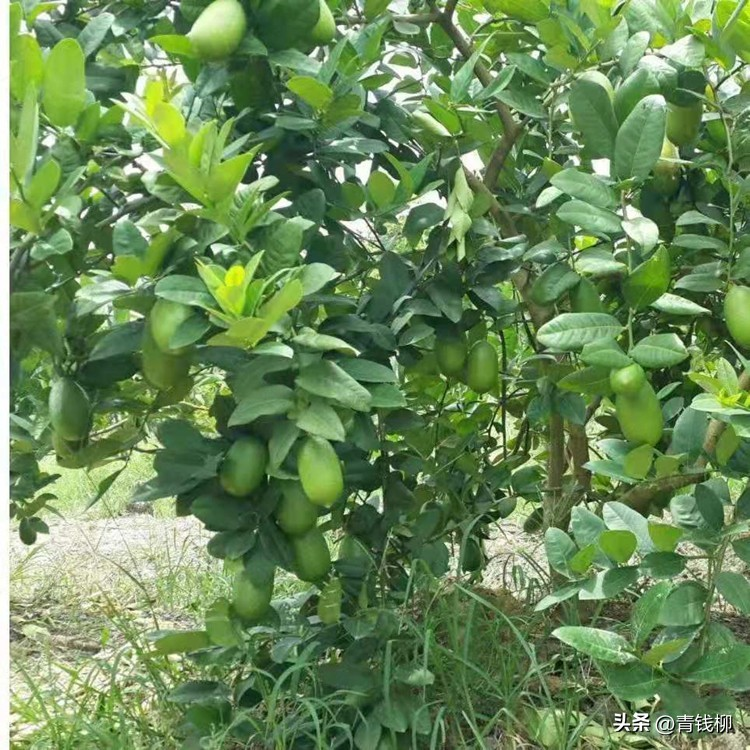
In order to ensure that there is more output than the same, trim some of the excess results from the parent branches, pre-fruit before the flowers are cut, strong branches have a proper number of flowers left, weak branches have few or no flowers, and no effective flowers have been cut; malformations, sick flowers, etc. An artificial eugenication is performed in two fractions, and after the first physiological fallout, the insect fruit, the deformation fruit, the infertile fruit; after the end of the second physiological fallout, the routing according to the tree pattern is determined by determining the appropriate routing amount (25:1 appropriate)。
5. 2 plumbing fruit
The first flower spraying of 0. 3% urea + 0. 2% - 0. 3% potassium phosphate + 0. 1% - 0. 3% boron, or of urea + 0. 2% 〜 0. 3% potassium phosphate , with an interval of 7 days, with a series of 2 ~ 3 so as to increase the seating rate。
5. 3 vegetable season reconciliation
In the light of market demand, and taking into account the climatic advantages along the hee hui river, hsushan hsiang hsiang autonomous district, the lemon season can be regulated by technical measures such as fattening and plant growth regulators。
6 pest management
6. 1 the principle of prevention
In keeping with the “preventive, integrated management” approach, priority is given to eco-regulation, bio-control, physical control, and precision application to keep orchard pests to a minimum, in accordance with the pattern of orchard pests and diseases。
6. 2 methods of response
(1) phytosanitary. By means of enforcement and administrative order, unsanitary lemon trees, ears, seeds and other ancillary materials such as soil, culture base, etc. Are prohibited from being imported or released, with a focus on quarantine pests and pests as prescribed by our national regulations。
(2) agricultural control. Choose resistant varieties and gills for local adaptation; fertilize science, carry rational loads, and enhance the tree's position; provide scientific shape, trim, and keep the tree crowns radiant; clear winter gardens, cut the branches, clear the leaves of the dead, brush the trees, and reduce the source of the disease; improve soil, cover the ground, and promote the healthy growth of the tree and increase its resistance。
(3) biological control. Improve orchard's ecological environment, protect or artificially introduce, breed and release natural enemies such as ladybugs and grasshoppers; promote the use of biological agents, sexual informants and enticing products and equipment。
(4) physical control. Promote solar insecticidal lamps, sticky boards, fruit packs, etc., and control pests and pests。
(5) chemical control. Strengthen disease surveillance, and understand the dynamics of pests and pests, and use appropriate medications in accordance with the environment and the life schedule when meeting control targets. Use pesticides that are environmentally compatible, efficient, low toxic, low residual. The use of pesticides from biological and mineral sources is promoted and used interchangeably (table 1)。
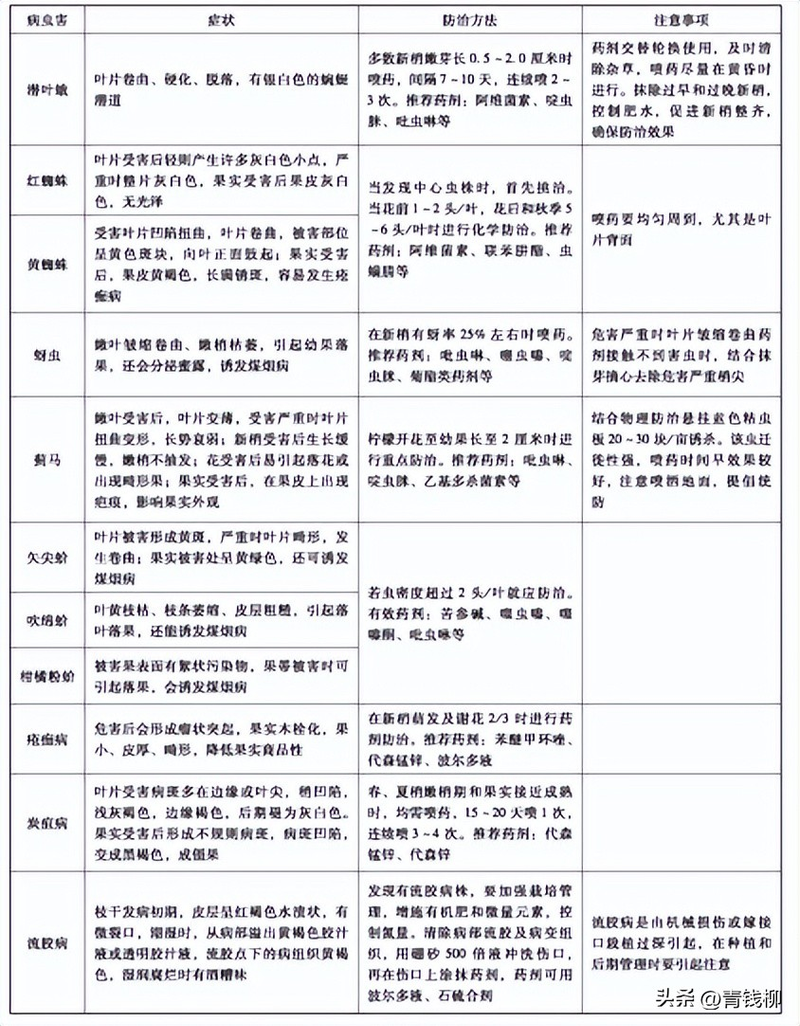
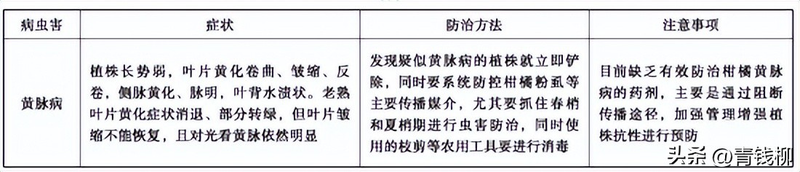
Continuation
7 harvest
7. 1 period of harvest
The perfumed lemon is dominated by green fruit. When the fruit is full, the colour of the fruit is changed from deep green to light green, and the fruit is harvested in a timely manner when it displays its inherent characteristics. It is not appropriate to harvest rain-day or ointment before dry。
7. 2 collection methods
The fruit should be trimmed, the first cut cut the fruit together, the second cut the slices, and the other cut the fruit. The harvest can be combined with a condensed trim of the branches of the result, and the harvest should be from top to bottom, from outward to inward. The planting and transport of fruits should prevent collisions。
Attention, click on my head on my home page to view more of my work, and today's headlines will send my updates to the people who care。