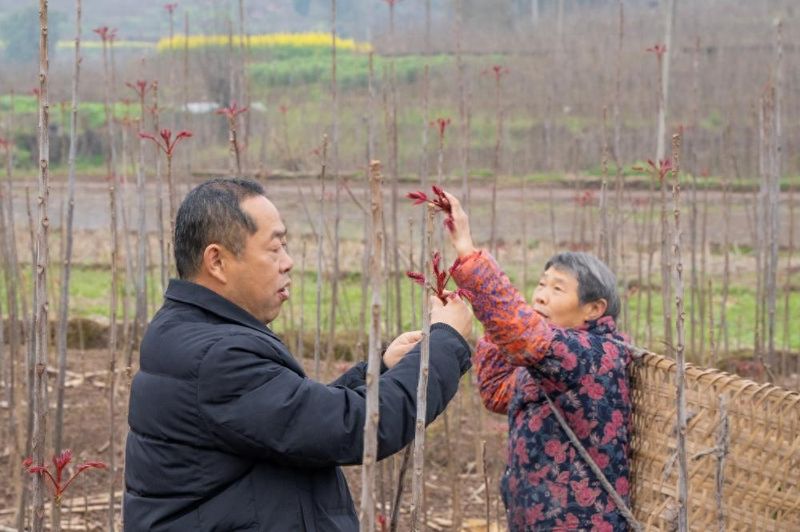
In march, ying chun, the red oil fragrance base in sookang village, copper creek town, manchuria district, welcomed the first harvest. At 7 a. M., villagers wu timed to travel through the sprouts of their homes, with small fingers between them, and young sprouts fell into bamboo. “this year, the first sprouts cost 50 pounds, up to $135, and my family's 5 acres of sorghum, with an estimated income of more than $20,000!” she smiled and counted。
The joy of the villagers ' return is a microcosm of the reform of the system of collective forest rights in the sichuan district, which has led to the economic escalation of forestry。
In recent years, the region has built on the unique resource advantage of “the country's finest new agricultural products” - the red oil fragrance, which, through the twin-wheel drive of the “forest rights reform + specialty industries”, allowed the former desolate slopes to become “green banks” by boosting forest land resources, activating the business owners, extending the industrial chain, collectively delivering services, passing on technology, conglomerates, village farming and many years of income. In 2024, the red oil fragrance base was growing 10,000 acres, with a gross value of more than $32 million, and the villagers each received more than a million yuan, moving away from an ecological priority and a new path of rural renewal for green development。
Technology empowerment, quality. Take it
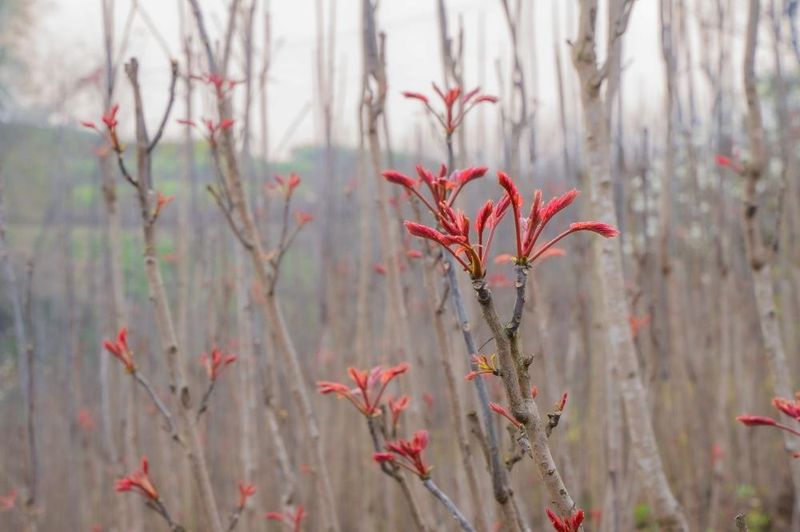
Advanced technologies inject dynamic energy into the development of the red oil fragrance industry. Zheng manlin, secretary of soap village, copper creek, refers to a sprouts forest of an average height of two metres: “in may of each year, we use dwarfing techniques to finely trim the sprouts dry, with only 10 centimetres retained, a change that makes the new branch manageable, easy to pick, and significantly higher in value and value. It's now worth between $6,000 and $8,000 per acre."
In terms of operational management, the town of copper creek follows the times, proactively embraces new digital technologies such as big data, cloud computing, and gradually integrates the concept of “digitalization” into the production, management, marketing, industrial collaboration and so forth in the red oil fragrance industry, thereby giving new dynamism and impetus to the continued healthy development of the industry。
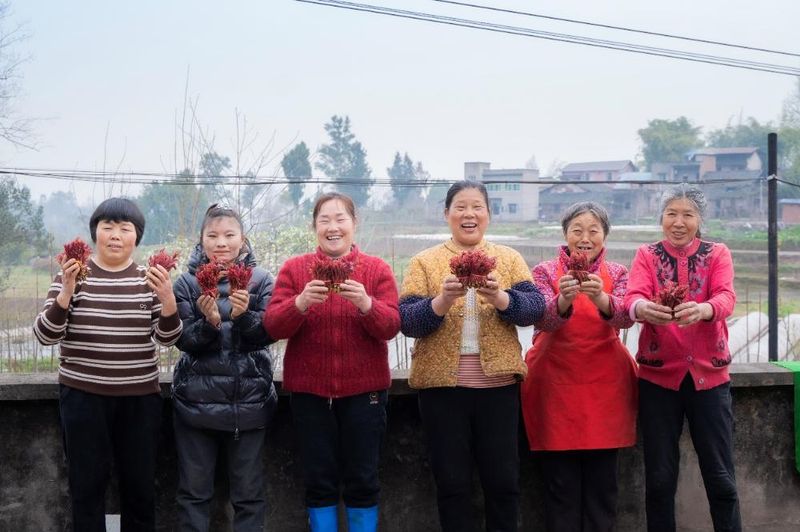
In addition, the town has made every effort to explore and refine the long-lasting mechanisms for the development of the red oil fragrance industry. They elaborate a system of four levels of agro-technical services, ranging from technical research and development teams for vegetable specialists at the municipal level to technical agents for vegetable growing at the district level, to agricultural extension teams at the town level, and eventually to village-level large-house technology demonstration, with progressive layers to ensure that technological power reaches the field. At the same time, a detailed code of technology for the cultivation of red oil has been developed, which comprehensively regulates key technologies such as dwarfation, dense planting and fertilization, actively piloting the technique of "intensity of membrane cover " , increasing the scientific and standardized level of cultivation and significantly increasing economic efficiency。
The ecological economy is rich
The growth of the red oil fragrance industry has not only allowed farmers and village groups to form “communities” in the wave of reforms, but has also led to ecological and economic win-wins。
In the village of sookang, where tourists are able to experience fragrance, they can also taste fragrance and buy specialty creation products. In the yoshikawa district, along the lines of a 10-km mountain-mountain walkway, a series of practices, such as the xinjiang exhibition hall, the rice fish symbiotic base, created a season-round tour route called “springs, summers, autumn medicines, winterwatching sea”, which received more than 50,000 visitors in 2024, leading to a significant increase in farm and residential incomes in the surrounding areas。
It is worth mentioning that the sichuan region has promoted eco-models such as “landfowl co-habitation” and “photo-polypolypolypoly” to produce “roast chickens” under the sorghum forest, and to produce “one acre of land and multiple benefits”. Among them, the market for real-equests was boosted by the main push, with an annual increase of about $1,000 per acre。
“limberland is not just rich pockets, but green mountains.” the officer-in-charge of the sichuan region forestry administration said that the next step would be to continue to deepen the reform of the forest rights system, to work together to promote ecological conservation and high-quality economic development, to promote the integrated development of forestry industry, industry and industry, and to achieve the organic integration of ecological beauty and human prosperity。
Liu mao jiao, peng xian, chu daji