


Potatoes, the fourth largest food crop in the world, are significant for food security, agricultural economic development and the extension of industrial chains in our country. As a result of the shift in agricultural production towards efficiency and scale, large-scale double-line farming has become one of the main cultivation techniques in the potato-producing areas, thanks to its significant productivity gains. The model has proven to be more than 15-20 per cent more productive than conventional pyrotechnic cultivation by optimizing the field micro-environment and increasing resource efficiency, and has significantly increased the commodity rate of eligible potatoes. Scientific stewardship of specifications is at the core of the technology and directly determines the potential for increased production. This paper will provide a systematic elaboration of the mechanisms for increasing the production of potatoes in two rows, and will provide technical support for high-quality potato production by in-depth analysis of the principles and standards used to regulate key specifications。
I. Electronic equipment in the blow-borking of tastes
The two-line farming model, which transcends traditional flat or small cultivation limits, achieves efficient use of resources such as soil, light and water fertilization by optimizing the spatial structure of the field, with the following mechanisms for increasing production:
(i) improvement of soil physico-chemicality and optimization of root environment
The formation and expansion of the potato trachea requires decompressive and humid soil conditions. Double-cropping operations have resulted in a concentration of topsoil, which has an increase of 10-15 centimetres in thickness over conventional cultivation, effectively breaking the bottom of ploughs and increasing the pore of the soil by more than 20 per cent. This facilitates longitudinal and horizontal expansion, increases the absorption capacity of the root system, significantly improves soil aerobics and meets the demand for oxygen for tuber development. At the same time, the structure of the acoustic system allows the rapid recharge of rainwater into the ditches and avoids the hazards of low-lying plume flooding, and the increased capacity of the acreage soil in arid areas can reduce water evaporation and bring about both drought and flooding。
(ii) increased utilization of photothermal resources to promote the accumulation of optics
Double-cropping has a reasonable width and distance, allowing the plant to form an orderly group structure in the field and avoiding the closure of the field as a result of intensive planting. Elevated body lifts increase the area of light on the surface by 30-40 per cent compared to the area of light on the surface of flat surface, and north-south run-up can increase the period of light on the plant by 2-3 hours/day. At the same time, the high heating of the body during the day and the rapid spread of the heat at night create a greater temperature difference between the day and the night, increasing by 2-3°c the temperature difference between flat blocks, effectively promoting the transfer of photo-cosmic products to the tubers and accelerating their expansion。
(iii) optimizing group density and improving capacity per unit area
The large two-line model, which is configured “blank-wide +-blank-up”, significantly increases the density of plant cultivation in a unit area, with a guarantee of single-space growth. The conventional flatting is about 3,000 to 3,500 plants per acre, and large-scale double-row cultivation can increase the density to 4,500 to 6,000 acres per acre, or even 7,500 to 8,000 acres per acre, depending on variety characteristics and soil fertility. Rationalally dense cultivation keeps the area area index of field leaves within a suitable range (3. 5-4. 5) and maximizes the use of light energy for photocosynthesis, resulting in increased community production by reducing the waste of light energy through inter-plant complementarities。
(iv) reduce the risk of pests and diseases and ensure healthy growth of plants
Start-up operations to flip the soil can destroy underground pests, such as plumes and tigers, and reduce their source base. The drainage of gutters reduces soil moisture in the field and avoids the spread of diseases such as late disease and frost in high-humid environments. In addition, acoustic structures improve the ventilation of the plant base, reduce the time of leaf foliage, reduce the spread of pests and diseases, reduce the use of pesticides, guarantee the normal growth and development of plants and lay the foundation for high yields。
(v) improved water fertilization efficiency and reduced waste of resources
Double-cropping allows for concentrated fertilization and precision irrigation, with the concentration of base fertilizers in the body soil, avoiding loss of nutrients as a result of casual fertilization and increasing fertilizer utilization by 15-20 per cent. For irrigation, ditches can be used as irrigation corridors for small-scale irrigation, reducing water evaporation and deep leakage, and suitable for application in water-saving irrigation techniques such as drip irrigation and spraying. At the same time, the increase in the water conservation capacity of the cyanide soil allows for proper concentrations of water fertilizers in the soil, the continued supply of plant growth demand and the avoidance of uneven water fertilizer supplies leading to growth imbalances。
Ii. Precision control of the size of the potato dichotomy
Speculation controls are governed by the principles of “adaptation, diversity and targeting”, with core parameters including gill range, high surface width, long range configuration and planting density. Under different ecoregions, soil conditions and planting objectives, specification parameters need to be tailored to optimize resource utilization and yield。
(i) scientific setting of distance
Distance determines the spatial layout and allocation of resources for the field population, which is set to take into account the needs of soil fertility, variety characteristics, planting methods (net or packaged) and mechanized operations。
- numeric model distance criteria: medium soil fertility, flat terrain area, recommended 80-100 cm. This range ensures that the body width accommodates double-line cultivation and provides good drainage and ventilation in the canals. The main areas in the north, such as eastern inner mongolia, are suitable for 100 cm range, with a distance of 60-70 cm long and a distance of 30-40 cm small, to create a wide and narrow line configuration that optimizes group ventilation; areas such as the shandong riang oblast and sichuan crawl can use 80 cm range to balance planting and ventilation needs and to increase unit area production; and the single areas in the north, such as huronbel, can use 90 cm range and adapt to mechanization to increase production efficiency。
- retrieval of the modulation: the modulation needs to be optimized on the basis of a combination of potatoes and crops such as maize and sunflower. Using the potato-toy type 2-1 band, the gill range can be set at 110 to 120 cm (80 cm wide on the face and 30 to 40 cm wide on the canyon) to ensure sufficient growth space for both crops; the potato-toys type 2:2 band is 80 cm wide on the potatoes, 80 cm wide on the maize band and 40 cm between the potatoes and the corn, to achieve complementary resource utilization; and the gill range can be reduced to 25 to 30 cm on the potatoes set of sunflower, 50 to 55 cm wide on the gill floor, and the accelerant sunflower growth properties can be improved by increasing the compound index。
- special areas with suitable distance: low-lying areas with heavy rainfall and high groundwater levels, with suitable lengths of up to 110 - 120 cm, increasing the width of the trenches, increasing drainage efficiency and avoiding flood hazards; areas with low drought and low soil water retention capacity, with low distances, can be reduced to 70 - 80 cm, with reduced surface stripping and increased protection effects。
(ii) reasonable regulation of height
High soil moisture, ventilation and drainage are defined as balancing the plumes with drainage, heating and erosion, with flexibility to adapt to climatic conditions, soil type and geomorphological characteristics。
- high standard for conventional areas: flat ground, medium soil fertility, medium precipitation, recommended high 20-25 cm. This high yields sufficient heat to increase the temperature of the soil to 2-3°c, promotes seeding of potatoes and seedlings and avoids the risk of soil drought and inversion due to high gills. For example, the climbing market uses 20 centimetres (cms) of high yield levels of about 4,000 kg of acre production, combined with 60-66 centimetres wide。
- special environmental adjustments: low-lying areas with heavy rainfall, high groundwater levels and poorly drained areas need to be raised to 30-35 cm, ensuring that their surface is above the groundwater level and avoiding long-term immersion of the roots to reduce the risk of rotten potatoes; southern winter areas such as lake varnishation, which can be set at 30 cm, with a well-established system of edges and geysers, which can be dryed; arid areas or sandy soils, which can be reduced to 15-20 cm, using low-wide swabs to increase the capacity to protect water fertility and reduce the loss of water evaporation; high-altitude areas with low temperatures, which can be controlled at around 25 cm, using a warmer effect to promote plant growth and reduce fertility。
(iii) normative requirements for the width and shape of the face
The width of the face needs to be matched to the range and line configuration to ensure that the plant is grown in sufficient space to form a reasonable group structure when growing on both lines. The acetal shape is appropriate for flat or microarly shapes to avoid the loss of soil and uneven water distribution due to the tipping point。
- the width of the face: the width of the face is usually 60-70 per cent of the width of the face, i. E., 48-56 centimetres of the face when it is 80 centimetres; and 60-70 centimetres of the face when it is 100 centimetres. The climbing market uses 60-66 centimetres wide, with a distance of 93-100 centimetres long (gauge + 33 centimetres wide) and a distance of 33-36 centimetres wide in both rows, with an even distribution of plantations; an area of 60-70 centimetre wide in the eastern part of the interior mongolia, with a distance of 30-40 centimetres wide in both rows, which ensures an adequate area for single nutrients; and a section of 70 centimetres wide, with a line of 70 centimetres wide and a line of 70 centimetres wide in each row, with a high density of demand。
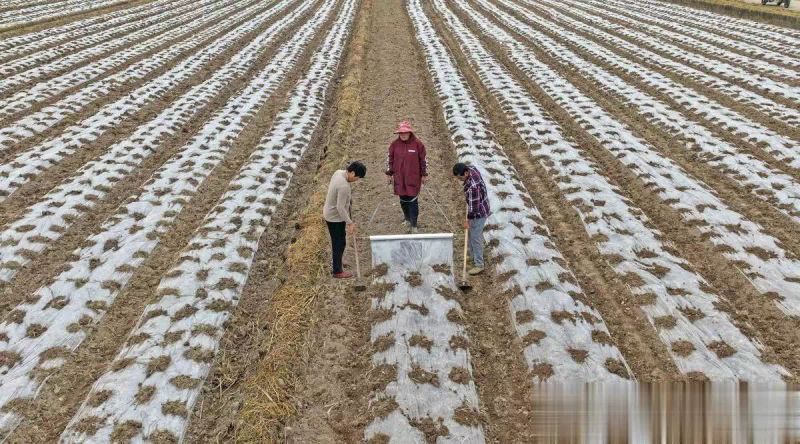
- the shape of the face requires that the surface be flat and flat, that it be protected from dimples or condensations, that the sowing depths be consistent and that the seeding be complete. When membrane cover is used, the face needs to be micro-arced, slightly higher in the middle and slightly lower on both sides, which allows the membrane to tighten to the surface, improves temperature protection effects and prevents membrane problems from arising from water in the membrane area. It needs to be suppressed in a timely manner to ensure that the earth is so compact that it does not collapse later, affecting field management and tubing growth。
(iv) spacing and crop density optimization
The line-space configuration consists of long lines of distance between the two rows and the adjoining one, and planting density needs to be accurately regulated according to the characteristics of the species, soil fertility and target yield to achieve group-to-individual growth。
- the criteria for the allocation of line spacing: a small line between 30 and 50 centimetres is appropriate for the two rows, ensuring that there is sufficient ventilated light space between the two rows to avoid each other. High soil fertility and high plant sizes can be set at 40-50 cm small line distances; low soil fertility and compact pre-cooked species can be reduced to 30-35 cm small line distances. The climbing market uses a double-line distance of 33-36 cm, with a sowing line and 15 cm, to form a flat field distribution; the ministry of agriculture and rural affairs recommends wide-line double-row cultivation with small lines of 20-30 cm and large lines of 50-60 cm, taking into account the need for dense planting and ventilation; and the eastern region of inner mongolia uses a configuration of 60-70 cm and small lines of 30-40 cm, optimizing the group structure。
- cultivation density management: cultivation density needs to be matched to the characteristics of the species, soil fertility and thorium, with 4,500 - 6,000 plants per acre. It would be useful to use density of 4,500-5,000 units per acre, with a distance of 25-30 cm, to promote the increase in the weight of individual potatoes and potatoes and to increase the rate of large and medium potatoes, with a distance of 25 cm x 20 cm being optimally configured; to increase the density of potatoes to 5,000-6,000 cm per acre and 15-20 cm per acre, to increase the quantity of small potatoes to meet the demand for potatoes and to recommend a configuration of 15 cm x 20 cm per acre; to reduce the density of pre-maturated varieties or less fertile plots of soil to an appropriate level of 4,000-4,500 cm per acre, so as to avoid excessive group competition; and to increase the density of refined varieties or more fertile plots of soil to 5,500-6,000 cm per acm, taking full advantage of the resource potential. In addition, 8,000 units per acre can be planted at a distance of 12 centimetres, using a triangle-based potato cut-off method, at a time when the winter sowing of potatoes in hunan is aimed at early ripening。
(v) synergy of supporting technologies with specifications
Speculation needs to be combined with supporting technologies such as landscape, fertilizer and seeding to maximize the potential for increased production。
- the ground and timing: deep tillage is required at depths of 30 cm or more, breaking the ground floor of the plough, combining deep tillage with the application of a sufficient amount of organic and specialized fertilizer, 100-150 kg of commercial organic fertilizer per acre, 50-70 kg of special potato formulations, and subsequent rises after dredge to ensure that the soil is fragmented and sufficient. The northern production area would benefit from a deep fall or pine and spring roofs; the southern production area could rise one or two weeks before seeding, avoiding soil slabs。
- scroll depth and soil thickness: the sowing depth needs to be high, typically 8-12 cm, to ensure that the seeding is in a moist and hot environment. The thickness of the land should be uniform so as to avoid oversinuation leading to the lumbering of the chips, or disproportionately affecting the rate of seeding. When membrane cover is used, the replanting is 8-10 cm, which can cover 2-3 cm of fine soil on the membrane, facilitate automatic demoliage and reduce manual operation。
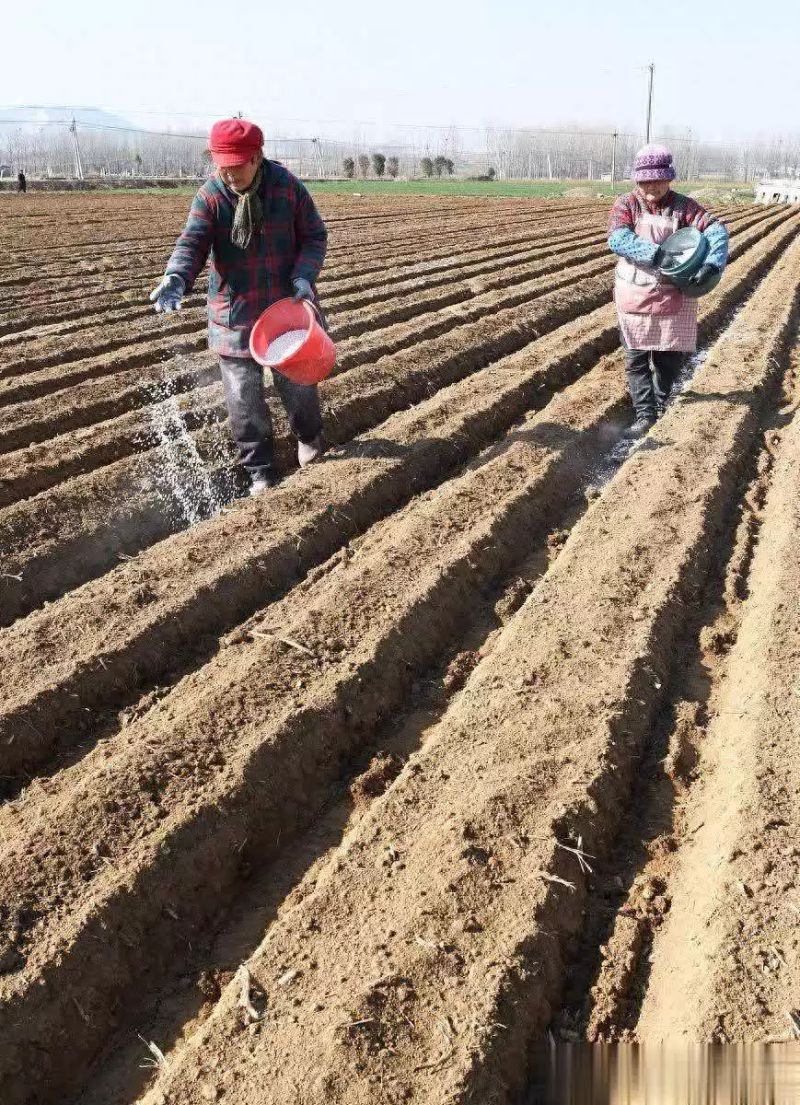
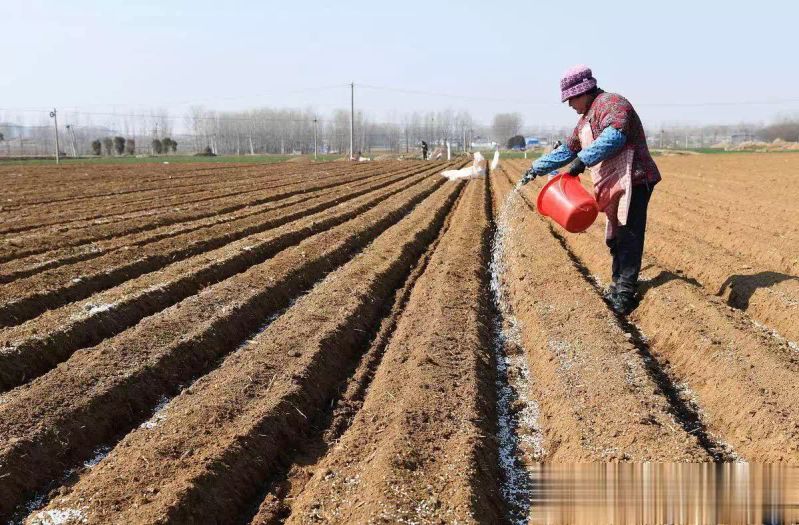
- fertilizers are combined with scavengers: base fats should be concentrated between scavenger lines, avoiding direct contact with the seeding of potatoes (range 3-5 cm) and preventing sprouts. Organic fattening of 1,500-3000 kg, phosphorus 30-40 kg, potassium sulphate 20 kg, or special fat for potatoes (15-10-20) 40 kg can be applied per acre to combat subterranean pests, such as thionphos-octate。
Iii. Attention to specifications and solutions to common problems
(i) attention
1. Rigid quality is strictly controlled so as to ensure the straightness of the gutter, the flatness of the lids, the flatness of the rims and the integrity of the earth, and to prevent the hysteria from leading to uneven ventilation in the fields and an imbalance in the distribution of water fertilizers。
2. The choice should be tailored to the local context, with priority given to the north-south of the plains, ensuring equal light for the plants; the slopes should be vertically linked to the slope, preventing erosion and improving water storage capacity。
3. Specification adjustments are to be gradual and, when new production areas or plots are grown, the optimal combination of parameters may be screened for different range and high comparison tests, depending on the local climate, soil conditions and variety characteristics。
4. In mechanization operations, specifications need to be adapted to agricultural equipment to ensure continuity and precision of the pick-up, seeding, fertilization, harvesting, etc., and to improve production efficiency and the quality of cultivation。
(ii) solutions to common problems
1. The problem of scavenger collapse: mainly due to the fact that the soil is too wet or underpressed at the time of the rise, the solution is to opt for a suitable scab (18-22 per cent of the soil's water content), to be suppressed in a timely manner after the scavenger, to avoid the retribution of plots, and to improve the soil structure through regular deep tilling。
Inadequate drainage: due mostly to low heights or too narrow ditches, it is necessary to increase the height of the canyons up to 30 cm or above, to widen the canyons up to 30 - 40 cm, while digging for edges, cross-cleavages and ensuring that the ditches are connected and the rain is dry。
3. Plantation depression: due to too small or too high density, should be appropriately increased to 80 cm wide, reduced to less than 5,000 hectares per acre, timely cultivation of soil and improved ventilation。
4. The problem of saplings: due to inconsistencies in the level and depth of seeding, the surface needs to be flattened and seeded using mechanical precision to ensure that the depth of seeding does not exceed one centimetre, that the soil is covered in a timely manner and that even conditions are ensured。
# potato growing #



