Overview
Sunflower is one of the world's four largest oil crops and the main specialty cash crop in my country and in my region, growing for a long time. The sunflowers are adaptable, characterized by drought-resilient, low temperature, salinist, infertile, water-saving, provincial, flexible, mechanized harvests, low planting costs, commodity rates and higher efficiency. They are suitable for the cultivation of sunflowers in areas of the central arid zone and the southern mountainous regions, as well as in areas where irrigation is difficult。
The world market for edible oils ranks third on the use of sunflower oil, and it is in a situation of oversupply. The sunflower oil is rich in unsaturated fatty acids, vitamins, etc., high nutrition and good oil quality, which contribute to human development and physical regulation, are good for the prevention of arterial sclerosis, hypertension, etc., and are referred to as “healthy nutrients” in the twenty-first century, which is the preferred food oil in developed countries and regions. The raw materials of our vegetable oils are insufficient, there is a large annual import of oil and grease, and the prices of food oil are rising every year. As the standard of living of the population improves, the shortage of food oil will continue to increase, and oil will be the agricultural product with the greatest market potential and the greatest space for development in the country. The consumption of sunflowers is a nutritious, healthy and leisure food that continues to grow as processing methods and formulations improve, and demand increases and markets expand. The size of the market and the prospects for development in the rice industry have been a powerful push towards the long chain of the sunflower industry. Sunflowers are used widely in food production and processing, making sweets, pastries, protein powders, etc., and making fun of international markets。
In order to increase the level of sunflower cultivation, the following is provided for sunflower varieties and cultivation techniques:
Oil sunflower species
S606: good sunflower hybrids for oil. Characteristic characteristics: the species have a fertility period of 105 days, a stock of about 170 cm, leaves 31, small and full of seed grains, high rate of self-conformation, 6. 1 g of grain weight, black skin, 81. 25% seed tolerance and 47. 8% seed oil. The variety is highly agronomic, pre-matured, full of seed grains, high oil-bearing, adaptive and medium-sized, and facilitates mechanized harvesting. In case of adverse environmental conditions, however, there are physiological fractions that have little effect on yields. Production level: average acre production of 250 kg, high-yielding plots of up to 300 kg. Acres leave around 4,500。
Ld1616 (as111): good sunflower hybrids for oil. Agricultural science and technology development co. Ltd., caffrey, beijing. It is marked by high production and oil-bearing rates, with test and demonstration production in the north-west group of the national sunflower test in 2006 and 2007 being the first of the participating species, with an oil content of 48. 4 per cent of the seed grains and no branches, but with relatively small poles, with a planting density of around 4,000 acres and prevention of inverting ... Production potential of over 300 kg/acre. Cultivated at 10°c activity temperature above 2400°c. Acres leave around 3,800。
Kws303: dayflower hybrids for oil. The species is well organized, staggered, inverted, adaptable, resistant to bacterial nuclei, resistant to black spots and mildly rusty. In case of adverse environmental conditions, however, there is a physical branch. Cultivation at 10°c and above 2,500°c is appropriate。
S31: oil and sunflower hybrids. The species is characterized by strong growth of seedlings, seedlings and flowers, strong rods, strong resistance to disease, reversals and high and steady yields. High-yield plots can be up to 300 kg/acre. Cultivation is suitable in areas above zen10°c activity temperature of 2400°c. Acres leave around 3,800。
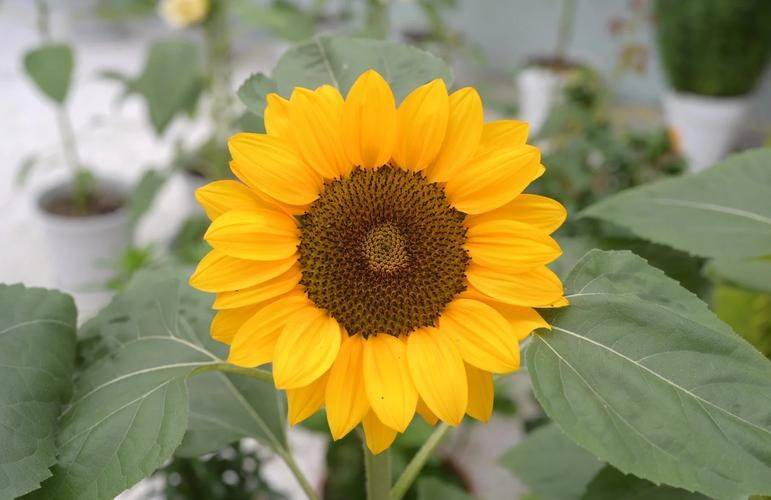
Kws203: oil and sunflower hybrids. It is marked by a high size of 100 grains, which can be used as a combination of larvae, but with a thick crust with a low oil content and a production level: acre production ranging from 240 to 250 kg. This is particularly appropriate for the silver north。
T562: a larvae with sunflower hybrids. The species is characterized by high yields and a large number of large grains, which in the region of 7. 5 g can be promoted as a pickle. However, the species is encountered and ploughs more than 25 cm. A combination of 1500-2000 kg of high-quality farm fatter per acre and 25kg of carbon ammonium for autumn fertilization. Water for winter by the end of november. In the harsh winter seasons, the tops of the early spring soil thaw when it freezes day and night, to the point where the ground is loose. The secondary salinization must be deep, heavy, and inhibited。
3. Good species selection: selection of hybrid species adapted to local conditions, abundance, high oil production rates, inoculation, disease resistance and new varieties approved by the autonomous communities. Seeds are more than 96 per cent pure, 97 per cent pure, germinate at more than 85 per cent and not more than 12 per cent water. Use of crop seeds after wrapping。
Seeding: 5 cm-10 cm temperature is stable at 8°c. Plantation was available from mid-april to early july. The principle established by the broadcasting period is to be broadcast at a later stage if normal maturity can be achieved。
Cultivation: there are two types of cultivation: single and double. The seeding process should be strung, with two to three seedlets per den being planted manually, and mechanical seeding being two to three times as high as theoretical seedlings. There should be sufficient seeding, which takes place at depths of 3 to 5 cm, and at depths of 5 to 8 cm when soil is not well. It's a backlash. Post-wheat replantation should be done free of cropping and followed by irrigation. Quantified species: 3,800-5,000 per acre, using sapling, 65 cm, 40 cm, 25-30 cm. Intercropping: intercropping with wheat, soybean, etc. Has a ratio of sunflower to intercropping crops of 2:6, i. E., two rows of sunflower, six rows of dwarf crops, which is conducive to ventilation and disease prevention. Cultivation of the membranes: using 80-90 cm membranes, the second membrane line, which is usually seeded in the form of pre-repeated membrane seedings, with the seeding sown between 70 cm, 35 cm, 25-35 cm, 2 cm, 3800 - 5,000 per acre。
6 fertilizer: base fat: urea ~75kg ~10kg per acre, ammonium phosphate 20kg ~ 25kg, potassium sulphate 5kg per acre. Fat contact with seeds is strictly prohibited to prevent burning. Fertilizers: inter-root fattening: at the beginning of the season, urea was followed by a combination of water. Leaf fertilizers: either 0. 3-0. 5 per cent of potassium phosphate solution with a urea leaf spray of 1 per cent, around 40kg per hectare, once every seven days and twice. In the early stages, platinum-depleted land is fertilized with 0. 2% boron or quick-impact boron soluble leaves, increasing the yield and weight of thousands of grains。
7 field management: seedlings, seedlings, seedlings: timely detection of seedlings after seeding of sunflowers and timely seeding of saplings. When soil sheeting is formed, the sheeting should be broken to the benefit of seedlings? Chinese grass: to t; line-health: 200 per cent" > 4 to 5 leaves once; now the rhesus tills for the second time in 15 days or so. Water: the flowering period of sunflower is the water critical period, which should be filled once and the slurry period irrigated twice. Should? The habit of long-constructed branches is that, in case of adverse environmental conditions, branches occur within the leaves, affecting the growth of the main tuber. To remove the branches in time. Singing and artificially assisted pollination: sunflower - 5 boxes of bees. In the absence of sufficient bees, two to three days after flowering, assisted pollination takes place two to three times。
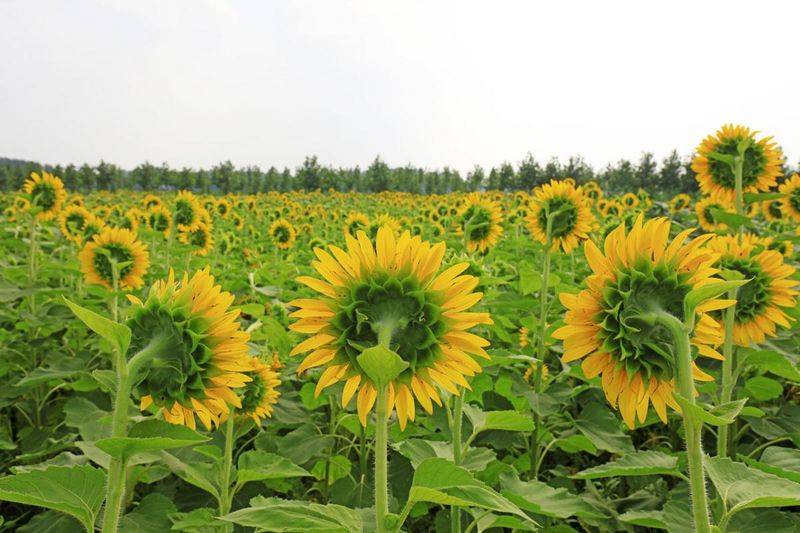
9. Harvest: the harvest is due. When the back of the florist is yellow, the rod is yellow, the tongue is defunct and the seed shell is hard, the harvest is possible。
10. Except for the sick and disabled: at harvest, the sunflower nuclei, froste strain will be taken out of the field, burnt or buried in a concentrated manner, and the strain will be strictly forbidden to remain in the field。
Overview of solar sunflower species for consumption (ld5009)
Ld5009 is the latest introduction of a long-carbed new species of american sunflower. It has broken down such shortcomings as poor yields of traditional long-pellets, low yields, and incomplete seed grains, leading to higher yields, better yields and better commodities, and a major breakthrough in the level of sunflower breeding。
The varieties are medium- and late-literate, 105 days of childbearing, 180 to 200 cm tall, an average of 3. 3 cm thick, 30 leaves, a wide range of adaptability, skin thinness, good seed production and easy to catch; and are highly resistant to disease and grow in the field. A flounder diameter of 18. 5-21 cm, an empty diameter of 0. 8 cm, a single plate of approximately 151 g, and a consistent display of the florist in daejeon, with a strong plate; on average, 18. 31 grams of grains weighs an average of 18. 31 grams, full of seed grains, high yield rates, natural output performance, average acre production generally of more than 600 kilograms, high-yielding fields of water fattening and well managed, and production can rise to more than 720 pounds; seeds of more than 2. 0 cm, 0. 9 cm wide, white stripes in black belts, blacker colours, one of the most popular commodity seed grains of the various firefighters, all the more so that they have been followed by a large number of firemen。
The species has now been tested in the main aluminum-growing areas of the country, including in the cities of naymun, xinjiang, gansu, ningxia and the north-east, and has received unanimous feedback from growers, seed distributors, and composters
Eat sunflower cultivation technology
The crop is more desirable in the case of crop varieties such as wheat, maize and melons. (b) water conservation: the amount of water is higher in the winter and the amount of water is smaller in the wind and sand. The earth is torn to the ground, and the earth is torn to the ground。
Foot bottom fertilization: 20 kg of urea in acre, 100 kg of phosphorus or 20 kg of ammonium, and 10 kg of potassium sulphate as bottom fertilization. They can also use 2,000 to 3,000 kg of organic fat for agricultural households。
3. Rationalally planted: growing in size, sowing?, 70 to 80 centimetres in size, 45 to 50 centimetres in size, sowing 3,000 to 3,200 acres and securing 2,500 to 3,000 acres。
4. Seeding time: 5 cm of warm daily seeding is required。
5 seeding: artificial seeding can be done by sowing at intervals of 1-2-1 grains per lavender; soaking must be done at a distance and depth, not suitable for ndent: 28pt; line-health: 200%"; field management: replanting seedlings: in case of lack of seedlings, timely replanting; chinese weeding: during the period of seeding up to the present period, weeding can be done at a depth of 2-3 times with a depth of 5-10 lbs; in the medium term, phosphate of 0. 1 to 0. 2% per acre can be sprayed? Heavy; drainage combination: in combination with reality, water is normally pumped 2 to 3 times at the present time? ? In the nursery age, what happens to right grey elephants and tigers (intersects) is timely prevention and treatment. Fifty per cent of methamidophos cream is used at 800 ml per hectare, 500 - 600 kg per water, more rooting of seedlings and spraying throughout the field。
Acquiring in due time: reasonable timing and timely harvesting. The harvest should be covered in time to prevent skin loss and deterioration due to prolonged periods of boredom, affecting the important hint of center
1. Sunflowers shall not be associated, which shall cause disease to occur, reducing the production of very highlight: 200 per cent" > 2 and sunflowers shall be double-leaf plants, which are more difficult to eat, and require that the seeding of sunflowers be sufficient to sow at depths exceeding 3 cm。
3. The sunflower plant is large, it is not appropriate to have more than 4,500 acres or to have more than 3,000 acres. And watch out for the scabs, or they'll fall。
4. Sunflowers prefer potassium phosphate, dev > 5 phosphorous fertilizers, sunflowers are insect-mediated pollination crops, and bees pollination can significantly improve the yield rate and, if necessary, artificially assisted pollination。
Six, sunflower? Locals should choose the appropriate planting period。
7. The sprouts of sunflowers have the habit of branching. When sunflowers are affected by adverse environmental factors, armpit malformations form branches. Such branches are uncertain and, for biological purposes, are not normally inherited from future generations。
8. Sunflowers are very sensitive to wheat herbicides and special attention should be paid to drift and residual drug effects。