


The editor was based on: agricultural boom, 100 per cent boom; farmers are rich and farmers are strong. As a major agricultural city in the new quest for comprehensive rural renewal and accelerated rural modernization, the village has always been bold and courageous. From the “calls of towns” model, the “choose house model”, to the “sunning model”, the hot soil continues to write a new chapter on high-quality agricultural development. In an effort to demonstrate innovative practices and pioneering power in the field of agriculture, the uyghur rural department of the uyghur rural department conducted an interview on the topic of “strength farmers”, focusing on the rehabilitation of rural role models, best practices and examples of poles, and spreading the moving stories of rural renewal, using the vanguard as a mirror, and following the example, bringing together the dynamism of agricultural power to promote stronger agriculture, more rural beauty and more cohesive farmers。
On may 19th, the news of rue's death. In the greenhouse shed of wang i village, mature tomatoes are full of branches and flourishing. Zhou junjiu, secretary of the party branch of wang yi village, the village director and head of the cooperative specializing in the production of fruit and vegetables in the zhou district, is looking at crop growth and directing farmers to scientific farming. Over the years, he has led the entire village to the development of the tomato industry, and has led the families to wealth by building special gardens, registering organic brands and creating a unique “tommy village”。
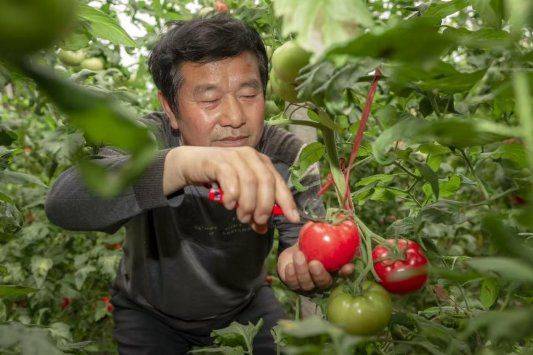
Organic tomatoes are popular
The village of wang yi has wide and flat roads, and the fields are also wide concrete roads. In the morning, journalists came to the village and saw that many of the roads along the shed were already parked, and that many of the tourist cars with off-site licence plates were used by tourists to enjoy the pleasure of picking。
"it's delicious. It's the best tomatoes i ever had." ms. Zhang, from aoshima, is picking tomatoes in the shed and has already picked a full basket。
Villagers zhou xinjiang's tomato shed attracted many people to pick, while he was busy teaching people how to pick tomatoes with scissors, while he was busy praising tourists who had picked tomatoes. It is now the time when tomatoes from the sheds are on the market, and recently, there has been a tomato pick-up festival in the village. Although prices are much higher than market prices, the citizens who come to pick them are still in contact。
In the shed, tomatoes are covered in a single vine, especially in the bottom of the vine, which is mature and attractive.” we have tomatoes here that don't do drugs, we don't use fertilizer, we don't wash, we just eat ... What's the difference between you and the market?” on the other hand, zhou shinji said that he would remove a tomato and hand it to the journalist. The whole tomato is very full, unlike some “empty” tomatoes in the market。
Zhou xinjiang, 56 years old, has grown tomatoes for more than 30 years, and is one of the representative figures in the tomato industry in the village of zhao wang. “one shed covers an acre and a half and earns around $50,000 this year, which is short of demand.” zhou xinjiang said that in the past, they had grown traditional tomatoes using fertilizers, pesticides and, in the past few years, using organic fertilizers such as fertilizers, bean cakes and microbiological fertilizers, in accordance with the uniform requirements of the village, it was true that tomatoes were growing with a growing sense of taste and higher prices。
“the living conditions of the people are better and food security is more and more important, and we have to keep up with the times and grow good, safe and non-hazardous vegetables.” zhou xinjie said, “the tomatoes in our village are famous, and the people who come to us to pick them are basically retrospects and sell them without worry.”
“now that agricultural production cannot be built behind closed doors, we often lead villagers out to study.” an example of this is given by zhou sunji, the secretary of the village branch, the village director and the head of the cooperative specializing in the cultivation of fruit and vegetables, who had previously planted 2,400 plants on an acre of their village, and who learned that this would easily lead to an increase in the shade cover to 2,000, which was much better, “this year will continue to enhance the safety of tomatoes' products, and will actively promote physical pest prevention techniques such as fertilisation of earth-based formulations, pest-killing lamps, clay sheeting and pest management, each setting up field production records and product detection records to better ensure quality”
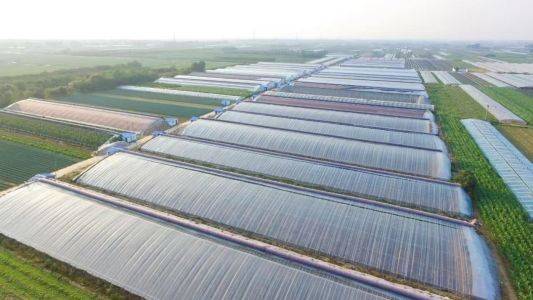
"new business card" for over 30 years
It's been more than 30 years since the village of zhuang was growing tomatoes. As a result of the efforts of successive generations of kings, the tomatoes grown here are now best sold throughout the country and become a beautiful local business card。
"this place is a place where we grow a lot of tomato skin, sour and sweet, and tastes so good." the fertile soil and abundant water resources on the alluvial plains at the intersection of the two rivers, located in the village of wang qian, provide a natural condition for agricultural development. Villagers in the village of wang yi have been dependent on traditional crops for their livelihood, and there are scattered families of villagers who grow tomatoes, but on a small scale, with no characteristics in their tastes and no optimism in their incomes。
In 2016, zhou junjio was inspired by the decision to lead the villagers to scale up tomato cultivation by “linking in” and moving out of a distinctive planting path。
“if we want to grow tomatoes on a scale, i've come up with a three-step strategy. The first is the establishment of cooperatives for the construction of tomato plantations; the second is the branding of tomatoes; and the third is organic certification for the development of brand farming.” there is a clear line of thought for the industrialization of tomatoes。
In may 2016, in the context of the management experience learned, zhou yingjii explored the model of industrial development of the “party branch + cooperative + base + farmer” and established a professional cooperative for the cultivation of fruit and vegetables to provide farmers with “one dragon” services such as seeds, procurement, packaging and marketing. From nothing, from childhood to age, over a year, more than 20 new sheds were added to the village of wang yi, and local banks have been active in providing credit funds to tomatoes growers, helping them to move on to the fast lanes of development。
As the development of tomato cultivation gradually improved, and in order to achieve scale cultivation and standardized management, zhou yingjii led the registration of the tomato brand “the one by the king”. “registration of brands, and the increased reputation of our tomatoes, attracts visitors and tourists from many areas within and outside the province.”
The year 2017 was a landmark year for the king's tomatoes. The year was marked by the successful organic certification of the tomatoes of the king, which has led to an increasing recognition of the reputation of the tomatoes produced by the king. Also since that year, the village of wang yi has organized a series of tomato harvest festivals to attract tourists and customers through village pick-ups and further widen the village's revenue channels, which have been held every year until the seventh, in addition to the two-year impact of the epidemic。
“now that more and more villagers have joined our professional cooperative, we have provided them with technical support and guidance from seed purchase to management, then packaging sales, and the income of villagers has gone from 20,000 to 80,000 now.” zhou shuji said。
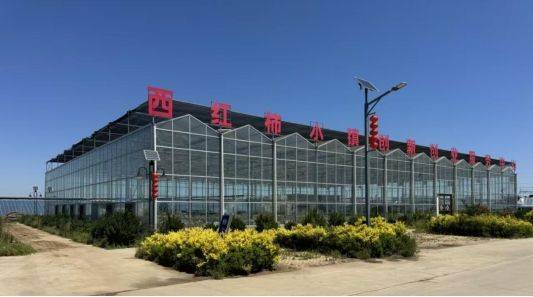
"the tomato" redfires farmers' lives
From the first huts to the more than 200 today's sheds, the tomato park, the "presentation of the king", has been rated as the "standards of quality and quality of agricultural products" in the city. At present, the village-wide shed produces 3 million pounds of tomatoes annually, with sales revenues exceeding $20 million and net per capita income exceeding $30,000, 20 times more than 35 years ago。
At the same time, cooperatives have been able to access online distribution channels by means of electrician platforms, and tomatoes are not only available for sale, but are also available online。
At the same time, zhou shuiji led the village's “two committees” to actively address the plight of farmers and to continuously improve infrastructure. Over the past two years, the village's “two committees” have vigorously promoted the management of sewage, the elimination of direct sewage and the improvement of the habitat; the rehabilitation of the piped water network, the introduction of water purification equipment to ensure the quality of water used by villagers; and the restructuring of the village-wide low-pressure line to address security problems such as the ageing of the village's internal routes. With the introduction of a series of practical initiatives for the people, the village's habitat has improved considerably, and the village's happiness index is increasing。
“in recent years, much has been done in the village to build beautiful villages. It began with the construction of the `village-to-village' road, followed by the completion of `household-to-house' and the hardening of the road. In addition, sewage treatment and the rehabilitation of dry latrines were carried out and roads were greened. Now the environment in the village has changed dramatically compared to before.” villagers zhou sing said。
In the search for common development and mutual enrichment. Zhou sunji turned small tomatoes into “happy fruit” for farmers. Today, in addition to the village of wang yi, villagers from a number of surrounding villages have joined a professional cooperative for the cultivation of fruit and vegetables, and tomato-specific industrial parks have been created。
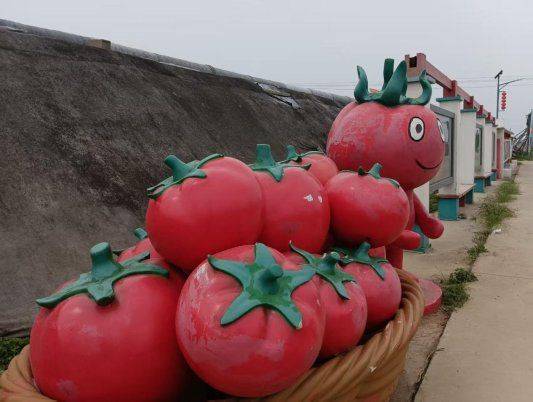
According to the manager of the yellow flag fort street, the street is an elaborate green fruit and vegetables brand that has evolved over the years. Under the leadership of wang yi village, four cooperatives, xingxiang, haitao, tsingqin and xingdong, have moved more than 1,000 acres of land, creating a new pattern of development along the main shantytown road and four parks. In the streets, the king's tomatoes, half-storey grapes, plateau watermelon, the inkport garlic, and the home tree... A fruit and vegetables brand came up, setting an example for modern farming。
“in the next step, we will also continue to explore new avenues for cooperative rural economic development in the new context, developing a growing village-based collective economy and making the way for the rich in the strong villages more and more accessible.”。



