In the southern russin khmer district, the garlic-tamp crop model was used, usually in late march, and in early may, the planting took place. Previously, seedlings had to be grown with large amounts of soil and time-consuming. The implementation of the cotton light-simplified cultivation project has allowed the breeding of 100 cotton seedlings through pearl rock base dens, and has reduced labour intensity and increased the productivity of cotton seedlings through the transfer of time and time. This is illustrated by a cotton nursery in the town of the temple of the pitai county, which is bred with a base of dens。
The spring season is approaching, cotton retailers everywhere are moving forward, and sales at the grass-roots cotton market are on the rise. Last summer, heavy rains affected cotton districts in lubei and north-west of my province, with some of the fields suffering from yellow atrophy and a general reduction in cotton production. What varieties are available for sale this year? More recently, journalists interviewed the deputy director of the shandong cotton research centre, a member of the cotton experts steering group of the ministry of agriculture, and the chief research fellow, dong chong, a scientist in the national cotton technology system。
Rational choice of cotton species according to the force of the earth and the stabbing
In recent years, a number of cotton farmers have indicated that, when buying cotton seeds, a number of cotton-species enterprises and sellers are recommending how high the yield and disease resistance are, leaving cotton farmers with no choice。
With regard to the selection of cotton-growing varieties, thong was of the view that as long as the varieties had been validated in recent years, they were safe to plant. But two things need to be noted, first of all, the choice of cotton produced by a formal manufacturer. “even the same breed, the quality of cotton produced by a formal manufacturer and by a small factory will vary.” according to the director of the board。
The selection of cotton seeds depends on whether the bag is marked with a “three certificate” (production licence, operating licence and quarantine certificate); second, the seed is dropped out to see the maturity of the seed, the more robust it is and the better it is; and third, the vitality of the seed is tested. Put the seeds in the water, wash them away, soak them up for half an hour, squeez the shell (care not to hurt the embryos in the shell), immerse the seed in red ink after thinning the general water for five minutes, and wash them out. Those who are not dyed say they are alive. Qualified farmers should also measure seed sprout rates, which are above 80 per cent to qualify。
Then, when cotton is chosen, production is not the only criterion of reference, but the key is to make a rational selection of varieties based on different geodynamic and planting systems. In the case of the cotton sector, such as the lussien mai, the garlic, the cotton crop, the varieties suitable for high-fertilization conditions, such as the rutts 36 and k836, which are ready early and suitable for inter-cropping, and the saline plots such as the beach and east camps, which require the planting of varieties resistant to premature decay and thinness, the varieties 28, rutsy, 37 and k638, which are highly resistant and resistant。
Rational selection of varieties, effective prevention shit
In recent years, cotton shrunk diseases and yellow atrophy have become important constraints on cotton production, which, according to tung, are more associated with the weather and are more severe in cold and rainy weather。
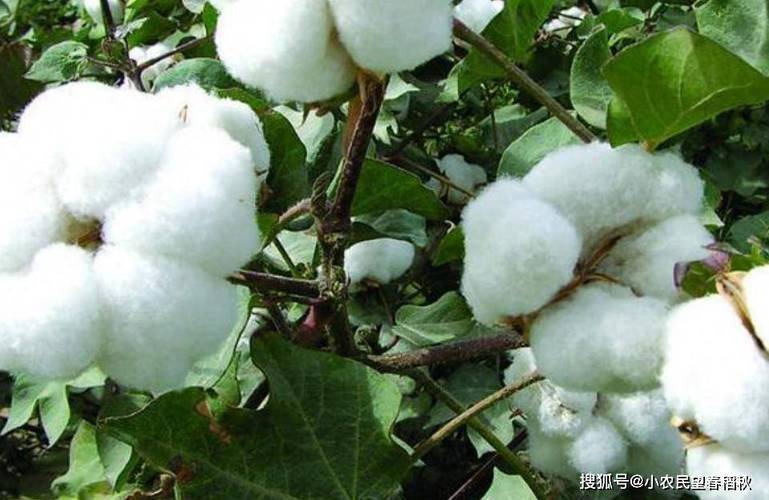
“at present, there is no good cure for the cotton disease, no biological, chemical, etc., and no good medicine, mainly to reduce the incidence of the disease by choosing resistant varieties.”
According to cultivation experience, early-haired varieties such as luttsu 36 and k836 are more resistant to the disease and post-fast varieties such as cotton 28, luttsu 37 and k638 are more resistant to yellow atrophy. Old cotton fields with more severe yellow atrophysics can be selected for such varieties as luttsu 28, lutten 37, k638。
“it is often a few characteristics that cannot be acquired at the same time, and those who are strong against yellow aging tend to be less resistant to seed and aging, and the production of resistant varieties is not necessarily high and flexible in their choice.”
Light and light cultivation is a new direction
Over the past two years, labour costs have risen significantly, while the persistence of depressed cotton prices has partly affected the incentives of cotton farmers to grow cotton, while later cotton cultivation has seen a reduction in labour use as the main option for cotton cultivation management。
“in the future, cotton should be grown in such a way as to promote light and easy cultivation, achieve a happy cotton planting by simplifying agronomic measures, reducing the number of jobs, replacing labour with machinery, and reducing the input of the labour force.”。
In the case of seedling management, which used to be sow in large quantities, seedlings are produced through a combination of seedlings, seedlings and seedlings, and now seedlings are promoted in precision, and seedlings are reduced by one, and seedlings and seedlings are reduced by artificial inputs. At the same time, the whole branch can be simplified through sound chemical regulation。
Expert business cards
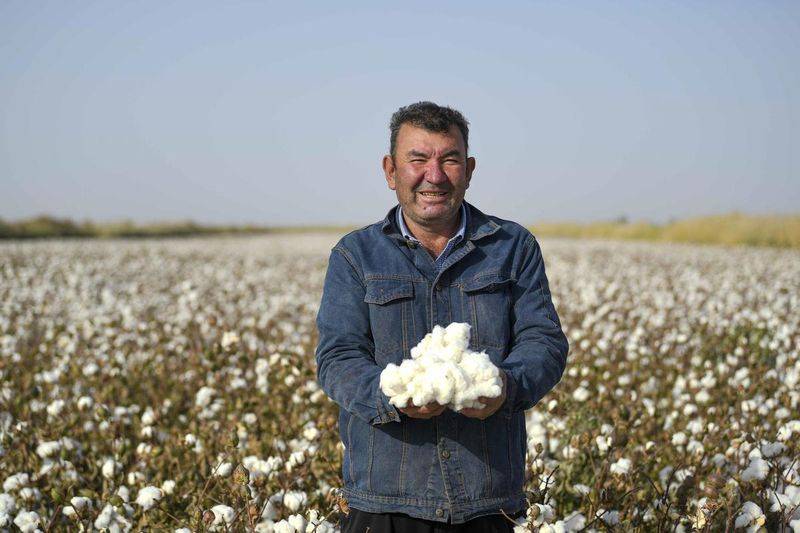
Zhong xiaozhong, deputy director of the shandong cotton research centre, member of the steering group of cotton experts of the ministry of agriculture, and scientist at the national technical system for cotton industries。
Since 1991, research on the physiology of cotton cultivation and the industrialization of seeds has been on the front line. More than 10 scientific studies have been conducted at the national and provincial levels. Two prizes have been awarded for the advancement of science and technology in shandong province; three prizes have been awarded for the advancement of science and technology in shandong province; one prize has been awarded for the advancement of science and technology in the agricultural and pastoral sector in shandong province; and one prize has been awarded for the advancement of science and technology in shandong province. In 1998 received the fifth shandong youth science and technology award, in 2000 received the first shandong middle youth science and technology innovation award and in 2001 received a special government grant。
The ministry of science and technology, the ministry of agriculture, “quality cotton base science and technology services”, and the agricultural restructuring, “small cotton nutrition seedlings, transfer machinery and technological research”, are currently chairing five topics, including the ministry of science and technology's “results transformation fund”, the ministry of agriculture's “quality cotton base science and technology services” and the shandong natural science fund. The main areas of research are high-yielding and high-quality cotton cultivation, cotton resistance, cotton induction and cotton seed production and processing。
Elements of major cotton and planting techniques
I. Rumumro 28
Rutong research no. 28 (formerly ru272) is a conventional new type of anti-worm cotton produced by the shandong cotton research centre in cooperation with the institute of biotechnology of the chinese agricultural institute. The species was nationally validated in 2006。
Characteristic characteristics: lumong rt. 28 is prematured, has a stable hair type, has a moderate seedling, has a healthy plant, is nutritionally coordinated with reproductive growth, and is prematured rather than premature. The branches are moderate in size, looser in size, towery in size, strong in length, medium-sized in blades, fissure in depth, permeability, small and weak, easy to plant management, flower bells, bells, bells, bells, bells, bells, bells, bells, bells, bells, bells, bells, bells, bells, bells, bells, bells, bells, picks, flowers are high。
The main elements of planting techniques: membrane cover, late-drying, adequate seeding before seeding, suitable planting for 20-25 april of the normal year of the yellow river basin. In high-, medium- and low-fertility cotton fields, planting density is appropriate at 2,500, 3,000 and 3,500 units per acre. Re-apply organic fertilizers, increased phosphorus, potassium fattening, re-apply flowers at the end of june, early bell fertilization, ordinary acres urea application 11-12 kg, re-apply urea application around 20 july, 5-7 kg of acre urea application, and, in the event of the emergence of a defertilized seed, use of leaf-covered fatting and timely watering in the event of drought. In due course, the soil is retraced to prevent a mid-term fall. Care is taken to control the receptivity and control, and the principle is small and numerous. Second generation cotton bellworms are generally not subject to prevention in the year in which they occur, and one or two times in the year in which they occur, and three or four generations in the case of cotton bellworms, as appropriate, in the case of cotton aphids, red spiders and blind elephants。
Ii. Rumongsu 36
Rumongsu no. 36 (formerly known as lu777) is a new conventional insect-resistant cotton variety, which was tested in shandong province in 2006-2007, was tested in 2008 and was validated in shandong province in march 2009。
Characteristic characteristics: more compact, barrel-like, well-bred, fast-growing, dynamic and robust, fatty water, rain-resistant, low-bulletting, easy to manage, medium-sized leaves, larger bells, egg-shaped, flower-belld, strong ringtone, early maturity, vomiting clear and concentrated, easy to harvest, high pre-frost rates, high resistance to cotton bell bugs, and resistance to dead and yellow aging. The shandong province has a two-year trial average of 123 days for full-childbirth, 7. 7 for the first branch, 107. 8 cm for a single branch, 14. 1 for a single branch, 18. 3 for a single bell, 6. 1 g for a single bell, 43. 3 per cent for a strip, or 10. 5 g for a pre-fouling rate of 97. 4 per cent。
(a) plantation technology: (i) lately: ruttung-36 flowering bells are concentrated, pre-cooked and broadcast at appropriate late hours. A live broadcast of cotton fields was generally seeded around 20 april, while nutrient-based seedlings were generally planted in cotton fields in early april and in early may. Scrambling, scrambling. (2) appropriate planting: luyonx36 is more compact, with an appropriate increase in density compared to conventional cotton varieties. As a general rule, 3200 to 3,800 units per acre, depending, inter alia, on the strength of the earth and the level of management, the lower limit is desirable for the more fertile plots and the upper limit is applied for the more generally or better managed ones. (3) balanced application of fertilizers: re-activation of organic fertilizers as bottoms, increased application of phosphorus, potassium fertilisation, breeding of strong seedlings and installation of fertile shelf. At the end of june, flowers should be re-applied and fertilized early, ordinary acres should be followed by urea 10-12. 5 kg, urea 5-7. 5 kg should be applied again around 20 july and leaves should be sprayed at a later stage. Drought should be watered in time to ensure that the month of august will pass. (4) moderation control: ruttsu 36 is robust and resistant to fattening, and chemicalization control should be based on the principle of a small number of times before and after weight, which should be appropriate. It should normally be followed by three times during the bud, during the flower season and at the top. (5) scientific treatment of insects: the second generation of cotton bellworms should be protected against ovulation during the peak of spawning. Iii. Four generations of cotton bellworms were treated one or two times in light. We're going to get rid of cotton aphids, cotton red spiders, blind elephants, etc. Eyeworms, when dealing with red spiders, should be careful to see through cotton。
Iii. Rusumei 37
Rumongsu no. 37 (formerly known as ru253), is the traditional new type of anti-worm cotton produced by the shandong cotton research centre with a high-yielding, high-anti-yellow fertility line of ru9136 (preparation 2067 x tao 621), and a genetically modified anti-worm cotton class 99, a father-breed hybrid. The varieties, which were finalized in 2009 through the shandong crop varieties commission (lunon review 2009024), have the characteristics of bell-fixing, disease-resistant, drought-resistant, infertile and field management。
Characteristics: luttsu 37 was strong and flourished throughout her reproductive life. (c) tube type; large, deep green, strong function of the leaf; bell ovulation. The total fertility period is 129 days, with 7. 2 branches of the first fruit, 108. 2 branches high, 14. 4 fruit branches strong, with an average of 22. 9 single bells, 5. 6 g single bell, 41. 3 per cent clothing, 9. 5 g seed, and 90. 3 per cent before frost。
Technical highlights of cultivation: ruym research no. 37 is suitable for spring live broadcasting, membrane cover or seedling transfer, especially for dry and dry sand cultivation. Spring broadcasts usually take place around 20 april, with an average seed density of 3,500 to 4,000. I'm going to use my feet to get fat. Take care of strict control during childbirth. Second generation cotton bellworms are generally not treated, and other pest control is the same as the general anti-worm cotton varieties。
Iv: k638 (41 lumongsu)
K638 (no. 41 lumong) is a conventional new strain of anti-worm cotton produced by the shandong cotton research centre, which was validated by the shandong crop varieties validation commission in 2010. The main features are good seedlings, disease resistance, high insect resistance, large bells, well-established and high yields。
Characteristic characteristics: medium- and early-maturized species. Good seedlings, strong seedlings, faster growth in the pre-middle period and medium size leaves. The birth period is 126 days, 105 cm tall and the size of a tower. 7. 3 branches of the first branch weighing 6. 3 g, bell ovaries。
Plantation technology elements: this can be replicated in the main cotton-producing areas of shandong province, especially for salin and dry areas in cotton areas such as north-west and north-east lubei (east); seeding at the right time, membrane cover, medium density (2,800-3500 units per acre), rationalization and timely closure. Other management measures are the same as in daejeon。