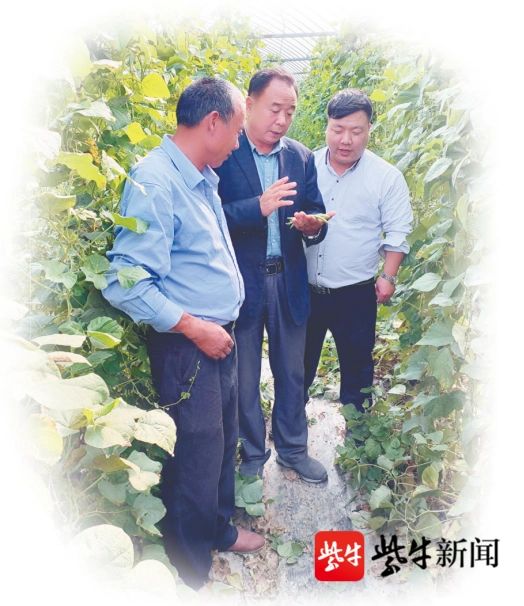
The farmers who grow cucumbers in rural gardens and open fields are aware that cucumber vines are growing rapidly, with large gaps in the fields of the pre- and post-shrunk areas, and that there are still a lot of idle spaces in the fields. Many farmers focus only on cucumbers, leaving these open areas with weeds, wasting fertile land in vain, not only reducing a season's harvest, but also increasing the burden of field management by increasing the vulnerability of weeds to pest disease。
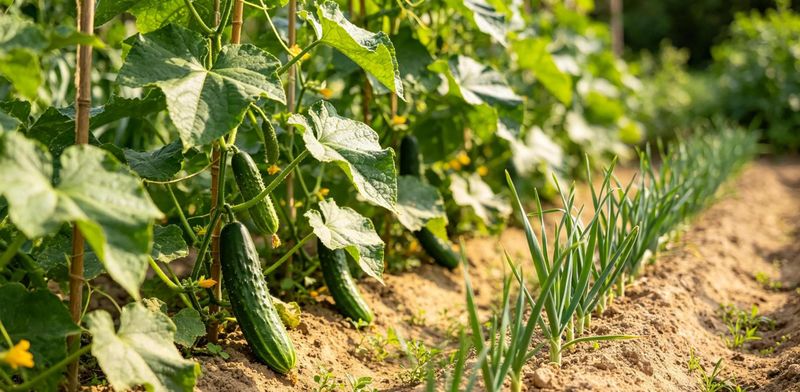
The year-long home gardening exercise has led to the identification of several rational crop models suitable for cucumber land. No new plots are needed, suitable crops are grown using cucumber fields that are vacant, which serve as a mutually reinforcing protection against pests and diseases, and there is a natural decrease in the number of medicines used in the fields, which can save a lot of agricultural expenses and produce more crops for a season, provide more income to farmers, and allow family gardens to conduct themselves。
First of all, let us be clear about the fundamentals of the cucumber field, which must not be planted blindly, and which is not only unhelpful, but also competes for nutrients and shades of light。
The first point is to control the planting space. Following cucumber planting, the pre-growing seedling plant is small, with the most abundant inter-crops and vacant areas, and this period is the most suitable time for planting short crops. When cucumber vines are slowly stretching up and the leaves are growing, it is important to ensure that the crop is not completely covered by cucumber branches, giving priority to semi-vaginal, low-planted and short-lived varieties。
The second point distinguishes between deep roots. The cucumbers belong to shallow roots, which are not deep in the earth, and absorbent nutrients are mostly concentrated in surface soils. Accompanying crops are selected as far as possible, with deep and shallow roots growing in error, without competition for the same layer of water fattening resources, with full utilization of the upper and lower layers of nutrients in the soil, and with no impact on the strength of either crop。
The third point follows the principle of customary complementarity. The selection of crops and cucumbers with natural deworming and infestable pests, the use of their own odours to drive out common pests, such as small insects, aphids and vegetables, reduce the likelihood of cucumber being planted with disease, the scarcity of pests and diseases in the field, the fact that farmers naturally do not have to spray pesticides more frequently, produce cucumbers with a better taste, and make daily care less。
This is followed by the sharing of several of the most practical methods of cucumber cropping in rural areas, with the highest success rates and the availability of family members, all of which are practical field exercises, simple operations and no complex techniques。
First type: cucumber liners with garlic
This is the most secure combination of farming households in rural areas that has been in circulation for many years and is used by almost all households and is extremely useful. The special spicy smell of garlic itself is a natural shield for many pests in the field, which can effectively drive away the aphids, red spiders and various subterranean pests that are the most likely to breed cucumbers, significantly reducing the probability of cucumber frosting and white powder。
The timing of planting is simple, and when planting cucumbers in the spring, evenly soding garlic is sufficient on the open ground between the cucumber poles, taking advantage of the gap in the ground. There is no need to deliberately reserve large open areas and plant along the sutures of the field. Garlic is low, does not hide the cucumber light from the top, nor does shallow leaves affect the climbing of cucumber vines。
During the growth process, the garlic takes root and the cucumber is shallow, and the two do not compete for fattening, so that normal watering and fatting in the fields can conserve both crops. By the time cucumber enters the cucumber season with a large amount of pick-up, there will also be a substantial increase in the amount of garlic grown between the lines, which can be harvested directly for consumption, and when it matures, it will also yield garlic, which will be sufficient for the daily food of the family, which will be sold and sold on the market, and a steady income。
It is also particularly difficult to manage everyday, with garlic being dry and well fed, without having to manage it alone, and with cucumbers to cut the pine soil, without adding too much work to the whole journey, and using the open ground to its full potential。
Second: cucumber empties and onions
The small onions grow with a short cycle, with rapid growth after seeding, and have a strong anti-vaginal capacity, especially suitable for planting below the cucumber shelf and for idle areas between cucumber plantations. The onions also have a strong and spicy scent, which is capable of dispersing flying insects in vegetable gardens, reducing the presence of pests close to cucumber vines for spawning, and reducing the growth of pests from their source。
Farmer planting is not done with the intent to grow large areas, and scattered cultivation is most appropriate. Once cucumber planting has been completed, onion seed may be cast in the open areas around the edges of the field, around the root of the cucumber, or directly into the seedlings. The small onions are active on the ground, do not crowd out cucumber growth space and do not compete with cucumber for its main nutrients。
By the time the cucumbers are not big enough, the onions can be collected in batches, easily. Rural families are forced to cook and cook onions on a daily basis and are fully self-sufficient in their own gardening, without having to pay for it. Free plots are used to their full potential, without wasting an inch of land, easy to manage and easy for new farmers。
Third: cucumber cucumber cucumber sprouts
Many farmers feel that cucumbers and bean horns are vines and can't be planted together. In fact, the combination of cucumbers and bean horns is particularly good when they control the place and distance of planting. When planting, be careful not to plant the cucumbers, plant the bean horns in the spare places on the outer side of the cucumber field, and build separate and easy shelves so that the two vines can climb and grow in different directions。
The roots of the bean are deep-rooted, the cucumbers are shallow, eutrophication is not conflicting, and both crops can flourish when the field is well ventilated. Moreover, the variety of field crops, a more balanced field ecosystem, and the large area of monocropping prone to outbreaks of concentrated pests can significantly reduce the number of mixed fields and the frequency of pesticide use。
By the time cucumber picks enter the middle and late stages, the bean bean horns are just in the middle of the season, the harvest is at the peak of the wrong harvest period, the farming activities are more rationally organized, they are less busy, they are collected in bulk and easily managed, and they are harvested in the field in one season。
Fourth: cucumber vactuums for various types of cabbage
Temperatures for spring and summer seasons, such as guacamole, lettuce, cabbage, etc., are particularly suitable for planting free land in cucumber fields. This type of vegetable has a short growth cycle, with more than 20 days to more than a month to mature and grow quickly and produce results。
The cucumber seedlings are well-lighted in the fields, so that leaves and vegetables are planted in the open areas of the rows, and the light is long and strong in the previous period. When cucumber vines grow to cover their shades, the cooler environment is more suitable for leaf-breeding, and it is not easy to grow old, leaf-breeding, green and fresh, and far more ablaze than tanned vegetables。
Farmers are able to sow in batches, harvest in batches, eat one and then plant another, and harvest fresh green leaves on a sustainable basis throughout the cucumber planting cycle. Sufficient daily household food is available and surplus can be sold in the near future, and the resources of unused land in the fields are fully utilized so that every inch of the land can yield benefits。
After a practical combination, we will share with our farmers' friends the practical experience of day-to-day field management of cucumber land, so that both crops can flourish and become less problematic。
First, rational control of field fattening. During cucumber cucumber berries, the amount of water needed and the frequency with which to catch fat were greater. As much as possible, farming households use small and slow water to avoid heavy flooding that causes water to accumulate in the field, which not only tends to decompose the cucumber roots but also leaves the crop in the form of rotten yellow leaves. Priority is given to the pursuit of fertilizers, which are consummated organic fertilizers, which are warm and persistent, meet multiple crop growth needs and produce better vegetables。
Secondly, weeds should be cleaned in time. Whatever crop varieties are planted, weeds must be uprooted early in the field. Weeds grow at a fast pace, take nutrients and moisture from the soil, and also block venturing passages in the fields, which tend to breed bacterial pests. The day-to-day treatment of cucumbers is accompanied by the cleaning of weeds, the maintenance of clean and clean fields and a better crop-growing environment。
Third, comb the cucumber vines in time. The cucumber vines grow at a fast rate and are easy to climb indiscriminately, blocking the light of the next crop. Farmers are required to prepare their vines in a timely manner, to carry them to the shelf in a reasonable manner, to soften the overly dense branches, to ensure a smooth flow of air from the fields below, and to allow for normal photocooperative use and the smooth growth of the plant。
Fourth, strictly control the field. As a result of the selection of the plant-preventive model, the use of chemical pesticides is reduced on a daily basis by focusing on physical pest control and field cleaning. If a small number of diseases and pests do occur in the fields, the selection of low-temperature agricultural assets, avoiding the peak spraying of crops, and ensuring the safe consumption of their own fruit and vegetables are consistent with current trends in green cultivation。
Many farmers have maintained a single-planting model, with only one crop on a field, prior land wasteful resources, and later harvests fixed, making it difficult to increase income. In fact, the simplest way to increase yields is to make more money in rural areas, not blindly expanding the area under cultivation, learning to make rational use of idle plots and to match each other with crop growth habits。
The cucumber land itself is rich in soil, abundant in water fertility, free land and simple combinations for the planting of suitable crops, with no additional investment in seedling costs or time spent on managing them, relying on natural crop practices to prevent each other, reducing the cost of planting inputs, harvesting a wide variety of agricultural products in the field for one season, adequate household use and increasing the availability of surplus products, which are also cost-effective for ordinary rural growers。
Topical discussion
What crops do you grow in the land, folks? Have you ever tried a good combination? The sharing of your field farming experience in the comment area and the exchange of practical field techniques are welcome。
A sweet hint
Farmers use cucumber cropping to be careful not to plant in high density, to reserve reasonable growth space and to avoid multiple crops constraining each other. In order to achieve better harvests, suitable crops are selected on the basis of their own field lighting conditions and soil conditions, and a gradual attempt is made to plant them in combination with local climate-adjusted management。