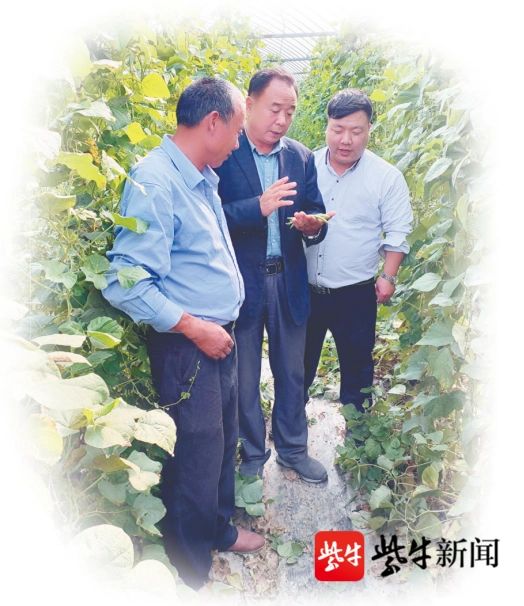
In the countryside, whether it be a small garden behind a house or an open-air garden, cucumbers are an essential family vegetable. In the spring, we sowed the ground, hoping that the vines would climb over the shelf, and we would produce a fresh and smooth cucumber, which would be enough for our family's day-to-day cooking, and that the rich ones would give it to their neighbours。
Many farmers grow cucumbers every year and experience the same anxiety every year. The vines grow so fast, the leaves are laid so full that they look so happy, and when it comes to the melons, either the flowers grow less and the cucumbers grow less, or the cucumbers bend and twist, and their heads are so small that they are prone to yellow and early decay, and they spend the whole spring and summer, and the harvest is flat and flat。
The first reaction of many people in this situation is insufficient water, low fertilizer, and then frequent watering, spreading nitrogen-based fattening. As a result, the more the vine grows, the more all the nutrients feed the leaves, the less energy there is to bear the guacamole, and the more it turns into a situation in which the guacamole is not formed。
I spent 30 years in the field looking after vegetables and talking to a lot of old farmers who grow vegetables around them, slowly understanding the habits of cucumber growth. In fact, the cucumber plant, which wants to produce a steady harvest, has a much more condensed cucumber, and does not use the blindness of fattening. Following the cucumber growth pattern, the extra useless branches are cleaned up in time to concentrate the nutrients on the branches, so that the vines can be filled with cucumbers, and then picked。
I. Understanding the growth habits of cucumbers and distinguishing between growth and management
Most of the cucumbers that our farmers grow from their homes are of infinity type, and as long as the temperature and water conditions are right, the vines can climb up and grow, and the sprouts will come out of the armpit position。
The advantages and disadvantages of this growth feature are that it should be managed in such a way as to sustain the melon and prolong the pick-up time; the disadvantages are that, if left to its own limited nutrients, they can be consumed in large quantities by numerous side branches, rolls and useless branches. In particular, during the seasons of fertile soil and abundant rainfall, the cucumber population is particularly marked, where nutritional growth overstretchs reproduction, and it is natural that it is difficult to grow normal flowers。
It is also important to make it clear here that cucumbers of different kinds are nucumbers with fine differences in growth habits. The old varieties of cucumber, which are common on the market, rely mostly on the condensation of chickens, with weak side branches, and some of the improved varieties, which are more heat-resistant, make it easier for the chickens to give birth to female cucumbers during high summer temperatures。
Our usual farmers grow their own food without deliberately distinguishing between complex varieties and remembering the most practical methods of judgement. In the case of saplings, which are weak and fertile, the conservation of the main chickens is the main priority, with fewer side branches; the soil is thick and abundant, and the cucumbers grow so thick that they can be properly preserved with a few strong side branches to support the melons, with flexibility to adjust their management methods, far more than the dead use of hard tools。
Ii. Basic management of the seedling season, starting with the growth rhythm of the seedlings
Many farmers do cucumbers only when the vines are crawling over the shelf, but the right controls start slowly from the cucumber sapling stage, starting at a young age, making it easier to manage later。
When cucumber seedlings grow to five or six real leaves, the roots are stabilized, and they begin to enter the fast-spreading chicken phase, the first thing to do is to wipe out all the sprouts, tiny sprouts, close to the ground. There is no need to keep all the sprouts within 30 centimetres of the general distance from the ground. These low branches, even if they grow at a later stage, can hardly produce good cucumbers. They are also close to the ground to cover ventilation, with a high level of moisture in the field, which tends to breed bacterial problems and affect the healthy growth of plants。
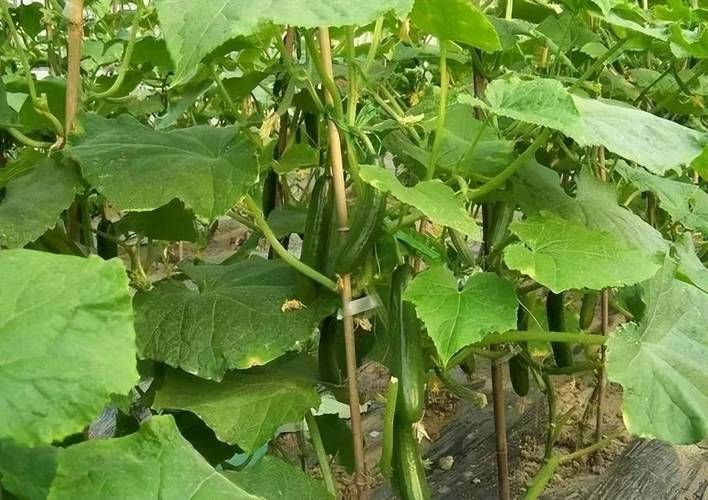
In addition to this, the swabs that grow during the growing of the vines must be drawn off in time. Many farmers feel that the rolls must help the cucumber climb up the shelf and cannot be cleaned, but they do not have to. The swab itself does not produce flowers, it only consumes nutrients in vain, and we grow long-term poles, and we tie the vines and vines to the frame with a small hand, which is a perfect substitute for the swab, and cleans up the swabs and saves a lot of nutrients for the main stem。
When cucumber saplings grow to about 30 centimeters and are clearly able to climb, they must be built in time. What is most common in the countryside is the construction of a frame with a pole, which, after being well-established, binds the vines along the shelf in the middle of the morning in order to avoid the wild spread of the vines on the ground, entanglement and crushing each other, leading to early growth, both in terms of saving the space to grow and in terms of giving the leaves even access to light。
The seedling season as a whole is governed by the principle of strong and strong control, with less frequent water being poured, soil microdrying is more conducive to deep-seated root systems, and nitrogen fertilizer use is reduced appropriately to avoid early and weak growth of small seedlings, which are well-developed and the bottoms of flowering melons are well prepared。
Iii. The whole branch of the cranium is the key to productive enrichment
The growth rate of cucumbers has increased significantly and the growth of their sides has increased. This is also one of the most critical stages in the management of vines and vines, during which the final harvest has largely been established。
The most practical aspect of our home gardening is the one-and-a-tail method, which is simple and suitable for the vast majority of the population. Only one strong chicken will be retained as the core result branch throughout the journey, and the side branches from the upper part of the chicken will have to be selected。
The long, small branches, which do not produce the female flowers, are cut off directly and are not left in their entirety; only the strong ones, which have grown on the top and are capable of normal breeding the cucumber, may be kept in small quantities. The side branch of the product, which was retained, could not be allowed to grow indefinitely, leaving one or two cucumbers on each side branch, leaving two or three more functional leaves, then cutting off the top growth point, preventing the side branch from continuing to extend its length and locking the nutrients for the sequestered fruit。
A number of new farmers are prone to a mistake, and it is always felt that the more branches are left, the more cucumbers are formed, and all of them are kept. The final result is a lack of ventilation of the internal leaves of the vines, a lack of sunlight and poor field ventilation, which not only increases the number of deformities, but also accelerates the ageing of the plant and early cessation of the melon, significantly reducing the pick-up cycle。
Under normal conditions, gardens are inspected every seven or eight days to clean up the new, useless sprouts in a timely manner and not wait for the long branches to be long before they are cut. The smaller the branches are removed, the smaller the wound from the plant, the faster the healing, and little impact on the overall cucumber growth. Cutting is done as much as possible in the clear weather, which drys the air, allows the wound to dry quickly and heal, and reduces the adverse effects of wet air in the field。
Iv. To strike the top in due course and rationally, and to stop the expansion of the macro-aided melon
In addition to the daily twigs, the proper cucumber-nurse hearting is an indispensable step in the control of the harvest, a step that many farmers have ignored, leading to the long and slow concentration of cucumbers。
It is not too early or too late to hit the top, and it is counterproductive to do so. If it is too early, the main chicken does not produce a sufficient number of smelts, and force-shocking directly reduces the length of the result; if it takes too long, the vines climb to the top of the shelf, remain uncontrolled, nutrients continue to flow up, and the cucumbers that are already sitting in the lower part grow at a slower rate and are prone to falling flowers。
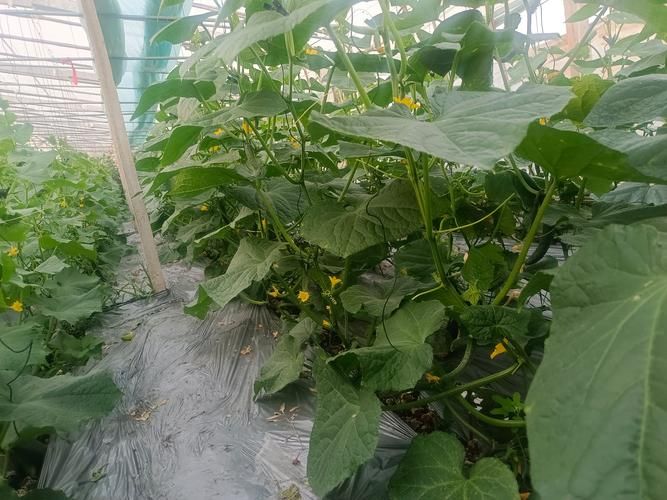
The cucumbers that are grown in the open garden can be used to top the chickens when the main vines are able to climb to the top of the stairwell, and the plant is firmly contained in three or four small cucumbers, and the whole body is stable. The method of operation is simple, with only two or three centimetres of tenderness and growth point at the top of the vine being squeezed lightly with the hand, leaving the functional blades at the bottom of the top intact, and not triming the healthy vines。
Once the main chicken has been put to the top, the nutrients that would have been transported upwards will cease to flow up to the top, and will be diverted back and spread, concentrating on the cucumbers that have grown in the middle and lower of the vines. This will significantly accelerate the growth of the cucumbers, so that the cucumbers can grow evenly and evenly。
For some cucumber cucumbers, which had been growing late and had previously been weak, it was possible to delay the cucumbers, as appropriate, and to maintain the vines and strong plants until they had recovered their strength, before running the tops. In the event of prolonged high-temperature droughts, early and light roofing can also be used, where appropriate, to reduce the unprovoked consumption of nutrients and nutrients and to guarantee normal growth of the melon fruit。
V. Equipment and equipment of a digital instrument
After the cucumbers successfully entered the poignant season, the control of the cucumbers continued unabated, and the core task of this phase was to protect the cucumbers, slow the growth of old plants and achieve continuous harvesting。
First of all, the old leaves, yellow leaves, and sick leaves must be removed from the base of the plant. The lower leaves that grow before the cucumber grow, slowly aging over time, have been reduced significantly in light co-operation capacity, not only to contribute to growth, but also to shield the surface from ventilation and build up moisture. The removal of the relevant amounts of these old leaves will improve the ventilation of the bottom of the vine and reduce the variety of problems in the field, as well as save the new leaves and guacamole on the nutrient supply。
The second is a rational mix of water fertilizers, which increases the demand for cucumber nutrients after the guacamole period, at which time the use of single nitrogen fertilizers will be reduced, with a focus on supplementing balanced nutrients and contributing to the growth of the cucumber fruit. The application of the dry wetting principle, the drying of the surface of the soil and the subsequent flooding of the soil, the inhibition of heavy flooding resulting in the accumulation of water in the fields, which can easily cause a lack of breathing on the roots and the occurrence of a rotten yellow leaf. Once each cucumber has been harvested, the thin nutrients are replenished in a timely manner and the nutrients consumed by the plant are quickly replenished, prompting new females to grow quickly and continuously。
There is also a need to collect ripe cucumbers in a timely manner, and many farmers are trying to keep them longer and bigger. Over-emerging old melons on the vines will significantly suppress the growth rate of the subsequent new melons and slow down the whole plant. Early harvest of fresh cucumbers that meet food standards will ensure both a soft taste and a reduced burden on the plant, which will facilitate the smooth growth of the next cucumber。
Vi. A common area of error in crop management and avoiding as much as possible the planting of vegetables in farming households
Too many farmers have been able to grow their vegetables in the fields for many years because of the poor way in which they manage them, which has delayed the production of cucumbers, and the most common areas of error are organized today, so that they can avoid growing as much as possible。
First, it's all about seeking the number of branches and not having to trim them. The excess branches will only spread between the nutrients and cause the scavenging to grow, and it is the right way to grow。
Second, no top-to-top control at all times, leaving the vines to grow. It is difficult to concentrate on the production of good-quality guacamole because of the infinity of the vines。
Thirdly, the bloated and fertilized seedlings are too early to flourish. The flimsy cucumber roots are weak, late-sitting capacity and prone to inversion。
Fourth, it'll be watered and fat. The cucumber branch has been trimmed with fresh wounds, and the short-term application of water for fertilization tends to affect the healing of the wounds and is then properly managed after two or three days。
Fifth, uniform cutting management, regardless of variety. The overcuting of the species of chicken-eating melons and the large-scale retention of the species of mackerel are detrimental to normal harvests, contrary to crop growth habits。
Vii. A rational view of field management is a good harvest
In fact, cucumber cultivation does not have any kind of incomprehensible know-how, nor does it have any shortcuts for easy and easy yields, and all good harvests are replaced by day and day-to-day care in the field。
The experience of managing the growth of vines and vines, which has been passed on by the old vegetable farmers, is a small sum of decades of work in the field, and the absence of a fancy set of roads is a practical way of matching the actual conditions of rural cultivation. Our farmers grow their own food without pursuing new and sophisticated planting techniques, solidizing the basics of germinate, wiping and twig, adapting to the natural growth patterns of cucumbers, rationally regulating the supply of water and fertilizers, and keeping the fields radiant enough to produce high-quality and productive cucumbers。
More and more people now prefer to grow cucumbers in their own homes, on the balcony, whether on a large-scale open-air basis or on a small-scale, home-based basis, a method that can be applied to manage the growth. After a slow process of familiarization, they managed to grow at the right time of the year, reaping fresh cucumbers and eating comfort and comfort。
Topical discussion
How do you like to grow cucumbers? Have you ever seen a melon with vines? You also know the practical experiences of managing cucumbers for higher harvests, and you are welcome to share your comments and learn from each other's field techniques。
A sweet hint
The cucumber control techniques shared in this paper are the first-line field exercise experience of farmers, with variations in climate, soil and crop varieties from one region to another, with flexibility to adjust to the realities of their own gardens. The core of fruit and vegetable cultivation lies in scientific water fattening and day-to-day care, rationally integrated branches being a supplementary means of increasing production and not rely exclusively on cutting to ignore basic field management。