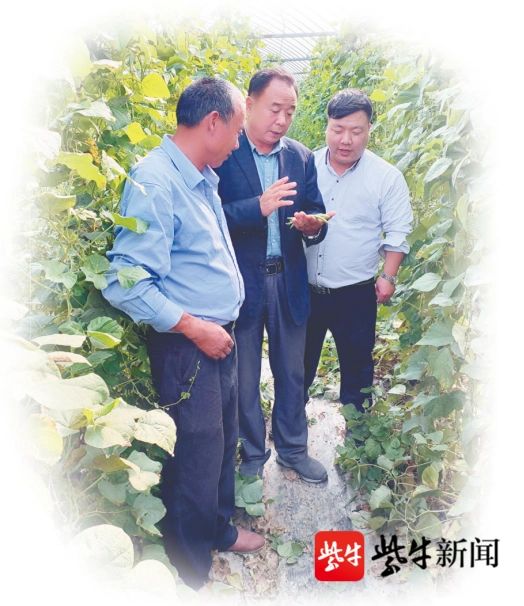
The annual spring and summer festival is a key golden period for open-air cucumbers, large-scale cucumber breeding and planting. The vast majority of growers, whether small-scale gardening or field-scale cultivation, face the same problem: cucumbers grow differently。
Some of the seedlings are strong and green, others are soft and thin, and the roots are shallow and slow to grow and stagnate. There are also a number of plots where seeding rates vary widely and the fields are thin and empty。
In addition to being time-consuming and labour-intensive, the new saplings will be overshadowed by pre-supplied sprouts, which will crush the saplings, the whole vegetable field will be in disarray and the difficulty of field management will increase significantly. Saplings have a long base, followed by slow production of vines, late upper shelfing, a direct delay in the flowering of cucumbers and, ultimately, a mixed production of cucumbers, which directly affects crop yields throughout the season。
Many start-up farmers suffer from weak and poorly grown cucumbers, with many operational errors. Either water is often poured in fear of drought or the seedlings are blindly spread out fertilizer, sprayed with prophylactics and eager to grow fast. However, this unwieldy management not only does not solve the problem, but it tends to cause soil slabs, burning of seedlings, causing drug damage, adding to the already weak cucumber seedlings and making them worse and worse。
In fact, cucumber seedlings do not depend at all on high-cost farming and various hormones. Rural fields, which have been certified through many years of farming practices, are adapted to cucumber growth habits and are low-cost, operational and safe. Temperatures are stable at 22-30 degrees celsius, with differential temperatures during the day and night, and are well suited to the growth and growth of cucumber seedlings in the prevailing spring and summer temperatures。
With these three practical management tricks, the growth of the seedlings can improve markedly in about four days, with greening of the yellow leaf, a strong and strong and fast-growing root system. Under normal reasonable care, the vines can climb in an orderly manner for about half a month, advance into the reproductive growth stage, and lay a solid foundation for later melons and melons。
I. Deep-tilled land modulation to address root causes
It is customary for many to believe that the poor and weak seedlings of cucumbers are of poor quality, but in most cases the problem is in the soil. The cucumbers are typical of shallow root crops with high levels of respiratory activity, particularly in the case of laxity, ventilation and fertile soil environments, and are the most vulnerable to slabs, water accumulation, heavy wretch and acid alkalin imbalance。
In rural areas, many gardens, growing fields have been growing guacamole and vegetables for a long time, without deep tillage or improvement of the soil, with the loss of soil organic matter from year to year, the rigidity of the earth floor and the deterioration of air and drainage. Before seeding or planting, many farmers do only shallow tillage, and the grass is grown directly。
The rigid layer of the earth can suffocate the seeds, their ingestion is hampered, the embryos fail to break them smoothly, the strong seeds grow first, and the vulnerable seeds rot in the ground and die, ultimately causing the whole land to run out of trees and torn apart. The seedlings that migrate cannot be stretched downwards, have difficulty in taking root, have a significantly reduced capacity to absorb water fattening, have a slow growing cycle, and have a long-term weakness。
To address this problem once and for all, soil rehabilitation during the sapling period is the most fundamental and central step and a key prerequisite for ensuring a strong seedling。
Step one, clean up the park. The remaining leaves in the fields, weed root and plowing crop residues are removed from the ground to avoid the decomposition of the debris in the soil, the breeding of bacteria, eggs and the lowering of the probability of the occurrence of diseases and pests during the infancy period from the source。
Step two, deep pine fields. The depth of the field is controlled at about 25 centimetres and not just the surface layer. Deep-dwelling soils are laid out, resulting in a significant increase in ventilation, while sunlight is used to effectively contain bacteria and optimize soil growth. The tillage is adjusted to soil moisture, soil water is accumulated and drained in a timely manner, while the soil is drier with a small amount of water and the soil is moist。
Step three, the science bottom manure. It is accompanied by fully decomposed organic fattening and the use of uncomposed raw manure is strictly prohibited. The second fermentation of raw manure in the soil releases high temperatures and is highly sensitive to the burning of cucumber seeds and root. Fertilized goat dung, cow dung, straw organic fat, warm and persistent nutrients, which can effectively regenerate the soil, increase organic matter and break the sheeting. Fertilizers are then released and then thrown down, allowing the soil to be fully mixed and avoiding the concentration of the fertilizer in the ground。
For land areas that have been subject to years of heavy and acidic soil, grass-wood ash can be used to improve soil. Each acre is controlled at 50 to 80 pounds, spread evenly between the lines without direct contact with the seedlings. Grasswood ash regulates soil alkalinity, supplements potassium and trace elements, increases the resilience of seedlings and prohibits the use of grasswood ash on saline plots to avoid soil salinization。
Finally, the planting model is used to maintain 15 centimetres high and to regulate broad layouts. Cultivation allows for rapid drainage in the rain, prevents smothering of roots and increases the temperature and growth of root systems。
After fine-tuning the soil, the seeds are watered evenly and seedlings are properly produced, and the planting of seedlings takes place at an accelerated rate. In normal temperature conditions, the recovery of the weak seedlings can be seen in about four days, with the blades stretching up and moving out of the aging yellow state。
Ii. Scientific control of water fattening and precision conservation for the growth of young children
Inadequate management of water fertilizers is the second central cause of cucumber seedlings, rotting roots and rigidity. The two most common areas of error in the daily care of farmers are the flooding of water and the rapid application of nitrogen fertilizer during seeding, which are also the main contributors to the weakening of cucumber seedlings。
The cucumber seedlings are small, have few leaves, have low water evaporation and have shallow roots. Frequent heavy flooding fills the soil gap, the roots of which lack oxygen to breathe, and long-term wetting causes smothering and rotting roots. Once the roots are damaged, the water fertilizer channel breaks, the seedlings appear to be still growing, the interior minister is stagnating, the leaves are yellow and thin, and it is difficult to restore robustness after that。
A large amount of fast-acting nitrogen fertilizer is applied when the seedlings are alive, which directly results in their growing size. The vines are tall, the staggered, soft, unresistible, and are prone to bending at the end. At the same time, the seedlings are fully fed, and the roots are severely stunted, and the seedlings are extremely resistant to cold, drought, disease and mild weather fluctuations。
In order to quickly rejuvenate the weak and grow the strong, it is necessary to follow the principles of dry wetness and lightness and to keep the water fertilizers in check。
With regard to water, small water has been used throughout the process, with a strong determination to stop flooding. Day-to-day observation of the state of the soil, with 3 cm of surface soil whiteened and dryed, opting to water it in the morning of the sun and pouring through the root layer. When water is planted in large sheds, the wind vents are opened and wet in a timely manner, and when water is planted in the open, the shallow pine topsoil is grown to accelerate evaporation and avoid prolonged humid soil。
In the rainy weather, water is cut off early, drains drained, and the field water is soaked. Before they survive, young children rely as much as possible on soil floor seedlings to protect them, to reduce the number of times they are watered, and to the extent that the roots are deep down, to develop a well-developed, deep and well-developed root system, with its seedlings naturally strong。
With regard to the application of fertilizers, the application of any chemical fertilizer is prohibited in cases where there is a weak absorptive capacity and where the application of fertilizers only increases the burden of the hues and results in fertility. After the seedlings are completely slow, the leaves are green and growing again, light fattening is provided。
Prefer to mild water soluble fertilizers during the shrunk season, diluting them according to product specifications, or using 1. 10 ts of water diluted fatty water for decomposition farmers, watering them down to their roots, mildly absorbible and harmless. Fertilizers focus on supplementing phosphorus, potassium and trace elements to reduce single nitrogen fertilizer use. The phosphorous elements contribute to the growth of the roots, the potassium elements grow thick leaves, and effectively prevent the growth of animals, so that the seedlings grow small and strong。
The fertilization interval of 7 to 10 days is once and can be applied twice in a row. Under a regulatory regime, the seedlings can change significantly for about four days, with yellow leaves turning green, staggered and whole fields growing evenly。
In the meantime, weeds must be cleaned in a timely manner, and weeds and cucumber seedlings must compete for water fattening, light and growing space. They are also prone to pests. Artificial weeding is recommended to prohibit the spraying of high concentrations of herbicides, to avoid the diversion of herbicides to burn young young leaves and troughs, and to make clean and clean fields more conducive to the steady growth of the seedlings。
Iii. Quick-on-the-board, fast-forward tossou
Many growers focus only on water fattening and soil management, completely neglecting the whole branch control of the sapling period and allowing the seedlings to grow naturally, leading to sprawl and dispersion of nutrients, slower growth of the main chickens, long delays in the extraction of vines, and significant delays in the upper shelf, which miss the best life。
The prevailing cucumber species in the market are dominated by the main cranium, and the sprouts of the seedling root, the inert fork, and the lower leaves only consume nutrients in vain, resulting in inadequate supply of the main cranium and slow withdrawal of vines. At the same time, over-heated leaves contribute to poor ventilation and high humidity in the fields, and are highly susceptible to frosting, pollinosis and aphids, which further slow down the growth of young children。
When cucumber seedlings grow up to five to six real leaves, the whole branch is performed in a timely manner to help the vine grow rapidly and rise as soon as possible。
First, it cleans the ground floor, removes all the yellow, weak and old leaves that are close to the ground, reduces nutrient consumption, improves ventilation at the bottom of the field and avoids disease and decay on the ground floor。
The second is the timely elimination of all the sprouts and small forks that have emerged from the root and the preservation of the strong chicken as the sole result branch throughout the process, and the concentration of all the nutrients that have been accumulated in the plant and the provision of the main chickens to extend their sap. The whole cut must be done in the middle of the day, with a high temperature and low humidity, and the cut will heal the wound quickly and dryly, significantly reducing the risk of infestation of the fungus and prohibiting the cutting of the whole branch in the rainy weather。
Upon completion of the whole branch, a climbing stretcher, which can be used on both poles and ropes, is constructed at a distance of about 10 cm from the roots of the seedlings, and is not attached to the root, avoiding later growth constraints. When the racks are fixed, the main chickens are attached to them by hand and gently, and they are slightly fixed, leading the vines to climb in an orderly manner。
For young children with small linguists, proper ventilation can be increased, field moisture reduced, short-term water fattening can be controlled, light-weighted to contain the foliage, promotion of vine and wood fertilization, and increased stasis。
The growth rate of the cucumber main chicken will increase significantly when the temperature is suitable, the water fattens and the tube is in place, usually for 12 to 15 days, so that the vine can climb up to the shelf, successfully finish the upper shelf and quickly enter the flowering stage of the pregnancy bud。
In day-to-day field care, inspections are carried out in the morning and evening to prevent infestations and pests in advance, priority is given to physical insects and clean fields and early detection and treatment. In the spring and summer, temperature variability varies, cold weather is provided with a simple temperature protection, and strong light periods of high temperature are properly shaded to ensure that young seedlings grow in a stable environment。
The above-mentioned three methods of care, from the three dimensions of soil base improvement, water fertilization precision management and whole branch control, fit the cucumber seedling growth patterns, are simple, zero threshold and low cost, and can be used directly in family gardens and in scale cultivation。
Under regulatory management, the saplings are clearly strong and well-developed for about four days, with a healthy and well-developed plant for about six months, a strong post-disease resistance, a large amount of cucumbers and good fruit, easy and easy to produce high yields and higher overall planting efficiency。
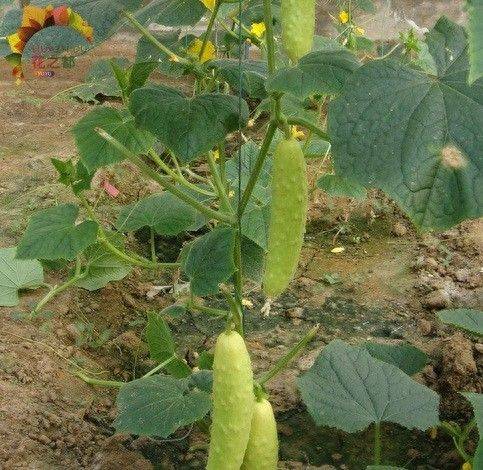
Interactive discussion of the topic
What problems have you encountered in planting cucumbers? What do you normally do with a seedling? The sharing of their experiences in growing vegetables and the sharing of learning are welcome。
Disclaimer
This paper only shares experiences in the management of popular cucumber field cultivation, and only serves as a reference for growers. Climatic, soil and cucumber varieties vary from region to region, with slightly different planting effects. Please do not pass blindly, and the use of agricultural resources is subject to the official instructions of the product。