


Tianma is one of the most expensive medicines in our country, the dry tuber of castroia elata bl. It has a temperamental taste, a fragrance of the liver, and has the effect of stunning and resting. Modern pharmacology has proven to be resistant to ageing and to prevent dementia. In addition to medicine, a common health-care food is also used in the private sector, often as a salsa. Tianma has been included in the list of pharmacological homogenesis published by the national board of health and the national market supervision authority. For many years, tianma has been a common health commodity for the elderly to resist disease and slow their ageing and has received extensive attention both at home and abroad。
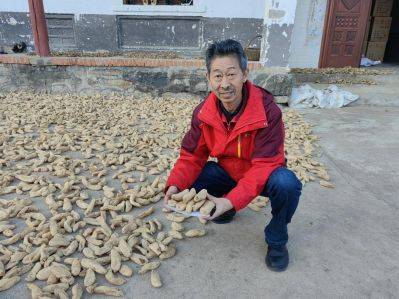
Figure 1
I. Tienima has been added to the list of dual-use items for medicine
It's going to increase dramatically
On 9 november 2023, the national board of health and health and the national directorate of market supervision issued a joint bulletin on nine new substances, both traditional and chinese, for party participation. The proclamation reads as follows: in accordance with the law of the people's republic of china on food safety and its implementing regulations, the regulation on the regulation of the cataloguing of substances that are traditional both food and chinese medicines, after a safety assessment and pilot production exercise, nine substances, such as party membership, meat (desert), iron and platinum, western cucumber, yellow, lingzhi, yamaju, tianmaq and dooyo, are now included in the list of substances that are both traditional and chinese medicines. This announcement is hereby made. See figure below:
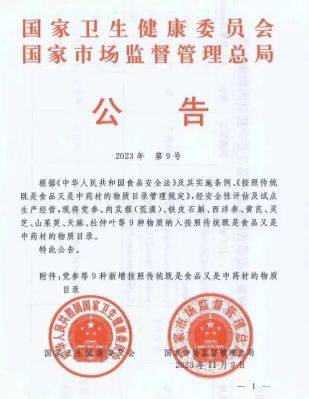
Figure 2. National health and health council, national directorate of market supervision proclamation of 9 november 2023
The policy is read as follows:
In our traditional eating culture, some chinese medicinal products are often widely consumed in the community as food, i. E., as food and medicine in accordance with tradition (hereinafter referred to as pharmacological substances). The nine new edible substances, such as party membership, published here, are based mainly on the food safety act and the regulations for the regulation of the catalogue of substances according to traditional food and chinese medicines, taking fully into account the traditional consumption situation, local needs and international management experience in the country, and are determined by a combination of pilot production operations and risk monitoring。
As follows:
Tianma. In the chinese pharmacy (2020 ed. ), it is a dry tuber for the lanchoa elata bl. In the provinces of guizhou, yunnan and other provinces, tianma has a history of feeding as a food material, mainly for stew, food, hot pots, etc. No adverse effects reported. Allergies are unfit for consumption. Party membership. Meat (desert). Iron stone. Western ginseng. Cornel. (b) the doo chai (details)。
The above-mentioned substances are used as a edible substance and are recommended for appropriate consumption in the traditional manner, and are not recommended for use by specific groups such as pregnant women, nursing mothers and infants. Traditional methods usually refer to the shredding of raw materials, slices, crushing, frying, boiling water, bubbles, etc. The substances mentioned above shall be used as raw materials for health-care foodstuffs in accordance with the relevant provisions for health-care foodstuffs, and when used as chinese medicine in accordance with the relevant provisions for chinese medicine. To date, there are 110 chinese drug varieties, both food and chinese。
The chinese pharmaceutical industry will have three main advantages with the adjustment and expansion of the pharmacological congener directory: first, the surge in demand for pharmacist congener raw materials, and the cultivation and processing industries in favourable production areas; second, there is a new trend in the development of products. Thirdly, the transformation of traditional chinese drug and tablet enterprises will be promoted。
According to the food safety act, medicines may not be added to the food produced and operated, but they may be added to substances that are traditionally both food and chinese. On 15 october 2019, the national directorate of medicines and medicines responded explicitly to the proposal of the national federation of chambers of commerce and industry to allow the sale of tablets within the scope of the list of generic medicines: if it is simply pure, sliced, packaged and not labelled as “artilleric, functional and legal”, it can be classified and managed in accordance with article 38 of the food safety act, “chinese medicine”, and the pharmacies can be opened for sale, and the population can purchase them without prescription. In addition, a licence to operate drugs is not required if the operation is limited to supplementing medicines in the health sector. The latest version of the medicines control act provides that medicines include chinese medicine, chemicals and biological products. The chinese pharmaceutical products are by-products of agriculture and are used for a variety of purposes. They are produced without a pharmaceutical production licence and operate without a pharmaceutical operating licence. There is also a corresponding liberalization policy. For example, fukuzhou, fujian province, in its opinion on supporting and encouraging the innovative development of the drug retailing chain (preliminary), item 10 clearly states that the chain (which also applies to single retail pharmacies) is allowed to operate a small amount of co-smuggling of medicines, supplementing medicines in chinese, and the sale of tablets in the odour used locally. The province of gansu has proposed “to support the sale of generic pharmaceutical products. Pre-packaged tablets allowing entry into the generic table of medicines may be sold without prescription”. History has taught us that once a drug enters the catalogue of medicinal homogeneity, the various forms of food and health-care products associated with it will be delivered and the demand for its raw materials will grow dramatically。
Ii. The successful cultivation of the tianmino family
The old scientist is a brilliant scientist
It's a ricin. It's a meds. Excavated from winter to the following year, immediately washed, evaporated and dry at low temperatures. It is a long-term parasitic plant with no roots and no light co-operation and no direct absorption of nutrients in the soil. The seed must be fertilized in order to fertilize, it must be assimilated in order to grow properly, and it must be symbiotic with the albino in order to develop. Plumbs are suitable for growing in a half-circle, cool, wet, permeable water, which makes it difficult to generate mycelium in the event of high-temperature dry weather; in the event of a rainy weather, the seed and root of cynics are prone to decay。
As a result of the growing demand in the market and the special fungus alienation lifestyle and the scarcity of resources for wild seedlings, artificial cultivation has become a major source of tima. We cannot fail to mention here professor seo jintai of the “father of tianma”, the “san of the yellow company”. The researcher is the country's famous pharmaceutical fungi and medicinal plant grower。
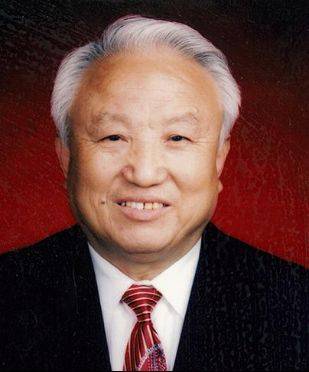
Figure 3. Professor of the "santa of the yellow company"
He was born in 1929 in taiwon, shanxi province, and worked in 1952. He graduated from shanxi university of agriculture and was assigned to the chinese academy of medical sciences in 1958. In 1983, the institute of medicinal plants was established as director of the laboratory of pharmaceutical factivism research, a member of the party committee, a deputy member of the academic council, a member of the academic council of the chinese academy of medical sciences. He was a member of the advisory committee of pharmacology experts of the ministry of health, a member of the beijing innovations association, a permanent member of the chinese association of food factors, a deputy member of the committee of experts and a deputy member of the medical fist of china, and was appointed as a permanent member of the chinese medical society in 2009. In september 2019, seo jin tong was hired as a member of the chinese academy of medical sciences. He has received various honorary titles such as the 51st national labour medal, the national scientific and technological excellence, and the national health civilization advanced, and is entitled to a “special government allowance” under the state council。
Teenager is a leafless orchid-free plant, and national and international scholars have studied for more than half a century the failure to grow. In 1959, mr. Tsui started carrying out a study on the development of a family plant in tianmu, and successfully developed a study on the “singnan, sichuan, hubei, hunan, etc.”. In 1963, the tianima study group in tsui jin province was officially established, and his research was no longer on its own. After summarizing the lessons and experiences of years of failure in cultivation and conducting a three-year systematic survey of wild sisma growing breeding nutrients, in 1963 he led a successful process of sisma cultivation with natural fungi and fresh wooden rods, which led to a new stage of artificial cultivation. For the first time, in 1965, the use of honey-circle materials was accompanied by the success of tianma, ending its history of incapacitation. In 1970, xu jincai led the team from beijing to ningchang, where it took root in the mountains, overcoming practical difficulties such as poor working conditions, poor living habits and frequent hiking over the mountains, and studying the subject of sexual reproduction. The child was born and he was not with him; the wife had had a baby daughter, but at the critical moment of the separation of the fungus, he chose to stay in ning dynasty. In 1972, he spent his time crouching in the central region of xinxiang, experimenting with the successful cultivation of trepidoma-free fixed-breeding beds in the three east winds in ningjian county. He travelled across 11 districts in the whole han chinese region and in the mountains of ankang, kan lo and other districts. He succeeded in researching wild trepidation techniques. He held a symposium on trepidation in six provinces and cities in beijing and a technical symposium on trepidation in the ningqiang region. The success of qinu-kunan has not only served our clinical needs, but also generated significant export revenues. Two hundred thousand farmers in the south, who have been freed from poverty by planting tampons, have been able to expand their techniques in 40 counties in shaanxi, with an economic benefit of 1. 6 billion yuan. Repeated tests, separations, screenings, identification of the purple that lives with the seed of tianma, to address the instability of its production a new pattern of symbiotic symbiotic symbiotic symbiotic symbiotic symbiosis has been documented in the history books of the world's rheumatological studies. In 1978, he was awarded the national conference on science and technology award for his research on wild parasitics。
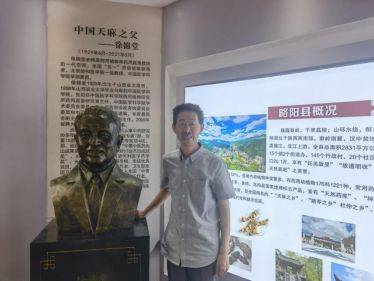
Figure 4. On june 23rd, 2021, the author took a photo of the teacher in shaanxiyang and tsui jin hall
In order to address the serious degradation of the plaster after the sexual infertility of the tienmah generation and the significant decline in production, mr. Xu jincai studied the invention of the “sembly cultivation - leaf bed” method, which has resulted in the recovery of the plaster and further increase in production, as well as in the award of the first prize for the 1979 scientific and technological achievements of shaanxi province. In the late 1970s, he found that the serious degradation of the plaster was occurring in the gestational incompetence of the gestation of the gestation, and he conducted experiments against various pressures to study the successful practice of the sexual prophylactic foliation of the ge, which has prevented the degradation of the plaster and steadily increased production, with more than 70 experts co-sponsoring one of the 20 major medical research results of the country's 35 years of existence。
Teacher xu jincai has been working on medicinal plants for more than 50 years and has made a significant contribution to the country's traditional and expensive techniques and theoretical research in the cultivation of herbal herbs, herbs, typhoids and pigs. This has yielded significant social and economic benefits, which have completely reversed the chronic shortage of these medicines, and has contributed significantly to the development of the chinese medicine industry, the economic development of poor areas and the rise of farmers out of poverty. The people of the land and the chinese pharmacists are hailed as the “sacred of the yellow company” and the “father of tianma”。
Iii. Tienmah cultivation has been successful for over 40 years
It's not an ideal development
Since the successful cultivation of tianma, which used to be home-grown and wild, it has become difficult for the market to see real wild products, with the supply largely based on domestic varieties. Following the success of the technology, the demonstration was carried out in several main production sites throughout the country, which was followed and actively promoted by local governments and by a wide range of pharmacists, and which was rapidly expanding. The main areas where my country is currently growing are the anhui district, the central, commercial and concubine areas, the gansukang district, the yuichang, shinyuan farm district, the yunnan district, and the guizhou, sichuan and chongqing regions. The country is home to a large number of fertilized land, and the development of the main land is uneven and the overall development is not ideal. In particular, the price of tianima has been chronically low and has been hovering over and below the cost line for farmers who have been growing for almost a decade, with no prospects for income generation but a pity for farmers。
On july 18, 2022, the china medicines network published an article entitled “why is the tianmima “fighting down?”, which is summarized below: “the success of tianma, one of the more successful species of wild mutants, also created a historical price of around $200 at the end of 2010, when the man-made business was simply a showdown. After almost a decade of subdued performance, the most recent one was in 2019, when the price hikes further stimulated production, which began to decline in 2020 and has now lasted for more than two and a half years, with prices still weak. There are three reasons why producers and market traders tend to think that prices are falling: first, the last round of price increases have significantly increased the incentive for farmers and growers to grow and production has resumed; second, it has been affected by the epidemic, where demand and circulation have been less than positive in the last two years, and where only demand-driven purchases can be made; thirdly, as a result of the growth in scale, supply-to-demand dynamics have increased the pressure on producers and markets to operate, and the culture of breeders is declining”。
Last year, in the first half of this year, especially in may-august, chinese medicine prices rose exceptionally, with price fluctuations reaching more than 70 per cent of the 300 commonly used medicines, increasing the number of varieties, but without the presence of cynics. Why is it that for 10 years it has been hovering in the valley and that it is able to remain silent, unsuspecting, and remain out of the picture when china’s pharmacist index rises。
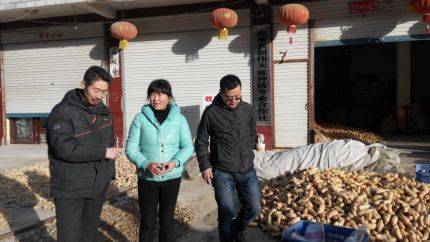
Figure 5. Study of the author's visit to tianmama's home site on 16 december 2014
As tianmima is now in the new annual production cycle, i have recently heard that tianmima has accelerated and prices have rebounded slightly, which is not in line with the prevailing weakness in chinese medicine, the general downswing in prices, and the general downwards of the large disk index! Why does tianma not increase prices as a whole, but rather fluctuates and rebounds as the chinese drug billboard index goes down? Anomalous things must happen! The author, with his doubts, has recently gone into a few field trips and studies in the motherland of tianmaq, before i'm free, and i'm able to document it. May i have your attention from the chinese pharmaceutical industry



