As a popular vegetable, eggplant cultivation involves several key stages, including nursery, planting, management and harvesting. Capturing the key elements of these links is essential for improving the production and quality of eggplants. Here's a piece on eggplant cultivation techniques and management。
I. Employment
(i) determination of nursery grounds and planting periods
Solar greenhouses tend to sow eggplants in mid-october. In order to achieve early marketing, eggplants require the cultivation of longer-age seedlings, usually 90-100 days. The selection of suitable nursery sites and planting times is the first step in ensuring the healthy growth of the eggplant。
(ii) leaching seedlings
1. Temperature water treatment: seeds are placed in water at 55 °c temperature, with a water volume of 5-6 times the amount of the seed volume, which is constantly staggered and kept at 55 °c water temperature of 10-15 minutes, then impregnated in its naturally declining water temperature for 8-12 hours。
2. Cleaning seeds: eggplant is thick, water is difficult to absorb, and it is harder to germinate if seeds are not fully fermented. They can be washed with alkaline fluids of 0. 2-0. 5 per cent and repeatedly washed with water until they become impregnated when they are clean. A 1% potassium permanganate solution can also be immersed for 30 minutes before leaching。
3. Drumbs: during immersion, water is exchanged once every 5-8 hours, when the seeds are fully inhaled, they are washed clean with water, packed with multi-layer wet or sackcloths, thrown out of the water and placed in the container and sprouts in the warmth. The eggplant sprouts are at 25-35°c, using temperature mutations, with a temperature of 30°c for 8 hours per day, 20°c for 16 hours per day, and 75% of the seeds are white after 5-6 days, and the germs are identical. During sprouts, seed packs are often flipped to facilitate exchange of skin gas。
(iii) seeding
1. Preparation of seedboxes: eggplant growth requires high temperatures, preferably in greenhouses. First, a three-centimetre layer of nutrient soil is laid in the seeding box, and when the first water is filled, when the water leaks, a layer of concrete soil is spilled, seed is soaked or cast in ditches, and then one centimetre of fine soil is sown, then plastic sheeting is covered, and the seeds are released in time。
2. Temperature and light management: post-plant room temperature requires 25-30°c, even light, 5-6 days after seeding. When 80 per cent of the embryos come out of the ground, the temperature is reduced to 20-25°c in the daytime, 20°c in the night, and there is adequate ventilation over 28°c, which cannot be excessive. Stop venting when room temperature drops to about 20°c。
(iv) shrimp management
1. Temperature management: when the leaf has spread, the first leaf has a tip, the room temperature can be increased by 25-27°c during the day, 16-18°c at night, and the temperature at 18-20°c to make the leaf grow smoothly until the transplant。
2. Hydrological management: eggplant growth is strictly required for moisture, and when the moisture is insufficient, the buds are split late, with the result being delayed and production falling in the previous period. The bottom water must be filled before seeding and transplantation, and the seedlings may subsequently be adequately replenished to meet their growth needs。
3. Light management: eggplant seedlings are subject to stringent light conditions and sufficient light not only helps to divide the bud, but also enables the growth and development of the seedlings. When the light is insufficient, the buds are split late, the seedlings grow and the deformities appear, which directly affect the production formation. In order to improve light conditions, the nursery can be tilted southwards for light. Increasing the area of nutritional paper bags for transplantation, with a reasonable emission density, also has the effect of improving light conditions。
(v) portage
1. Timing of transplants: poor regenerative capacity of the eggplant root system and difficulties with new roots, usually only 2-3 leafs of seedlings, which have not yet begun to be transposed to nutritional paper bags。
2. Preparation of nutritional paper bags: the use of nutritional paper bags for seeding is a better way to protect the root of the eggplant, but only when preparing the soil, care is taken to add some nitrogen fertilizer. One or two days before the transplant, the water in the trophic paper bag was filled to the point where the bottom was wet。
3. Transplantation method: when transplantation takes place, the seedlings are torn out of the soil that is already loosed from the seeding box and planted in nutritional paper bags without bending. Eggplants are grown on 18-20 cm tall, 6-7 leaf leaves, more than 70 per cent of the tremors, thick, purple and developed roots。
Ii. Standing
(i) pre-plant preparation
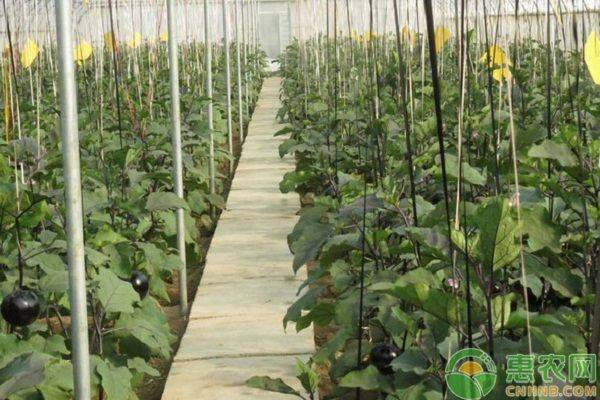
The pre-plant acres of skeletal fattening 5,000 kg, which is made of 60-65 cm wide and 15 cm high, then open two shallow trenches to water the bottom of the foot. The water leaked and was planted at a distance of 30 to 40 centimetres and then taken from the middle of the two shallow trenches on the top. It is appropriate to establish depths of seedlings at the same level as the surface. 3,000-4,000 acres planted。
The timing of planting should be chosen for the short-lived heating period, which, according to the patterns of weather conditions in the north, would ensure that the seedlings remain weathery and slow within three to five days of planting. The planting day should take place at 10-14 p. M。
Management
(i) temperature management
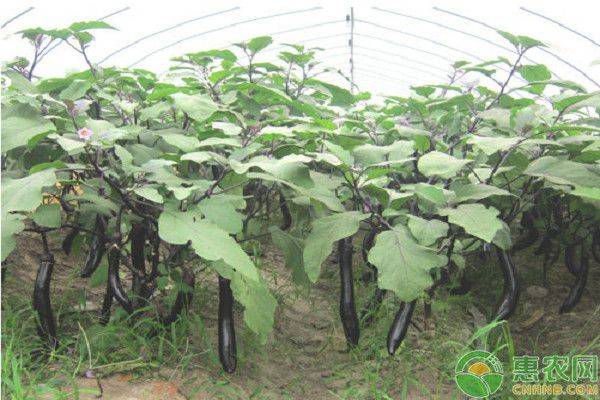
1. Management of the cold seasons: the greatest difficulty with eggplant planting is the lack of temperature, which makes it necessary to increase temperature protection during the cold seasons following planting. 7 to 10 days after planting, room temperature is maintained at over 30°c, thereby increasing the temperature, supplementing the night temperature and slowing down the seedlings as soon as possible. And try to keep the temperature steady at 16-18°c. After a period of slow seeding, the plant begins to grow normally and daily attention is paid to the light of light, which can easily result in flowers。
2. Results management: at the end of the outcome period, care should be taken to reconcile nutritional growth with reproductive growth by lowering room temperature to 25-30°c in the daytime and 15-17°c in the night, so that the eggplant can grow and grow. Home temperature above 25 °c begins to be released in an appropriate amount to remove excessive indoor humidity, increase co2 content, increase light intensity and reduce fall flowers. Even in the middle of the day, it is necessary to maintain proper air outage, with special attention to air outage and air outage。
(ii) water management
The eggplants are scheduled to be watered before the flowering of the eggplant until the eggplant is generally as big as 3 cm and then fertilized. First-time fattening can be greater, with acre application of ammonium sulphate at 10-20 kg or faeces at 10-20 kg. The second fatting of the egg when the egg is starting to swell and the next one in 10-15 days does not result in a shortage of water and weight。
As a result, the amount of fertilized water has been increased appropriately during the run-off period, usually once over a period of 7 to 10 days, with chemical and organic fertilizers being used interchangeably. This is accompanied by increased ventilation to meet the needs of light co-operation and to promote the maturity of the fruits。
(iii) light management
The eggplant is a radiant crop, but it is difficult to satisfy the need for solar greenhouses to plant natural light in winter and spring, resulting in the planting of long stands, the appearance of short-post head flowers and the deformation of fruit. As a result, in addition to the daily cleaning of the greenhouse, there is a reflection to reduce the gap in the back of the greenhouse and increase the intensity of the light。
The eggplant flower was painted with a moisture of 25-30 ppm 2,4-d, or with a spray of one per flower, which could not be repeated and could not be sprayed on leaves。
(iv) whole management
In a timely manner, the whole branch will improve the ventilation and light, and when the eggplant expands, it will remove the sprouts of the side branches below the manga and the lower leaves, and its second fruit (for the eggplant) will be erased。
As a result, the amount of fertilized water has been increased appropriately during the run-off period, usually once over a period of 7 to 10 days, with chemical and organic fertilizers being used interchangeably. This is accompanied by increased ventilation to meet the needs of light co-operation and to promote the maturity of the fruits。
Collection
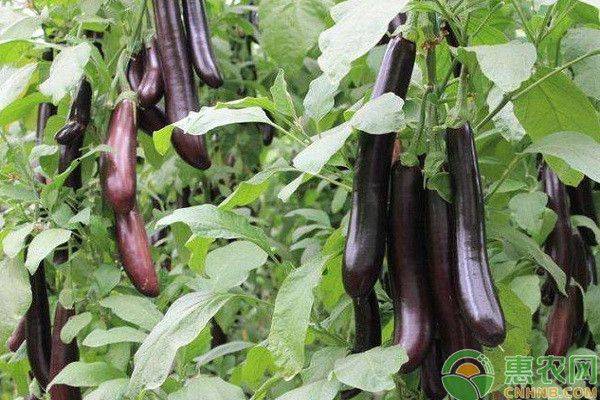
The eggplants are fully burgeoned and are harvested early when the fruit is purple and radiant in order to increase production in the prior period. The harvest should preferably be cut off from the handle and cut off the injuries. The harvest should be carried with care to avoid damage to the fruit. The harvest should be followed by a timely phasing to facilitate transport and sale。
Based on the above, eggplant cultivation is a system project, each of which is essential from seedling to harvest. The production and quality of eggplants can be improved effectively through scientific breeding methods, sound planting arrangements, fine management and timely harvesting。
You may be interested in and welcome to the content of the following recommendations of the network:。