Are the trees alive? Here's 12 tricks for tree conservation
Secret one, tree transplants, drainholes
A plastic tube of 18 cm-20 cm in diameter, approximately 1. 5 m in length, laid on the edge of a tree earthball, 50°-60° with an angle of a trunk, suitable for tree species that are not wet, is planted in high-water areas and can be drained manually by small plastic drums during the rainy season. Good drainage results, such as white leather pines, cedars, oil pines, plastic black pines, silver apricots, horse lumbers, broad jade, etc. Water drainage during the rainy season should be a conservation priority and balanced water supply。
Secret 2, homemade improvised container matrix
Slurry-based formulations: 22 per cent lye, 30 per cent peat, 2 per cent pearl rock, 4 per cent calcium perphosphate, 25 per cent of fine field soil, 15 per cent of corrosive acid and 1 per cent of amino acid, which are used to plant false seedlings, which are simple to operate and easy to extract。
This home-made seedling has a large number of roots and, as a result of secondary plantings, the rate of site survival has increased significantly。
Secret 3 and pre-cut to improve survival
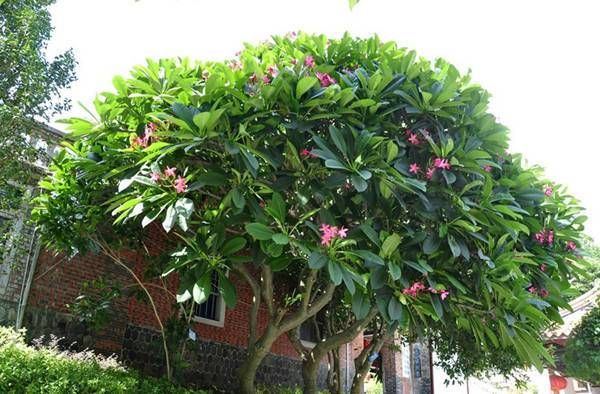
Particularly suitable for anti-season greening (may-september), such as the summer transplantation of hard-planted species such as red leaf plumes, which are trimmed seven to 10 days in advance, and the loss of water and nutrients from branches, which are filled with roots in a timely manner to maintain water balance. A tree transplant to shorten the period of rehabilitation of the tree when the sprouts begin。
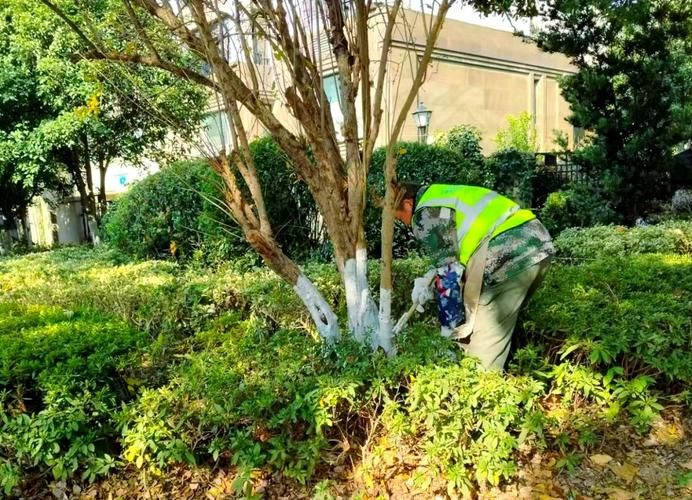
Three points need to be noted: the first is repeated trimping to reduce water evaporation, with more than three quarters of the shears (twigs and troughs); the second is to increase earthballs appropriately; third, proper leaf removal controls the evaporation of the leaves. It works better with the extraction of leaves, flowers and fruit before moving。
Secret four, suspension vial for reinforced tree nutrition
This law is suitable for anti-season transplants of famous and valuable species, such as silver almonds, pyramids, hiroshima, etc. The entry of nutrients such as root powder a few days before transplantation, as well as home-made nutrients, with a medical glucose of 0. 5 per cent (original liquid), could also have a good effect. It's best to use cool or mineral water。
This move forward complements the early recharge of moisture and plant nutrients and promotes nutrient accumulation of planted trees in preparation for later needs, which can effectively ensure the survival of trees。
The secret is five. The tree has its roots
Long-activated root-based soil, with active ingredients such as cogents, growers, cylindricals, and yolk acids, is characterized by good permeability and significant long-activation root effects. The early and medium-term application of re-emergence work is good. Digging two or three caves on the outer edge of the soil, fattening the trees, usually with new leaves in the week. Salinous lands can be used to make roots in trees to improve special formulas for fertilizer。
Secret six, planting silver almonds to control water management
Silver almonds are found in low-water soils, with high land size and easy drainage sites. Overloading causes death at root. I love the strong sand, the border. Silver almond cultivation is good for all seasons, and our 10-year experience with big tree transplants is that we don't have to water for 10 days, and this water control can produce 100 percent of the almond life。
The secret 7 and the nursery plugs are best with peat and leech
Pyramid trees have been tested in our practice for many years, and peat 1/2+1/2 stones can be inserted into a variety of trees, such as moon seasons, large leaves, gold and silver wood, pomegranates and gurus. Life expectancy is higher than other matrices. It also has good oscillation effects, with 1/3 of neptunium, 1/3 of mixed carbon and 1/3 of sand。
Secret 8 and prevention of iron yolk deficiency in saline areas
The first is to paint the trunk of a tree with a 10 per cent sulphate sub-iron solution, which can increase iron absorption through bark. Second is the spraying of urea soluble on leaves by a ton of water plus 5 kg of urea, 3 kg of iron sulphate, and a leaf spray, with a better effect after a week, for the prevention of iron deficiency such as fascination, almonds, oil pines and black pines。
Secret 9 and the best anti-vamination agent - yellow acid
An important component of anti-season greening is to control the evaporation of the leaves. The various anti-vapour agents currently produced in the country are generally not marked, nor are they imported from abroad. The fa is the code name of yellow acid and is an invention of our country. The application of domestically produced yellow acid to large tree transplants is also a shortcut, but only requires a concentration test。
There are different species, different seasons and different regions, and the amount used should also be different, with both the positive and the negative sides of the leaves being sprayed, especially since the air hole is mainly on the back of the leaves, with a suggested level of spraying of about 1 per cent。
Secret 10, good way to control the evaporation of the tree
Anti-season transplants, which control the water evaporation of the tree body, can be taped around the trunks with grass curtains and then tied with plastic sheeting, which can be used in winter to prevent cold. The key point is to insert a number of small holes in the plastic film for proper air penetration, which is better than the single plastic film, and the grass curtains (better than the grass rope) can regulate the internal moisture and temperature of the film, thus providing a good conservation of the tree body and creating basic conditions for the tree to function。
Secret 11, planting depth and watering science
The depth of tree planting has a direct impact on the survival rate of the trees, and accurate prediction of sedimentation factors in the cave soil is key to determining the depth of planting。
Overplanted depths or overplastered surfaces, causing root suffocation leading to tree deaths. It is therefore not appropriate to plant at a depth of more than 5 cm above the root neck of the tree, and it is appropriate to plant earthballs on the ground or slightly above it。
The water must be moderately watered, first water must be watered, and water and gas harmony in the soil will facilitate new root expansion. Watering the assembly has resulted in the death of trees. Our experience: large trees with 20 centimetres of chest size, with a bowl of water approximately 1. 5 metres in diameter and 20 minutes of water to seep out, is a standard of permeability, which distinguishes between wet and dry tree species, conservation and management according to the ecological practices of the tree species, to the effect of tree management。
The secret 12, the details determine the rate of survival
Increasing tree survival is an integrated technology, with small technologies reflecting details that determine success or failure. The soil should be pre-planted and analyzed for the physico-chemical properties of the soil. The saline soil should focus on the ph of salinity, which is managed by tree management, according to the ecological practices of the trees, without losing sight of each detail of planting and management, without losing sight of the differences in the conditions on the ground, starting with the management of water, soil, air and root nutrients, and planting of roots。