Seeds for radish sprouts should be selected for varieties of radish that are well-growing, disease-resistant, of good quality, and have larger seed grains, such as red robes, green radish, red hearts, radish, national radish, radish, etc., of which autumn and winter radish are more suitable for sprouts production. Seeds producing radish buds are selected for seeds with higher purity, purity and germination rates, and seeds are saturated at a consistent rate of over 95 per cent。
It is preceded by screening, wind selection or manual selection to remove bad seeds and impurities, such as granules, rags, etc., in order to increase the resistance of seeds during seeding. Seeds are washed with room temperature water and then immersed with 2-3 times the amount of seed water for 6-10 hours until the seed is fully inflated and washed with liquid water one or two times. The seed is seeded at 23-26 °c after leaching and seeded when the root is 3-5 mm。
Sulphur fumigation (two grams per square metre) or enzyme fumigants may be disinfected at the production site, and air ventilated when sealed. Plantation containers (e. G., seedlings) can be washed with 0. 1%-0. 2% bleach solution, 0. 3% potassium permanganate solution, or immersed with hot water above 80°c and washed with clean water。
Sowing technology reports
The seeding techniques for radish sprouts include, inter alia, the planting of seedlings without soil and of seedling beds (tetan/sapé). The seedlings require floor leveling, robust durability and permeability. The seedlings need to be cleaned and disinfected before planting. Plantation matrices may be selected for white cotton cloths, wrapping paper, pearl rock or grass-grain. Seeding is usually 100-150 g per disc. This can be followed by a stacked sprouts that keep the temperature at 23-26°c in a dark, damp environment, and can rise up to 0. 5-1 cm over a period of 1-2 days。
Sapling beds (earth/sap) should be sown with the choice of sorbenting, fertile, well-watered sandy soil or clean river sand as seedbeds. It is necessary to pour water before it is broadcast. The seed rate is 150-250 g/m2. This is followed by a layer of 1 cm thick loose soil or other cover. Temperatures of 23-26°c and 80% humidity of the air are to be maintained during the sprouts and often reverses so that the sprouts can be fully formed。
Plantation management reports
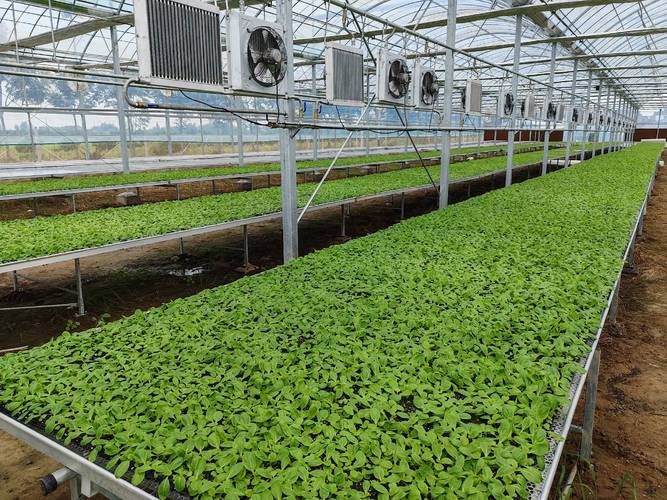
3 days at 15°c ~20°c. According to the latest planting techniques, radish sprouts have a suitable temperature of 23-26°c for the sprout period, which should be controlled at 20-25°c and can be maintained at about 15°c at night. After seeding, water is sprayed in time to keep the soil wet. Specifically, in the case of seedlings, the base of the disk should be kept wet but unwatered, and the relative humidity of the indoor air should be controlled at 70-80%. When seedlings are planted in seedbeds, they begin to be watered in small quantities up to 3 cm, usually two to four times a day. When sprouts grow to 5 cm, the radish bud should be given proper light. Light management should be gradually transitioned from weakness to strength. When sprouts are up to 5 cm (terra/sap) or 1 cm (unearthed) they begin to ensure proper light, which is appropriate for the strength of 3,000-4,000 leks. There is a need to gradually increase light at the end of production. It is necessary to open windows for one or two air breaks each day to keep the air fresh, but the cooling should be careful not to let the wind blow directly to the bud. In the case of seedlings, the seedlings should be rewinded on a regular basis (e. G., once a day) so that the seedlings are lighted and evenly heated to ensure their growth. Carrot sprouts rely mainly on nutrients stored by the seed itself during the pre-growth period. When a seedling grows to a certain height (e. G. 3 cm), it can be administered with 1 - 2 trophic fluids to promote growth。
Collection and post-harvest processing of reports
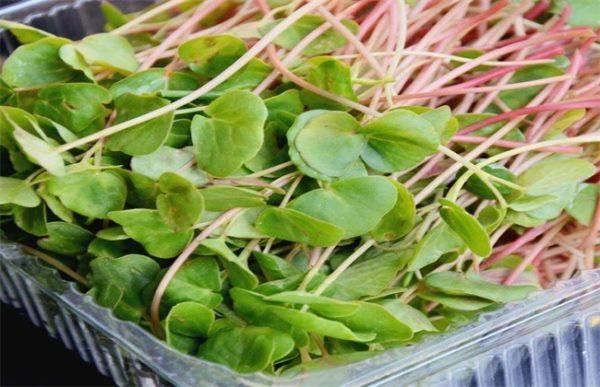
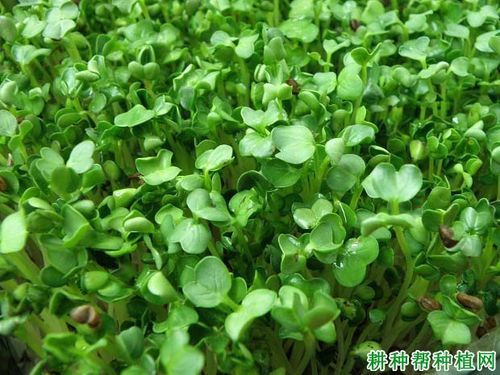
The sprouts of radish sprouts should be ready, with no rotten seed, no rotten root, no different smell, full leaf flat, large, green in colour and white, red or green in the lower axis。
The timing of harvest varies according to the manner in which it is grown, and when the seedling is grown up to more than one centimetre, the seedling is collected as a whole, and when the seedling is green, the seedling is 8 to 10 centimetres tall, the leaf is flat, fully fat, and there are matches and sticks。
Pulling root at harvest。
After harvesting, shells and soil are washed with water, which can then be packaged according to marketing channels, such as small packagings in plastic boxes or bags, or direct whole plates sold in live form。
In the case of proper planting methods, 10 kg of radish sprouts per kilogram of seed can be produced。