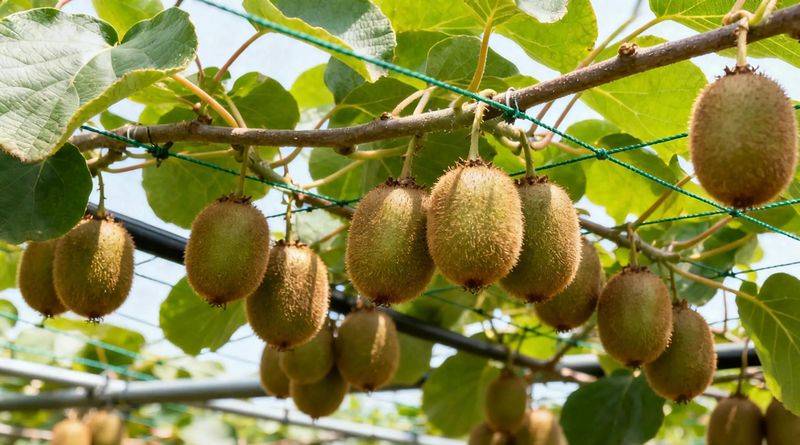
A typical female and male plant with only 30-40 per cent natural pollination sitting rate, combined with a science male and female + precision pollination, increases the sitting rate to more than 85 per cent to ensure yields and quality, with the following core technologies:
I. Mixing of females and males: ratio to variety is the basis
Matching ratio: production park is established on the basis of “8-10 females 1 male” (one female 1 male per family) and the male stock is evenly distributed between the gardens (one male per 3-4 female) to ensure that pollen is distributed over the whole garden; and to avoid imbalance (too few males lead to low pollination and excessive waste of nutrients)
Varieties matching: selection of a group of species with a consistent flowering period (male flowering period 1 - 2 days earlier than female, extended pollination window period):
This is the first time that the country's population has been affected by the drought in the region
Chinese monkeys (e. G., red sun, gold) are paired with the male no. 3
Avoid cross-cropping (low pollinators and low power, lower seating)
Plantation points: the distance between male and female is not more than 10 m (bee pollination radius), the height of the plant is consistent with that of female (for pollination purposes), and the soil ph value is maintained at 5. 5-6. 5 (moderate acids for growth)
Ii. Polluting know-how: timing + choice of correct method
The pollination window period: 2-3 days after the opening of the female flower (in the case of a plume with milk and glue) is the optimal pollination period, and if the plume is lost, the plume is dryed out; the pollination is done every morning from 8 to 10 a. M. (temperature 15 to 25°c, with the highest pollen activity), avoiding the high temperature at noon (powder failure) and rain (powder easy to wash)
3. Efficient pollination methods:
Artificial (household / small-scale) planting: collection of male guillotine (with pollen), extraction of pollen with soft platinum pens, light coating of female luminaries (5-8 females per flower) and post-pollination marking (duplication)
Bee pollination (scale cultivation): 2-3 boxes of bees per acre (approximately 15,000 per case), pesticide spraying (protecting bees) is prohibited 10 days before the flowering period, and sugar is placed near the bee box at the beginning of the flowering period (increased bee activity)
Flour spray (large area supplementation): mix dry pollen with smoother powder at 1:5, load the aerosol dispenser (head aperture 0. 3 mm), 30 cm light spray female (spray usage 50 g per acre) and avoid spray overheated (spray block impact pollination)
Flour harvesting and preservation: 1-2 days before the opening of the male flower to harvest the buds, after the dry season to collect the pollen (avoiding the tan), in a sealed bag to freeze (0-5°c), for a shelf life of not more than 7 days (fresh pollen sprouts > 80%)
Iii. Accompanying management: enhancing pollination sit-ins
Accelerant nutrient supplement: 10 days before the flower, the female application of high phosphorus compound fertilizer (10:20:10) per acre 15 kg per acre (ditch application), application of 0. 1 per cent of the porcelain solution (promoting pollen production); no application of nitrogen fertilizer during the flowering period (avoiding long
Environmental regulation: during the season, air moisture is maintained at 60-70 per cent, and water is sprayed around the plant (not directly) every evening during the dry season; a temporary wind safety net (to prevent pollen from blowing up)
Pocket fruit: 10-15 days after pollination, defoliating deformity, weak fruit, with two to three healthy fruits per result (one or two for the chinese monkeys), concentration of nutrients to avoid a deterioration of quality due to over-created fruit
In accordance with the above-mentioned approach, the chrysanthemum fruit ratio can be more than 85%, single production of 20-30 kg, single fruit weight of 80-120g, soluble solids content of 15-18%, deformed fruit rate of less than 5%, achieving high quality production。