


Red-yang monkey protection techniques: guidelines for seed optimization and production applications
Chen text
The soil of ming creek county in fujian province is rich in zinc and widely distributed, with high concentrations mainly in the villages of sakuri, dragon lake, etc. The minghu county council and the county government have given high priority to the construction of the zinc industry, encouraging and supporting businesses and individuals to participate in the development of the zinc qin queens industry. In 2016, they established a subsidy support policy. Since 2016, a county-wide base of 4,500 acres of zin zin qin qin monkeys has been built, with the introduction of new quality domestic and foreign varieties such as red sun, gold and gold nuts. The town of xinjiang has been actively working together to replant and expand the zin zin zin in the village of iri, using a steel shed that grows on a paris, with an area of approximately 450 acres, which, after eight years of cultivation observation and guidance, is summarized as follows:。
1 quoted and quoted
1. 1 basics of seedlings
By the end of 2016, the excellent species of chinese monkeys had been introduced from the field. The seeding base is located in the village of sakashi, ming creek county, fujian province. The base is about 350 metres above sea level, with an average annual temperature of 17. 8°c and an annual frostless period of 225 to 250 days. The soil is sandy, ph5. 6 and fertile. Plantation was established in late january 2017 at a range of 3 x 2 metres and 110 acres. The proportion of pollination trees configured is 6:1。
1. 2 quoting performance
1. 2. 1 routine period
The flow of general fluids began in mid-january, with a bud in mid-february and a leaf in late february, with fresh life lasting from early march to mid-march, with the first flower in mid-march, flowers in late march and flowers in early april. Indeed, it began to mature in mid-august, with the end of the branches lasting from late october to early november and falling leaves from mid-november to late december。
1. 2. 2 resilient and adaptive
The variety is less demanding for soil, but is better in the form of high organic content, well-structured pellets, aerobics, deep layers of soil, drainage and soil that preserves water. It is more resistant to cold, damp, dry, intolerant; it is less infestable, it is more resistant to ulcer, it is more resistant to ulcer。
1. 2. 3 growing-out habits and fruit properties
It is a fast-growing and burgeoning species that can be pumped three to four times a year, and the larvae planted in the same year. Spring, summer and autumn can all be the fruit branches, and spring branches are the good ones, and the fruits are larger and the summer is the second. The phenomenon of physiological fallout is not evident and early and productive production is steady. The second year after the planting of the seedlings began, and four to five years went to the festivities. 20 kg in stock and 1,500 - 2,000 kg in acre。
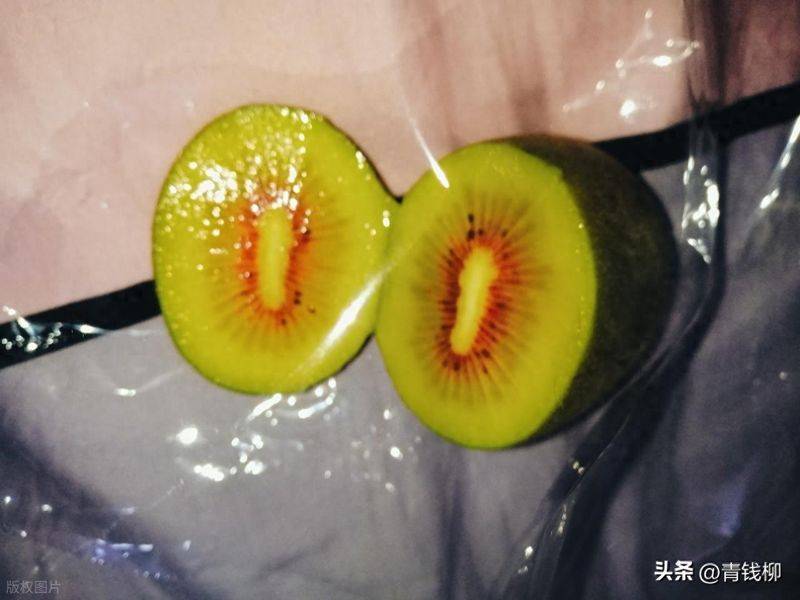
It is a short cylindrical form of fruit, the base of fruit is flat, the bark of fruit is green and brown, the face of fruit is clean and clean, the fruit is smooth, with a single fruit weight of 65 to 95 grams and a maximum of 110 grams. The fruit is yellow and green and has a radioactive red heart. The meat is juicy, sour, fragrance, 16%-20% soluble solid. The fruit is ready for about 15 days, the shelf for about 15 days, the indoor temperature for about 30 days and the storage for 90 days in a freezer of 3-5°c。
2. Role and basic requirements for rain-shield cultivation
In the spring run-off of mingbrook county, rain-shining can be effective in avoiding the losses caused by the fall-off. In the middle of april, the chrysanthemum chrysanthemum chrysanthemum, which coincides with the rainy season of mingbrook, rain-shielding is an effective way of avoiding the effects of rain on the pollinator's fertilisation and improving the production and quality of the chrype. The second is to effectively reduce the amount of water in the area where monkeys grow and significantly reduce the occurrence of ulcer diseases. Thirdly, rain-shielding in the spring with plastic sheeting can increase the temperature in the sheds, make plants grow early and fast, promote early maturity and quality of fruits, and in mid-august it will be possible to pick up markets and improve market competitiveness and economic efficiency。
The choice of park and rain-shield sheds is reasonable. Plantation in paddy fields requires deep, lax, organically rich and permeable sandy and bordery soil. The use of steel sheds to avoid rain can be developed on flats, hills and mountains, but areas with large individual plots, slow slopes and favourable construction of steel sheds are selected. A large, flat sloped paddy rice field with a rain-shield-shield plantation would benefit from a series of huts, while a large slope and a small plot of terraces would benefit from a single shed. The shed is required to be not less than 3. 5 metres high and shoulder height not less than 2. 3 metres. A combination of spray or drip irrigation or other water-saving irrigation is selected using a multifunctional drop-in polyethylene farming long-lived membrane with a thickness of 0. 5 ~ 0. 6 mm and resistance to a class 8 typhoon. The sheds are made up of three to five single huts; one-and-a-half metres between the two adjacent single huts, which are too small to allow the sheds to ventilate, drain and light; and one-metre open ditch. At the same time, condensable sunnets will need to be laid outside the roof of the shed, with a shelf greater than 50 cm above the roof and a coverage density of 75 per cent。
On the outskirts of each shed, the pole is approximately 1. 9 metres above the ground (a height that facilitates farming activities such as the retrofitting, lumbering, artificial pollination, etc. Of the kipper plant) and is tied together by ten wires for a week, which prevent slippages, and on which it is then stretched every 50 to 60 centimetres by ten wires, a web of well-shaped shapes, forming a flat roof in each or all of the sheds。
3 key technology for rain-shield cultivation
3. 1 soil preparation
The paddy fields are well protected on the ground, and they play a good role in rice growth and water management. But it makes the roots of the monkeys difficult to lace and prone to flooding. The garden is first to break down the ground floor of the plough, and it is advisable to plant the topsoil of the gutter in a platinum that is 50 centimetres high and 1. 5 metres wide, and then to dig on the topsalms that are 50 by 50 centimetres wide, and to apply corroded organic fattening (50 kg/stap), cake fattening (10-15 kg/stap), phosphorus fattening (2. 5 kg/stap), which is mixed with the topsoil and is 20 centimetres high. The construction of gardens in paddy fields is carried out with a gutter and ditches, with a full circle of trenches at depths of over 60 cm, a gutter every one to two lines, which links the whole orchard ditch, with a drying of the water, with a depth of 30 to 40 cm, slightly shallower than the gutter。
3. 2 planting
From october to february of the following year, the earlier the plant was established, especially in late autumn, when the temperature was high, which contributed to the recovery of the root system, and there would be no tardy periods in spring. The tree is grown with three to five sprouts of sprouted poles and plattered with raw root powder, with a straight layering of roots and a slightly higher root neck than the ground, as the root of the chrysanthemum is fat, suffocated with proper pressure and retweeting, then watered to the root, covered with membranes or straw, and warm, wet and protected。
3. 3 landland fertilizer water management
3. 3. 1 soil management (improved soil) and water management
In late autumn, the larvae reaches a depth of 0. 6 metres, a width of 1 metre and symmetrical ditches of more than 2 metres. On the basis of the return of the topsoil to the bottom of the ditch, it is applied to commercial organic fattening of 50 to 75 kg, plus phosphorus fattening of 2 kg. The soil outside of the horticulture will be modified within four years from the date of planting; the first fruit period will be combined with the application of organic fertilizer of more than 50 kg each at the beginning of the fall and winter. The result is that every year or year after year, soils other than the autumn and winter fertilized gutters are ploughed from 50 to 70 centimetres of tree trunks by 5 to 10 centimetres and 20 to 30 centimetres deep from 50 to 70 centimetres of trunks. In may, when weeds flourished, weeding was practiced in china, and in july-august, during high-temperature dry seasons, so that weeds were removed from the herbs in order to prevent the competition for water with the monkeys, and the planks were covered. During the rainy season, emphasis is placed on draining trenches so that they are connected and rained over gardens. In the period from july to september, unfed orchards with drip irrigation, micro-irrigation and ditch irrigation were poured once every 7 to 10 days, keeping the soil field water holding at 60 per cent. The irrigation was stopped 15 days before the harvest。
3. 3. 2 fertilisation
Young trees: fertilizers are applied in small numbers, fertilized every 30 to 45 days and 5 to 7 times a year. After planting, fertilization increased year by year with the age of the tree, with annual fertilization of 0. 25 to 0. 4 kg of nitrogen per application, 0. 12 to 0. 2 kg of phosphorus, 0. 17 to 0. 24 kg of potassium, ratio of nitrous, phosphorus and potassium mix: 1:0. 5 to 0. 7。
Outcome trees: three times throughout the year, from mid-april to late autumn and early winter, with organic fertilizer and appropriate velocity fertilizer, can be applied early to the end of august to september, after harvest, and in the growing season, usually twice, with the first application in mid-april, with the highest permafrost rate, with the appropriate combination of nitrogen and phosphorus; the second can be followed before and after harvest, with fast nitrogen and potassium. Out-of-the-horizon fatting is treated separately or in combination with pests every 15 days during the growing season. At a rate of 0. 5 kg of nitrogen, 0. 2 kg of phosphorus, 0. 6 kg of potassium, 1,500 - 2000 kg of fruit orchard, 0. 2 - 0. 25 kg of nitrogen per acre, 0. 1 - 0. 15 kg of phosphorus per year, 0. 25 - 0. 3 kg of potassium, 1:0. 6:1. 2 organic fertilizers account for more than 60% of total fertilizer application. The trees of the early age are mainly plowed and distributed, the trees of the growing age are plowed in ditches, and the rainy season is fertilized and the dry season is fertilized。
3. 4 integration, trim and binding of chickens
Two or three of them are sprouted, and then they erase the buds from the top, so that the backbone can grow up. When the main dryer is about 20 centimetres beyond the surface of the shelf, it is cut at about 30 centimetres below the shelf, prompting the new dryer to cultivate both sides. The main chicken grows up to a certain height, crosses in reverse and grows in two directions along the middle wire. At the end of the winter, a strong branch is kept as a side branch at a distance of 30 to 40 centimetres on both sides of the chicken。
The winter cut is best done after the fall of the leaves until the onset of the injury. The female selects a strong branch with a diameter of more than 1 cm as the result of the chicken, while the male provides mainly pollen, retaining the full-growing branches and cutting them lightly. Long-term shearing is also referred to as summer shearing, eliminating the trunk and the seed of the foundation, and cutting the dead and the sick branches. The fruit is followed by the removal of dense nutrient branches, long branches, and the heart of the chickens left behind for the next year as a result of which they are raised in 12 to 15 leaves, while the rest leaves five to eight leaves in the last fruit. After winter and long trimmed, you have to tie the chicken in time to adjust it to its strength and branch. A reasonable distribution on the shelf and a tie, with a nylon rope, is used to tie a fixed chicken。
3. 5 flower fruit management
In order to reduce the amount of fruit-kiding work, small side buds and small curvature buds are removed during the curvature. Monkeys, which are male and female fruit trees, can increase pollination rates through complementary measures such as bee-laying in orchards and manual pollination. One box of bees per acre is used to help pollinate when 10-20% of the flowers are open. Artificial pollination, the removal of open male flowers, the painting of newly open female columns, or the collection of pollen for hair pens, sponges, etc. The fruit takes place within two weeks (april-end of may) to sterilise malformations, small fruit, insect fruit and side fruit, and to preserve the fruit of the main flower. Five or six of them, three or four of them, one or two of them, and none of them。
3. 6 pest management
The main diseases are ulcer disease, as well as grey disease, among others. After winter clean-up, the whole garden (tree and ground) is sprayed with thiomers of 3 to 5 degrees. An ulcer disease can be administered at the initial stage (mid-april) between 1 and 2 times with 1,000 times the microbacterium humid powder or 20 per cent with 600 times the copper suspension agent; and at the initial stage (mid-march) with the onset of the disease, between 1 and 2 times with more than 10 per cent with anticinogen humid powder or between 1,000 and 2,000 times with 40 per cent of the amphibian humid powder with 800 and 1,200 times the liquid. The main pests are gold turtles, salbaum, fin moths and red spiders, among others, who, during the april-june infestation period, sprayed 2. 5 per cent of the high-efficiency chlorofluorocarbon platinum cream with low-toxic pesticides such as gold turtles and fin moths. Fifty per cent of the thiophos-methyl emulsifiable cream of 1,000 times the soil before the winter pests are released in the spring . In april, red spiders were initially sprayed with a 45% cythaphthalmyl suspension (the mites hazard) 4000 times the fluid or 1. 8% the humid powder of the avil. At its peak of incubation (generally may-mid-june) for all generations of salwarms, 22. 4 per cent of the ethylene styroid suspension 4000 times or 2. 5 per cent of the high-efficiency chlorocypermethrin cream was sprayed five to seven days in two to three consecutive times。
3. 7 fruit harvest
The soluble solids content of 6. 5 per cent is the harvest indicator and 8 per cent - 10 per cent - the optimal harvest period, taking into account the quality and storage properties of the red-yang monkeys. At the local maturation of red-yang monkeys, from early august to mid-august, more than 18 per cent of the soluble solids are collected, usually after short periods of ripe fruit. When the fruit has reached its biological maturity, the infarction and the fruit base have begun to form an ionoma, so when the harvest is taken, the fruit is held by hand, and the fruit is easily taken down, leaving the fruit to the branch。



