


As people's standard of living improves, black muir has become a popular food fungus for consumers. The black wood ear is thin, glitter, nutritious and of high edible value. Its protein content is lower than meat, eggs, fish, beans, and higher than any other vegetable. As a result, black wood ears are often compared to “infinity” nutrients. Professor wang liang of the faculty of life sciences of hebei university of pedagogical sciences will now be asked to provide you with a detailed account of the high-yielding plant technology of the black moor。
The main technology model for artificial black-molecular planting is the use of clinker bagging, which is based on broad-leaf tree chips or cotton seed shells. In this model, bacterial species can be found in solid or liquid strains, and earbrows, field-showed bags, laminate bags or casseroles。
Nutrient material for normal growth of black muir
The nutrients required in the growing process are dominated by carbohydrates and nitrogen-containing organic matter, and small amounts of inorganic salt are required. Artificial planting is usually dominated by broad-leaved tree crumbs, cotton seed shells, maize cores, sugar cane slag, etc. Nitrogen-containing substances that can be used in black wood e. G. Proteins, amino acids, urea, etc., are grown to produce nitrogen by adding falconium, pie fat, etc。
Inorganic salts are mainly calcium, phosphorus, potassium, iron, magnesium, etc., which are important components of protein and enzyme in the wood ear, in small but indispensable quantities. General wood crumbs can be provided and protected by plaster, potassium phosphate etc. In cultivation。
Black muir's requirements for temperature
It is a medium-temperature fungus with cold-resistant and heat-resilient properties, so its ears in the south are not as black, big and thick as in the north。
The mercuric cord is growing and growing between 5 and 35°c, but it is most appropriate between 22 and 28°c, which is growing faster than 28°c, but is thin and susceptible to aging; growth below 10°c is inhibited, but it does not freeze to death at -30°c。
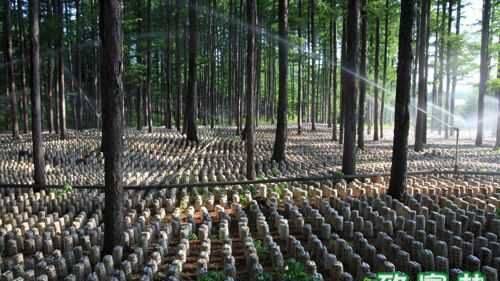
The sub-entities of the black moor can be formed and grown between 15 and 30°c, but they grow large, thick and of good quality at 22 to 25°c. Molybdenum meat growing above 28°c is thin, yellow and of poor quality. Wood, growing between 15 and 20°c, though thick, black and of good quality, is slow to grow and has a long production cycle, affecting production. Less than 15°c does not easily form a sub-entity。
Black moot for humidity
The requirements for humidity in black muir are expressed in two respects:
One is the amount of water in the culture. The nutrients are required to contain 60-65 per cent of the water during the fungi phase; the most suitable is 70-75 per cent during the sub-entity formation phase。
The second is the relative humidity of the air, which is required to be around 70 per cent in the fungology chamber at the fungic stage, and 85 per cent to 95 per cent at the earring stage. Because the earpieces of the black wood are glued, they are easily absorbed into the air and the water swells in the air, and they only grow when they inhale. Headsets are slow to grow when the relative humidity of the air is less than 80 per cent; less than 70 per cent are not easily formed. But if the air is relatively wet above 95 per cent, the growth and development of ear blades is also detrimental and prone to disease。
Black moor demands light
It is a fungus type, but it does not need light to grow it, but rather it inhibits the growth of the fungus, so that the fungus stage is dark. Light is required for the formation of the blackwood ear entity. Black moot cannot easily form a sub-entity in a completely dark environment; insufficient light, sub-entity deformity. Ear buds only grow strong in a certain direct sunlight. The thickness of the wooden ear after direct light. An ear field with no direct light, growing woody ears, light color, inflexible, feeling weak. So black muir is one of the brightest species of artificially planted edible bacteria. It should be noted, however, that while the black wood ear is more resilient to direct light, it must be accompanied by appropriate humidity, otherwise it can shrink, dry, stop growing and affect production。
Requirements for ventilation and alkalinity during blackwood ear cultivation
Black muir is a good aerobic fungus, and good ventilation is required at both the fungi and earning stages to ensure adequate oxygen and co2 emissions. In the fungi stage, the fungi bag is highly susceptible to fungi contamination if ventilated; in the sub-entity, when ventilated during growth, co2 concentrations are high, the original base is indistinguishable, the earpiece is not properly stretched and growth is inhibited. As a result, the air flow of the fungus chamber or the ear field is often maintained during blackwood ear cultivation to protect the growth and development of blackwood。
The black wood ear is suitable to live in a micro-acid environment, and the ph of the culture is best at 5. 5 to 6. 5. The ph value of the broach at the time of mixing can be moved from raw lime to range 7-8, and the required alkalinity can be achieved after sterilization。
It's a formula used to plant black wood
(1) 78 per cent of tree crumbs of broad leaves, 20 per cent of wheat or fine rice, 1 per cent of plaster powder, 1 per cent of sugar or red sugar。
(2) 73 per cent corncracker, 20 per cent cotton seed shell, 5 per cent wheat, 1 per cent sugar or red sugar, 1 per cent plaster。
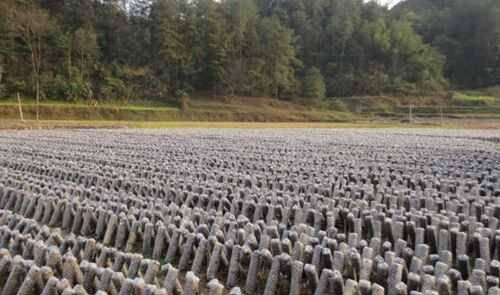
(3) 76 per cent of tree crumbs, 10 per cent of rice, 10 per cent of wheat, 2 per cent of soybean powder, 1 per cent of sugar or red sugar and 1 per cent of plaster。
(4) ninety-three per cent for cotton seed shells, 5 per cent for wheat, 1 per cent for plaster and 1 per cent for sugar or red sugar。
Note: nutrients should be selected for fresh, dry, non-stereogenic materials. Wood crumbs choose broad leaf tree species; corn cores should be exposed to sunlight for a period of one to two days, with shredders to break into particles of soybeans to the size of maize grains, and not to be crushed into herbs, so as not to affect the aerobicity of the materials。
What should we do with black muir cultivation season
In general, normal fertilisation periods are 45 to 50 days, 10 to 15 days, 7 to 10 days, and 45 to 60 days。
In seasonal arrangements, the earing period avoids high temperatures above 30°c and low temperatures below 18°c. In accordance with the temperature requirements of the black muir, the southern part of the country is generally cultivated in the spring and autumn. In the spring, 2-march bags were cultivated, and mushrooms were produced in april-may; in the autumn, 8-september bags were cultivated, and in the ears in october-november。
The northern regions of the country are generally selected for spring and summer cultivation, with bags in march-may and ears in september. In north china, two batches can be produced in one year. The first planting bags were produced in mid-february, followed by a push in mid-april and late, and ended in mid-july. The second batch, which was produced in mid-may and late, was ready for call in mid-august and ended in early november。
The planting time of the black moor shall be based on the production time of the planting bag, with the secondary species being approximately 65 days in advance and the tertiary species being approximately 30 days in advance. At the same time, bags and vaccinations should be pre-empted or delayed appropriately in different regions。
Processes and cares for artificial black wood
Combination packs are inoculated against the fungus of fungi management。
The following aspects should be noted in the mix: first, strict application of the requirements of the plant formulation. Substances of unknown composition may not be added at will into the culture. The second is to dry, then wet, and try to be even, and it can be done with artificial blenders or blenders. Thirdly, the amount of water contained in the material is about 60 per cent, i. E. The ratio of dry materials to water is 1:1. 1-1. 3. In front of the bag, test the amount of water by hand: hand palms hold it hard, there is water in the stitches but no drops, the middle of the hand can be condensed, and the appropriate amount of water; if the water is dripping, it shows too wet. Usually do not get wet. The high water content not only results in slow bacteria, but also is susceptible to contamination. Four is appropriate for ph, which can be measured on ph paper and controlled around 7. Finally, when the material is mixed, it must be packed in a timely manner and sterile to prevent the acidity of the material。
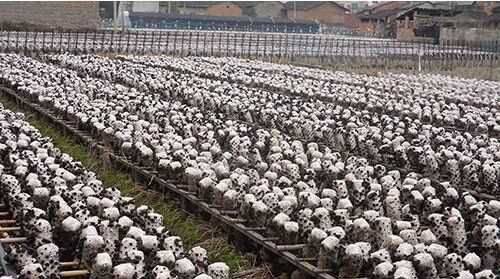
Package is typically mechanical, and small amounts are manual. 17 cm x 33 cm low pressure polyethylene short or 12 cm x 45 cm long. Whether it be mechanical or manual, it must be done: fast, loose and moderate, with a sealed pocket, with light discharge。
Observatoire:
Sterilization is often carried out under constant pressure. 17 cm x 33 cm fungus should be eliminated in a basket or on a shelf in a steaming pan; 12 cm x 45 cm fungus elimination bags should be applied in a long and flat fashion, in an overlap of the word "#" with a row distance of 3 cm to facilitate internal air flow. It is then sealed with plastic cloths and cotton, and remains at temperatures of more than 100°c for more than 12-16 hours. When the temperature of the fungus is reduced to below 60°c after sterilization, the bag is sent to the inoculation room for cooling while the heat is in the pot。
Vaccination requires attention:
Vaccination is possible when the temperature of the material in the bag is reduced to below 30°c。
Vaccination must be sterile and completed in the inoculation room or in the vaccination box。
The short-breed kits are administered as follows: cold-cooled bacterium bags are placed in sterile inoculation boxes; 75 per cent of the external walls of the bacterium are sterilised with alcohol, and in the sterile areas where alcohol lamps are lit, the mouth of the bacterium is directed to the pocket, and the bacteria are spread evenly on the inside of the bag, forming a thin layer, so that the black-mulcella cords rise quickly and seize the surface in order to contain the infection. When a bag is loaded with a cone plastic stick, the plastic stick can be pulled out and the fungus can be drawn to a hole left by the stick, so that the fungus grows from the inside out, and the fungus can grow faster. Usually, 30 bags per bottle can be taken。
Vaccination of the fungus bags is carried out using the method of lavender vaccination, i. E., a 1. 2 cm in diameter and 2 cm deep on the side of the fungus chamber, which is quickly connected to the block of the fungus and is then immediately sealed with tape, requiring that the lavender, vaccination and sealing be fast and accurate。
Technical highlights of fungi management:
The fungus bag is then administered on the sterile shelf, which is about 35 cm between layers. In the early stages of a culture, the bag should be set up and properly placed, with appropriate distance between the bags, so that when the mycelium reaches into the material, the bag can be compared to the bottom, mouth-to-mouth, two rows in, and four rows up and down. A culture room without a culturer can be sprawled into a bacterium wall, usually on 6-8 floors; there are pavements between the bacterium walls. When the fungus is produced, the culture bag is placed in a "#" shape, about 10 layers high. The first four bags of fungus should be kept at a suitable distance at each level and may be converted to three or two layers as the temperature rises。
During the pre-bacterium period, i. E., 15 days after the vaccination, the temperature in the culture room is reasonably low, at 20°c - 22°c, which slows the growth of newly inoculated bacterial silks, which are alive and can reduce bacterial contamination. In the medium term, i. E., 15 days after the inoculation, the growth of the fungus has been dominant, increasing the temperature to about 25°c, and increasing the rate of infection. In the post-bacterium period, when mybs are running fast, i. E. Within 10 days of the end of the culture, the temperature is then reduced to 18°c ~ 22°c, the mybs grow robust at lower temperatures, and the nutrients are fully absorbed. In this way, the fungus are produced early in their ears, are highly fragmented, resistant to disease and yield。
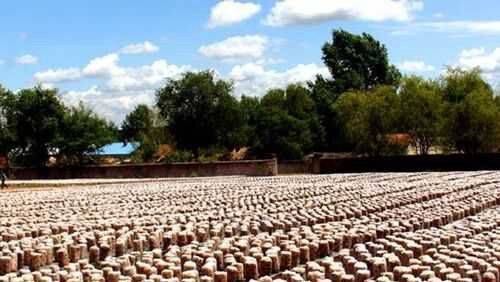
The temperature in the fungus bag during the fungi period shall remain at below 32°c, whichever is the second and lower layers measured above. The relative humidity of air in the culture rooms is generally between 55 and 65 per cent. Black moor does not need light at the filamentary stage, and the windows and vents of the culture room need to be covered and the interior light close to darkness. The training room has 20 to 30 minutes of ventilation per day. Make sure there's enough oxygen to maintain normal metabolic use of membranes. At a later stage, there is a greater need to increase ventilation time and frequency and to keep indoor air fresh。
The need for attention when developing bacteria
(1) cultivation rooms must be hygienic, dry and not more than 70% wet air. (2) the pre-package culture room is to be sterilized. Aerosol disinfectors can be used for fungicide treatment, while sprayers can be sprayed with multibacterium or pyrethroid insecticides for insecticide, preferably with a layer of lime on the ground and more at the door. (3) the culture room shall be protected from light. (4) periodic screening of the infection. Inactivated and non-contaminated bags of bacteria can be replanted; contaminated baptism bags can be controlled by local injection of multibacterium or limewater; severely infected bacterium bags are cleared in a timely manner and removed by remulcanization in order to prevent fungi transmission。
How to make a bed for a well-released bag
Blackwood ears may be used in the form of shades, field overlay bags, laminate bags or bags. The south generally uses shades. In the north, there are more field bags. The latter must be used to make the first bed for the bag. The topography is flat, near the water source, well drained, and an empty area behind the house to make a fung bed. Try to avoid the wind and stay away from the farm. Clear the garbage around the fung bed. 5 cm tall, 90 cm wide, unlimited length. There's a drain between the bed and the bed. When the bed is ready, heavy water is poured over the bed surface once, and polymice or pyrethroid insecticide is sprayed for insecticide treatment。
Technical aspects of seedling management
A well-bred bacterium bag is transported to the site of the bacterium, and the pockets of endemic fungi are placed in isolation and finally opened. Transport is carried lightly。
A 1% raw lime water or 0. 1% potassium permanganate solution is used to sterilize the whole bag and then extract the post-dry control. Type v on the face of the fungus. It's 1. 5 cm long and 0. 5 cm deep. The fungus bag is about 20 mouths and the fungus bag is about 40 mouths。
After a sip, the fungus is set straight on the crib. A distance of 3 cm is left between the bag and the bag, and the surface is released without a membrane, e. G., the ground drying requires some bottom water; the ground is more humid and directly bagged. After the release, plastic film is covered, and grass curtains are covered, and then managed for the germination period。
Technical elements for the management of sub-entity segmentation
The period of physical division of the blackwood ear means the period during which the ear-wire formed the coral form and grew as long as the peach nucleus began to stretch out the small earpiece. After the eardrum, the eardrum is naked in the air, where the relative humidity is not less than 90 per cent, and the wooden eardrum surface is not dry. In the event of insufficient humidity, the ecstasy is prone to loss of water rigidity, affecting the fragmentation of ears. In order to maintain humidity, the fungus bag may be sprayed with mist water so that the earpieces are wet to the point where they are wet to the side. Ventilation is carried out every evening until ear buds reach about one centimetre to start bed management。
A layer of membrane shall be laid on the ground before the break-up, the fungus shall be lightly carried and set up, and the fungi bags shall be removed from the middle, 20 bags shall be placed per square metre, with a distance of 10 cm, so as not to bind the ears and influence the circulation of the air。
Elements of long-term management techniques for sub-entity
When the earpiece extends to about 1 cm, it enters the sub-entity for long periods of time. This period increases the relative humidity of air between 90 and 95 per cent and improves ventilation. During this period, water spray management is the most critical link. Clear, clean, clean river or well water; specialized water-jet facilities such as micro-jets are used for spraying. Two watering methods, 5 to 7 a. M. And 5 to 7 p. M., are generally used. Hym management should be careful to maintain “dry and wet interchange, dry and wet, wet and clear”. In the management process, the edges of the earpiece are kept in their inner scrolls and the earpiece is increased and thickened. Earkiss can wash directly with clean water when contaminated. Water is stopped at temperatures above 25°c。
Picking and drying blackwood ears
When white spores appear behind the earpieces, they must be collected in time to reach the age of eight. Water was stopped 1-2 days before the harvest. When the earpiece is extended or rolled up, the extraction affects quality and productivity. Slices are used to cut off the eardrums at the time of harvest, and as far as possible no culture material is brought to keep the eardrum clean. You can't just wring it off with your hands on your earpiece。
And when the ears are tanned, they shall be on top, and their ears shall be on the lower, and when the large bodies are tanned, they shall be torn open into single pieces. When tanning your ears, use a net of support and air up and down. The sun is dry as far as possible and is dry once。



