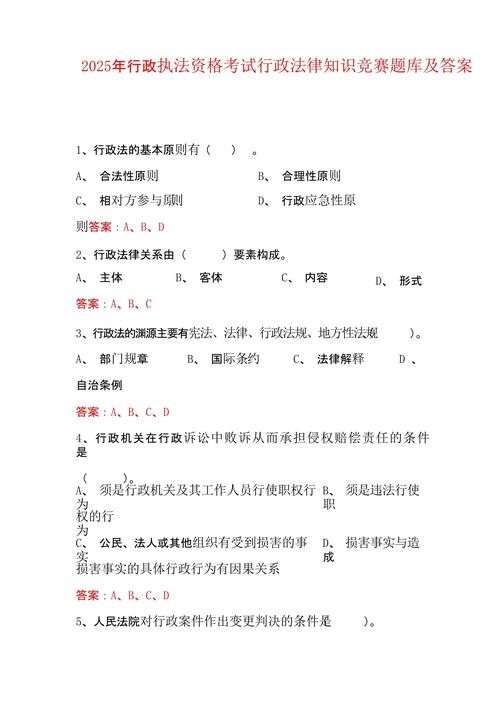
Question 1 of the constitution: in which year did our current constitution come into force? - answer: 1982. 2. Question: what is the constitution's fundamental system? - answer: the socialist system. 3. Question: who is all the power of the people's republic of china? - answer: people. 4. Question: what are the principles applied by our national institutions? - answer: the principle of democratic concentration. 5. Question: is it correct that the constitution establishes that citizens have the duty to preserve national unity and national unity? - answer: correct. 6. Question: what does our constitution provide for education for citizens? - answer: rights and obligations. Question: how many years does the constitution provide for the term of office of the national people's congress? - answer: five years. 8. Question: the amendment to our constitution proposed by the standing committee of the national people's congress or by more than one fifth of the deputies of the national people's congress and adopted by the national people's congress by a majority of all the representatives. -answer: two-thirds. Question: what is the national anthem of the people's republic of china? - answer: "the vigilante is in motion." 10. Question: what is the constitutional right of our citizens to criticize any state organs and agents? - answer: recommendation. Question relating to the civil code: when has the civil code of the people's republic of china been in force? - answer: 1 january 2021. 12. Question: when does the civil code provide for the civil capacity of natural persons? - answer: at birth. 13. Question: how many years of age are minors without civil capacity? - answer: eight. 14. Question: is a person who has suffered damage as a result of a voluntary act of emergency assistance subject to civil liability? - answer: no. 15. Question: how many years does the statute of limitations apply to the people's court for protection of civil rights? - answer: three years. 16. Question: how many years should the duration of the lease not exceed? Overwhelming. - answer: 20 years. 17. Question: if the right to personality is violated, the victim has the right to claim the responsibility of the perpetrator in accordance with the provisions of the civil code and other laws. - answer: civil liability. 18. Question: the civil code stipulates that the age of marriage may not be earlier than 22 years for men and how many years for women? - answer: 20 years. 19. Question: what is the property of the spouses during marriage generally? - answer: joint property. 20. Question: what is the order of inheritance? What's the first order? - answer: inheritance in the order of legal succession, the first order being spouse, child, parent. Questions relating to criminal law: what are the basic principles of our criminal law? (at least two answers) - answer: the principle of criminal law, the principle of equality in the application of criminal law, the principle of proportionality. 22. Question: what is the liability for crimes committed by persons who have reached the age of 16? - answer: criminal responsibility. 23. Question: should a person who commits a crime, be criminally responsible? - answer: should. 24. Question: what is the harm caused to a person by an act of suppression of an unlawful act in order to protect the state, the public interest, the person, property or other rights of the person or of another person from an ongoing offence? - answer: self-defense. 25. Question: the automatic surrender after the commission of the offence, if the statement is true, is voluntary. What can be done to punish criminals who surrender? - answer: the penalty may be light or reduced. Among them, where the offence is less serious, the penalty may be waived. 26. Question: what are the main penalties and what are the additional penalties? (a minimum of three answers) - answer: control, detention, imprisonment, life imprisonment, death penalty. 27. Question: if the offender who has been sentenced to a term of imprisonment or more, after the sentence has been served or pardoned, the offence for which the term of imprisonment or more is applicable is repeated within a few years? - answer: five years. 28. Question: what is the offence of looting public or private property by violence, coercion or other means? - answer: robbery. 29. Question: what is the offence of misappropriation, theft, fraudulent taking or other illegal possession of public property by state agents, who avail themselves of service facilities? - answer: corruption. 30. Question: is it intentional or negligent to commit an offence knowing that its actions would result in harm to society and wishing or allowing such a result to occur? - answer: intentional crime. Question 31. Administrative law: what are the types of administrative acts (at least two responses)? - answers: ex officio administrative acts and applications for administrative acts; restraint of administrative acts and discretionary administrative acts; fundamental administrative acts and non-essential administrative acts. Question: what are the types of administrative penalties? (a minimum of three answers) - answers: warnings, fines, confiscation of illegal proceeds, confiscation of illegal property, suspension of operations, suspension or revocation of permits, suspension or revocation of licences, administrative detention, etc. 33. Question: what are the rights of the applicant and interested parties to be informed by the administrative authority before the administrative authorization decision is taken, that the administrative authority is directly concerned with a significant interest between the applicant and others? - answer: hearing. Question: how many days from the date of receipt of the application should the administrative review body take a decision on the administrative review? Answer: within 60 days; except for administrative review, which is prescribed by law for less than 60 days. 35. Question: when citizens, legal persons or other organizations bring administrative proceedings directly before the people's court, how long should they have taken from the date on which they knew or should have known that an administrative act had been made? - answer: within six months. 36. Question: do the administrative authorities and their staff have the right to compensation in the exercise of their executive powers in cases of illegal detention or in cases of unlawful administrative coercive measures restricting the personal liberty of citizens? - answer: yes. 37. Question: is it correct that the administrative authority, by applying for administrative authorization, may not make improper requests to the applicant for the purchase of specified goods or for the acceptance of paid services? - answer: correct. 38. Question: what should be done by the executive branch that takes administrative decisions, when administrative enforcement is established by law, which does not provide for enforcement by the executive? - answer: application to the people's court for enforcement. 39. Question: how many law enforcement officers must be in charge of investigations or inspections? - answer: two. 40. Question: what are the ways in which administrative opponents can defend their rights and interests if they decide not to accept administrative sanctions imposed by the executive? (at least two responses) - answer: administrative review may be requested and administrative proceedings instituted. Questions relating to labour law: under our labour law, the state applies a system of working hours for workers not exceeding a few hours per day and, on average, hours per week? Answer: no more than eight hours per day and no more than forty-four hours per week on average. 42. Question: if the employer does not enter into a written contract of employment with the worker for how long from the date of employment, the employer and the worker are deemed to have concluded an indefinite contract of employment. - answer: a year. 43. Question: the wage of the worker during the probationary period may not be lower than the minimum wage for the same job at the employer's place of employment or the amount of the wage agreed in the contract of employment, and may not be lower than the minimum wage at the employer's place of employment. - answer: 80%. 44. Question: what proportion of wages should be paid in the case of extended working hours by employers? - answer: 150 percent. 45. Question: how can employers and workers resolve labour disputes? (at least three answers) - answer: consultation, conciliation, arbitration, litigation. 46. Question: how many days does a woman worker have maternity leave? - answer: 90 days. 47. Question: part-time work, which is primarily hourly paid, is a form of work in which workers generally work no more than a few hours per day in the same employer and no more than a few hours per week. Answer: on average, no more than four hours a day and no more than 24 hours a week. 48. Question: is it correct that employers hire workers, that they may not withhold their identity papers or other documents, that they may not be required to provide security or that they may otherwise collect their property? - answer: correct. 49. Question: what is the limitation period for applying for arbitration in labour disputes? - answer: a year. 50. Question: how many days before the worker gives written notice of the employer's dismissal? - answer: 30 days. Question 51. Question related to consumer protection: is it correct that consumers need to buy, use or receive goods for their consumption, whose rights are protected by the consumer protection act? - answer: correct. 52. Question: what are the rights of consumers? (at least three answers) - answers: right to security, right to know, right to self-determination, right to fair trade, right to claim, etc. Question: how many times is the amount of compensation paid to the consumer for the purchase of the goods or the cost of receiving the services? - answer: three times; 500 for the increase in compensation less than 500。54. Question: how can consumer disputes arise between consumers and operators? (a minimum of three answers) - answers: conciliation with the operator; conciliation by consumer associations or other mediation organizations established by law; recourse to the relevant administrative authorities; arbitration by arbitration bodies on the basis of an arbitration agreement with the operator; action before the people's court. 55. Question: the operator sells goods on the internet, television, telephone, mail, etc., and the consumer has the right to return the goods within a few days of the receipt of the goods without having to give reasons? - answer: seven days. Question: to whom can consumers seek compensation for damage to their legitimate rights and interests when purchasing or using goods? - answer: compensation may be sought from the seller. 57. Question: what liability should the advertising operator, the publisher, design, produce and publish false advertisements for consumer life and health goods or services that cause damage to consumers? - answer: joint and several responsibility. 58. Question: what are the legally established organizations of consumer associations that protect the legitimate rights and interests of consumers through social oversight of goods and services? - answer: social organization. 59. Question: how long does the consumer discover defects and, in the event of a dispute, the operator bear the burden of proving the defects in the services provided by the operator, such as motor vehicles, computers, televisions, refrigerators, air conditioners, washing machines, etc., or decorative improvements? - answer: within six months. 60. Question: when buying goods or receiving services, consumers have the right to fair trading conditions such as quality assurance, fair prices, correct measurement and the right to refuse the operator what kind of transaction? - answer: forced trading. Question relating to the environmental protection act: what are the basic principles of our environmental protection act? (at least two answers) - answer: the principle of coordinated development of economic construction and environmental protection; the principles of prevention, integration of prevention, integrated governance; the principle of public participation; and the principle of liability for damage. 62. Question: business enterprises and other producers who release pollutants in violation of the law, are fined, ordered to correct them, refused to do so, and the administrative body that has decided to impose the penalty in accordance with the law, may, from the day following the date on which the correction is ordered, impose a continuous penalty according to the amount of the original penalty. - answer: daily punishment. 63. Question: is it correct that the country has a system of control of total emissions of priority pollutants? - answer: correct. 64. Question: citizens, legal persons and other organizations who find that the people's governments at the local level and above, the environmental protection authorities of the people's governments above the county level and other departments with supervisory and regulatory responsibilities for environmental protection do not perform their duties in accordance with the law, have the right to report to their superior organs or to what bodies? - answer: inspectorate. 65. Question: the construction of pollution prevention facilities in the project should be designed at the same time as the main project, at the same time as construction, and at the same time what? -answer: both. 66. Question: what should enterprises and other producers that release pollutants pay in accordance with the relevant national regulations? - answer: environmental protection tax (original sewage charges have been changed to environmental protection tax). 67. Question: what are the conditions under which social organizations can bring an action before the people's court for pollution of the environment, ecological damage and damage to the public interest? - answer: registration by the civil administration of the people's government at the municipal level and above in the established districts, in accordance with the law; specializing in activities of public interest for the protection of the environment for more than five years without any record of violations. 68. Question: what is the mechanism for monitoring data and strengthening the management of environmental monitoring? - answer: sharing. 69. Question: what measures, if any, can the authorities responsible for environmental protection at the county level and above order enterprises and other producers that exceed the emission criteria or the control targets for total emissions of priority pollutants, and, in serious cases, with the approval of the people's government with the right to authorize, order the closure and closure of the operation? - answer: limit production, cut-off and clean-up. 70. Question: what is a good culture that people's governments at all levels should strengthen their efforts to promote and disseminate environmental protection and encourage grass-roots mass self-government organizations, social organizations and environmental protection volunteers to disseminate information on environmental protection laws and regulations and environmental protection? - answer: protect the environment. Viii. Other law-related issues. The road traffic safety act provides for liability for traffic accidents between motor vehicles and non-motorized drivers, pedestrians and, if no fault of the non-motorized drivers, pedestrians. - answer: the motor vehicle party is liable. 72. Question: what kind of school education system does the state apply, as stipulated in the education act? (at least three answers) - answers: pre-school education, primary education, secondary education, school education in higher education. 73. Question: how long has the public security administration punishments act not been discovered by the public security organs for breaches of the administration of public security? - answer: within six months. 74. Question: the trademarks act stipulates how long the registration of a trademark is valid, starting from the date of its approval for registration? - answer: 10 years. 75. Question: what are the rights to copyright under the copyright act? (at least three answers) - answer: right to publish, right to sign, right to modify, right to protect the integrity of the work, right to reproduce, right to issue, etc. 76. Question: the law on the protection of the rights and interests of older persons provides that the breadwinner shall fulfil his or her obligations regarding the financial support, living care and moral comfort of the elderly and the needs of the elderly. - answer: special needs. 77. Question: what rights does the state guarantee to women on an equal basis with men, as stipulated in the law on the protection of the rights and interests of women? - answers: political rights, cultural and educational rights, labour and social security rights, property rights, personal rights, marital and family rights, etc. 78. Question