The primary stage is the foundation for the child's growth, starting at the age of six and seven and starting at the middle school level at the age of twelve, and six years, when it seems flat, is quietly shaping the child's learning abilities, character and character. Many parents equate primary education with targeted grades, remedial classes, downgraded scores, deregulated grades, and the way in which the reverse education is carried out tends to make children tired and tired of growing up. A truly high-quality primary education, hidden in daily details, with habits, plastics, nature and competence, is at the heart of children's long-term growth。
It's a habit. It's the invisible treasure of a student's life. The first and second grades are devoted to three minor tasks: many children go to school to play first, to write late, to spend time with the whole primary school, the root of which is the lack of a sense of discipline in early childhood. Parents do not have to be strictly regulated, but they have to set a fixed schedule: half an hour after school, work at a fixed point, and prepare school bags and stationery before bedtime. Similarly, writing habits must not be ignored, and scribble writing not only affects cross-scoring, but also fosters perfunctory attitudes. The day-to-day exercise without extra weights, 20 minutes of silent writing each day, and the child's patience and self-discipline will be visible. The focus is even more important, as parents do not send fruit frequently, interrupt questions, create a quiet learning environment and focus on learning, which can significantly increase classroom absorption efficiency。
Moral education is an indispensable base for primary education. Textbooks teach children and family education shapes children's personalities. Primary school pupils are not yet in shape and are very easy to imitate from their side of the story, and the first lesson of the child is that of parents. The children are taught to be polite, to be mistaken, to share and to be grateful: they are in conflict with their classmates and are guided to think instead of being partial to their own children; when they make a mistake, they take the initiative to take the consequences and do nothing to avoid pushing them; and they take the initiative to do what they can to clean the place, to clean up the dishes and to clean the room. From childhood, children who know responsibility and love are more popular and more healthy in their minds. A good, faithful and committed character can make the child go further than a full score. Many parents now value only their cultural scores, neglect their moral upbringing, and have excellent and selfish performances. They are highly vulnerable to interpersonal conflicts, psychological rebellion and loss of profits after entering primary and secondary school。
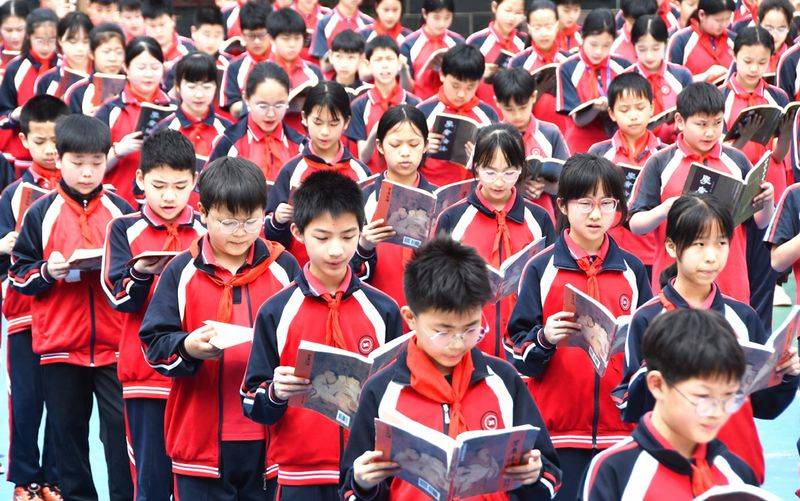
Responsive to nature, refusing blind front-runners. It is now common to teach early classes in pre-schools and newspapers in the lower grades, with many children attending kindergarten completing primary school, repeating classes in the lower grades, losing interest in listening and creating early aversion. Primary education is gradual, with a corresponding level of awareness for each age group, a pre-eminence of superstitious knowledge, short-term performances that appear to be high, and an overstretched child. After school hours, take the children into nature, climb mountains, go to the park, observe insects, and keep reading out of school. Reading is a low-cost, integrated way of improving literacy, maintaining half an hour of reading every day. It builds up word material, improves reading understanding, enriches the inner world and increases language literacy. Reasonable early childhood protects children's curiosity and desire for exploration, which is precisely the driving force behind active learning。
Looking at the scores, rationally looking at the ups and downs. Knowledge at the primary level is less difficult and a single examination score does not define the child's merit. Many parents accuse them of cursing when they see a low score, over-incentives with high scores, and extreme reward and punishment models that bind their children to learning and utilités, fearing failure and fearing examinations. In the face of undesired papers, priority is given to finding faulty reasons: careless or uninformed, and targeted omissions are far more useful than criticism. Incentive education corresponds to the psychology of primary school pupils, and one word of recognition and appreciation can help children build their learning self-confidence. Self-confident children are willing to study in the face of difficult problems; long-defended children are prone to self-doubt and give up their efforts。
Home schools work together to create a two-way education. The school is responsible for classroom instruction and group guidance, and the family is responsible for after-school attendance and customary landings. Parents take the initiative to work with teachers to communicate their children's school status in a timely manner and do not shift the responsibility for education to the school; teachers are school-based to regulate child behaviour and provide timely feedback on growth issues. Family schools have the same goals so that children can grow steadily in a unified educational environment。
Six years of primary school, six years of deep roots, are not six years of rapid growth. There is no need to rush to achieve a one-time high and steady upbringing based on the four main directions of habits, virtues, reading, physical and mental health. The difference may not be apparent for children in the short term, but the pre-maturity advantage will erupt in the early stages of primary and secondary school. Education has never been short-cut, accompanied and guided by science, to keep up the critical period of primary school growth, and every ordinary child can grow up in warm education, becoming a good young person with physical, mental and physical integrity。