


Grapes are fruits that many people like to eat, which are of high nutritional value and good taste. Grapes are not only fresh, they can be processed and used for a wide range of purposes and are grown in many areas. In order to be more effective, many people have chosen to plant them in large sheds, which together follow to understand the techniques and management of grape cultivation。
1. Site selection
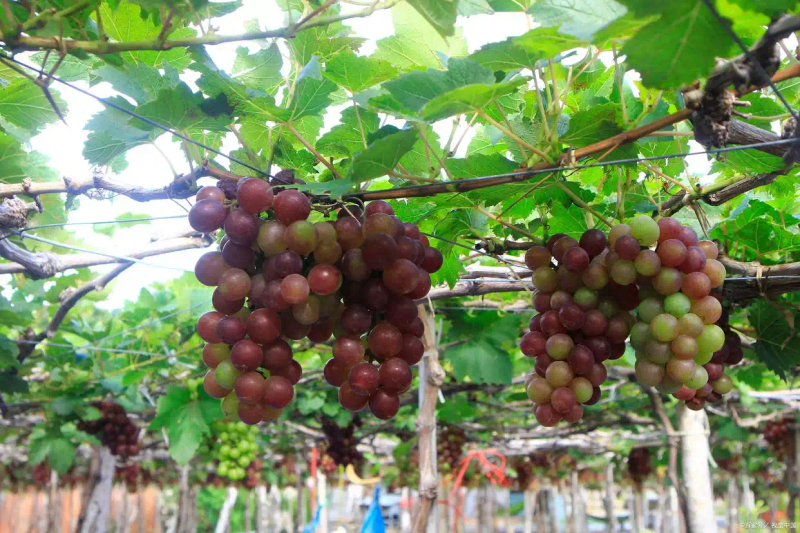
Sites are selected in such a way as to ensure sufficient water sources for irrigation and good drainage to prevent rain from entering the sheds after the rains and to the detriment of grape growth. Soil requirements are loose and thicker. Grapes are selected to be disease-resistant, of good quality, high-yielding, cold-resistant varieties. When planting, care is taken that the roots of grapes should be scattered around them, and when half of the *fill is filled, the seedlings are lightened, so that they can spread better, and when planted, water is poured so that the * sunk。
2. Fertilizer management
Grapes are grown with a large amount of nutrients, fatting is applied before they are fertilized, before they start to bloom, and when they swell, so that the branches grow better and their ears grow better, and the base fat is applied before winter after the fall harvest, so that they can be fertilized in shallow ditches so that they do not cause too many root injuries, mainly in the form of human and animal dung, school fat, fat fatty, etc., and water when applied。
3. Water-water management
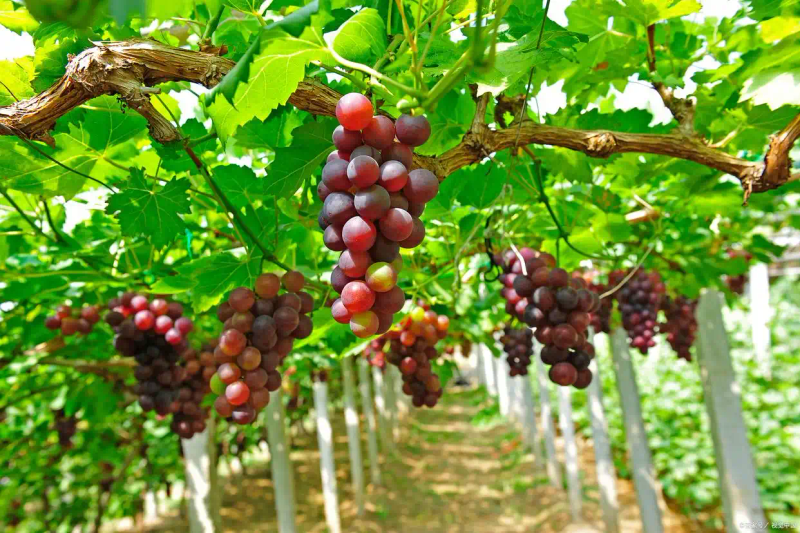
The grapes are watered for the first time, before flowering, for the second time, after flowering, for the third time. If the flowering period is overwatered, it can cause a large number of flowers to fall and can also see the extent of the drying of the soil in the shed, otherwise the flowering period would not be suitable for water。
4. Temperature management
The humidity during the flowering period cannot be too high, otherwise grapes will be coloured, of low quality, and the incidence of fibrosis will increase relatively. Relative humidity is controlled at around 50 per cent and 70 to 80 per cent for the rest of the period. The temperature in the shed is below 30 °c, the grains expand to maturity and do not exceed 32 °c in the daytime, and the high temperature causes solar fever in the ears. Night temperatures are lower, and temperature differentials contribute significantly to the increase in colour and sugar on fruit grains。
5. Cut management
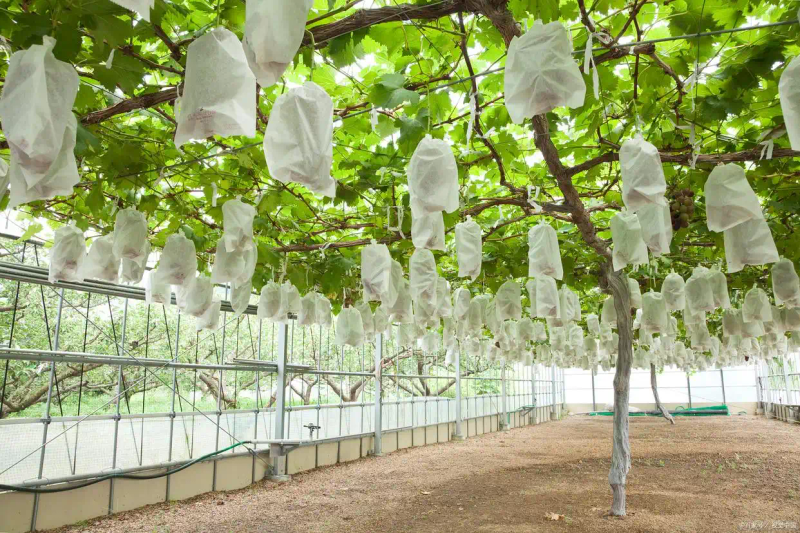
In the process of growing grapes, they are trimmed periodically, and the broken grapes are trimmed, leaving strong branches. When triming, care is taken that the thick branches can be long, the smaller ones may be short and the smaller ones may be on the side branches. In the more hot summer days, when grape branches are not irrigated with sufficient water, the leaves become water-scarce and dry, so that the dry leaves are trimmed in time to facilitate their normal growth。
6. Pest management
In the case of raisins, which are relatively small under reasonable conditions of cultivation, if not properly managed, they are prone to diseases such as buffalo, foliage, pollinosis, red spiders and moths, which must be combated in a timely manner. In the fight against pests and diseases, grapes are breeched to cut out some of the more dry branches, to remove leaves in time and to reduce the probability of their occurrence. In the later stages of grape growth, appropriate insecticides and microbicides can be administered。
The above is a presentation on the management of large-street grape cultivation, which makes it possible to plant grapes at different times, promotes high-quality production of grapes and meets market demand, and therefore requires good management。



