


When it comes to planting land, the first reaction of many farmers is the application of fertilizers, flooring, weeding, year-to-year work, and the more the soil grows, the less the ground, the more the fertilizer is used, the less the production。
In fact, growing land can be achieved without great effort and with simple crop pairs and natural cycles。
For the most common radish, it is not just a regular meal table, but a good hand for soil improvement。
Today we will talk about the core logic of radish breeding, together with the global prevalence of lazy breeding patterns, taking into account the latest ecological farming experiences at home and abroad, where ordinary people can move directly from home to small farms, with fewer inputs and less management and more fertile soil。
I. Bottom logic of radish breeding: no deep tillage, roots of pine-coated turbobuff
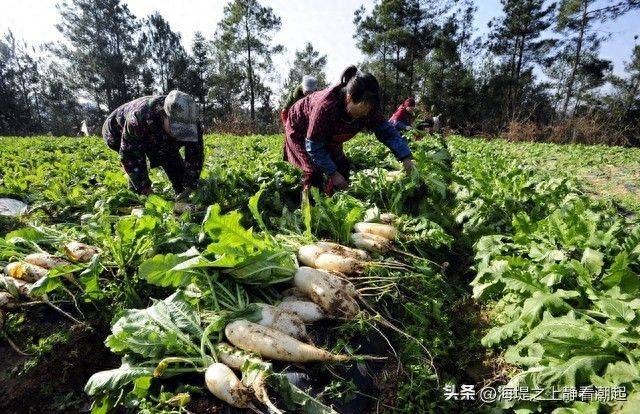
Many do not know that radish is a natural soil improvement crop, especially in straight root varieties such as white radish and blue radish, and that the field is far more effective than ordinary green leaves。
The root root of the radish can reach 60-80 centimetres vertically into the ground, and the deep roots are grown in a way that stretches up a tight layer of soil, breaks down the ground floor of the plough, without the use of large-scale machinery for deep tillage, so that the soil can decompress itself and become more ventilated。
And radish growth cycles are short, usually 60-90 days to harvest, suitable for crop rotation。
It is a crop of shallow fattening, deep pine soil, absorbing excess nitrogen fat in the soil and avoiding salinization resulting from excess soil nutrients; it also releases organic matter and organic acid after the root is decomposed, decomposes solid phosphorus and potassium in the soil and increases soil fertility。
Domestic agricultural extension data for 2024 show that for two consecutive years, radish had been rotated, with an average increase in soil organic content of 8 to 12 per cent and a marked improvement in soil sheeting。
At the heart of the land for lazy people is less intervention and crop regulation. The seeding of carrots does not involve frequent earth-turning, heavy water fattening, the harvesting of radish sush root, the direct return of leaves to the fields without additional cleaning, the natural decomposition into organic fertilizer, the total absence of man-made manure and the saving of energy。
This is a low-cost model that can be used both in family gardens and on scale ecological farms。
Ii. The domestic radish cultivation model, with a zero threshold for farmers
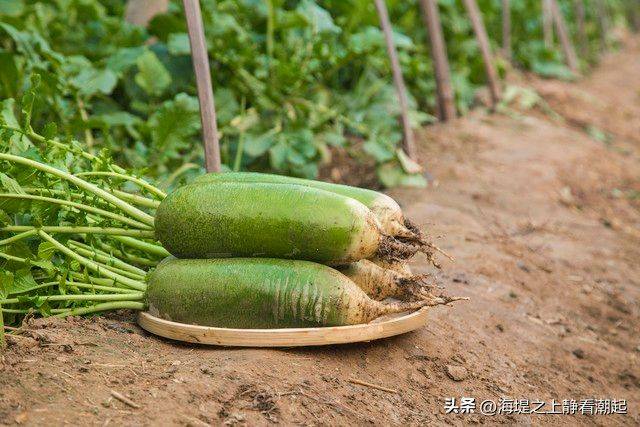
In conjunction with the case of ecological farm landings from 2024 to 2025, the country's radish farm is divided into three practical models, which are operated by lazy people and do not use sophisticated technology:
1. Pre- and post-natal care land
In the summer, plots of maize and vegetables are grown directly in the autumn, and when the carrots are harvested, the ground is unturned, the roots are not clear, cold and green, or the winter is idle。
In the second year, the soil is soft and fertile, and the cultivation of guacamole and vegetables tends better。
Household farms in shandong and henan, where radish rotations resulted in the subsequent planting of cucumbers, tomatoes, more than 30 per cent reduction in pests and more than 40 per cent reduction in fertilizer use。
2. Ropbow breeding
And corn, soybeans, peanuts, corn grew into the middle and late, with wide gaps between the lines, and the carrots were broadcast directly。
The corn hides the radish, the soil between the pine radials, the two crops do not compete for nutrients, and it also inhibits weed growth without artificial weeding。
After harvest, the two crop straws, the residual roots were returned to the fields and soil nutrients were recycled。
3. Use of radish on idle plots
Many farmers have idle, marginal lands, where weeds are easily grown by direct farming. Growing a radish without careful management, using both idle land and improved soil, will double the capacity of the land to grow crops directly in the coming year。
The entire model, without chemical herbicides and less fertilizer, is fully in line with the country's green agricultural development policy of 2025, which explicitly encourages cropping on a rotational basis, organic fertilizers instead of fertilizers, and radish breeding lands that coincide with green cultivation requirements, with subsidies for some areas。
Iii. Global mainstream lazy land model, replicating the experience of ecological farms abroad
After many years of practice, ecological farms abroad have developed a mature system of lazy land, centred on reducing human intervention and relying on natural ecological cycles, combining improved crops such as radish to achieve no-tillage, low-tillage and low-cost land, with four models best suited for domestic replication:
1. Land cover-free model (mainstream europe and america)
Family ecological farms in europe and the united states are widely used, with no deep tillage. Crops such as radish, peas and trifles are rotated in the plots and, after harvest, straw, leaves and radish roots remain directly on the surface and cover the soil。
Surface cover is wetted, weededed, decomposed and replenished organic matter, soil microorganisms are proliferating and soil is automatically improved。
The 2024 agroecological study in the united states showed that in one year, the no-till cover model, with a 20 per cent increase in the particle structure of the soil, a significant increase in the capacity to save water and fertilizers, with virtually no manual management, is a typical lazy model。
2. Rotation pattern of shallow root crops (japanese and korean small farms)
Small-scale japanese and korean small farmers have small areas, where they are grown mainly by fine and lazy people, with priority given to radish (deep pine soil), leaf cabbage (light root for fatting) and beans (nitrogen fixation)。
The radish is responsible for the decomposition of deep soils, nitrogen in the fixed air of pulses, the absorption of shallow nutrients by leaves, and the cycling of the three, the more fertile the soil becomes, the less fertilizing it。
This model, which does not use large agricultural machinery, is extremely low in terms of labour costs and is suitable for domestic family and yard farming。
3. Natural weed symbiotic model (australasia eco-farm)
Eco-farms in arid areas of australia do not deliberately remove weeds, but rather grow with carrots。
The radish roots are deep, the weeds are shallow, they coexist, the weeds protect the water from the surface and the razed soil。
Regularly harvest weed and radish debris, return directly to the field, relying on natural ecological balance, and reducing pests and diseases without pesticide fertilizer。
4. Model of multi-cropping plots (organ farms in south america)
There is no monolithic seeding of radish, mixed with potatoes, peanuts and pastures, using different crops with deep and shallow roots, with the whole range of lax soil。
The radish roots break the hard layer, the grasslands increase soil organicity in intensity, the weeds become difficult to grow after a mix, and pests and pests inhibit each other, so as to make the field unchallenged。
Iv. Points for slugs to avoid pits, less bends and doubles
Whether it be domestic radish breeding grounds or replicating the global ecological model, three key points need to be noted. The latest planting experience in 2025 avoids common areas of error:
1. Rejection of heavy cultivation: the same land cannot be a continuous crop of radish, which can accumulate pests and pests, and must be replaced by pulses and grass-crop crops, while avoiding crop reduction。
2. No quantitative fertilizer: the core of lazy land is cycling by nature, and more fertilizer can kill soil-friendly microbes, destroying ground power and focusing on a small number of grown farmers。
3. Residues must return to the field: after the radish has been harvested, the roots and leaves shall not be removed from the land and shall be left to rot directly in the soil, which is the most critical step in the field, and the removal of the remains is nothing。
Many farmers feel that there is no need to invest in large costs and labour。
The core of the cropland is not just fertilizing, but adapting to the natural patterns of the soil and “self-rehabilitating” the land with suitable crops。
As an improved ground-based crop, radishs are low-threshold, high-impact and integrated with a globally mature model of lazy land, whether home gardens or small-scale farms, that allows for the synchronization of cultivation, saving money and producing green and healthy agricultural products。
Is there a problem with soil slabs in your land and the power of the land? Have you ever tried radish rotation? Let's talk about your planting experience and share the lazy-ass techniques



