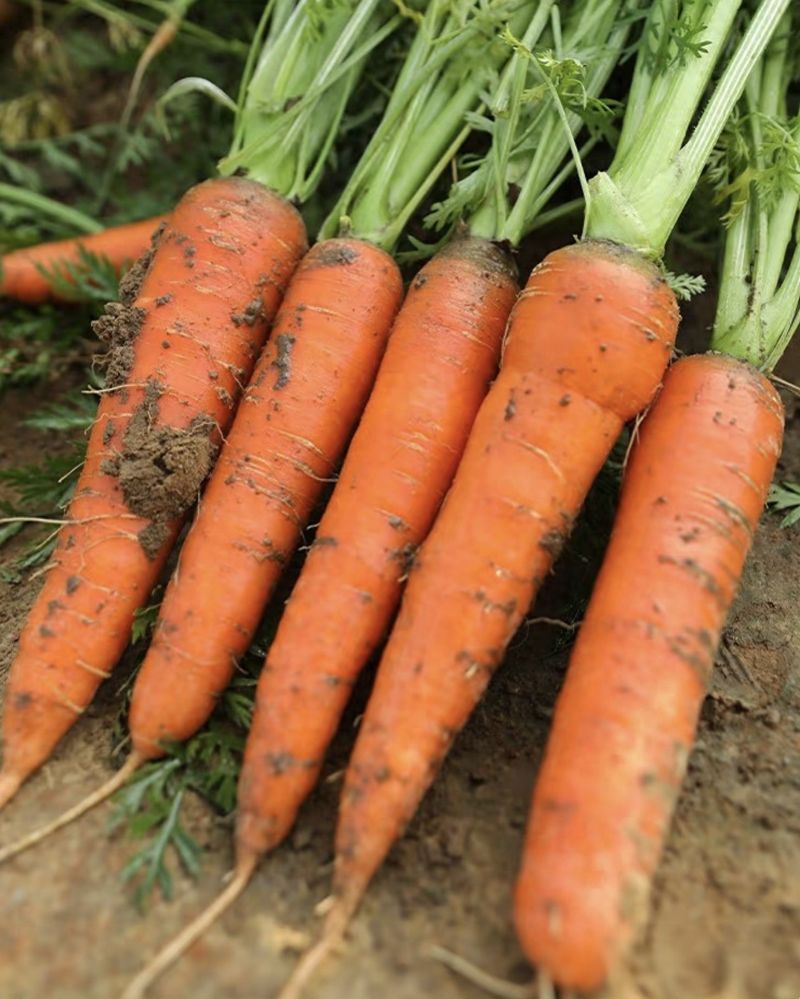
We rural people grow vegetables, we grow carrots。
Whether it's a small garden or a lot of seed in daejeon, radish is the smoothest dish in the autumn and winter. It's cold, solid, clean, simple and productive。
In the winter, i'll take it back. A cellar can eat for half a year, extra money can be brought to town for sale, and it can be used to earn some money。
But to be honest, the vast majority of the natives grow carrots, and they lose every year。
It must have been the case that the carrots are green and bright, and the leaves are wide and large, and look better than any parent. It's a direct disappointment to wait for the harvest to grow。
Either the radish is small, thin and crooked; or the skin is smooth, everything is empty, inside like a beehive, dry, woody, waterless。
It's empty radish. It's a bad taste. Nobody wants it. A few months of busy work is like a waste of time。
This is the case for many people, who are responsible for bad seeds, bad weather and poor soil fertility。
I grow carrots for more than a decade and keep my hair under management. Let me tell you the truth today: radish is empty, small, low-yielding, not a problem, not a problem of seeds, it's all our own fault
In particular, these five bad habits, 90% of which are committed every day, are unknown. Today i'm speaking in plain language, and you're listening to it, and this year the carrots are so tight, so big and so empty。
I. Bad habits i: one urea, nitrous fertilizer, no radish for long leaves
This is one of the most common and destructive production problems of natives。
In many of the old country's perceptions, growing food quickly requires extra urea。
Whatever it is to plant urea, it works fast, leaves green, and looks alive。
But let's be clear: those who grow leaves and those who eat root
Leaf for cabbage, lettuce, oatmeal, more nitrogen fat does grow fast。
Ropes eat the root of the ground, too much nitrogen, it's a cut
Once the bottom and the pursuit of fat are based on urea, the nitrogen is overrated, the radish goes crazy。
The layer of leaves is stacked, thick and green, and looks at the glamorous, but it's all a “false blisters”。
All the nutrients were looted by the leaves on the ground。
Underground carrots have no nutrients, they don't grow, they don't freeze。
The longer the leaves grow, the smaller the carrots。
At the mid-term end, the lack of potassium for phosphorus, the radish meat structure was loose and the cell walls were weak。
Looks like he's growing up, and it's not too long before he starts to have a heart, a heart, a wood。
That's why a lot of people look at the best, the worst radish。
Correct old agricultural practices:
Grow carrots, never use urea alone。
Fatty is the preferred choice for manure farmers, goats, chickens and composting。
Manure fields, post-heavy feet, soil foliage and seeded radish water do not emptied the core。
A combination of appropriate phosphorus fertilizer, potassium fertilizer, bottoms, nutritionally balanced and solid。
The seedlings are weak and can use a small amount of urea to keep them well。
The radish is a line, it's starting to swell, it's working on nitrogen and potassium
Potassium fat is fattening, specializing in radish hairs, locking water, tight meats, potassium fats keeping up, and hollow problems are less than half。
Ii. Bad habits ii: the whole earth is plentiful, the earth is shallow, the radish is too large to grow
A lot of people grow carrots, and they make a lot of fun。
And plough the earth over and over again, and the earth is only a dozen centimeters deep, and beneath it is hard-walled earth, scavengers, rocks and grass, so that the seed of grass is cast。
Don't think radish can grow better。
The radish is a deep- root crop that grows straight down, with the laxity and depth of the earth, which directly determines its size and shape。
The whole floor is too shallow, the floor is rigid and the radish has taken hold。
If you don't grow down, you'll grow out of it。
The last radish scribbles and deformities are ugly and can't be sold。
Moreover, subsurface land is particularly fertile, with strong roots and weak grips。
At a later stage of drought, there is a shortage of water and fertilizer, and radish growth is intermittent and uneven, making it easier to be empty in advance。
Many gardens are uncultivated year after year, and year after year, year after year, year after year, and year after year after year, the root cause is here。
Correct old agricultural practices:
You want to plant the radish, clean it up。
It is necessary to plough 25 to 30 centimeters to break the hard layer completely。
And then they ploughed, and then dredged all the earth, and picked up the stones, the weeds and the old roots。
The soil is loose and soft, the radish takes root and swells without resistance。
There are conditions to grow as much as possible, with ventilation, well drained water and no water, and radish is smooth and thick。
The ground is in place, and at a later stage, even with less weight, the strength is far greater than that of lazyness。
Bad habits iii: water pouring, wetting, drought pouring, empty-heart murder
I've been growing radish all these years and i've come up with an iron rule:
Ten hollow carrots, eight watered wrong
We farmers water, we love two extremes。
First: the lazy eat in the sky。
They don't normally water, they dry, they crack, they don't care。
The second is to pour water in a hurry。
The drought was so severe that the seedlings were dying, and the water was pouring out, and the water was pouring out。
Both practices are taboos of radish。
Carrot sprouts are drought-resistant, dry and strong。
I'm afraid of damp changes during the boom
In the midst of prolonged drought, the radish is shrunk and its flesh is dry and dry。
At that time, water was suddenly pouring in or catching up with heavy rains, and the soil was suddenly full of moisture。
The radish skin is fast, the internal meat is slow, the skin is hard to grow up, and the inside is not up to speed。
The growth of the interior and the interior is not synchronized, and the gap is drawn directly from the middle and slowly becomes the heart of the beehive。
There are also many old people who do not drain and soak in the ground。
The radish root system is particularly afraid of flooding, with water being accumulated for a day or two, and the hairy roots decay。
The roots are bad, they can't absorb the fat, the radish is slowly dehydrated and the mass heart is reduced。
Correct old agricultural practices:
Growing carrots to water, not hard work, is steady。
The water is run over, the land is dry and the roots are deep down。
The expansion of critical periods keeps the soil moist and damp。
When you're dry, the water is slowly watered and the supply is small and repeated。
There is a strong determination that water will not be flooded and that drought will not be so intense。
The dry and dry water is gradual and gives radish time to adapt。
Immediately after the heavy rains, the ditches were cleared and the water was not boring。
As long as soil moisture is stabilized, the radish meat is compact and the problem of hollow spaces is significantly reduced。
Iv. Bad habit iv: too dense to sow, not too crowded
Ninety percent of the freshmen grow food, and all of them have this problem: the sowing of a sommy。
There's always a feeling that the seed is so productive and soaked。
After the seeding, a large area of green oil was seen to be particularly strong and particularly welcome。
Until then, when it shall be sanctified, its heart shall not be taken out。
Look at the little ones, feel wasted, and finally let them grow mad together。
And i tell you the truth: "the seed of radish is a total loss of production."
There must be enough space for radish to grow its roots underground。
The saplings are too dense, the fields are unwinded and the light is not visible。
All the seedlings squeeze together, grab water, get fat, get sun。
The nutrients are scattered, the supply is short of demand, and each of the carrots is not fed。
They all grew small and weak, and nobody was。
It's too dense, and it's very productive。
The mid-term and post-term nutrients are not up to date, the carrots stop growing, they age early and there's a lot of empty hearts and hearts。
The fields are closed and humid, and they are prone to yellow leaves, illness and bad leaves, and are growing worse and worse。
Correct old agricultural practices:
Grow radish. Make sure you keep it hard
The earlier the seedlings are grown, the stronger they are。
Weeds, seedlings, seedlings, seedlings, seedlings, all of them removed, but only strong ones。
It is reasonable to keep a line distance and each radish has a separate space。
There is good ventilation and a concentration of fattening supplies。
There's no need to fight for nutrition. Rhods are natural big, meaty, not empty。
If you are unable to leave, you will end up with more, smaller, and low production。
V. Bad habits v: post-fat, delayed harvests, radish emptier
A lot of people grow carrots, they manage well, and the last move is a loss。
Watching the radish grow up, it's a little bit short, and i've been thinking about it。
A dozen days of urea, urea, fertilizers, and blind follow-up to fatty production。
This is a very fatal mistake
In the later stages of radish growth, the root causes are generally ageing and declining, with particularly poor absorptive capacity。
There's no way to absorb excess fertilizer。
At this point in time, the pursuit of fattening can only result in excess soil fertility and high salinity。
The internal water loss of the radish is rapid, the meat is rapidly aging, and in a matter of days, large areas are empty and firewood are sent。
There's a big problem in addition to obfuscation: delays in harvesting。
Many felt that the radish was in the ground for a few more days and could be longer and heavier。
Actually, once the radish matures, it can't wait。
Once mature, radish automatically returns to nutrients and provides seeds for flowers。
The longer the nutrients of the subterranean roots are lost, the more emptiness, the greater the taste and the lighter the weight。
To the end, it looks like radish, it's all empty cores, it's completely gone。
Correct old agricultural practices:
Twenty days before the radish harvest, all fat pursuits stopped completely。
Only soil moisture is stabilized, without drought or flooding, and nutrients and dry matter accumulate。
At mature points, harvests are collected in a timely manner without advance or delay。
Ropes are harvested on time, they are watery, they are hard to store, they are good for sale, and they are almost empty。
Summary of text
After reading, it became clear that radish is not a very deep technology, and it does not cost much。
The radish is small, empty and of poor quality
After all, these five old habits:
Nitrogen fertilizers are applied, the ground is too shallow, the water is drenched and damp, densely planted, fattening is followed up, and harvesting is delayed。
As long as we change these long-standing problems
Deep plowing, balanced fattening, steady water wetting, rational thinning, and timely harvesting
The radish you planted is full of water, it's hard meat, it's empty, it doesn't send wood, it's good for you, it's more expensive to sell
Topical discussion
Have you ever planted radish on these pits before, folks? Have you ever seen a leaf, a little radish, an empty heart? What kind of experience do you have with carrots? Welcome to the comment section
A sweet hint
The core of the radish plant lies in steady water fattening, deep tillage, pre-control of nitrogen cascading, late potassium expansion, avoidance of dry and wet abrupt changes, and later recovery of fertilisation, so that in detail, good radish of good quality and less empty can be grown。