Sapphire of sweet sapphire grapes at the western corridor facility: growth performance and efficiency-saving cultivation techniques
Fund projects: ww2201yfn006 priority research and development project in wuwei city; project on innovation base and talent plan in gansu province (18jr2th001); project funded by vu wai city priority laboratory (2023zs5006)。
He's waiting
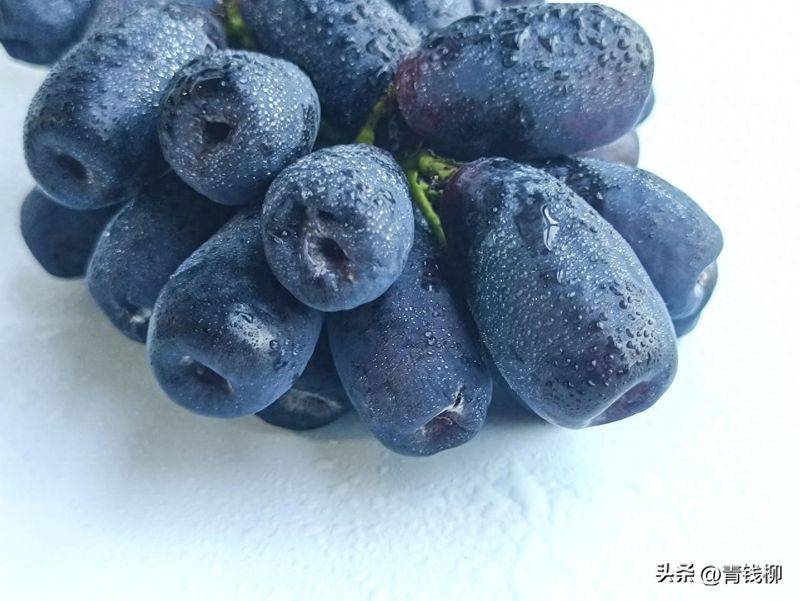
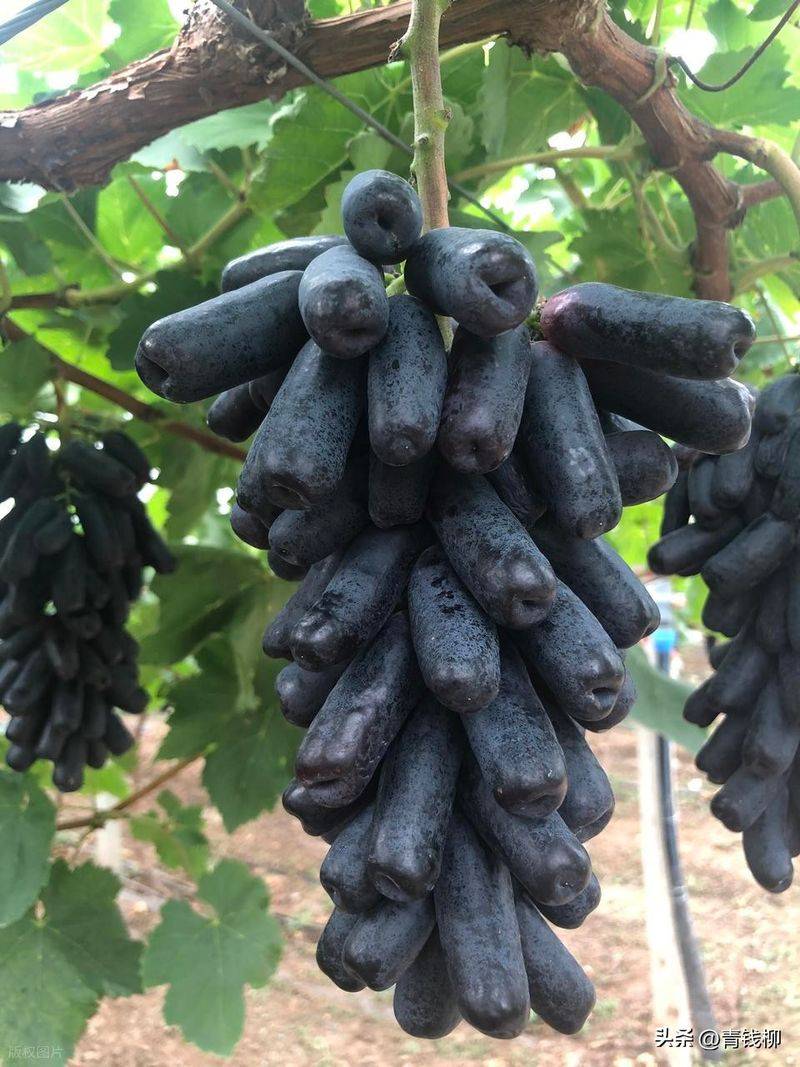
The western corridor is well-lighted, with high temperatures, long daylights, cold weather, high levels of potassium in the soil, which is one of the most important facilities in gansu province, as well as one of the most productive areas in the country. Grape varieties in the western corridor are dominated by “red earth”, relatively monolithic varieties, and maturity is concentrated between november and january of the following year, with relatively concentrated yields. The west-west corridor is more extensive, with different geographic ranges, different planting methods, facilities and market targets, and different varieties of choice. Therefore, market demand-driven, based on climate and altitude differences in different production areas, with a focus on culpability, greater screening of grape seeding in the west corridor facility and accelerated restructuring of the grape varieties in the facility are important initiatives to promote the quality development of the grape industry in the west corridor facility. As people's standard of living improves, new varieties of fragrance, non-nuclear and large grains of fresh grapes are popular with consumers. “sweet sapphires” are cultivated by the united states and are of european and asian species, double bodies, fruit blue and black, non-nucleus, dents in the head of the fruit, brilliance, blue and black in the skin of the fruit, long drops of the fruit, alias “leaves of moonlight”. The fruit is 4. 5 to 5. 5 cm long, of a single mass of 9. 0 to 11. 9 g, of a single ear mass of 850 to 1,300 g, up to a maximum of 2,600 g. In the western corridor, soluble solids reach 18 to 22 per cent, up to 24 per cent when fully mature. The following is a summary of the excellent performance of the facility trials introduced in the cool district of gansu province in 2019。
1 test site overview
The pilot site is located at the grapes demonstration base, 1480 m above sea level, in the sub-town facility of sunzhou, muwe, gansu province, which is a continental dry climate type. The region is well-lighted, with a frosty period of 155 days, 2,698 hours of annual sunlight, 7. 8°c annual average temperature, 38. 5°c annual extreme temperature, 29. 5°c annual extreme temperature, 3,003°c annual activity temperature, 166 mm annual rainfall and 2,020 mm annual evaporation. Soils are ash calcium soil with 0. 89% organic content, quick n 25. 8 mg/kg, quick p 26. 4 mg/kg, quick k 132. 2 mg/kg, soil ph 8. 7 and groundwater irrigation conditions. In 2019, the “sweet sapphire” seedlings were introduced, with a log of 5bb and an area of 13 solar greenhouses (approximately 9,360 m2). Line distance 2 mx4 m or 2. 5 mx4. 0 m. Using a high-dry-level tree, east-west direction, the fruit began in 2021 and entered the poignant season in 2022。
2 citations
2. 1 main economic characteristics of fruit
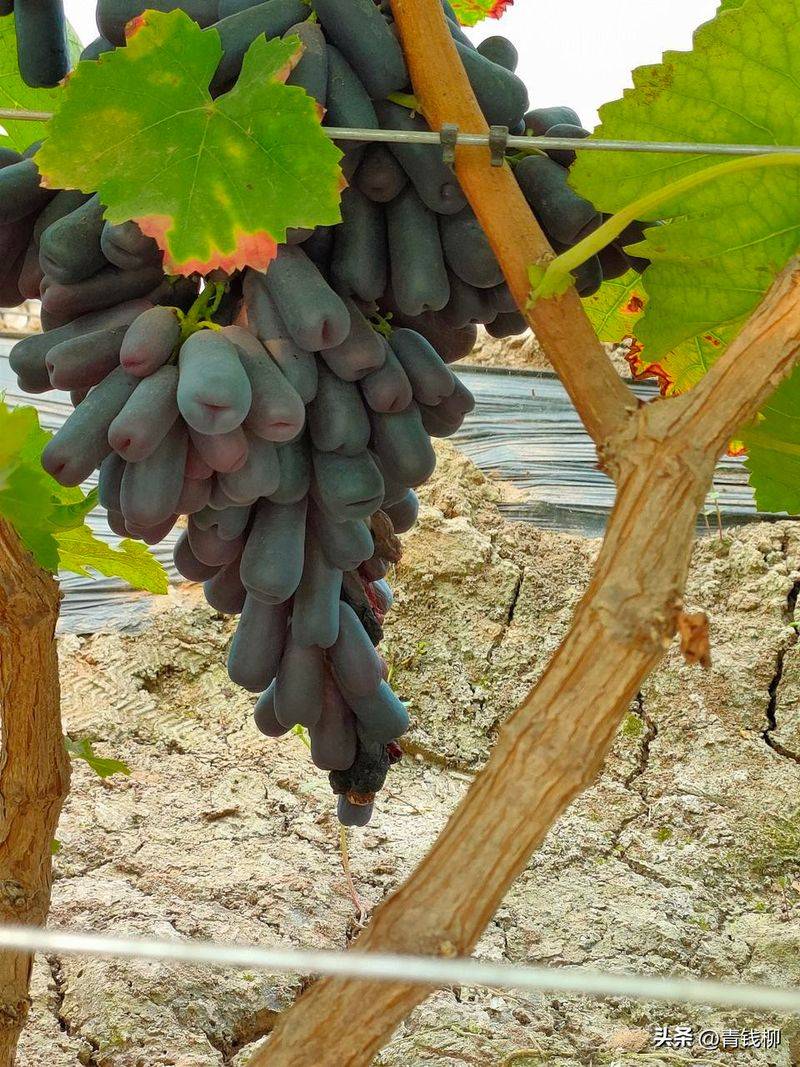
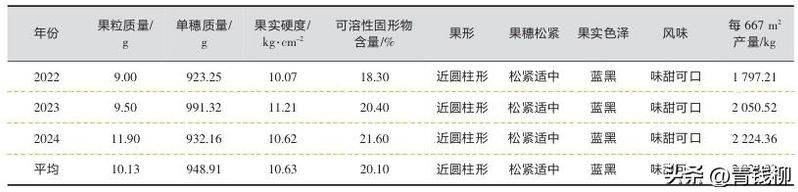
For three consecutive years (2022-2024), observations indicate that “sweet sapphires” are grown in facilities in the western corridor, with a long cylindrical form of fruit in the form of small fingers, dimmed in the base of the fruit, naturally non-nucleus, cone-shaped, loose and moderate, with an average single grain mass of 10. 13 g, and an average single ear mass of 948. 91 g. The fruit is blue and black, colourful and productive and commercial. The fruit is sour, sweet and tasteful, it smells of light milk, it has less grain powder and it contains 20. 1% soluble solids. Production averaged around 2000 kg/667 m2 (see table 1). Grown-up and not-so-defunct, tree hangers lasting around 30 days, durable storage, long shelfing and inherent quality。
Table 1 “sweet sapphire” grapefruit of main economics
2. 2 equipment period
In the western corridor of the river, the facility has had different heating times and different waiting periods. The “sweet sapphire” facility was planted in late february to heat up the curtains, and in late march (20-25) it sprouted, and in mid-april (12-19) entered the stage of stratification. The flowering period was concentrated in mid-may (2-13), starting on 2 may, entering the flowering period on 7 may and entering the final flowering period on 13 may. In late june, the baby fruit began to swell, on or about 20 july, and the fruit matured completely between the end of august and the beginning of september, with the fruit growing 150 to 155 days (see table 2). Leaves fell from late november to early december and entered the hibernation phase。
Table 2 “sweet sapphire” grapes for major objects (month-day)

2. 3 adaptation and resilience
The “sweet sapphire” plant is very large and thick, with 12 to 15 cm in length and less demanding and adaptable soil. Frost, powder and powder are less resistant, and are highly resistant to anthrax and pox。
3 high-quality and high-impact planting techniques with limited capacity
3. 1 park selection
(b) the choice of transport facilities, distance from industrial zones, abundant light resources, drought and rainfall, irrigation facilities, water-free hilltops or flat blocks for the construction of solar hothouses. The soil is based on light and sandy soil. The development of gobi facilities requires the replanting of grapes after the soil has been reclaimed. The park is suitable for an average annual temperature of 0-9°c, an annual sunlight of more than 2,600 hours and an altitude of 1,300-2,700 m。
3. 2 structure of facilities
(b) a solar greenhouse, either above or below ground, northwards southwards and east-westwards, appropriate for 5° south-south or west-west. The length of the wall is 60-80 m, the breadth is 12 m, the wall is better than the earth wall or the brick wall, and the wall is 1. 2-1. 5 m thick; the backside is 1. 2-1. 5 m thick, 20-30 cm thick; and the mid ridge is 3. 2-3. 5 m tall, with cotton covered。
3. 3 digging of ditches and saplings shizuku
(c) the length is determined by the length of the facility. The gutter shall be dug in separate piles of topsoil from the subsoil, which shall first be filled with 20 cm thick straw at the bottom of the gutter, then mixed with topsoil, fully decomposed farm fats (5,000-700 kg/667m2), phosphorus fats (100kg/667m2) and n, p, k compound fats (40kg/667m2) into the ground level and then watered. When the soil is squeezed into groups and loose, 50 per cent of each of the topsoil and river sand rises by 20 to 30 cm and 60 to 80 cm wide。
The tree was planted and managed with good-quality seedlings, fixed from late spring february to early march, pre-planted with long and damaged roots, with roots of 15 to 20 cm long, immersed in water for more than 12 hours, with 100 mg/kgabt1 root powdered for two hours. The planting was centred on the location, where 30 cm in diameter and 30 cm in depth were dug on the plant, and the bottom soil was made into a central “weasel” form. It then spreads the roots of the seedlings, spreads them evenly on the “weasel”-shaped earth piles, fills back the surface, lightly lifts the tree and lays down the root soil. Upon the completion of planting, the root water must be poured and the membrane must be covered in a timely manner when the surface is slightly dry and white. High air humidity (60% - 80%) is maintained after planting, temperature is kept at 10-15°c, and after gestation the moisture is reduced, the light is increased and the rate of activity is extremely high. Up to 15-20 cm, one of the most powerful branches of life was kept, the rest being wiped out. The fat can be followed once the new steps begin to grow, with urea at 50g and phosphorus at 50 g. Control of fattening after early august to prevent long branches. Pests and pests focus on dust, frost, asympathia and grape shortskin。
3. 4 integrative shearing
The “sweet sapphire” grapes in the western corridor are grown in a tree-formed tree with a high-dry arms level of 1. 8 to 2. 0 m, with a straight-up backbone of 1. 6 to 1. 8 m dry, a horizontal leaf curtain, with the main spreading direction and direction vertically, with the result that the branches are evenly distributed on the main chicken. It's 20 to 25 cm, 100 to 125 cm, horizontally bound on both sides. When the main chicken was planted, it grew to 1. 6-1. 8 m, and two of the more powerful new mats were selected for extraction under the mouth of the heart, to be pulled horizontally and grown into the main chicken. The other sides on the main stem left two leaves behind. The two horizontal chickens grow up to 1. 2 m with a heavy heart, prompting the sidebreading branch, and the top sidebreading branch to 1. 0 m, then the sidebreading branch continues. After the graft, the splendor of the top of the chicken leaves two to three leaves to be taken repeatedly. The 16-20 cortexes on the horizontal chickens, except for the top bystand, are choreographed according to “5 + 3 + 3”. In the winter, if the length of the main chicken reached 0. 8 cm, it spreads from the main chicken to a length of 2 m, and if the top of the chicken is less than 0. 8 cm, the length of the main chicken is shorter in the winter. In the case of the “5+3+3” main chicken cortex, which is a continuous choreography of the leaves, it is bred as a result, with a short duration of two to three buds in the winter. The whole backbone was removed from the base. The result branch uses the "5+3" gravitational lobe. In addition to the top of the tree, the top of the tree leaves one leaf behind the top side, and the top side leaves three leaves behind the top side。
3. 5 flower fruit management
When the length of the bouquet reaches around 3 cm. Only one standard lobe is left on each branch of the outcome, which is eliminated in accordance with the principle of “slow, low and low”. Get ready for the chicken. Strong trees, with 16-20 ears alone, are contained in 24-30 kg; weak trees, with 10-16 ears alone, are contained in 15-24 kg. In order to increase the fruit rate and improve the dent in the base of the fruit grain (dimple), 1 mg/l chloroni was sprayed three days after the flowers were cut. When the fruit stabilizes, it removes one or two of its upper ears, two or three large branches. When the grain is as long as 0. 5 cm in diameter, it has been cut off from the circulus, internal fruit, cross-cutting fruit, upper and lower cross-cutting fruit, deformity fruit and small grains, leaving the fruit that stretches outward. Standard large ears leave 130-150, medium ears 90-120, small ears 60-80。
3. 6 fertilizer management
The “sweet sapphire” is in high demand for water fertilizers, which adhere to the principles of organic fertilisation, supported by fertilizers and complemented by leaf fertilisation, which are applied in accordance with the year-round fertility and requiring fertility patterns. From late september to early october, fertilizers were applied alternately on both sides of the cleavage, 40-40 cm deep and 20-30 cm wide, and organic fertilisers were applied 5,000 kg/667 m2, phosphorus fertilizers 100 kg/667 m2, urea 10 kg/667 m2, zinc sulphate 2 kg/667 m2, microbicides 100 kg/667 m2. Aqueous water solution (30-12-9+te) 20 kg/667 m2; 5-7 days before flowering 10 kg/667 m2 + boron fat 3 kg/667 m2; 5-7 days after flowering 5-7 days after application 15 days after application 15 days after application of high phosphorus particulate water solubility (13-39-13 + te) 15 kg/667 m2 + medium elemental solubility (organic fertilisation) 20 kg/667 m2 during fruit expansion period; 15 kg/667 m2 + mineral-based potassium soluration (11-540 + 15 kg/ 667 m2 + 67 pv) 20 kg/m6 / 67 pv20 / 6; each fertilization is followed by water recharge, which is controlled at 12-15 m3/667 m2。
3. 7 integrated green control of pests and diseases
In the development of the western corridor facilities, the diseases that affect the “sweet sapphire” are mainly chalk, frost and ash, and the pests are mainly short-skinned and green blind. The principle of a comprehensive approach based on prevention was upheld throughout the reproductive period. Chemical pesticides, such as 5-to-7 days of pre-emergence, such as a 5-periphery or 45-percent-sulphuride crystal 50-70 times the first time, and 22. 4 per cent of the ethyl ester sulfide suspension 4,000-5,000 times the fluid, 33 per cent of the chlorfluorine amphibian sulfate 4,000-5,000 times the fluid, were sprayed when new leaves of 3 to 4 years were grown, with a focus on the prevention of grape short specor, green thorium, etc. Before the bud starts to bloom, 50% of the aqueous accelerants are sprayed with 1,500-5,000 times more liquids, 75% of the fungi do manganese zinc humid powder 600-800 times liquids and 62. 25% of the manganese zinc acne humid powder 600-800 times liquids, respectively, to combat frosting, powdered, and greyy. Every 15 to 20 days after the bag is sprayed with bordeaux two to three times. After winter trims or leaves fall, the trimmed chickens and leaves are completely removed, the burning is concentrated, the winter spots are eliminated and the winter bacteria are reduced. Producing long-term integrated whole branches and grafts, removing in a timely manner the more seriously ill leaves, concentrating on their destruction outside the shed and reducing the incidence of disease in the shed。
Summary
The “sweet sapphire” is a new type of black, non-nuclear, medium- and late-literate grapes that is favoured by the market and economically efficient, but there is also the early colour of the fruit, such as the heavy water supply, which can easily cause a break at the end of the fruit, leading to asymptomatic diseases, which can be caused by poor management, such as heavy size grains, increased exposure to solar burning, and low degree of woodification. The facility shall be grown by choosing a high-dry-level tectonic or bird-stretch “v” leaf curtain to reduce planting density, with a distance of 2 m and a distance of 3 to 4 m; a balanced supply of water fertilizer, increasing the amount of potassium phosphorus fattening at the later stages of growth; an enhanced bouquet management, with the scientific stalking of the fruit; and an enhanced summer shearing management, with a timely cut of the heart and handling of the bystands. The western corridor facilities introduce test plantings, with relatively light fissures, fewer size particles, a high degree of woodyity and a low vulnerability to sunburn. In order to improve the quality of the fruit, to fully develop the characteristics of the varieties and to increase the competitiveness of the market, it is recommended that a reasonable load should not exceed the maximum output of 2000 kg/667 m2, and that strict ointment and finality would be appropriate for single-speech quality control of 900 to 1,000 g. When the plant is larger, it will heat up in batches, regulate the period of production and stretch the shelf。