


Quality efficiency gains: critical planting techniques and practical effects of sun-sun rose grapes
Fund project ten good agricultural technology promotion pilot project in hunan province (2024)。
Wang wenjie and others
It is widely recognized in the market that the sun roses are in the form of nuts and ears, and that the fruit is soft and fragrance with roses. In recent years, its area of cultivation in the hunan region has expanded rapidly and has become an important cash crop for boosting the incomes of farmers. The city of xianyang, located in the south-eastern part of hunan province, belongs to the subtropical monsoon humid climate zone, with an average annual temperature of 18°c and a precipitation of 1,374. 7 mm, with a sunlight of 1,514 h and a frostfree period of 289 d. The weather conditions in the same period of local rain heat provide sufficient water heat resources for grape growth. The rainy season in the region, which was concentrated in april-june, coincided with the larvae period, and the high humidity environment, which led to diseases such as frosting and anthrax in the plant, could directly result in a reduction in the quality of the fruit and in the commodity properties. On this basis, studies have been carried out by scholars and studies such as the royal dragon have shown that 60 per cent of frostic ester water is more than 1,500 times diluter, 31 per cent ketone fluoride suspension is 1,500 times more effective in the protection of sun-sun roses from frost. Mallow gold summarizes the technical aspects of grape-result management in terms of fruit-inflating water fertilisation, tree management and pest control, contributing to the development of results。
In order to improve the standardization of the grape industry in the city of xianyang, a demonstration of high-quality, high-efficiency techniques for the cultivation of solar rose grapes was carried out. This paper summarizes the technical elements of the shed construction, scientific fertilization, green pest prevention and control in the context of the cultivation practices of the demonstration area, and analyses the demonstration results of the technology to inform the region's high production of sun rose grapes。
1 elements of cultivation techniques
1. 1 tree selection
Cultivated trees have been selected for three years and more, and they have been growing for a long time. Plants are grown at a range of 2 m x 3 m to ensure the growth space and light conditions of the plants。
1. 2 tunnel construction
Ethylene ethylene acetylene co-polymer (eva) was selected for a long life without drip film (0. 04 mm thick and 2. 5 m wide) and a shelter at a height of 2. 55 to 2. 60 m from the ground and a width of 2. 3 m. At both ends of the shed skeletons, solid concrete poles are fixed, supported by strong bamboo blades, thus forming solid structures. The membrane operation was completed in late march and early april. • the timely removal of the film after the harvest and the restoration of the orchard to its natural state。
1. 3 scientific fertilization
1. 3. 1 the application of fermented organic fertilizers (combined with pie, pig dung, chicken dung, etc.) of more than 50 to 60 °c to 5,000 - 6,000 kg/667 m2 combined with deep tillage to increase soil organic content. High-temperature fermentation contributes to crop growth by effectively killing bacteria and eggs, reducing the probability of disease and pests occurring, and decomposing organic matter and releasing nutrients such as nitrogen, phosphorus and potassium, which are required for plants. Deep tillage not only facilitates the equitable distribution of fertilizers, but also improves soil structures, improves air permeability and water conservation, and creates a good environment for root system growth. Gysch microbacterial fertilisers (with bacterium molluscs, bacterium molluscs in the ground garments, bacterium molluscs, etc.) 40 kg/667 m2 to improve the microecological environment of the soil. In addition, organic matter in microbacterial fertilizers enhances soil conservation, improves soil cortex structure, improves its physicochemical form, and contributes to root system development and nutritional absorption。
1. 3. 2 fertilizers are followed and applied to 20 kg formulations for every 1,000 kg of organic fertilizers (n∶p2o5=k2o=15∶10=20). The ratio is effective in increasing soil fertility, promoting the growth of the roots of crops and enhancing the absorptive capacity of the roots. During the period of fruit expansion, the leaf is sprayed with amino acid water soluble fertilizer (2,000 ml/667 m2), which is rich in a variety of trace elements and growth regulators, increases the efficiency of foliage co-operation and promotes the rapid growth of fruit, thereby improving the quality and production of fruit. Stop fertilization before harvest 35 to 40 d to avoid the effects of fertilizer residues on the fruit and to ensure its taste and safety。
1. 4 water-saving irrigation
The main channel of the drip irrigation system consists of a polyethylene hard plastic tube (pvc tube), a two-cm diameter plastic tube, and a holed black plastic tube, which extends directly to the root of the grape. If the length of each row of grapes exceeds 60 m, the supervisor is placed in the middle of the line, using a two-way pavement to ensure that irrigation pressure is even and to avoid uneven water flows due to long distances. During key reproductive periods, such as grape gerontism, early fruit expansion and coloring, water supply is provided on demand and the soil is maintained at a relative humidity of 60 to 70 per cent to promote healthy growth and quality of fruit. The precision control of drip irrigation systems can be effective in reducing waste of water resources while avoiding soil erosion and nutrient loss that may be caused by flooding. In addition, black plastic tubes can further optimize the growing environment for grapes by blocking sunlight and inhibiting weed growth。
1. 5 tree and fruit management
1. 5. 1 tree-shaped management the fruit-tree tree-forming uses a high, wide and lean "t" structure for a single-armed integration process. Controlling the retention of 3,000 to 3,600 pieces of 667 m2 in order to ensure air circulation and the adequate reception of light at each of the new sites, ensuring ventilation within orchards and promoting healthy fruit growth。
1. 5. 2 the bouquets and routings are organized in proportion to the one-hundred and one-hundred-one-and-one-half branches, removing redundant bouquets, retaining a bouquet, a tiny bouquet and a bouquet of nutrients, and triming them as necessary to ensure that each bouquet receives sufficient nutrients, thereby guaranteeing the quality of the development of the fruit. The removal of one fifth to one quarter of the top of the raisin has helped to improve ventilation and reduce the incidence of pests and diseases. In the case of the specter species, one each of two branches along the vertical axis has been removed, and the space between the grains has been further expanded to make it more loose and to the benefit of even maturity and growth of the fruit. The production and quality of fruit can be improved effectively through rational flowering and plasticization。
1. 5. 3 obregation, with a control yield of about 2,000 kg/667 m2 for each plant, with 20-30 ear of fruit. Malformations are poorly presented and easily transmitted, posing a potential threat to other health fruits; too dense small grains cause nutrient dispersion and prevent the full development of other fruits. Thus, the removal of malformations, pest-infested fruit and over-heavy small grains help to ensure even size and improve the beauty and taste of the fruit. The implementation of rational fruit-cutting measures can effectively improve the quality of fruit and the value of commodities。
1. 5. 4 for 3 years of plant production, 20 to 24 branches are reserved for each plant, and surplus branches are removed to prevent canopy depression. Rational wiring can improve ventilation and light within the canopy and increase the efficiency of light cooperation, thereby improving the quality and production of fruit. At the same time, reducing the competition for branches has helped to concentrate nutrients on the main branches and to enhance the overall growth of plantations. In addition, regular branching prevents the occurrence of pests and diseases and maintains the health of trees。
1. 6 vegetable bag
In mid-may (when the larvae size is soybean) a bag was selected to be used for bagging and a microbicide was sprayed in front of the bag to prevent disease. In late july (10 d before harvest) a bag-picking operation was conducted to first open the bag for ventilation and keep the upper part of the bag to cover the light, thus avoiding excessive light leading to the burning of the fruit. Packing operations can be carried out 24 hours a day in the middle of the sun before 10:00 or 16:00, during which time light is weak and temperatures are low, which can effectively prevent the occurrence of sunburn. An appropriate increase in irrigation following the removal of bags and the maintenance of the moist state of the soil contribute to the ultimate maturity of the fruit and the accumulation of sugar, thereby improving its quality。
1. 7 integrated pest management
1. 7. 1 agricultural control reasonable trimmings are carried out to improve the growth environment of crops and to increase ventilation, thereby effectively inhibiting the breeding of pathogens and pests. The membrane cover approach is used to maintain the proper humidity of the field and to reduce the evaporation of soil moisture through membrane cover techniques。
1. 7. 2 physical control the nets can effectively prevent insects from entering the field and reduce the level of pest abuse; the decoy boards use aphids to reduce populations and damage to plantations。
1. 7. 3 chemical control. In accordance with the precautionary and integrated treatment principles, the application is based on the precision of the chemistry: pre-flower spraying of 25 per cent of the metamine 800-fold dilution, 80 per cent of the bordeaux 400-fold dilution, etc., is used to combat the diseases of ashilosis, frostic disease, etc., and the diversion of protective microbicides (80 per cent of the bordeaux, 30 per cent of the dysen zinc) and inhalant microbicides (50 per cent of the acetamide, 70 per cent of the methyl-sulphate, 3,000-fold of the diaphthrene) is used to combat pests. In the application of chemical pesticides, application concentrations and frequency are to be adjusted strictly in accordance with the instructions to prevent harm and to ensure that no drugs are used until they are collected to ensure product safety。
2. Demonstrated application effectiveness
In march-september 2025, a demonstration of high-yielding production techniques for roses from sunlight was conducted on a family farm in the town of hoangyang (26°13 " n,112°57 " e). The model garden area is 1 hm2, with a red border of soil type, ph 5. 5-6. 0 and a high organic content with good drainage and ventilation。
2. 1 production performance
On average, grapes in the demonstration area weigh 620 g per ear, with a single fruit weight of 12. 5 g, yielding 2,242 kg/667 m2, with an increase of 41. 90 per cent over the regular planting model (1,580 kg/667 m2). In addition, the proportion of fruit at the level of the demonstration area (12 g of single grain weight and full symmetry) was 78 per cent, an increase of 36 percentage points over the conventional cultivation pattern (42 per cent). The data show that complementary cultivation models are better than conventional cultivation models in terms of both yield and fruit quality improvement。
2. 2 quality of fruit
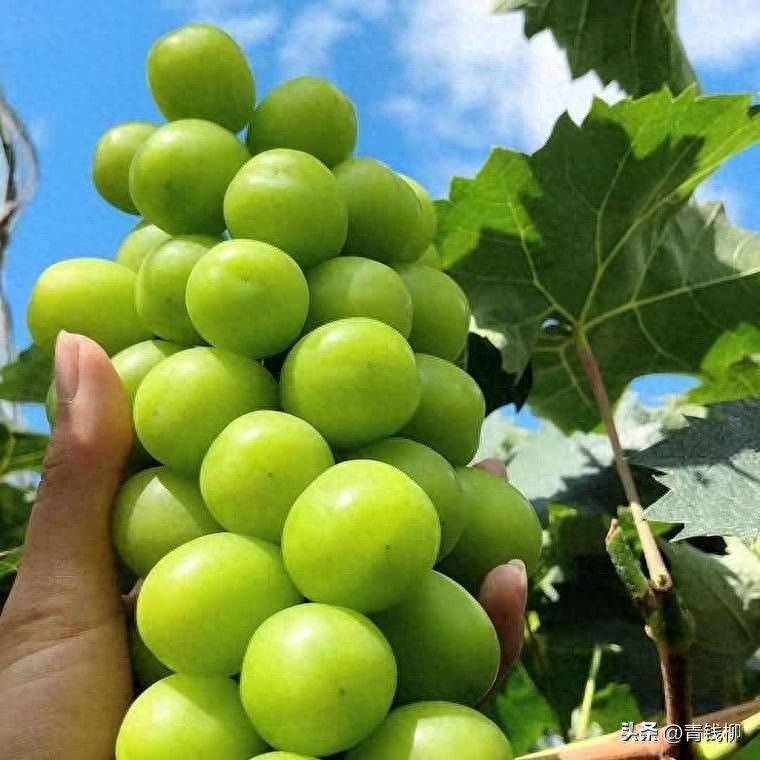
The soluble solids content of the fruit in the demonstration area ranged from 18. 5 per cent to 20. 0 per cent, with an increase in the more conventional cultivation model (15. 0 per cent to 16. 5 per cent), indicating that the planting techniques and management measures used in the supporting cultivation model had been effective in improving the quality of the fruit. Its fruit is even, showing natural yellow green and glitter, while its fruit is fragrance of roses and tastes and flavors are more unique, further enhancing market competitiveness。
The market feedback showed that the purchase price of the model garden fruit was 7. 2 yuan/kg, an increase of 0. 6 yuan/kg, or 9. 09 per cent, compared to the pass-through planting model (usd 6. 6/kg). This price increase not only reflects consumer willingness to pay for high-quality fruit, but also demonstrates the effectiveness of demonstration parks in producing quality agricultural products。
2. 3 analysis of economic benefits
The purchase price for grape fruit in the demonstration area was $7. 2/kg, with a production value of $16,142. 4 and $667 m2, with a planting cost of $11,237. 0 and a net gain of $4,905. 4 and 667 m2 for pharmaceuticals, fertilizers and management, and a purchase price of $6. 6/kg for grape fruit in the conventional planting area with a production value of $10,428. 0 and $667 m2, with a planting cost of $6,900. 0 and $667 m2 for pharmaceuticals, fertilizers and management and a net gain of $3,528. 0 and 667 m2. Taken together, the net benefits of the complementary cultivation model have increased compared to the conventional cultivation model。
2. 4 social benefits
The technology demonstration guides the remaining growers to learn and apply supporting technologies. The production and quality of grapes have improved through the introduction of advanced planting techniques and management methods, while the increase in the rate of high-quality fruit has led to the expansion of the industrial chain, attracting a number of enterprises to participate in pre-colding, packaging and processing, and further increasing the value added of products. In addition, the demonstration not only promoted the upgrading of the grape industry, but also created a number of local jobs. In addition, through training courses and technology exchanges, the professional skills of farmers have been further upgraded, the competitiveness of the market has been enhanced and the basis has been laid for the sustainable development of the regional grape industry。
3 concluding remarks
The high-quality and high-efficiency planting techniques of solar rose grapes combine techniques such as rain-shield farming, scientific fertilization, water-saving irrigation and so on, resulting in a synchronized increase in yields, quality and efficiency in the 1 hm2 demonstration park in the city of sunyang, adapted to the climate in the rain-fed areas of the south and to the characteristics of the red border soil. In the course of its application, there may be problems such as inaccuracies in the timing of lumber-cutting by some farmers, the susceptibility of drip irrigation systems to water quality congestion, and the need to strengthen the control of frosts in high-temperature and wet environments. In the follow-up, field training needs to be further strengthened to standardize operational techniques, add filters to drip irrigation systems and maintain them on a regular basis, optimize pharmacological matching and biological control programmes, and promote the standardization and scaling of applications。
The technology system not only provides a model reference for solar rose grape cultivation in the southern red zone, but also has positive implications for the restructuring of the grape industry and for industrial efficiency。



