


Equivalent grape cultivation: exploration of the application of integrated and efficient cultivation techniques
Zhang ta and others
Grapes, which are essential fruit in people's daily lives, are rich in a variety of vitamins and minerals, eat grapes that increase human immunity and prevent hypertension, high blood sugar, etc. The current high demand for grapes and higher demand for high-quality grapes in the market requires farmers to focus on the application of quality cultivation techniques. The study found that the application of integrated and efficient techniques of water fertilization in grape cultivation has been effective in improving soil quality, saving water resources and fertilizers, promoting the growth of grapes and improving yields and quality to a greater extent, and has contributed positively to meeting market demand and promoting income-generating enrichment of fruit farmers, thus contributing effectively to the continued stability and healthy development of the local grape industry。
1 overview of integrated water fertilizer technologies
In forestry production, grape growth requires a large amount of moisture and nutrients. Past patterns of flooding have been highly susceptible to heavy waste of water fat, especially in water-scarce areas, and poor irrigation can also constrain the steady development of the forestry economy. Over- and under-fertilization can also have adverse effects on soil fertility, thus constraining grape growth. These problems can be addressed through the implementation of integrated water fertilizer technologies. The integrated technology of water fertilizers effectively integrates fertilization and irrigation, based on soil quality and the demand for nutrients from grape plantations, following a reasonable ratio of water and fertilizers. Fertilizers, when dissolved in water, are transported by drip irrigation to the roots of plants through a pipe to achieve the synchronization and precision of application of water fertilizer. Water fertilisation is integrated in comparison to traditional water fertilisation management, and is characterized by regular, quantitative and even water fertilization (figure 1). The application of precision supplies, depending on the demand for water by grapes, has greatly reduced the double waste of fertilizers and water resources and has significantly increased the utilization of fat water, thus better promoting the growth of grapes。
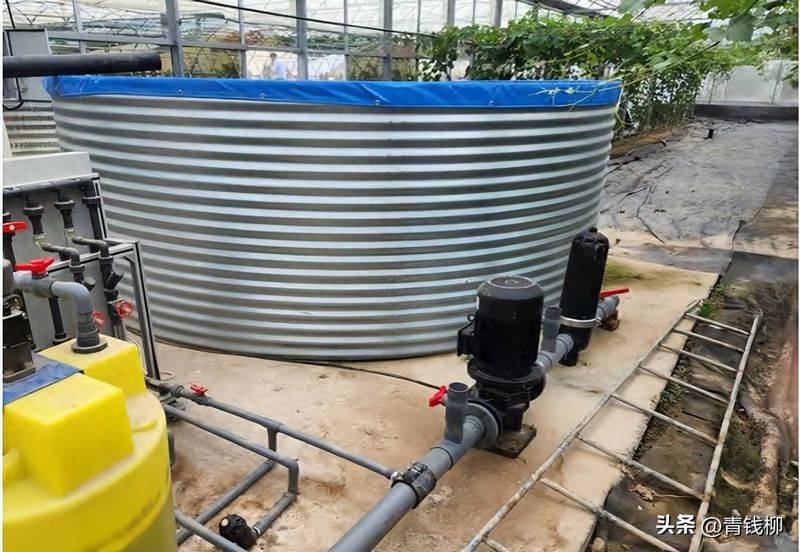
Figure 1
2 advantages of applying water fertilizer integration
The application of integrated water fertilization techniques in grape cultivation has contributed to increased grape production. This is done through drip irrigation with the pipeline after the fertilizer has been dissolved in water. This approach allows for full use of water fattening, which is available to every grape. Given that grapes require different nutrients and moisture at different stages of growth and development, an integrated water fertilizer technology can be effective in avoiding the waste of fertilizers and moisture while meeting the healthy growth of grapes, based on the moderate increase and adjustment of moisture and fertilizers required for the corrosive stages of grape growth。
2. 1 water conservation and fertilisation during provincial and provincial hours
At the heart of the integrated water fertilizer technology is a drip irrigation facility, which delivers well-equipped fatty water directly to the root of the grape plant, thus achieving the goal of saving time and water from fertilization. The drip irrigation technology was implemented, with approximately 10 m3 per water per 667 m2. In addition, the drip irrigation equipment automatically sets working hours without the need for manual guarding and management, resulting in significant savings in labour costs. The survey found that following the implementation of integrated water fertilization techniques in vineyards, 70 per cent of water resources and 40 per cent of fertilizer were saved, compared to the traditional way of managing water fertilizers, which greatly avoided waste. Integrated hydro-fertilizer technologies do not require too much manual input, thus reducing to some extent the management pressure and economic burden on fruit farmers。
2. 2 precision fertilization, timing
Based on the need for hydro-fertilizers at different stages of grape growth, the specific types of fertilizer and the appropriate concentration are reasonably determined, and the operation time for hydro-fertilizers is set so that drip irrigation can be performed automatically once the equipment has been adjusted. Water fertilizers reach the root of grapes through specific pipelines, allowing for accurate and concentrated application to meet their growth needs. This technology not only reduces the loss of fertilizers with water, avoids waste of fertilizers and pollution of the environment, but also effectively prevents the sudden increase in moisture in the soil, which has a positive impact on soil sheeting, reducing air moisture and controlling the occurrence of pests and diseases。
2. 3 growth promotion, disease prevention and pest prevention
The drip irrigation system, based on the growth needs of grapes, is well irrigated in the context of soil drought, avoiding not only the waste of water resources caused by over-irrigation but also the adverse effects of drought on grape growth. It also reduces the probability of pests and diseases occurring。
3 application of water fertilizer integration in grape cultivation management
3. 1 scientific site
When planting grapes, it is important to have a scientific site, which requires that the land be flat, the soil be rich in organic matter, adequate light, clean water, etc., and that contaminated areas such as gutters, waste gas, etc. Be avoided, thus ensuring that grapes grow and grow in good health and that fruit is not contaminated or harmed。
3. 2 preparation of seedlings
A combination of local climatic conditions, geographical characteristics, market demand, etc., needs to be taken into account, with preferred quality, pest resistance, market popularity, storage and conservation of high-quality varieties when buying grape trees. Currently, grapes such as sun roses, giant peaks and roses, which are widely grown in shandong province, are the preferred species in grape cultivation because of their high nutritional value and resilience and good storage properties。
3. 3 cultivation
Cultivation usually takes place in march, with long stretching and organic fertilizer applied during the excavation of the den, which is followed by the placement of the tree in the den to ensure that the roots are fully stretched and refilled. The water permeates the soil to prevent the appearance of roots. A drip hose belt is laid on both sides of the grape seedlings, the number of drops and the distance between them need to be adjusted flexibly to the grape varieties, range spacing, soil conditions and growth stages, and the drops are generally controlled at 20 to 50 cm to ensure a balanced distribution of water. Following the implementation of integrated management techniques for hydrofertilizers, inter-line covered membranes can be protected against hysteria (figure 2)。
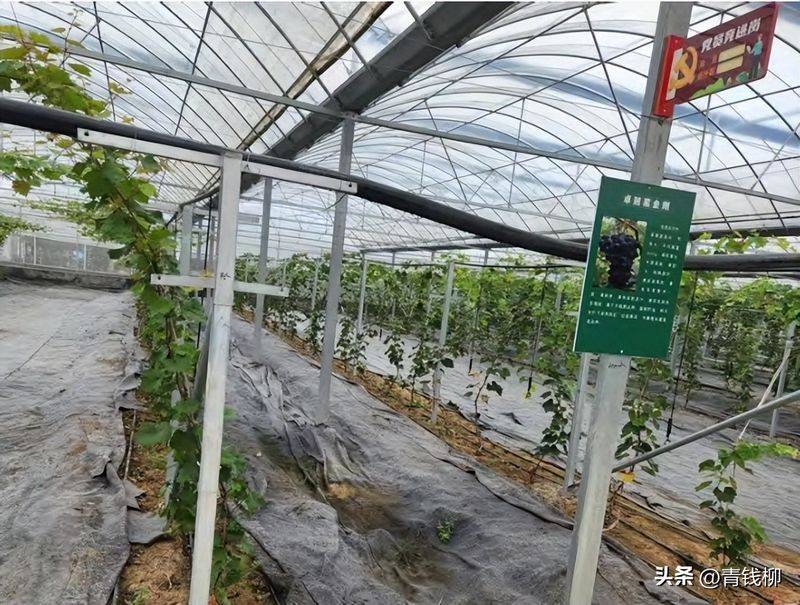
Figure 2
3. 4 fertilizer management
In the process of growing grapes need to be fatter and watered several times to meet their needs. Depending on the growth of the grape plant, the type of fertilizer required and the amount of fertilizer to be applied are determined, and an integrated and efficient application of hydrofertilizers is truly achieved through the implementation of a quantitative and temporal supply of grapes by drip piping belts (figure 3). In integrated water fertilization applications, the mixing of fertilizers should observe the presence of sediments, temperature variations, etc., and should not be allowed to block the fertilizer filters and drops. The use of alkaline fertilizers, high fertilizer nutrient concentrations and better water solubility, which are filtered after the fertilizer is dissolved and then used, is recommended to avoid congestion filters and drops. Grapes absorb sufficient water fertilizers, which are more conducive to growth and flowering and to increased fruit production. Dripping, compared to traditional irrigation, can effectively reduce soil moisture and the occurrence of many soil-borne diseases, thus improving fruit quality。
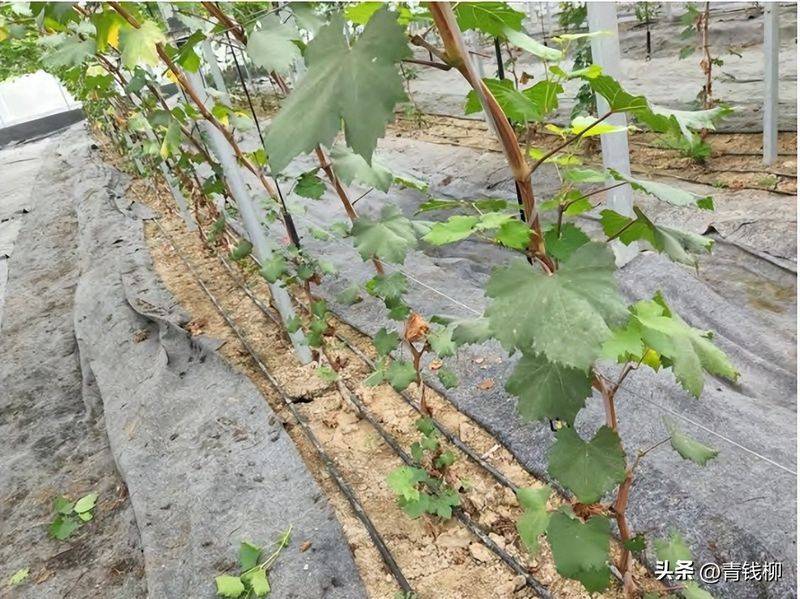
Figure 3 dripping hose belts
3. 5 intracting
After the grapes were planted, when the tree grew to around 20 cm, one to two strong new chickens were chosen, and the rest were wiped out. This will allow the nutrition of the grapes to concentrate on the main chicken, so that it can grow and thrive, and when the main chicken grows to more than 40 cm, it will be tied up in time to guard against windfall. Grapes are trimmed in winter and summer, and winter shears are mainly for the removal of thin, sick and insect branches, medium-long shearing of the selected branches of the fruit, a dynamic control measure for the growing branches, an update of the old branches whose capacity has been reduced, and the selection of new strong branches to replace old ones. The summer shears, which include, inter alia, sprouts, grafts, the removal of leaves, the removal of swabs, etc., are aimed at improving ventilation, regulating nutritional distribution, reducing the occurrence of pests and diseases and improving the quality of fruit。
3. 6 flower fruit management
In the management of the lumbers, they shall be properly removed. In practice, a strong branch may be retained with two ears, a strong branch with one ear, and a weak branch is not. In case of twigs, insects, super fruit, deformity and sun-burning fruit, etc., the fruit is selected in the same size, so that the ear of the fruit is loose and moderate. The implementation of a fruit pack during the gestation period (figure 4) has been effective in reducing fissures, pests and bird pecking, and avoiding sunburning of fruit, thereby improving to some extent the quality of the fruit and increasing the yield of fruit farmers。
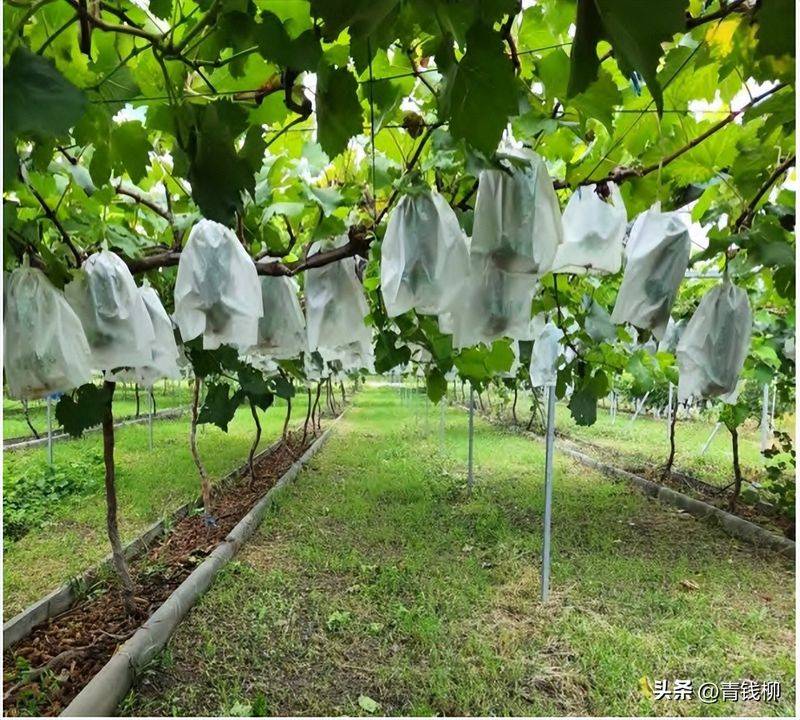
Figure 4
3. 7 pest management
In the control of grapes and pests, agricultural prevention and control should be based on a combination of technical measures such as physical, biological and pharmaceutical control. Agricultural measures such as soil tillage, rain-shielding and orchard cleaning can be used to effectively reduce the probability of the occurrence of pests and pests, and physical control can be carried out during insect insects through such measures as sexual induction, lantern induction and chromosomal booby traps, combined with fruit packs, grass between rows and the installation of bird nets. Effective pest control is carried out in a timely manner with the use of insecticidal agents in the early stages of the disease。
4 conclusion
In order to achieve a high yield and harvest of grapes, the management of hydrofertilizers as a key part of the management of vineyards, the application of integrated water fertilization drip irrigation techniques is widespread, the simultaneous supply of water fertilizers can be achieved through the rational allocation of water fertilizer resources, with significant advantages for water conservation and high utilization of fertilizers. Not only did the nutritional needs of grapes be guaranteed, but they also improved the quality of the fruit of grapes, achieved efficiency gains in the production of grapes and became an efficient, environmentally sound and economically viable vineyard management technology with wide application prospects in fruit tree production。



