


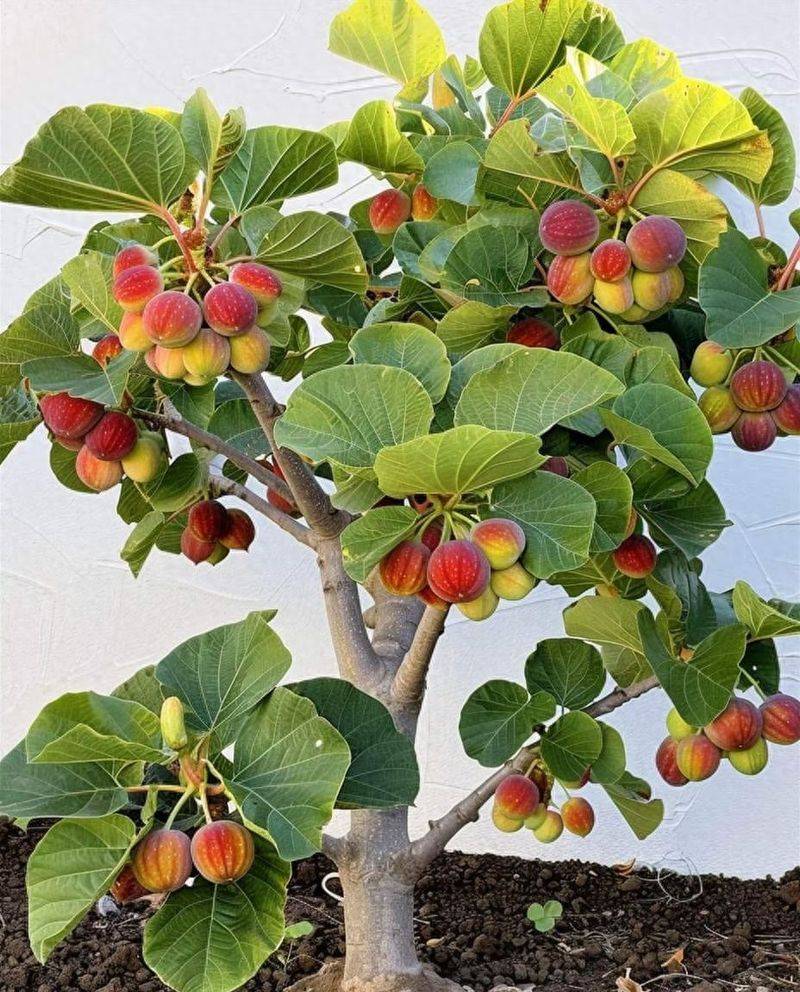
A growing number of rural families today prefer to plant figs in front of their houses, gardens and gardens. The fruit trees are fast-growing, well-fed, with few pests and diseases, and the fruits are soft and sweet, and grown-up children love to eat, so that they can solve their problems on a day-to-day basis, and when they mature, they can be sold on a market, adding an extra income to the household。
But most of the new farmers who have just begun to be exposed to planting have experienced very disturbing problems: it has worked hard to buy high-quality figs and to fertilize them for a whole year, and the seedlings have grown so thick, so long and so hot, that they have no flowers and no results, or have a few little fruits hanging in small pieces, with a low sense of taste and a waste of time. In fact, planting figs is not as difficult as you can imagine, and it is not an option for seedlings, most of which are planting methods and daily management deviations. Today, with many years of field experience in fruit-planting, new hands are being shared with all practical techniques for planting figs, bearing in mind the key points of spring, when small seedlings are planted, the year can be filled with branches and early harvests of fresh fruit。
I. The deadliest areas where newers grow figs
Many people grow figs that are fruitless and fruitless, all of which are routine maintenance errors, which must be avoided in a timely manner。
I. Improper selection of plant locations, severe lack of light
A large number of farmers have easily planted figs in the corner of the yard and under the trees. The figs are extremely radiant fruit trees, with a chronic lack of sufficient sun, they can only grow long branches, the buds cannot be properly divided and the fruits are difficult to produce。
The basin is damp and its roots are flooded for a long time
The fig root system is the most afraid of water accumulation and flooding, with many people growing and often pouring in heavy water, combined with low-lying drainage, long-term wetting of the soil and stifling of the roots, and slow growth and weakness, with the severe and severe death of yellow leaves。
Three, one nitro fat, one long branch. Long go
Many beginners think that the faster the fertilizer grows, the faster the tree seedlings grow, the more they apply a single nitrogen fertilizer. Nitrous fertilizer only breeds foliage, disrupts the growth balance of fruit trees, feeds all branches, and is completely incapable of breeding fruit, creating a situation where trees are not productive。
Four years without cutting the branches. Trees are so messy
It is difficult to concentrate on the fruits of the nutrient supply after the fragmentation of the nutrients by allowing the figs to grow wildly, with dense interlocking branches and disorderly outer branches not only to shield internal light, but also to consume large amounts of excess nutrients。
5. Overplanting of tree seedlings affecting slow growth
The roots of the fruit seedlings are buried too deep during planting, all the roots of the roots are buried in the soil, with a deterioration in the aerobics, slowing down of the seedlings, difficulties in taking root, a weak period of time and a significant delay in the duration of the suspension。
6. Neglect of seasonal temperatures and the impact of the wrong planting
It is easy to freeze roots without looking at the time of planting, to plant in cold weather, to evaporate in high heat and hot summer plants, to dry and dry trees, to reduce the rate of success, and to keep up with the later periods。
Ii. Information for farmers on the practical and practical development of figs and on how to manage them
In order to grow a fig, first, it must be made clear how well it grows, how well it is managed and managed。
A figs have a moderate capacity to withstand the cold, with the best planting period after the spring temperature warms and the fastest climate and tree seedlings; it has a high light, accommodation, a strong drought-resistant soil, and a common preference for dry soil rather than long-term water accumulation
It is fast-paced, has a strong year-long branch, has a nutrient supply, has a short growth cycle, and with proper management, the summer and autumn season will be smooth
At the same time, figs are not happy with the weight of the soil, which tends to hamper the development of the roots of the system, and daily conservation is dominated by extensive management, which is far more effective than frequent management。
Iii. New hands plant fig cores so that the year results
First point: selecting the right place for planting is the basis for the result
Whether it is a garden or a domestic flower plant, priority is given to open areas that can tan all day。
Ensuring that the daily sun is not less than six hours long, that adequate light contributes to the rapid fracturing of the buds and increases the woody symmetry of the branches, and that only with sufficient light can the fruit tree move smoothly from a long tree model to an outcome model, which is the most basic condition for a smooth tie。
To the extent possible, the terrain is high enough to facilitate daily drainage, far from high tree shades and the backs of houses。
Second point: take control of the plant depth and make it reasonable to plant it
The fruitless seedlings that were bought were trimmed with dry and dry roots, and then planted after they were too long。
The depth of the seedlings shall be fixed and the traces of the seedlings shall be kept even, bearing in mind that they shall not be buried in deep roots, that they shall be filled with soil, that they shall not be stomped upon, that the roots shall be closely bound to the soil, and that once the planting has been completed, they shall be watered once and for all, so as to speed up the seedlings。
Land was planted early to reclaim the land and remove stone weeds, making the soil loose and softer and more conducive to the emergence of new roots。
Third point: water irrigation follows the principle of drought resistance and water scarcity
The day-to-day watering of figs remembers the saying that it is dry, wet, dry, or soaked。
Keep the soil micro-humid during seedlings and do not water on a daily basis; when the seedlings are stable, the frequency of the water is further reduced
(a) after entering the rainy season, clear the surrounding drains, discharge the excess water from the fields in time and protect the roots from the blistering water
During high-temperature dry seasons in the summer, water can be adequately replenished to meet the need for fruit expansion, with a minimum amount of water being watered for the rest of the time, and water management is more conducive to the promotion of flowers。
Fourth point: scientificly rational pursuit of fat, phased and precise enrichment
In order to achieve results in the year, it is important that the fertilization phase be clear and that the fertilization process be eliminated。
1. Slow seedlings are on call: they are planted within one month of their life, so that, as little as possible, they do not rush to fatten, so that the roots of the system take root in natural growth and are prone to burning。
2. Long sapling periods: after the growth and stabilization of the seedlings, a small number of balanced farmers are put on thin fats, helping the seedlings to extract strong branches and build the basic tree。
3. Stimulation period: the use of pure nitrogen fertilizer ceases as soon as the branches thrive, with a focus on supplementing phosphorus potassium nutrients, which can be applied by rural farmers using manure, grass-wood ash, and effective seedlings to promote the rapid formation of young fruit。
The period of fruit expansion: after the fruit has stabilized, with extra nutrients in the form of thin weight and effort, with the help of the fruit growing up to improve its sweetness and taste。
It is strictly forbidden to apply fat and fat on a one-time basis and avoid causing damage to fruit trees。
Point five: scrubbing on time, cutting the branches
Cutting was a key tool for figs to be productive at the time, and it was important for newers to learn simple cutting。
1. Detachment: when seedlings are planted, the appropriate high-level cutting of the top branch is retained, the growth advantages of the top end are broken and the tree seedlings are divided into more branches, more branches and more results。
2. Day-to-day twig: timely cutting of small and weak branches within the chamber, cross-cutting branches, inner-direction branches, long and useless branches, saving surplus nutrient consumption, and concentrating nutrients on the provision of strong branches。
3. Light cut of the fruit: after the first harvests were completed, the long branches were slightly cut, prompting the fruit tree to re-emerge the new branches and prolong the overall outcome。
The overall cut is mainly light, so that it is not overcut and does not affect the normal shape of the fruit tree。
Pivot six: day-to-day protection to reduce the fallout
(b) instability of temperature in the spring, exposure to cold spring weather and early and easy wind protection against new sprouts
(b) high-temperature and high-light seasons in the summer, with small and small seedlings able to properly shield themselves from the need to grow into trees
Weeds around fruit trees are cleaned in a timely manner in order to prevent weeds from taking water from the soil and creating a clean and comfortable environment for figs。
Iv. Two planting models of ground-planting, with farmers selected on a needs basis
1. Rural gardening
The courtyard space is sufficiently prioritized, with rapid growth, early formation and high results。
The soil is improved early, low-lying floors are ready for planting, and daily coarse management is sufficient, with the three main items of light, water fattening and trimmed, with light and light years of trees。
2 home garden plant
The small size of the home is such that the choice of a flower plant is perfectly feasible。
(b) the choice of an air-transmitting large-calibre flower basin, with soil mixed with pine-garden sand, to enhance air permeability
Pyramid figs are easier to control, move, and are placed in adequate light at all times, so that the fruit can be successfully recovered。
V. The results of planting in the year were truly beneficial
1. Speed of return: the year of planting in the spring does not have to wait long enough to eat the fresh figs planted at home。
Savings in planting costs: multi-year results of a single planting, long life of a fruit tree, simple maintenance, little need for excessive input at a later stage。
3. Useful: mature fresh fruit can be eaten directly, and dried and jam can be made, and surplus fruit can be converted into increased harvests。
4. The courtyard is beautiful: the figs are green and thick, the summer and summer leaves and the summer and autumn fruits, both of which eat fruit and beautify farming。
5. The resistance to disease is strong: there are few figs and pests compared to other fruit trees, almost no daily spraying and a healthier natural green。
Vi. Real administration of the old gone
In 2026, family friends of farmers who plan to plant figs in their homes, have never grown fruit trees out of their own enthusiasm and blindness, responding to their strength and focus。
Many newcomers have been planting for years without success, not only because of insufficient light, too much water, poor fertilization and lack of understanding of the shears。
As long as we avoid the misplanted areas, remember the selection of the sun, the rational setting of the plant, the control of the water for the flower, the filling of fertilizers, and the timely cutting of these practical techniques, even first-time seeders, can be easily maintained。
In the spring, it was a good time to plant figs of gold, and to pick up a good-quality sapling of healthy fruit, so that it could be managed in such a way that it would be easy and easy to plant in the same year, when it would be full of fresh fruit, when it would be planted in a few trees from a family home, with fresh fruit for four seasons a year。
The planting of trees is slow, and the effort to control every little detail will naturally have real rewards。
I'm just gonna grow it
Put figs in the spring and move towards the sun
Less water and less nitrogen fattening
It's hard to cut and grow
The newbies remember a few things
Interactive topics
Do you farm people grow figs in your homes? What are the problems with planting? The comment area would be welcome to share its experience with cultivation。
A sweet hint
This paper is intended to share only the experience of the field of field-based fielding of flowerless fruit in the countryside and is intended for study only in the area of amateur farming. There are differences in climate temperature, soil and soil quality between different regions, and planting times and management practices can be adapted flexibly to local realities. No seedling farming resource guides are available in this paper, and tree-bearing conditions are subject to day-to-day management and climate-related environmental impacts。
#rural fruit tree planting # fig planting #3 # home tree growing #new farmer farming techniques # yard planting experience



