Analysis of the key elements of the test and critical planting techniques
Yang hass and others
The prunus avium l., which is particularly demanding for the growing environment, is not suitable for planting in many places. Through more than 20 years of seeding, two varieties have been successfully screened for planting in the goja fruit garden, a demonstration base for agricultural extension centres in the old municipalities, and the results of the flowering process have been stabilized. The car is called "roaseae" and "prunusl." more than 120 types of cherries are grown as fruit trees, mainly four types of chinese cherries, european sweet cherries, european sour cherries and cherries. Among them, chinese cherries are known as “small cherries”, european sweet cherries and european sour cherries are known as “big cherries”. Chinese and european sweet cherries are grown in many varieties, and big cherries are commonly referred to as cars. It is a translation of the english word “cherry” and is meant to mean big cherries, which were first imported through guangdong and hong kong, directly translated by the locals and then sold widely in the country. From western asia and south-eastern europe, the sprawl from origin spreads with migration and, with the worldwide expansion of countries in europe and north america, it is brought to most countries. Its main distribution is in turkey, iran, the united states, germany, the united kingdom, ukraine, russia, chile, canada and new zealand. In the country's most popular places, such as hubei, hebei, shandong, henan, liaoning, sichuan, guizhou, and many cold areas of yunnan have also been experimenting in recent years。
1 old market test
An old city began to experiment with car plasters in 1998. From shandong, he introduced a total of 160 carpentry varieties, including red lights, rabins, pioneers, rene and naon, which were tested at mahou village's home. After 13 years of testing, it was found that only two varieties (tentatively known as goja1, goja2) were able to produce small flowers, while the other 13 species were eliminated without flowers. In 2011, 15 large trees were planted from mahou village (13 years old) to the fruit demonstration base of the old city agricultural technology promotion centre, goja orchard, to change their planting environment, to strengthen the management of fruit orchard fertilizers, to strengthen the green control of pests and diseases, to produce a full flowering of 15 trees in 2017, to grow well in the field and to grow more than 30,000 trees of high quality, to produce more than 4 hm2, 3,000 plants, to produce more than 9 consecutive years of production in 2017-2025, to produce more than 120 kg for better monocultures, to produce more than 50 kg for 6 years and produce a total of 20 ts, to produce more than 1 million yuan, to attract villagers and fruit technicians from surrounding counties to study and extract a new road for the production of new and emerging fruit in a future city。
2 carbid growth performance
The goja orchard is located in the village council of goja, located in the old town's sity city street, 3. 5 km from an old city, accessible, well-regulated forest cover, deep earth, around 1,900 m above sea level, cold weather, suitable for the growth of fruit trees such as pears, peaches and cherries, where the trunks grow in size, standing in straight positions, strong growth, dryness and canopy, dry skin tan and one year of yellow green. As a result, the branches are dominated by bouquets of fruit and troughs, with high rates of self-abundance and no need for pollinating trees. The fruit is large, 8-12 g of single fruit, close to the circle or heart form of fruit, wide indigence, thin handles of fruit, unobserved threads of fruit, bright red in maturity, bright in light, hard in meat, juicy in juice, durable in storage. In mid-may, the goja orchard matured with a strong wind and sour sweetness and matured with more than 20 d of fruit on the tree。
3 key elements of planting techniques
3. 1 choice of appropriate environmental conditions
At 1,800-2,100 m above sea level, the average annual temperature is 16. 7°c, the annual rainfall is 1,059. 8 mm and the number of daily hours per year is 2,057. 5 h, and the temperature of 10°c is from 1,000 to 1,500°c. The terrain is flat or slow, and a car can be planted at the fertile soil. It is being tested in many places, such as the old mountain, the land pond, the grail, and so on, with the result that three years of test planting of the tree tree has begun to bloom。
3. 2 varieties and plant specifications
The goja orchard was chosen for its own breed, goja 1, goja 2, and the wood for local wild cherry. Based on the fertility of different plots, 22 or 33 plants per acre are grown at a range of 5 m x 6 m or 4 m x 5 m。
3. 3 orchard management
(1) soil management. There's a lot of people who come to the orchard for pick-up during the fruit season, and the soil of the orchard is so pedaled that it takes more than 50 centimetres per winter to tan the soil, and to use bottom fats, acres of decomposition chicken dung, goat dung, pig dung, 1. 5 to 2 t. The soil is evenly mixed, with 1 kg per application of compound fertilizer (n∶p2o5∶k2o = 15∶15=15), and with the application of calcium phosphate and potassium fat in the case of a pruning of roots at any time, promoting new root growth, increasing soil organicity and increasing soil fertility by green fertilizers such as gills and vermins from april to may。
(2) fertilizer management. In mid-february, pre-flower fattening was pursued, with acres applying fertilizers from 1. 5 to 2 t, with 1 kg of compound fertilizer per application, in mid-april, with a chromosomal phase of phosphate potassium sprayed in mid-april, and in june-july, with a return to fertilizing the tree, creating good conditions for flowering in the coming year。
(3) drainage and irrigation management. In the old cities, the winter and spring are dry, the summer and autumn rains are concentrated and water is required three to five times between december and late march. Low-lying orchards are to be dug and the rainy season from june to july is to be observed。
3. 4 cropping management
(1) old orchard retrofitting. The goja orchard luminous tree was planted at an early stage, with extensive orchard management, severe shades, poor ventilation, excessive body sizes and inconvenient harvesting, mainly by short-cut trims, cutting of closed plants, improving ventilation, pulling branches and cutting hearts, and growing branches into short or flowers。
(2) summer autumn trim. The summer autumn was hot and wet, and the trunk tree was particularly strong, with its twigs being pulled, its twigs being removed, its strong branches being removed and its circulatory conditions being improved。
(3) winter trim. In january, they were trimmed in winter and should not be heavy, and other branches, in addition to the small and brief stem branches at all levels, were spread slowly and quickly to retrenched and rejuvenate when the results were weak, and the disease branches, broken branches and dead branches were removed。
3. 5 flower fruit management
(1) precious fruit. An old car has a high rate of self-plowing, without the need to deploy pollination trees and artificially pollinating, and with routine pest control, it is possible to plant fissures without rain。
(2) plumbing fruit. There are age-specific effects, fruit-reducing in old age, no fruit-reducing in old age, and lumbering tends to absorb small and deformed laces on thin branches. Scavenging fruit is mainly the elimination of small, deforming and colored negatives and the preservation of normal fruit。
3. 6 fruit harvest
The maturation of the car is not uniform, it is collected in batches, it is grown in small areas, it is produced in small quantities, and it is mainly for the local sale of fresh food, and it is possible to harvest the fruit from the end of may to the beginning of june。
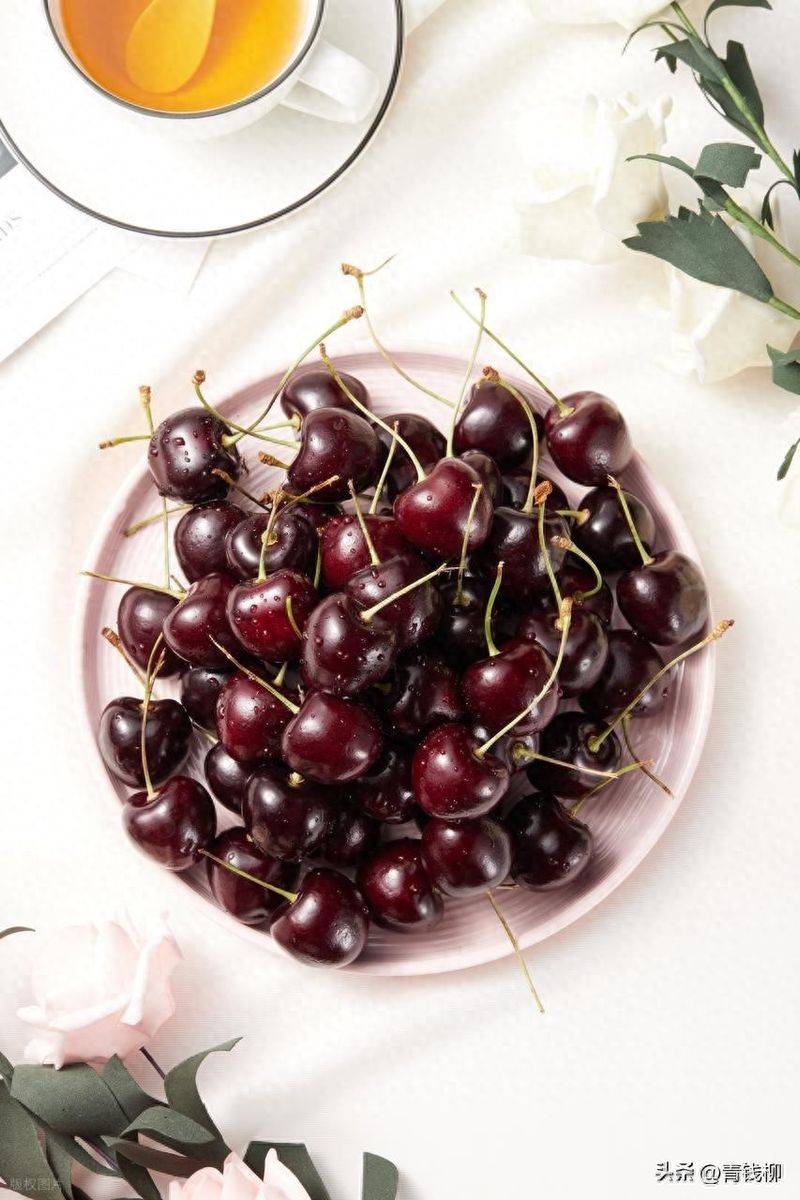
It's perfect for the north and the south to grow the pyrophagus. Goods
3. 7 disease control
(1) winter clean-up. First, weeds of all kinds and trimmed with dead and insect branches in orchards should be removed, burnt out of the garden, white trees painted with thiomers, the sources of various winter infestation should be eliminated and pests should be reduced in the coming year。
(2) growing season. Insect pests that often occur in old car salvos, small green leaves, yellow moths, small leaf moths, fruit flies, sorghums, etc., can be used for 40 per cent of pyrophosphate emulsions, 1,000 times more than or 10 per cent more than 3,000 times the acetylene or biphenyl esters or avermectin rotations, while the orchards are yellow, blue sticky flies and sorghums. Frequent diseases include adhesion, perforation, lignosis, root disease, etc., sulfur sulfur sulfur sulfur sulfur sulfur sulfur sulfur in a timely manner for workers suffering from adjoining diseases; treatment of 700 times the methyl sulphate or 600 times the dysen manganese zinc sulphate in perforation; treatment of 800 times the graft or 1,000 times the phenyl ether acetate in an early fallow disease; treatment of 70 per cent of the methyl sulphate humid powder with 1,000 times the substance or 500 times the substance of more than 50 per cent of the fungal humid powder; and control of other bacterial rotor diseases, horn spots and ulcers with intermediate fungi。