“live, this time!” qingdao, an old moedojiang, smiled, his face wrinkled in black, and now the white temple's hair sprung out of the field, and he was so happy。
This land was once a place of deep regret for the growers and the villagers. Earlier in the year, the same plot planted the taro, which every june and july would be decayed and rotted, with the death rate reaching up to 70 per cent. A large number of farmers have been unable to land, and the “national temple taro”, which has been growing for more than 600 years, is on the verge of extinction。
And today, this once-unusual “earth pebbles” is being re-emerged by a “battle of balls” that lasted almost a decade. Not only does the white taro come back to the top table for up to 20 pounds per pound, but it is also a “bump” of $340,000 per acre。
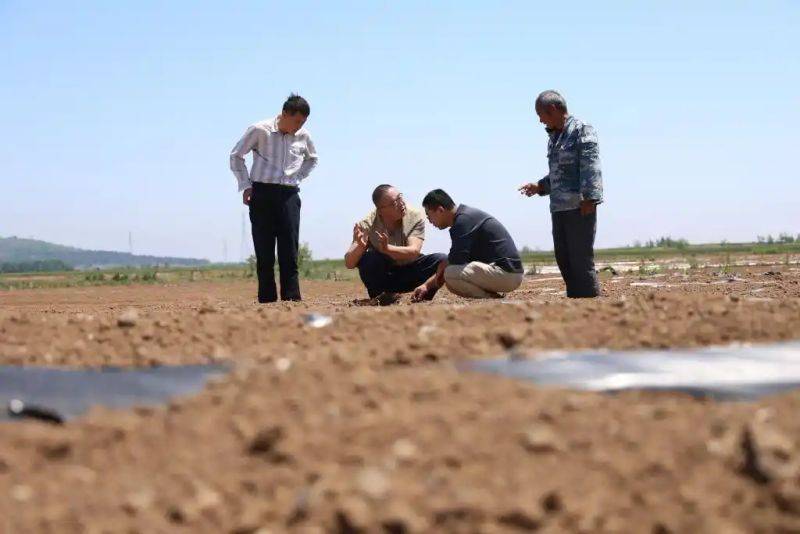
The shandong science and technology team interacts with farmers
On the morning of 12 may, journalists followed the technical attaché of shandong province and expert from the taco industries service in qingdao city into a land that had once left farmers in a state of deep sorrow. From the qingdao agricultural university laboratory, to the field head of the village of murman gong, the story of the escape behind this kind of defence battle was discovered。
Tragedy:
Six hundred years ago, the taco died
"look at this tarp, it's so strong!" on the street of muron springs, in a field full of three villages, sun yunde, a technical attaché from shandong province and head of the taco industries corps in qingdao city, crouched down, slowly lifted the membrane, pulled up a seedling and showed the journalists that, “look at the roots, they are all white and fresh, and they are so fat that there are no signs of disease”
Sun windsor was careful to hold the seedlings and saw the crops as treasures。
“single late can produce at least three pounds of taro. The special structure of the platonic taro is similar to that of the human stomach mucous molecule, which is easily digestive and nourished, and is suitable for the consumption of elderly children, women and children, and is typically a product of pharmacological co-production.” sun windsor describes the current state of development of the white temple taro。
For a long time, the country has been plagued by serious obstacles to the growth of agricultural production, which is a geographical indicator。
Growing zhijiang has rough hands full of cocoons, but moves softly when it caresssssssing seedlings. "the taro that has been planted has grown so well, that it's finally real." jiang zhi was laughing and saying。
It is hard to imagine that, just over five or six years ago, this field was left to farmers with a great deal of grief。
“in previous years, the seedlings had been planted and died for no reason, and our farmers were never able to find their roots.” jiang zhihong shoots the mud on his knees, pointing at the current slope, and remembers, “every summer, at high temperatures, the seedlings of tarp grow into decomposition, death rates exceed half, and 70% of the serious plot of land will disappear.”
Successive crop cuts led to the total abandonment of cultivation by a number of farmers and the rapid reduction of the area under white taro cultivation from the peak period. The existence of 600-year-old specialty agricultural products has, at risk, cut off cultivation。
The origin of the cultivation of the white temple taro can be traced back to ming generation. According to historical records, in 1367 a. D., during the fall of mingyu zhu zhu yuanbing, the family of the army brought the southern taro species into the area of the jie dong ling mountains。
More than 600 years of age have passed, with irrigation in the mountains of the toto mountains, with weathered soil rich in phosphorus, and the porcelain taro has formed a unique quality of soft aroma, smooth mouth, with the term “phosphate springs for tasting”. In 2008, the white temple taro successfully entered the guest table at the fish state hotel and became a known “national taro”。
"we've grown this taro for more than 600 years, and we can't give it away." as the farmers struggled, a team of science and technology agents from shandong province moved into the fields to solve the planting challenges. But no one has ever imagined that this unique quality has been so difficult to plant。
Attack:
Detective taco in the lab
With planting difficulties, journalists came to the qingdao agricultural university laboratory. Into group training laboratories, a full incubator is shown in eye curtains, a layer of transparent group bottles are placed in an orderly manner, and the seedlings of taro in the bottle grow steadily and are carefully cared for。
“it was previously possible to grow tens of thousands of acres of taro in this area, and it was significantly reduced in the later stages.” prof. Yang yanjie, aoshima university of agriculture, is standing by the incubator, holding a bottle to observe the condition of the seedlings. As the core expert of the science and technology task force, he has been working on technology for the cultivation of taro for the past decade。
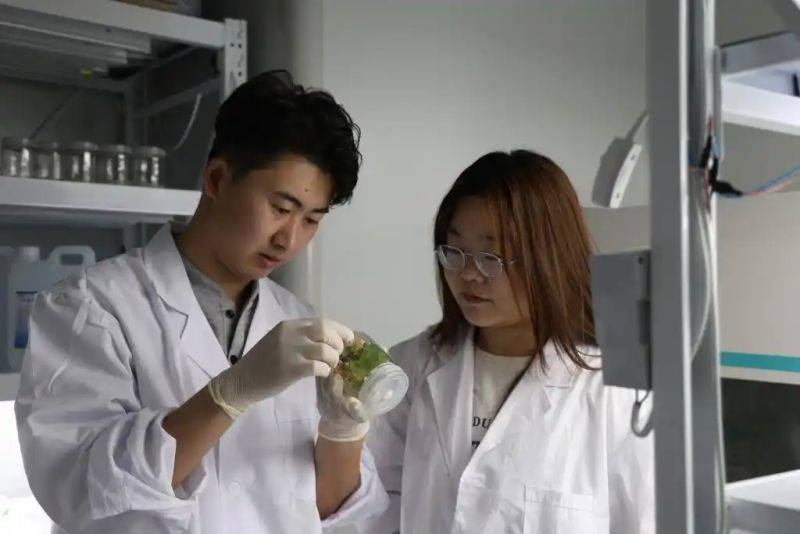
Taste seed growth by team observation team of yang yanje, professor, aoshima agricultural university
Yang yanjie described the unique nature of the cultivation of the taro itself and the great fear of being planted. “after the cultivation of the taro, it takes between five and seven years for the land to be recultivated, the farming households have limited resources to cultivate the land, and the long resting period is essentially equivalent to an inability to plant over the years.”
The challenges are at hand, but the causes of the disease are not conclusive at an early stage。
"in the beginning, we decided that the problem was in the soil environment." the yang yanjie reminiscent of the research process, where the team initially produced seedlings using a sterile base, and the seedlings that could be cultivated continued to die. “it was only after the seedlings were brought back to the lab for testing that it was not the soil, but the tacoball itself!”
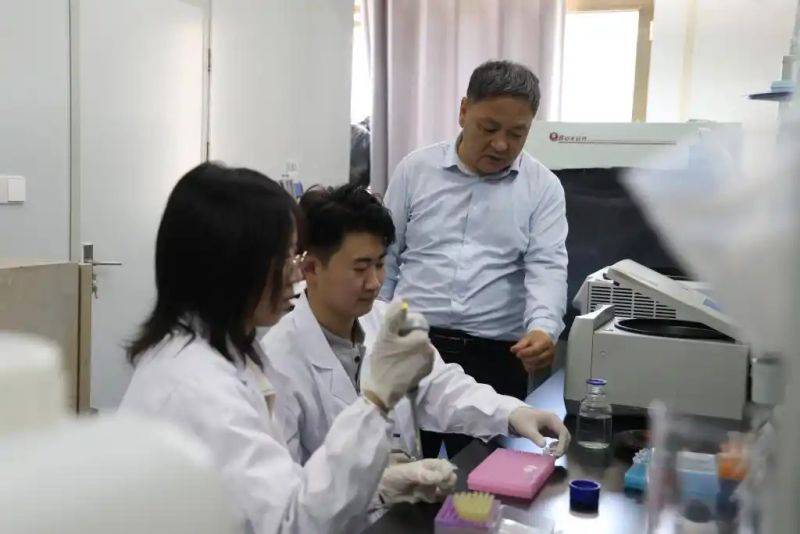
Experiments in the lab
After several rounds of specialized testing, scientific teams have detected a variety of fungic diseases, including black fungi, in samples of balls. The symbiotic properties of this type of disease are extremely strong, and research has confirmed that the source of the taco disease is more than just the soil, more of it from the seed carrying pathogens。
When the causes of the disease were identified, the service formally initiated detoxification work for the balls. The team sent the tacoball to the lab and used plant-group debacterium technology to carry out the technical attack。
“as a result of three generations of growth, the fungus carried by the ball can be virtually eliminated.” yang yenge pointed to the introduction of seedlings in bottles, and tested seedlings that had completed degenerative treatment could reach 95 per cent survival even if planted on plots in general soil conditions。
The growth rate of seedlings has risen by 20 to 30 per cent compared to previous rates, which has been a real success, allowing farmers to witness technological changes in cultivation. “... When farmers saw the results of the tests, there was a marked increase in cultivation motivation and renewed confidence in the planting of white temple tarts.” sun wind said。
The professional value of this service has been further highlighted by the scientific power of higher education institutions to break down core diseases. The team covers various fields of specialization, such as seed detoxification, plant breeding, plant cultivation, pest and disease control, soil improvement, and deep processing of agricultural products, and includes senior agriculturalists from the aoshima city agrotechnology promotion centre。
The team provides full-process babysitting support for the cultivation of taro, from seeding, screening of disease-free balls, to co-mingling, integrated field management of water fertilizers, to the selection of agricultural products, geographical branding. Small tacos, based on specialized team collaboration, have gradually moved from ordinary to high-value farming。
Breakthrough:
New technology makes the acres more than 6,000 pounds
After resolving the problem of the survival of the seedlings, sun windsor began to explore planting programmes to increase the production of the extracts, seeking to make the taro more dynamic and economically efficient. In 2021, the team developed and introduced high-quality, high-yielding planting techniques。
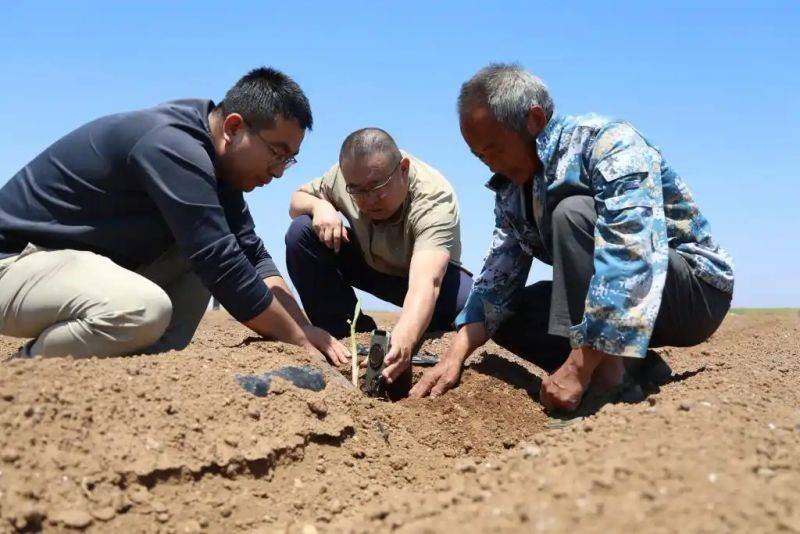
Sun yunde observed the growth of the white temple with team members and farmers
“traditional planting patterns directly plant the balls into the soil, and we adapt them to concentrate their seedlings and then plant them in the field. Improved planting patterns have led to significant productivity increases。
"acres used to be less than 4,000 pounds, and new technologies could have exceeded 6,000 pounds." the change in crop yields is measured by jiang zhi, which “had accounted for only 30 per cent of high-quality taro, which can now rise to more than 50 per cent. The market price for high-quality taro is 15 to 20 dollars per pound, while the price for small taro is only 5 or 6 pounds, resulting in a direct doubling of earnings.”
Today, revenues from the cultivation of taro acres are at a minimum of $30,000, a level that was previously unimaginable。
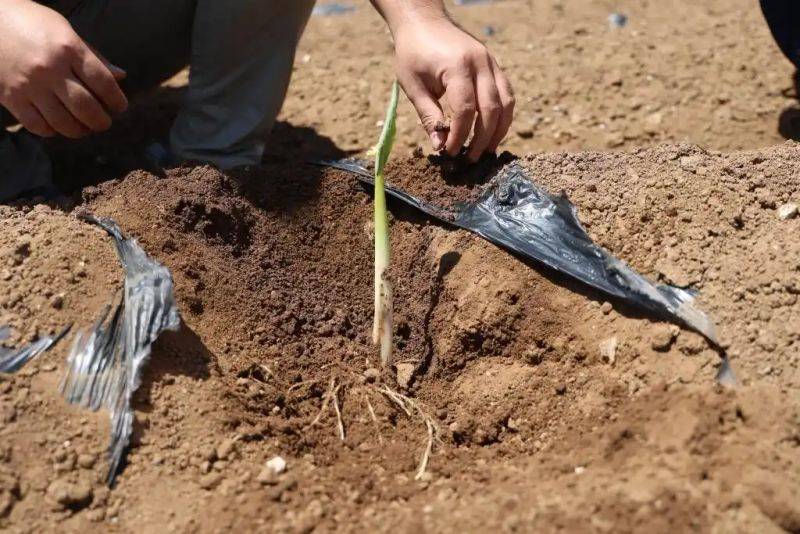
More than a month of white tara roots are white and healthy
“in previous years, a number of farmers have given up their cultivation directly and have not been able to identify the underlying causes of the decline. Since the arrival of technologists in the research field, the identification of problems, research and development techniques and land landing guidance, farmers are now growing according to standardized techniques. Growing problems in the field arise, and everyone will consult with experts to find solutions.” turning to the current state of cultivation, jiangji is smiling。
A biodegradable membrane made of corn starch was introduced in the fields with the support of the ink agricultural rural authority. “such membranes do not cause soil contamination and naturally degrade to increase soil organic content.” sun yunde leans over to touch the membranes in the fields and says that cultivation development is not only about economic benefits but also about soil conservation and sustainable planting。
With technology in place, the white temple taro industry has seen an all-round development turn. At present, the core area is planted on a scale of more than 3,000 acres, with annual production ranging from $60 million to $80 million. Quality upgrading has also led to an increase in brand value, and even with a sale price of $15 per pound, the white temple taro is still in short supply。
At the same time, the team developed the “expert team + business + cooperative + farmer” model, setting up fixed technical assistance points in lacey, in mok, qingxiang, etc., to provide technical guidance throughout the taco growth cycle。
Over the past two years, the team has developed the technique of purification of tacoballs and the transfer of sprouts to high-yield production. The cumulative expansion of related technologies has resulted in more than 10,000 acres, resulting in an increase of more than 25 million yuan for farmers。
In the demonstration fields in the three villages of mangong, pilot seed plots have been created to plant many of the country's taro species. The yang yanjie team has continued to conduct stock-adaptation assessments, collecting 19 high-quality varieties in the taro-producing areas of shandong, sichuan, yunnan, zhejiang, jiangsu and fujian。
“the establishment of demonstration test fields is the scientific assessment of the ability of different species to adapt to the local soil and water climate in qingdao and the screening of high-quality, disease-resistant and productive potato varieties.” according to yang yanjie, keo dongmoto is the main potato-producing area, with a considerable amount of trato-head out-marketing. The team's technical guidance now covers the regions surrounding lacey, ping, zingxiang, and even to the faraway, sun-ray county, etc., in an effort to promote the smooth and sustainable development of the tao industry。
The white temple taro is fortunate to be reborn with scientific assistance at a time when the industry is on the brink of collapse. In addition, the team provided scientific and technical support for the flat-cut agricultural products, such as peas and ginger。
Sun winde is standing on the banks of the dragon springs looking at the taro fields: “the local sandy, phosphorous-rich soil, combined with mountain spring water and unique geographical climatic conditions, can breed white temple taro, which is of good taste”
“we have spent nearly 10 years saving the endangered white temple taro.” sun windsor deplores the fact that there are still plans for the subsequent development of the industry, extending the chain of deep processing of tacos, developing products such as tacos and tacos, and exploring the integration model of the agro-bourbon and building projects for research and study on tacos。
At the same time, there is still a short-term development of the industry, with a total of 11 researchers and technical assistance covering more than 12,000 farmers, but some of them have an old concept of traditional farming management, which still requires a sustained agro-technologies programme to update their knowledge of farming。
From laboratory research to field planting in daejeon, from detoxification seed balls to mechanized harvest sites, from near extinction to return to the high-end table. This long battle for the protection of the species is continuing, not only over a taro crop, but also over the geo-farming roots of the soil of one side, as well as over the hopes on which farmers depend for their livelihood。
News extensions:
From planting to vacationing
Make the landmark product hard
Even though industrial development has been successful, the team of experts has not stopped studying, and the current stage of industrial development has brought new challenges。
“there is still a gap in the stock of the white temple taro market.” yang yanje said that the ageing of the rural population was a major constraint to the expansion of cultivation. Traditional taro cultivation is intense and young workers are less willing to work。
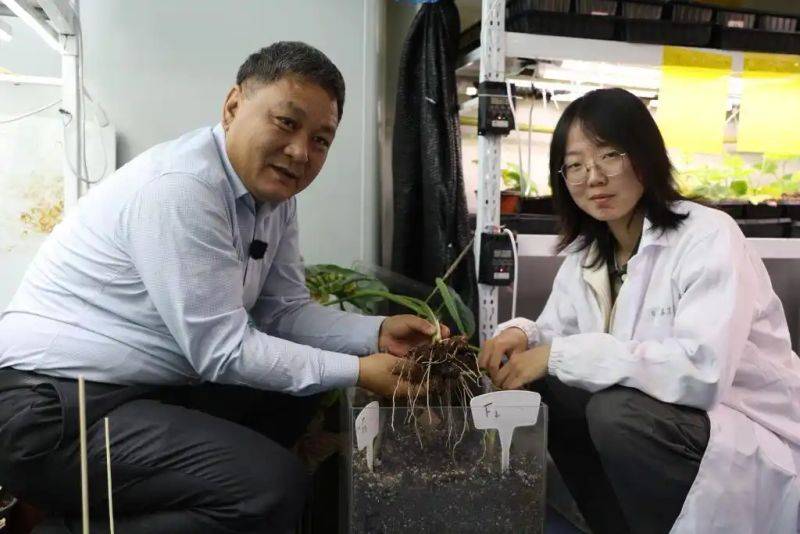
Professor yang yanjie, aoshima agricultural university, shared with students the progress of experiments related to white temple taro
In response to this situation, the team has focused on the development of light and simple planting techniques and the promotion of whole-process mechanization. “the technology we have developed for cosmopolitan seedlings can be adapted to mechanized planting equipment to complete the field planting in one time. The pick-up chain is also mechanical in that it completes the extraction, earth-cleaning, fruit-speculation process and automatically distinguishes the size of the taro like the fruit-screening equipment.”
This is more problematic than the shortage of labour. “in april and may of each year, there are virtually no real white taro in the market, and most of the goods in circulation in the market are made up of foreign taro”. It is difficult for ordinary consumers to distinguish between the true and the true nature of the goods, as yang yanji's speech is full of frustrations, inadequate indigenous production and foreign taro-heads。
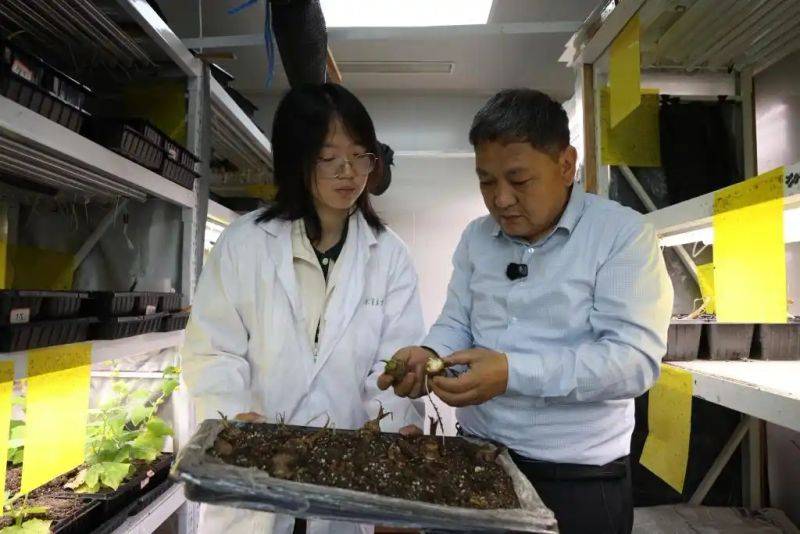
To safeguard the reputation of agricultural products in the region, the team simultaneously promoted the development of two core technologies. One is the creation of identity cards for taro-head molecules, the use of molecular marking techniques, the targeting of unique aroma and tactile markings of white temple taro, the identification of the authenticity of goods through specialized tests and the elimination of the circulation of counterfeit products。
The second is the extension of the supply cycle for the storage of goods, which has now resulted in a six-month quality change in the storage of taro by optimizing the process of drying out the sun, and physical debacterial storage. The taro collected in november each year can be stored until the following may, with the team's long-term goal being to achieve a long-term storage of eight to nine months。
In addition to this, the team explored a summer hysteria planting pattern, with wheat and garlic being planted directly and still producing nearly 5,000 pounds. The root of the garlic crop is a naturally resistant substance that optimizes the soil environment and corresponds to the demand for taro. With the combination of seed transfer and intensive planting techniques, the rate of seed production in the summer can be more than 99 per cent, and the results of the experiment in the field, the ink and wind shop, are significant。
Over the past four years, the cumulative expansion of this cropping technique has reached more than 26,000 acres, with a maximum annual expansion of up to 78,000 acres, particularly in the flat and lacey lands. To date, the team has obtained dozens of relevant patents, leading the development of a shandong group standard and a local planting standard for aoshima city。
“from pedestal detoxification to rotational planting, a series of technical studies are making the potato industry more robust and widespread.” yang yanji said。
The field was tested with eyes, and a seedling of tara rose green and green under the sun, and the spring of the dragon springs flowed along the mountains, feeding this land, which had been growing for centuries。
♪ all over the peninsula ♪