I. Increased relevance of the new business community to the underworld
Challenges in developing traditional business skills
The main reason for china's rapid economic growth since the reform and opening up of the economy can be attributed to the full release of the demographic dividend in the context of economic globalization. From the point of view of commercial competition, the main manifestations are price competition in the market, technological imitation improvements, strategic short-termist tendencies, and business-to-business rivalry. Under this model of business competition, traditional business education, which is functionally oriented, aims at single-scientific talent development and focuses on the quality of business, can meet the demand for talent for economic development。
However, with the emergence of a counter-globalization of the economy, the release of the demographic dividend has come to an end, along with a new wave of technological and industrial revolutions, new technologies and models, such as the internet, cloud computing and big data, are profoundly changing the way people think, produce, live and learn. Changes in the stage of economic development and the upgrading of technological conditions have determined that commercial competition will be characterized by quality competition in markets, technological autonomy and innovation, strategic long-termist tendencies, and inter-firm synergy. It was therefore urgent for the chinese economy to move from quantitative expansion to qualitative efficiency enhancement in order to achieve high-quality development in the new situation。
The changing nature of business competition poses a serious challenge to traditional business education, which is no longer adapted to the social development needs of the digital economy in terms of human resources standards, teaching concepts, teaching models, curriculum systems, etc., as evidenced by the overemphasis on theoretical and academic research over applications and practical teaching; barriers between professions and disciplines leading to constraints in interdisciplinary training; neglect of the contribution of emerging technologies to business education; disconnect between human resources development standards and market user requirements; inadequate internationalization; and the lack of business ethics education。
The reed trees provide fundamental adherence to new business talent development
“new business” is a cross-cutting approach to traditional business, integrating new technologies into business curricula, providing students with comprehensive interdisciplinary education using new concepts, models and methods, and responding to technological innovation, industrial integration and social change. In order to better meet the needs of china's future commercial competition and promote high-quality economic development in china, the new business department, in addition to emphasizing the “comprehensive” and “interdisciplinary” content of education, would like to emphasize the development and upgrading of the “nature” of the educated。
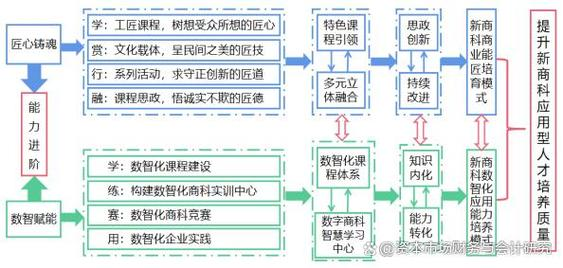
“the man who is good, the man who is good, the man who is good.” our higher education, which serves the construction of a reform of openness and socialist modernization, has the fundamental task of “bringing the builders and successors of socialism”, who are the foundation and the fundamental observance of higher education。
Unlike traditional business education, which is dominated by western theory and case law, “new business” should try to explain chinese phenomena, solve china’s problems and focus on building a business education system under china’s socialist economic system. Therefore, it is only by insisting on the role of the lycans in new business education, and by taking germany first, that the “humans” will be able to develop more business participants and leaders of high quality, long-term vision and cooperative sense, and that the chinese economy will be better able to face the fast-changing, complex and integrated business competition。
Ii. Enforcement of the enforcement of the lites under the new business
Guided by the real needs of china's economic development in the new context, focus on the goal of developing a composite and innovative talent
With connectivity, big data, cloud computing, artificial intelligence, shared economy and the application and development of technology in commercial services, the chinese economy has entered the era of 3. 0 years of commerce. The rapid development of emerging technologies and the iterative renewal of business concepts are both the result of multidisciplinary cross-fertilization and place more demands on cross-cutting disciplines, knowledge integration and technology integration in business development. Thus, the development of high-quality “complex” talent to meet the needs of china's economic development in the new context is one of the objectives of the new business sector to educate the lidddian. Complex business talent is in line with the fundamental features of the new business community, including the combination of knowledge, competencies and thinking. Complex business talent needs to both broaden knowledge and constantly adapt mindsets to change; to integrate the natural and social sciences with each other; and to integrate disciplines in the field of humanities and social sciences; and to place emphasis on the learning and mastering of theoretical knowledge and take the time to act in a bold and practical manner, thereby improving its comprehensive quality and core competitiveness. In the context of the era of “mass entrepreneurship, a crowd of innovation”, innovation has become a consensus for modern economic development in china. Fostering the creative spirit, innovative thinking, creative abilities of students and developing innovative talent adapted to the development of the new era are also important objectives of the new commercial koridian。
Guided by the development features of the new economic era, focusing on the development of new business education
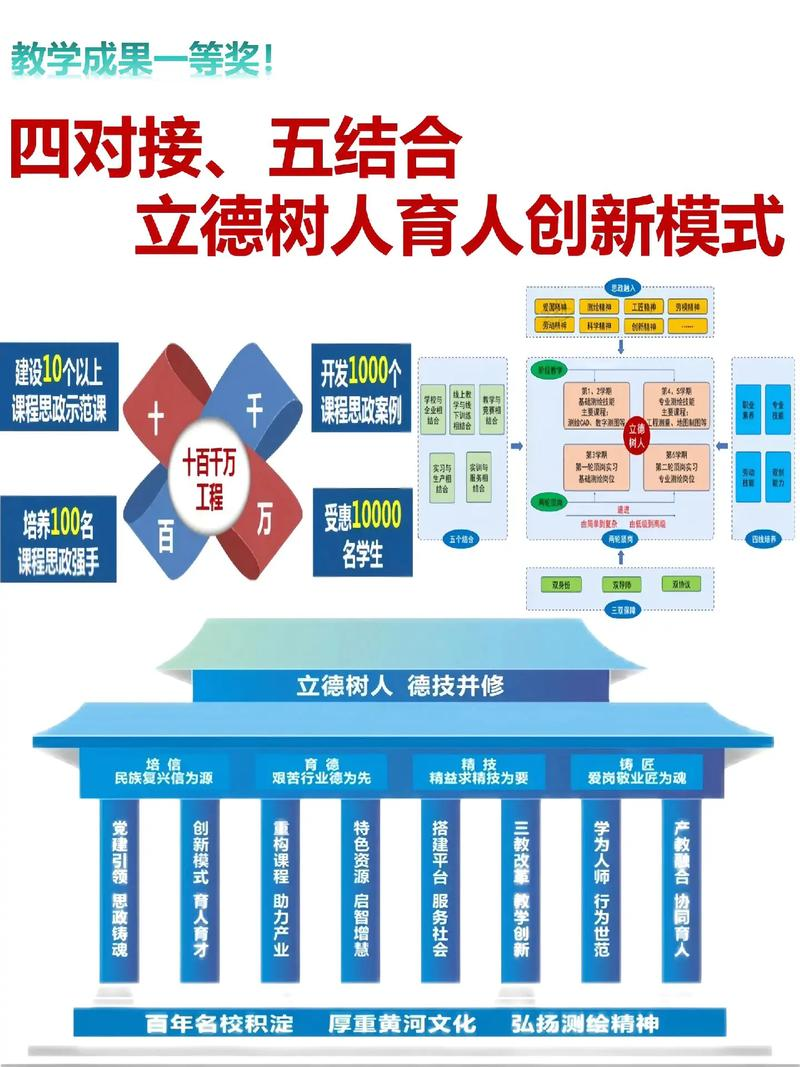
Pluralism and variability are fundamental features of the development of the new age of the modern economy, with unprecedented complexity and diversity in the social values and orientations of the digital economy, as well as problems such as misalignment of business values, poor moral awareness of the market economy and lack of social responsibility. However, a market economy, a knowledge-based economy and a virtuous development of the globalized economy require business talent that is not profit-oriented, but sophisticated “interpreters”. New business professionals are the future business managers and the dominant players in the business sector, whose value orientation not only affects the development of an individual’s professional career, but also relates to the long-term economic development of society as a whole, and even represents the image of the rise of china’s great powers. Thus, in the development of new business skills, the spirit of rational profit-making, co-development and social contribution should be promoted, the concept of entrepreneurial development should be fostered, and an atmosphere of honest labour, scientific and technological innovation should be created; the rules of fair competition and mutually beneficial win-wins should be emphasized, and the education of the core values of socialism, the moral sense of the market economy and the sense of social responsibility should be integrated into the entire process of new business education, with a view to maintaining the development of its content. To develop new business talent capable of re-establishing business ethics, assuming corporate social responsibility, emphasizing the organicity of economic and social benefits, promoting a virtuous cycle of market economy and moral construction, building a modern market economy system and modernizing the socialist powerful。
Following the pattern of market economic development and human development, building practical development programmes
Practice is good, practice is good. As an applied science, which explores both the theoretical patterns of economic development and current economic problems, commercial talent is developed in ways that are limited to certain natural socio-economic and political economic systems and serve social productive purposes. Economic globalization is an irreversible historical trend, and china's economy will be more fully and fully integrated into the world and become an important force in the global economy. Because of the unique nature of the natural economy and the business culture that has developed under china's socialist economic system, we need to build a practical business talent development programme based on china's national circumstances. Accurate knowledge and control of the patterns of market economy development and human growth, and follow and combine both patterns to better achieve the leeds goals of the new business. In terms of specific methods of upbringing, the successful experience of identifying and developing talent through an in-depth review of major realities, the cycle of “practical-perceptive-repractical” learning has been repeated, with the ultimate aim of improving theoretical knowledge with universal regularity. Through hands-on training, vocational training and the creation of a platform of ethics and practice to strengthen students ' home situation. It is necessary to identify talent in innovative practices, nurture it and bring it together, and to educate students to reach out to the general population, to produce and to live in reality, so that they can truly develop in practice and build their careers at the grass-roots level。
Iii. New business viewing the path to realization of the lower lyde trees
Combining literacy education with personality development
Literacy education is an essential leader in shaping students ' values. General education refers to the expansion of humanities education beyond professional expertise, which is carried out in the context of talent development programmes and curriculum design to strengthen the humanities, personality and life education. Many business colleges and universities have not only included the teaching of knowledge and skills in business, but have also been able to achieve “tree people” education for students, including in the areas of critical thinking, writing and communication, western music appreciation, confucian culture, and others. While literacy education is conducive to the development of complex and applied talent, individual development is encouraged by the development of leading and innovative talent, based on the evolving characteristics of different students, providing students with a variety of options and opportunities through teaching, enabling them to develop according to their individual characteristics and making them professionals on the basis of being civilized。
Combining knowledge and extracurricular practice
Emphasis is placed not only on the “high-profile, low-action” “high-intensity, low-intensity” phenomenon of “high-intensity” business students due to a lack of ethical awareness and business behaviour, but also on the development of business personnel with greater hands-on skills, which has become a basic requirement for new business education. Learning knowledge and service societies are mutually reinforcing, using as an example the “economic principles” of the basic curriculum in business education, which allows students to design self-study topics on the themes “enterprise to the community”, “enterprise to the business” and “enterprise to the rural areas”, to extend classroom teaching to the community, enterprise and rural areas, to guide students into social classes, to observe problems with their own eyes, to think about problems with their own minds and to express themselves in economics professional languages。
Under the theme “going into the community”, the university's think tank is used to guide students to the development of community business models, the development of community-based old-age services, etc., and to encourage students to provide the community with the intellectual support it can, to participate in society-building by serving the community, to strengthen the compassion of students and to enhance their sense of social responsibility。
Under the theme “enterprise to business”, using the advantage that business is the subject of the market, students are led to analyse issues of corporate governance, constraints on corporate finance, lead students to business with questions and reflections, gain insight into the actual functioning of enterprises, and deepen understanding and ownership of economic theory from a realistic perspective。
Under the theme “into rural areas”, students are encouraged to reach out to rural areas by designing extra-curricular subjects related to the issue of “three farmers”, such as rural poverty, old-age rural residents, compulsory rural education, and so forth。
Combining theoretical teaching with value guidance
If a function y=kx is used to represent the system of the new commercial koridian, in which the variable y is the effect of the liedian, and the variable x is the theoretical teaching of the teacher, then the coefficient k is the value guide based on the theoretical teaching. In the educational practice of the pro-business elite, issues such as opportunity costs and life beliefs, maximizing corporate benefits and social responsibility, equity and efficiency, economic development and income distribution, and maximizing consumer effectiveness and well-being can be addressed through analytical methods in economics and management. For example, the content of entrepreneurship and its importance for student development and social development are read in the professional introduction course; the business-to-employer requirements are presented in the economics act course in the context of typical cases, as well as students ' perception of the rule of law, ethics, responsibility and accountability; the profile of young students in the human resources management course is described in terms of people's leadership in the business and the requirements of business's awareness of human responsibilities。
By closely linking china's situation in the classroom, students are trained to develop constructive critical thinking; by exploring the underlying logic of inter- and inter-disciplinary convergence through deep-seated knowledge of the subject; by fostering a scientific spirit that is realistic and practical; and by connecting knowledge and feelings to awaken the good feelings shared by humankind, and by fostering the complementarities and humanism of students。
(by the school of business, united university of beijing)