In order to map the regional distribution of intellectual property resources, promote the integration of intellectual property into the regional economy, promote the transformation of the macro-management of intellectual property in the region, explore intellectual property resources with regional mechanisms for scientific, industrial, economic and social development, channel and achieve regional convergence of innovative resources, and develop a pilot work programme on the regional layout of intellectual property。
Background of the pilot
With the deepening of the global economic landscape, the internal and external environment for our economic development has changed profoundly, the structure of the economy is at a critical stage of restructuring and there is widespread pressure for industrial development and economic transformation. Eighteen countries have proposed innovative-driven development strategies that provide direction for regional economic and social development. Intellectual property rights, as intellectual capital of commercial value, have become an important resource for production, indirectly or directly, and are widely recognized by the international community as a strategic resource for national development and a central element of international competitiveness。
The development experience of countries has shown that there is a significant spatial dependence on knowledge creation and technological innovation activities, that there is a growing tendency for high-end intellectual property resources to be concentrated in a few regions, that institutions and mechanisms for the allocation of resources centred on intellectual property rights have been put in place, that innovative resources, such as science, education and industry, have been brought together at the regional and industrial levels, that this has contributed to a shift in the way regional resources are allocated and economic development has played a decisive role in the allocation of resources to markets; that it has contributed to a better match between intellectual property resources and innovative resources, industrial resources and economic resources, that it has strengthened the spatial integration of the chain of intellectual property creation, use and transformation; and that it has contributed to the improvement of intellectual property policies, the attainment of the objectives that underpin the structural adjustment of regional industries, economic restructuring and innovation-driven development of the region, and that it has promoted the deeper integration of innovation systems with the market economy。
The aim of the regional ipr mapping exercise is to map the regional and industry distribution patterns of the various ipr resources, including patents, trademarks, copyrights, etc.; identify the match between regional science, industrial resource potential and intellectual property creative capacity; the match between intellectual property creation and application; the match between intellectual property utilization capacity and industrial and economic and social development needs; propose a guided catalogue that is guided by intellectual property resources to optimize the allocation of other resources; and, based on the principles of classification guidance, propose a programme of optimization and adjustment of intellectual property rights and related policies in favour of regional development that will lead to more efficient regional resource allocation and a scientifically sound regional intellectual property resource allocation。
Ii. Overall objectives and working lines
(i) overall objective. Explore mechanisms and models for the formation of regional intellectual property rights (ipr) schemes to provide a practical basis and working norms for the overall advancement of the regional deployment of intellectual property resources (iprs); use the attributes of intellectual property resources to explore mechanisms and mechanisms for the allocation of resources centred on intellectual property rights (iprs), leading to regional and industrial convergence of innovative resources; explore ways of deeper integration of intellectual property rights with economic and social development, and enhance the macro-management capacity and service support of government ips。
(ii) work thinking. The selection of some provinces (districts, municipalities) or model cities for intellectual property rights as pilot areas for the regional layout of national intellectual property rights, with a rolling mechanism of annual assessments。
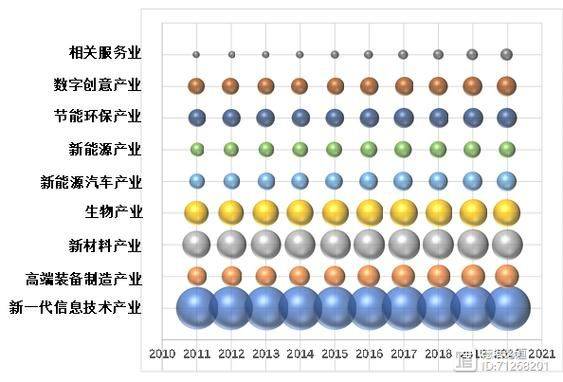
(b) mapping the intellectual property resources of the pilot regions and the basics of innovative resources, such as science and education, identifying the intellectual property-intensive regions of the pilot regions, the industries of intellectual property, the matching of intellectual property rights with related resources, in particular innovative regions such as national autonomous innovation demonstration zones, national high-technology industrial parks, and proposing a regional intellectual property-oriented catalogue, as well as proposals for the adjustment and refinement of intellectual property and related resource policies。
Pilot work has been carried out to improve the underlying theory of work, research and analytical methods, technical norms, operational manuals, supporting platforms, etc. In the regional distribution of intellectual property rights, to explore working mechanisms and models, to draw up work experience, to develop a workforce and to promote comprehensive work。
Where conditions exist, major categories of intellectual property resources, such as patents, trademarks, copyrights, etc., can be included in the pilot scope of work, as well as from patent resource analysis, which can be progressively extended to the main categories of intellectual property resource analysis, subject to the conditions being met。
Iii. Main mandate
(i) carry out resource analysis of intellectual property rights (or patents, under the same heading). (c) mapping the current distribution of intellectual property resources at the regional and industrial levels; studying the match between intellectual property resources and innovative resources; understanding the support that intellectual property resources provide for local industrial development and economic and social development; and combing intellectual property policies in the region, as well as their interface with science, technology, economics, industry, etc。
(ii) conduct a comprehensive evaluation of the regional layout of intellectual property. Explore regional intellectual property layout evaluation models and indicator systems, explore integrated evaluation tools, spatial analysis methods and visualization expressions, and map intellectual property layouts, identifying regional types of intellectual property development and development orientation。
(iii) explore regional intellectual property classification guidance work models. At the regional level, develop a directory of relevant resource allocation guidelines centred on intellectual property resources to guide the adaptation of relevant regional policies and optimize the regional allocation of intellectual property resources。
(iv) building an information platform on the layout of intellectual property resources. (c) study standards for collection of intellectual property resource data and explore standardized models for intellectual property resource analysis. Development of databases on intellectual property resource bases and intellectual property-related resources. Develop and improve existing intellectual property information platforms and establish a system of intellectual property information retrieval services based on the standard industrial classification of national economies。
(v) establishment of a system of intellectual property layout support services. Development of guidance materials for the analysis of intellectual property resources. Developing teams of workers and experts in areas such as intellectual property, regions, industry, economy, science and technology, education, etc。
Iv. Pilot results
(i) development of a regional intellectual property architecture normative document. A series of papers on analysis of regional intellectual property resources, an analytical manual on intellectual property resources, a directory of intellectual property resources and the preparation of draft proposals for policy adjustments related to the region, intellectual property policy and policy, etc。
(ii) developing a regional intellectual property mapping facilitation mechanism. (c) the formation of a mechanism for coordinating the regional layout of intellectual property, in association with the national intellectual property agency and local governments. A system of government guidance, participatory research support and expert advice was developed. Develop collaborative mechanisms for advocacy demonstration and work facilitation。
(iii) developing standards and systems for information services for regional layout of intellectual property rights. Standardized collection of resource data. Establishment of information platform building standards. Developing a system of intellectual property layout information retrieval services based on the standard industrial classification of national economies。
V. Planned progress
The pilot was conducted in three phases, covering the period 2015-2019。
Phase 1 infrastructure (june 2015-december 2016). The focus will be on building mechanisms for advancing work, carrying out an analysis of intellectual property resources and a comprehensive evaluation of regional layouts, exploring the regional intellectual property classification guidelines and preliminary working normative documents. Development of the results of the groundwork。
Pilot launch (june-july 2015). Declarations are launched and prepared for submission to the pilot programme. Organization of reviews, identification of pilot units, identification and publication of local pilot programmes。
Pilot advance (july 2015-october 2016). (c) establishment of a pilot facilitation mechanism, formation of teams and pilot promotion. We follow up with the relevant agencies。
3. Phase summary (november-december 2016). The pilot exercise was summarized, the achievement of the objectives of the pilot exercise was checked, and a summary report and preliminary results were produced。
Phase ii focused advance (2017-2018). The focus will be on building an information platform on the deployment of intellectual property resources, optimizing the adaptation of intellectual property rights and regional policies, and developing more comprehensive and normative work guidance materials. Some results have been achieved in terms of focus。
A mid-term assessment was conducted in 2017, with appropriate adjustments based on the results。
Phase iii acceptance and inspection promotion (2019). Comprehensive lessons learned from pilot experiences and results, and comprehensive replication。
Vi. Organizational safeguards
(i) strengthening organizational leadership and developing working mechanisms for upward and downward linkages. The national intellectual property authority and the people's governments of the pilot provinces (districts and municipalities) have strengthened their communication and co-sponsored the pilot. The department of protection coordination and the directorate of intellectual property of the pilot provinces (districts and municipalities) form a joint working group to coordinate the implementation of the pilot, strengthen the communication of information on the pilot and coordinate the resolution of specific issues under way in the pilot。
(ii) create a pilot environment to ensure that the pilot works well. The main role of local governments in the pilot exercise is fully utilized, and existing policy resources are consolidated and motivated. Strengthen financial, technical and human resources support for piloting. Enhanced advocacy coverage of the progress and results of the pilot。