(2) the whole area of the watermelon must be covered under the roof of the shed by tilling, dredging, ditching, dingling, requiring drought and irrigation, drainage, gilling, 2. 5 to 3. 0 metres wide, ditching 35 cm wide, watermelon trophic ditch 50 cm wide and 40 cm deep, placing decomposed organic fats like pig manure and dung drying at 3000 kg per 667 m2 in the trophic ditch, adding 75 kg of potassium fertilizer to the nitrous phosphorus applied, fertilizers to the soil and then to the trophic ditches, and some fertilizer to be applied to the guava, such as 1,500 kg of evacuated soil per 667 m2 of fertilation, and to the soil, since the undetermined roots of the melon can absorb nutrient needs for the growth of the melon。
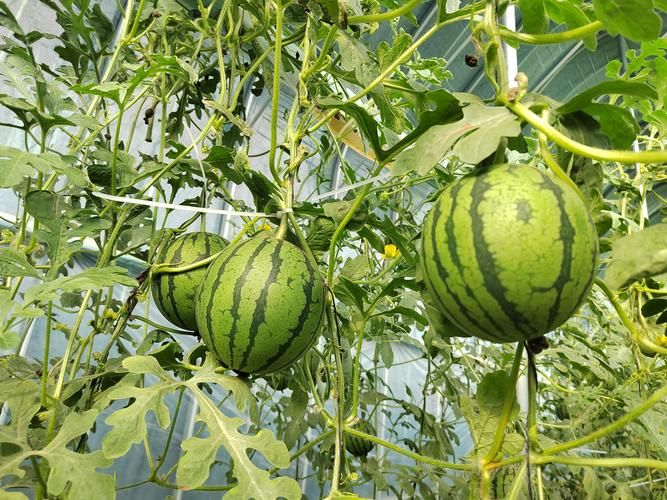
(3) the planting of autumn watermelon shall be done at the end of august and early september, with 800 plants per 667 m2 planted on the nutrient belt, which shall be cut off from the nutrients, at a slightly deeper depth than the original soil, and shall be immediately watered, with unsensitized herbicides of the water being sprayed on the surface, i. E., 100 ml for each 667 m2 and 50 kg of water evenly sprayed on the surface. Then cover the membrane. To prevent the effects of heavy rains, the roof of the shed must be lifted immediately after planting。
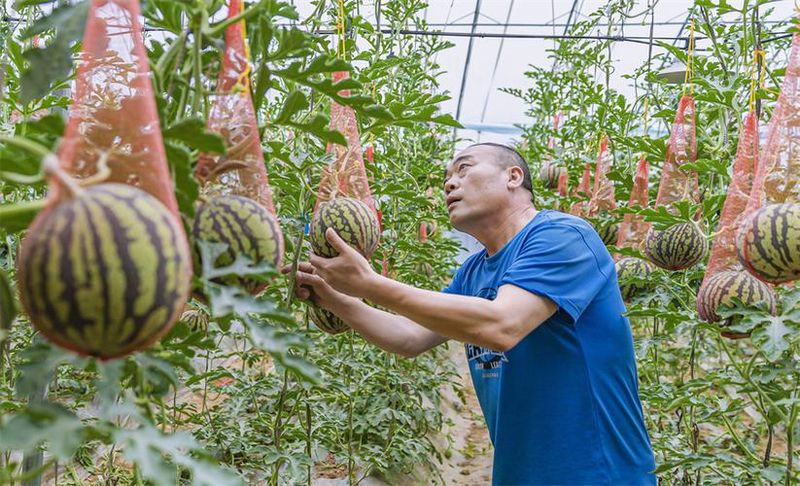
(4) the suitable temperature for management of watermelon growth after planting is 25-30°c, which is slow when the temperature is low; when the temperature is high, it is prone to viral disease, requiring a minimum temperature of 18°c at night and a maximum temperature of 32°c at daytime. Night temperatures were already low between the end of august and mid-september, and the night shed was closed around thin film. Every day at 8 a. M., the air was lifted and at 4 p. M. The shed was closed. Later, the temperatures are getting lower, the morning demolitions are delayed and the afternoon closure is gradually early. The chickens are usually dumped one week after planting, with both branches, and watermelons must be artificially pollinated after flowering, as there is no insect pollination in the shed. The pollination must take place between 6 and 10 a. M. It is best to choose the second female to sit on the melon, where the chicken will be squeezed with its finger so that it can be transported to the melon with the nutrients, where the melon expands to around 1 kg, where the melon is basically fixed, and where the melon is 6-7 years old, where the melon is flipped. During the field's growth, two fats (spreading chickens, fertilizing melons) were followed and water was poured twice。
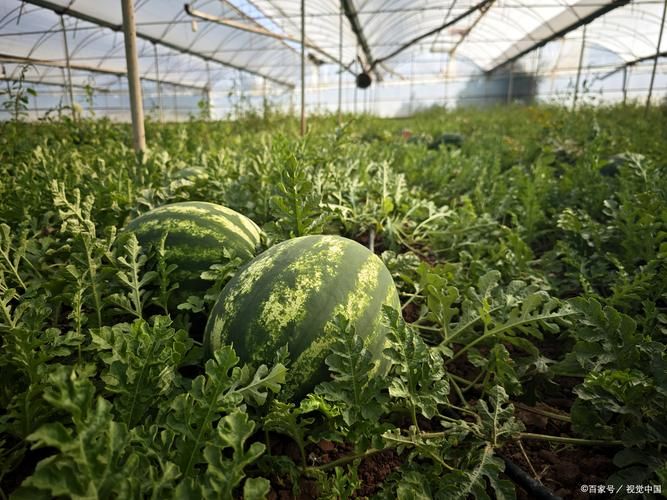
(5) the harvest usually takes 40 days after the watermelon is taken, which is 10 days later. Autumn watermelons are more durable and are stored at indoor temperatures for 15-20 days。