


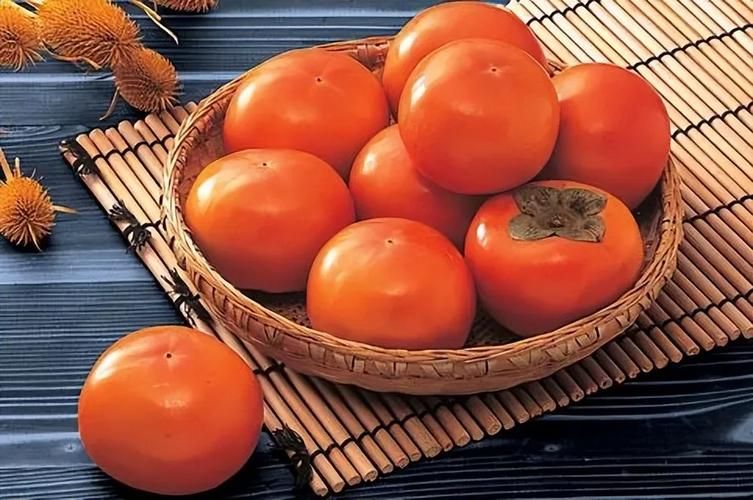
Tomato's name is town head. Large-leaved wood, usually 10-14 metres or more, with a height of 65 centimetres in diameter for the chest and up to 27 metres for older trees; gray to black for the barks of the trees, or brown to brown for the khakis, which are thickened by the girdles, and cracking into blocks; tree crown ball or long ball, with an old tree crown of 10-13 metres in diameter, with a size of 18 metres. The branches are carried out with green to brown, hairless, dispersed, long circle or narrow cortex; the young branches are elastic at first sight and have brown, soft or hairless. The winter sprouts, the egg shape, the length of 2-3 mm, the precipitous bluntness. Leaf and paper, egg-like elliptical shape, usually large, 5-18 cm long, 2. 8-9 cm wide, front-end leaning or blunt, foundation wedge, blunt, circular or near-cut, rarely heart-shaped, new leaves glitter, old leaves with glitter on them, dark green, hairless, green below them, flexible or hairless, with a cavity on them, small hair on them, small hair on the ground, perched on the lower side, 5-7 stripes on each side, flat or slightly dented on the lower side, long on the lower side, shorter on the upper part, leaning up, slightly towards the upper part, close to the lobe, small veins of which are attached to a flat or small cleavage; long 8-20 mm with no hair on the upper side, small swathes. Females and females are different, but there are a small number of females in each of these strains, with a small number of females and a small number of males in each of these strains, and the raisins are the chubby sequence; the bouquets are small, 1 - 1. 5 cm long, bending, have short, hairy or fuzzy hairs, with 3 - 5 flowers, usually with 3 flowers; the total flower crotch is about 5 mm long, with small pellets; the bouquets is small, with 5 - 10 mm long; the bouquets are small, with hair on both sides, with four deep, fractured, with eggs of approximately 3 mm long, with eyebrows on both sides; the crochet bells are not more than twice as long as the bouquets, yellow white, with hair on either side, about 7 mm long, fractured, pelts of eggs or heart, with both sides, with a long, close to none of them, with a blunt, with a first-and-to-to-to-to-to-to-to-one, with a females with single leaves, approximately two centimetres long, radiant, approximately three centimetres or more in diameter, deepness, four cracks, dyslexia, near-ball bell shape, meat, approximately 5 mm long, 7-10 mm long in diameter, hairy outside, hairy hair in which a fissure is present, broad egg shape or half circle, pulse, approximately 1. 5 centimetres long, obscurity or near hairy on both sides, blunt or impervious, with two ends crooked to the back; eight dyslex, white or yellow on the head, with purple red on the head, with a canteen or near-bell shape, shorter flowers, long-and-1. 5 centimetres in diameter, close to four rims, with approximately 6-10 mm in diameter, 5-10 mm wide, 4-8 mm wide, with a soft-twisty, with a short-tracted beak, with a long-twisty, 8 mm; all kinds of fruit, with a spherical, flat-ball shape, slightly square, egg-shaped shape, etc., vary from 3. 5 to 8. 5 cm in diameter, usually the base is elastic, green when tender, yellow lateral, orange yellow, the meat is harder, the meat becomes soft and juicy when ripe, orange red or red, etc., and has seeds; seeds are brown, elliptical, approximately 2 cm long, approximately 1 cm wide, with sides flat, usually without seeds or a small number of seeds in the plant varieties; slabs grow thicker after flowers, 3 to 4 cm wide, fractured, square or near circle, nearly flat, thicker or dry near wood, with flexible hair on the outside, and then hairless, which is enclosed with brown-coloured, cracked, wide by 1. 5 to 2 cm, long to 1 to 1. 5 cm, with no hair, with light on both sides; fruit is thick, 6 to 12 mm long, thick and has a thickness. May-june, september-october。



