


On november 5th, in beijing, yang guange, the national science and technology awards conference was held in the people's hall in the morning of 2020, according to the central radio and television radio china voice, news hyperlink. Two agricultural projects were awarded second prizes for the national prize for scientific and technological progress, entitled “technology and applications for drought resilient water cultivation in dry lands of the north” and “technology for the scalding and innovative use of quality resources in corn”。
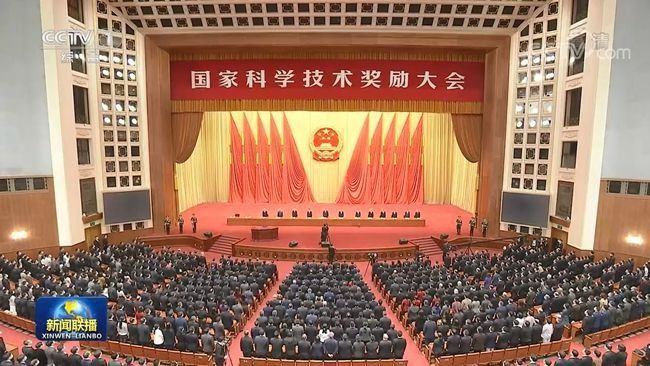
A total of 264 projects, 10 scientific and technical experts and one international organization were selected by the congress. Of these, 46 were national awards for natural sciences: 2 first prizes and 44 second prizes; 61 national awards for technological inventions: 3 first prizes and 58 second prizes; 157 national prizes for progress in science and technology: 2 first prizes, 18 first prizes and 137 second prizes。
What is drought-resistant water? How can plantations be combined to meet the requirements of adaptive production in drylands? Can maize be used for drought-resistant water cultivation in drylands of the north? How do you choose to cultivate good corn seeds
What is drought-resistant water
The drylands of the north refer to the area north of the qinqingye river, which covers approximately 16 provinces, municipalities and autonomous regions, representing approximately 51 per cent of our national territory. Dryland areas in the north account for approximately 56 per cent of our total arable land, and food production in the region accounts for 57 per cent of our food production. In recent years, the focus of our food production has gradually shifted north-west and west-west, and in our cropland system the drylands of the north have taken a strategic position。
However, the drylands of the north are chronically water-deficit and agricultural production requires more water than precipitation. In the context of global warming, the north is increasingly showing a trend towards drought and water scarcity will increase。
Agricultural productivity in the drylands of the north is a matter of food security in the country, and it is therefore essential that drylands be drought-resistant in the face of increasing water scarcity。
Drought-resistant water, by definition, is about combating drought and about adapting to water conditions. Specifically, “waterworthy” refers to the adaptation of cropping structures to current climatic moisture conditions so that agricultural production avoids extreme drought. Agricultural land needs both drought and water. The vice-president of the chinese academy of agricultural sciences, mehu yong, said that the shift from traditional confrontational production to adaptive production was a central route to the results of that technology。
How can crop allocations be selected to adjust the agricultural structure of dryland fields
Adaptively adjusted agricultural cropping structures mainly refer to enhancing the stability and moisture productivity of dryland farming systems through multi-cropping, which can improve the biodiversity of farm ecosystems. When the biodiversity of agricultural ecosystems increases, if one of these crops dies as a result of drought, other varieties of crops may remain unaffected and productive。
In the many crop configurations in the drylands of the north, may wing indicates a good mix of maize and soybeans. The production of maize and soybeans combined could increase by 12-20 per cent compared to the production of individual crops. In addition to maize and soybean co-cropping, cereals with soybeans and maize with peanuts are all possible options for multi-cropping crops in future drylands in the north。
Multi-crop configurations are somewhat at odds with modern methods of agricultural production. Modern agricultural production emphasizes scale production and favours large-scale cultivation of the same crops with a view to achieving economies of scale. However, water scarcity is a major constraint in the drylands of the north. And the drought and the high yield are like fish and palms of bears, and they cannot be taken together. Growers need to adapt, choose stable production in high and stable production, and increase crop resilience to drought by increasing the variety of crops。
How do you choose to cultivate good corn seeds
Corn is highly drought-resistant, cold-resistant, infertile and highly environmentally adaptable compared to food crops such as rice and wheat, and is more suitable for growing in drylands. Corn can be matched both with soybeans and with peanuts, serving as a good combination of crop configurations for dryland fields。
At the same time, maize cultivation is simple and widely distributed in china, from north to heilongjiang and south to south, with more than 600 million acres of maize in china, but also because of widespread cultivation areas, maize often suffers from a variety of diseases. High-quality maize seeds need to be screened to help them withstand multiple diseases and reduce production losses. Wang tianyu, a researcher at the crop science institute of the chinese academy of agricultural sciences, stated that the previously severe corn-sading disease had been effectively controlled through the cultivation of quality maize seeds。
Before nurturing high-quality seed resources, it is first necessary for breeders to screen maize seeds, and for them to screen drought-resistant or high-yield maize seeds through preliminary judgement. The seed will then be cultivated by the breeder and will be evaluated and tested on a regional basis upon its completion. The quality of maize seeds is assessed by focusing on multiple factors, such as their yield, drought resistance and character。
High-quality seeds will need to be evaluated to speed up seed cultivation. Genetically modified technologies, whole genome selection breeding techniques and genetic editing techniques are the three main technologies currently being used to cultivate quality maize seeds。
The issue of food security is vital to the livelihood of the people, and the two award-winning agricultural projects will explore wider applications in the future and further contribute to the steady production of our food。
Production: white china



