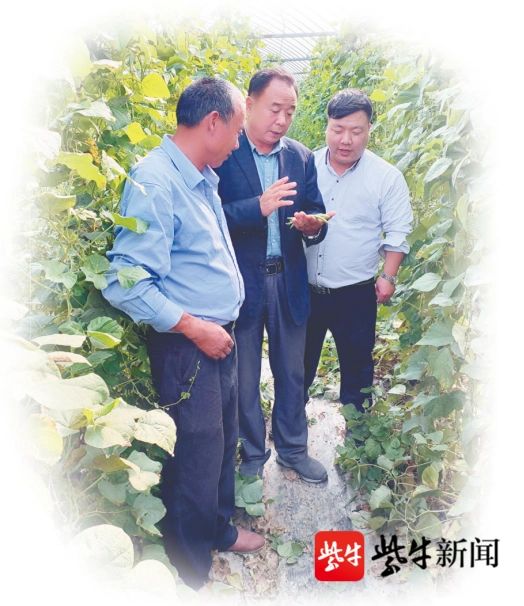
North corn spring 2022 technical advice
The northern spring, which accounts for more than half of the country's total area and production of maize, is now in a critical period of spring tillage. On the whole, the northern maize spring was more favourable this year, the soil conditions were generally better, and the spring temperatures were rising rapidly, favouring sowing, but local factors such as high soil moisture and high climate uncertainty were also present. In response to the production situation and climatic characteristics, the northern corn seeding in the spring of 2022 was to focus on “precision, selection, fertilization, fertilisation and pest control”, with the aim of increasing density and alignment, to advance the implementation of key measures such as single-particle seeding, fertilization and so forth, and to focus on improving the quality of seeding, ensuring that the whole seedling is strong, building reasonably high-yielding groups and laying a productive crop base。
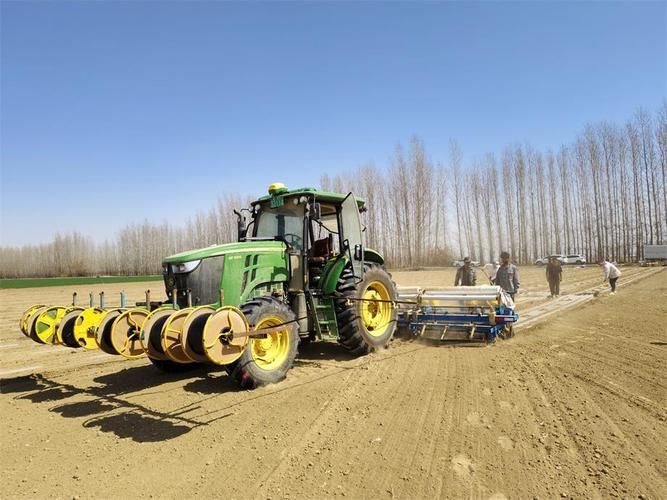
(i) precisely and on a seeding basis. Locally appropriate, wedging is handled using corn straw cover, covering strip farming, and scrambling back to the fields to speed up the extraction. The field is returned to the fields in the autumn, where it is maintained that the floors are covered, the tops are covered when the earth is frozen from 7 to 8 centimetres to 15 to 18 centimetres and the floors from 3 to 5 centimetres from the surface. In the case of spring-croped, soil-croped plots, the land is swirled, lax, and the land can be ploughed, tilled, dredged, raised and suppressed; in the case of land-deficit plots, the soil is reduced to the minimum possible, and sows the seeding or raw card species with less or no tillage; in the case of soil-crossing wetlands, the snow is mechanized in due course and the water is drained in time。
(ii) best selected species, scientific application of fertilizers. In accordance with natural ecological conditions and production practices, good maize varieties are selected through nationally or provincially validated maturities, high-yielding production, insulation resistance, anti-resistence, insect resistance and mechanization. Avoiding the cultivation of long-lived varieties and eliminating cross-border cultivation. Depending on market demand, high-quality, specialized or food-for-breeded corn varieties are selected. Optimized mix of different varieties in the same growing area. Pre-plant seed scalding, screening of uniform seeds for one to two days to improve seed vitality and germinate rates; precision seed wrapping, eliminating “white seeds” from the ground and ensuring the promotion of seedlings. Fertilizers are applied in accordance with the principles of soil fertility, yield level, variety properties, planting density, organic inorganic application, pre-fertilization of base fertilizers, early application of phosphorus potassium, and follow-up of the distribution of fertilizers. A combination of soil formulations to determine the amount of potassium nitrogen phosphorus used, with emphasis on the application of trace elements such as sulphur, zinc, common acres 10-15 kg of phosphate, 25-30 kg of urea, 5-10 kg of potassium sulfate, 40% of which are nitrous fertilizer and all of the potassium phosphorus fertilizer for bottom fertilizer, fertilisation, followed by the remaining 60% of nitrogen fertilizer before the loudspeaker. If a 30 per cent release period of 50-60 days of slow-release nitrogen is selected, all fertilizers can be used as a one-time basis for bottom fertilizer and later no more。
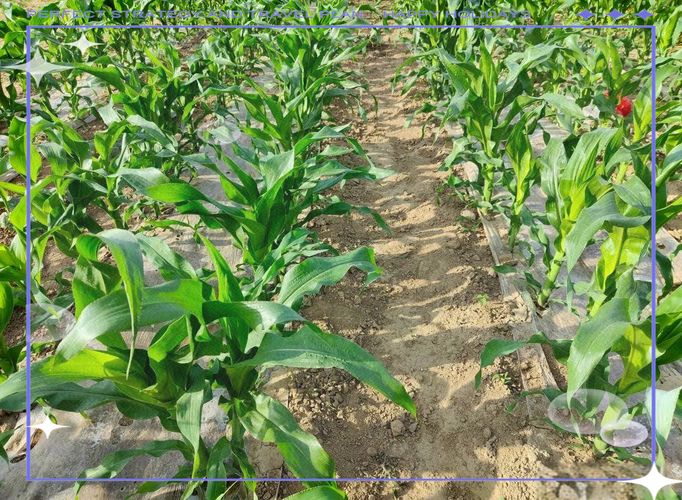
(iii) sterilization to build high-yielding communities. Where soil is suitable, five centimetres of temperature stabilizes when 10-12°c pass, sowing is done in single grains, and the quality of sowing is improved by one operation, such as fertilization, sowing, earth cover and suppression. Land plots with poor soil and water conditions, which can be used for submural drip irrigation and shallow drip irrigation, accompanied by precision and precision management techniques for the planting of high-yielding, seedling drops to increase the rate of seedling and community integrity; and drought-prone, water-free plots, with appropriate in-depth soaking or deep-sliding techniques, such as free planting or flat-spreading, gutter planting, etc. Land blocks with high soil moisture and low temperatures, early dispersion, rising temperatures, sowing seeds, soaking or sown soil as appropriate, are moderately suppressed the following day. In the north-west, rain-fed areas are moderately stretched for long periods of time and soaked until rain is ready to sow. Land in severe drought conditions could be sowed with “sitting” or water. The average acre density can increase to between 4500 and 5,000 if it is determined by local conditions, with around 4,000 acres protected, with a high quality, sufficient supply of fat water, better overall production conditions and a choice to use dense and resistant maize varieties. If seed conditions are not met during the broadcasting period, pre-maturized varieties are replanted in a timely manner, with an appropriate increase in planting density。
(iv) strengthen monitoring and control of pest and grass. Weeding is followed by chemical weeding and the choice of safe and effective weeding technology models to reduce the use of long residual herbicides. Twisted plots of good will are dominated by weeding before the seed, supported by weeding after the seeding; and swisted plots of good will, supported by weeding after the seeding and weeding before the seeding. Strengthen surveillance and early warning of pests and pests to accurately capture the dynamics, with a focus on the potential for moderate and localized incidences of maize scabs, medium incidences of maize distress in large areas and endemic concentrations of pests and aphids. The source selects disease-resistant varieties and repackages, as necessary, based on the precision of the seeds. Green control and biological control measures are implemented during the shrunk, estuarine and granule periods, with the use of high-lying jets or plant protection drones to control the mid-to-late period of maize production, to improve the effectiveness of controls and to reduce the loss of pests。
Ministry of agriculture and rural development