About me: a small-scale farmer who's committed to growing. Watch me and teach you to grow fast and well。
It is well known that the most suitable rice growing in the country's three main plains -- the northern plain, the north-eastern plain and the lower-central plain of the yangtze river -- is the north-eastern plain. A lot of people have been wondering how to grow something so cold in the northeast. One known reason is that there is black land, which, although one reason, is often ignored。
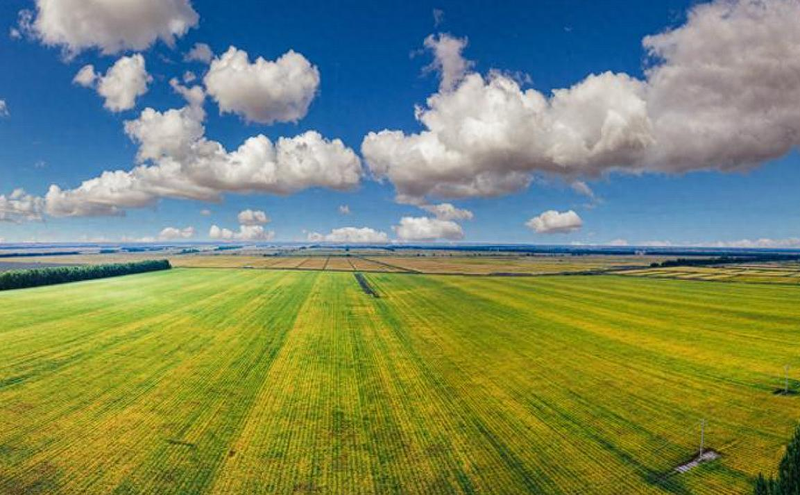
1. Flat terrain, hotbeds of rice
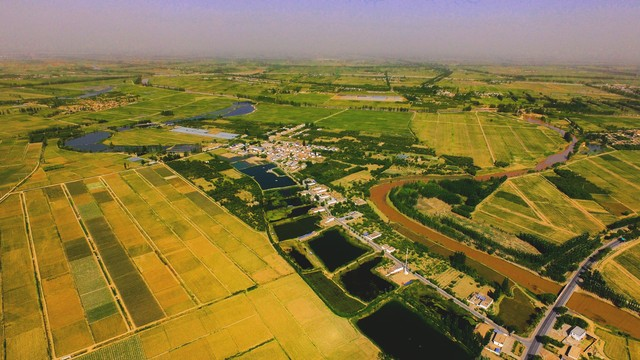
The north-east plain is particularly flat, which is a good thing for rice. Rice is a water crop and cannot be separated from water. There's plenty of water. There's lots of water. The north-eastern plains are flat, water is flowing evenly everywhere, and rice fields are irrigated to a greater extent. In addition, the north-east summer, though short, has been rained off, and when the rainy season comes, the water is not sad at all。
Some people also say northeast summer is short, which has little impact. Rice is supposed to be a summer, and in the north-east it is a suitable summer temperature, and it does not need to be particularly long-lived, but rather more secure. The temperature is not as high as a fireplace, and the water in the rice fields is slowly evaporated and the water in the fields is maintained. You can't underestimate that. Rice is hot, especially in the south. It's hot, but it's hot in the northeast。
Black land is fertile and growing
Let's say this black land is indeed one of the treasures of the northeast plain. Black soil is organic, and fertility is good, and it has nothing to lose, especially rice, which likes to eat “fat”. The roots of rice are deep-rooted, absorbing nutrients and growing rice is naturally full。
I've heard the village say, "if you don't work, the rice will grow up." this is an exaggeration, but you should know that black land does not need to be overfertilized, and the soil itself provides good growth conditions for rice. This is not comparable to the red and yellow regions of the south. The soil of the south is not as fertile as it is, with rice growing to the point where it is fertilized, the soil is used year by year and fertility is declining rapidly. In the north-east, however, there are fewer people and the land is not exhausted, the fertility of the black land is maintained and the rice is grown unconcerned。
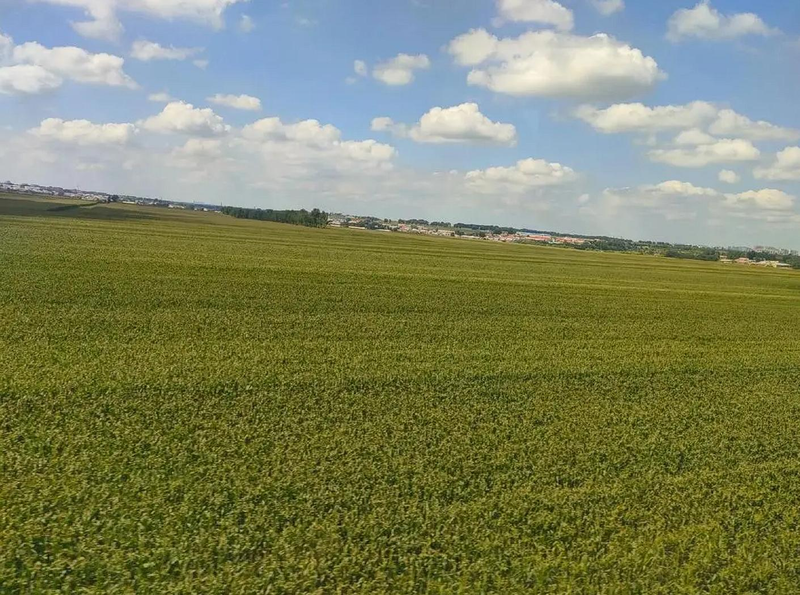
3. Good water conditions and easy irrigation
Rice is grown without water, irrigation is the key. The north-eastern plains are well developed, with a large number of rivers, such as the songhua river, the heilong river and the liao river, which provide paddy fields with abundant sources of irrigation. In the north-east, the rice fields have a guaranteed volume so that the rice can grow well. Moreover, the terrain is flat, the water flow is slow, irrigation is efficient and does not require the use of the same energy as in some mountainous and hilly areas。
More recently, the state has also increased its investment in water facilities in the north-east by repairing reservoirs, water-sending projects and channelling water into rice fields. Farmers now grow rice without having to worry about lack of water and water facilities make irrigation easier. The north-east does have an advantage in seeing the water in the south, although it is watery, and in places that are high and low, the water is running out fast and the rice fields are prone to water shortages。
Cold to help kill pests
It's cold in the northeast, 20 or 30 degrees below. Don't look so cold, so rice is less affected by pests. Insects and diseases such as lice and rice plagues in the south cause human headaches, annual drug use, high costs and environmental impacts. In the north-east, however, winter is too cold to survive. In the spring, the number of pests and insects will be significantly reduced and farmers will be able to save their hearts。
No more pesticides. Rice of better quality. And less use of chemical pesticides, more environmentally friendly quality of rice and comfort to those who eat it. This is a unique advantage for rice cultivation in the north-east, which is difficult to compare with other plains。
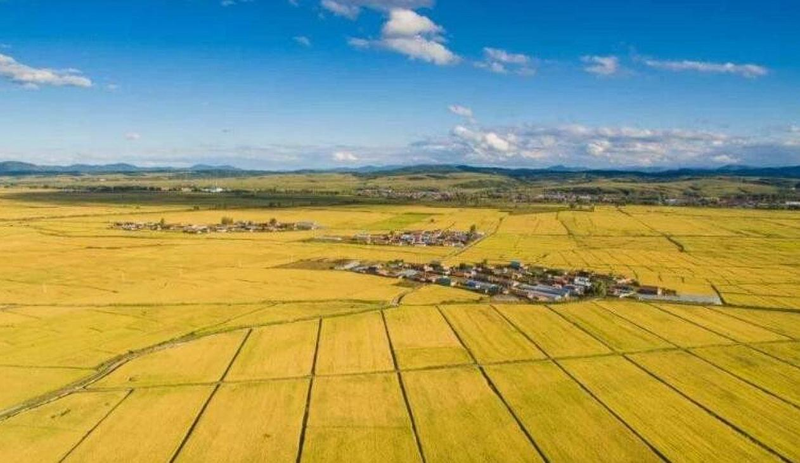
5. High-quality, adaptable varieties
Seeds are fundamental to rice. The north-east rice cultivation is based on long-selected varieties, especially cold rice, adapted to cold weather. This rice can grow and grow at a low temperature, with a high capacity to withstand the cold, and the cold summer in the northeast does not affect its growth. There may have been less interest in improving rice varieties, but now, with advances in agricultural technology, rice varieties in the north-east are not only high-yielding but are also becoming better-quality, with many high-end rice in the market coming from the north-east。
The adaptability of this rice, combined with local climatic and soil conditions, has resulted in the planting of sweet rice. North-east rice has been branded for years, sometimes exported abroad, becoming a pet of the high-end rice market, and this is not something rice can do anywhere。
Scientific field farming: level of modern mechanization high
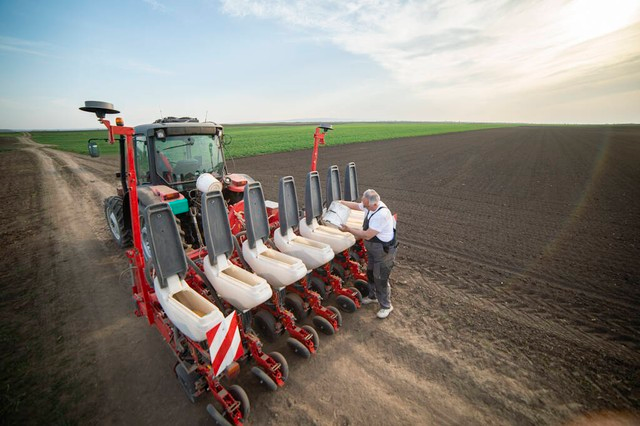
The level of agricultural mechanization in the north-east plain is indeed admirable. The vastness of the land is not incidental to the fact that the land area in the north-east is large enough and that there is a particularly large number of plots planted and suitable for mechanization. This has also enabled farmers to complete the entire rice production process using large-scale mechanical equipment instead of manual cutting and harvesting, as in the past. Machines such as plug-in machines, harvesters and distillors have now become the standard for north-east rice farmers。
You see, the greatest benefit of mechanized farming is time-saving and efficient. A plug-in machine can work dozens of people, not just fast, but also during harvests, when the harvester blows over, and a few acres of rice will soon be finished. By contrast, the small plots in north china and the lower middle and lower yangtze plains have complex terrain and make mechanization difficult to fully extend and depend on additional human inputs. Once the large tracts of land in the north-east have been mechanical, yields and efficiency have increased significantly。
Mechanization has brought about not only efficiency gains but also cost reductions. Traditional cultivation requires a large number of people and now saves a lot of labour on the farm machinery. Over the years, national subsidies for agricultural mechanization have also increased, and the threshold for farmers to acquire agricultural machinery has been reduced considerably. This means less input, more output and, naturally, higher yield on land. Now in the north-eastern countryside, large agricultural machines can be seen all over the land, and the prevalence of mechanization is truly the highest in the country。
7. Diversified market demand
Rice is grown to sell rice, but today market demand is helping to develop rice in the northeast. As people's standard of living rises, the demand for rice is not merely “satisfaction”, but rather “good eating”. In the past, it may have been possible to buy as long as the price and volume of rice were low, but now it is about quality. At this point, north-east rice has solidified its feet with a high-quality taste。
North-east rice has good taste and good rice quality, brands such as permanent rice, watery rice, and yonbian rice, which are well known not only domestically but also exported to overseas markets. The name is already known on the market as a quality proxy, even if it is called “luxury in rice”. Market demand is strong and the price of natural water is rising, which is increasing the incentive for farmers to grow rice。
Market demand and rice cultivation form a virtuous cycle. Farmers will naturally invest more energy and be more committed in planting when they see the profitability of high-quality rice. As demand changes, the north-east rice growers are constantly adjusting their farming structures to introduce more market-friendly new varieties to ensure the stability and upgrading of rice quality. Market pull is also an important reason why north-east rice continues to be at the forefront。
Ultimately, successful rice cultivation in the north-eastern plains is not based solely on black land. None of these factors can be less flat, climate-friendly, watery, mechanized and market demand. In the north-east, rice can take its place in domestic and foreign markets, relying on an effective modern agricultural system。