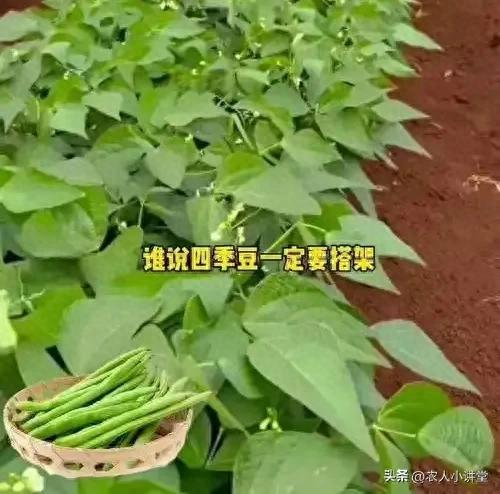
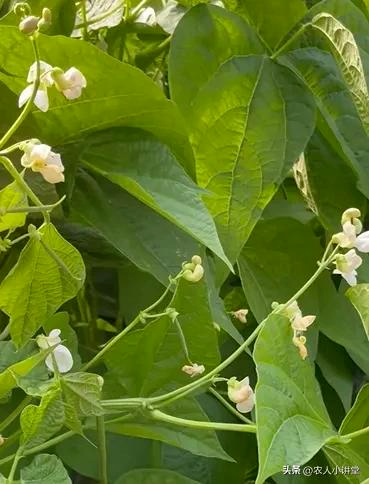
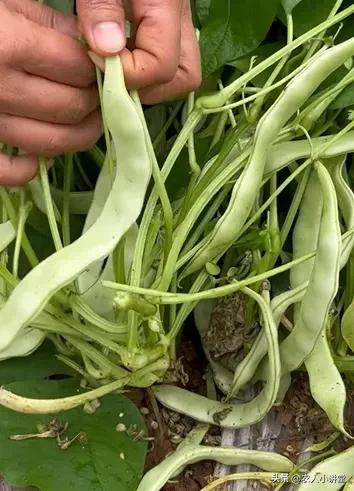
The bean-less (also known as the ground bean bean) is a “god of lazy people” who grow their food in their own homes, and grow it with little effort and no less output, without a shelf, and with a height of about 50 cm. Today we're going to teach you how to grow a soybeans like this, from seed to harvest, so that the new guy can do it easily
I. Why are there no beans
1. Savings: the use of bamboo frames and chicken strips is particularly suitable for balconyes and small gardens。
2. Resilientness: highly resistant and well managed。
3. High yield: a few trees will be enough for the whole family in a single round of two months。
Ii. Preparation for seed: soil fat and beans
1. Land selection
Land parcels: choosing a place where the sun is high and no water is sprung, soybeans are afraid of flooding and lowlands are prone to decay。
(a) land-turning: 25-30 centimetres (deep) with shovels, pieces of earth torn and weed stones to clean。
Fertilisation:
The bottom fertilizer is used for the use of manure (highest chicken dung, sheep dung) of a mature farmer of 2,000-3,000 kg/acre, 30 kg of calcium phosphate (strength) and 15 kg of potassium sulphate (contribution)。
No farmer's fat is replaced by compound fat, but the taste is worse。
Selection of seeds
Varieties: short-sized varieties such as “united states-free bean” “new thailand-free” are selected for the net purchase using the word “free bean horn”。
Treatment of seeds:
The sun is bred for 1-2 days (in vitro)。
Temperature bubble species: 55°c hot water boils for 15 minutes (scaling) and can be harvested in exchange for 3-4 hours。
Iii. Sowing technique: time's right. Half the time
1. Sowing time
Spring: temperature is stable at more than 10°c (end of april/early may in north china and end of march/early april in the south)。
Autumn broadcasts: in the north, in late july-early august, the south could be extended until mid-august (to avoid hot and heavy rains)。
2. Sowing methods
Live infertility: the root of the bean horns is weak and the seedlings are vulnerable to injury。
Steps:
1. Zirconium: zirconium width of 1. 2 m (walkability) and ditch depth of 20 cm (water drainage)。
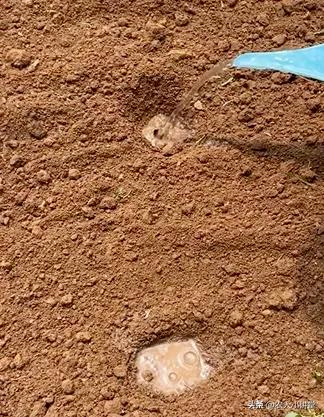
2. Peak-drilling species: 2 rows per acre, 25 cm, 3-4 seed per lacuna and 2-3 cm thick coating。
Ductive temperature (early spring): covers the membrane after broadcast, gleans the seedlings in time to prevent burns。
Iv. Field management: less water, more roofs, convulsions jing
1. Small seedlings
At the time of the two leaves, there were two to three saplings (weakly removed) per den。
After the four leaves, only two are left in each den to avoid overcrowding。
Water mouths
Shrimp period: less water, more seedlings (no soil, no soil)。
Flowering period: water control against falling flowers (drying)。
Terminator: 5-7 days watered once and soil humidity (water easily rotting roots)。
3. Critical periods for the pursuit of fertilizers
(b) fattening of seedlings: 5 kg of urea per acre at 10 cm height (10 cm away from root, pre-burning seedlings)。
Catalytic fat: after flowering, double fats (1 15 kg) or decomposed manure every 10 days。
Leaf supplementation: 0. 3% potassium phosphate (preventing early decay) sprayed after the pick-up of bean horns。
4. Top-up production growth
When the seed is 30 to 40 cm tall, the upper tip of the top is cut off (promoting the side branch fork and more forks)。
V. Pest and pest control: early prevention, less drug use
1. Diseases
Rusty/powdery: leaf long yellow spots or powder, sprayed with triazone or rusty lint。
Anthrax: black spots of beans, 600 times more venom。
2. Pests
Aphids: aphids 2,000 times the fluid spray back。
Bean-polymeric acids: bromocythylene sprayed in flowering (focus eclamplas)。
The trick is to plant a few mints or onions next to them. They're deworming
Vi. Receiving and receiving: effective and longer
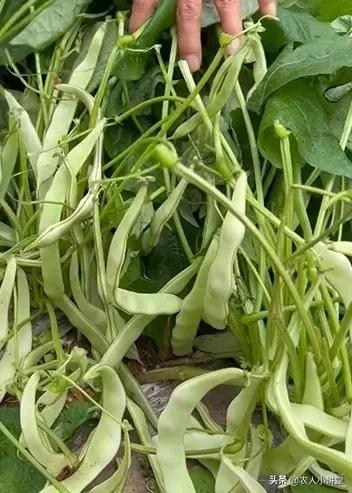
Timing: 10-15 days after flowering, bean horns grow to about 15 cm (fingernails can choke)。
Skills:
Use scissors, don't pull。
Two to three days to pick, and the fruit to pick (the longer)。
Question answers
1. Question: are bean bean bean beams blooming
A: it may be too much nitrogen fat (less urea), too much water or too high temperature (over 35°c flowers)。
2. Question: are the bean leaves yellow
Response: shortage of fat (composed fertilizer) or water-stubling roots (deep ditches drain)。
3. Question: can you keep your seed
Answer: yes! Pick the old bean horns of a strong plant, then dry them, and then strip the seeds, and seal the shade。
No bean horns are really “landnuts” and according to this method, it takes only 60 days to sow and harvest, and once to fall. The point is, don't get your hands dirty, don't hit the top, make sure you can eat more beans