This paper is about to bring to you methods of growing soilless vegetables and several ways of landless cultivation. Hydraulics are plant roots that are in direct contact with nutrients and do not use matrix cultivation methods. The earliest hydroponics are the immersion of plant roots into nutrients, which causes oxygen deficiency and, in serious cases, death. The hydroponic method of nutrient membrane, even a thin layer of nutrients, continues to circulate through the root systems of crops, guaranteeing a continuous supply of crop moisture and nutrients, as well as fresh oxygen。
I taught you to grow soilless vegetables at home
When it comes to soilless cultivation, many people may be rusty, meaning that when growing crops, instead of traditional soil, fertilizers and pesticides, they are replaced by nutrients, which have the advantage of growing fast and of good quality, and clean, environmentally sound, clean, clean and harmless, because pesticides are not required。
So, what kind of plants can grow soilless, and what can they do when they're at home trying to make some soilless vegetables? Here's a specific explanation!
– it is thought that soilless cultivation is nothing more than hydroponic, which is one-sided, and that soilless cultivation, in addition to hydroponic culture, includes sandbreeding, gravel, asbestos, curry, plastic granular cultivation, etc., which fixes the roots of fruit and vegetables in containers and keeps the plants up and growing, while the nutrient-dissolved water is inserted between them for crop absorption。
Now, let's say, in concrete terms, an indoor soilless process! Here, let's take the example of foundational culture. Let's see it together!
I: selection of unearthed vegetables
The fruits that can be cultivated without soil are tomatoes, cucumbers, bitter melons, strawberries and cherry carrots. Vegetables include lettuce, celery, cuisine, cabbage, cabbage, etc. In general, fruit requires a higher temperature than vegetables, fruit requires a full-day temperature of 10-25 degrees, light is seen throughout the day and there are relatively few requirements for vegetables。
Preparation equipment
There are abandoned plastic cups or plastic flower pots at home, opening the bottom of the plastic cup or tub and then filling it with 0. 5 kg of pottery and 1-2 kg of pearl rock (sold in construction stores), then preparing nutrient fluids, which must be downblended。
Child breeding
Seeds are immersed in warm water for six hours, and gravel and pearl rock are also immersed in water. The gravel and pearl rock were then put into the kit, small holes were dug with their fingers, a single or two seed was buried in the fruit, and the vegetables were dug and the seeds were scattered along the ditches. Then cover it up and seal it with plastic film
Management
Once the seed has grown, the diluted trophic fluid is poured one or two times a day. The seedlings grow leaves and begin seedlings, leaving only one seedling, and the rest of the seedlings are pulled out and replaced. It's longer than a small sap to have three-to-five real leaves, and then it's a big pot. In the same way, seedlings are grown into large basins, and then the vegetables are watered every two days, twice a day, instead of water, and twice a day。
Waiting for a durable vegetable and fruit to grow, and planting a little vegetable and fruit on the balcony will clean the air and make room for fresh vegetables and fruits. What's with the arrows and arrows?
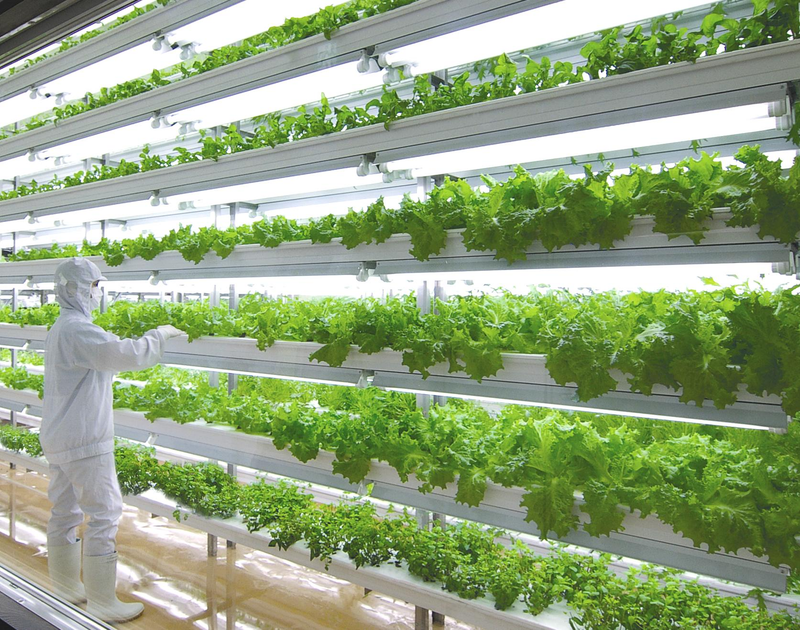
Several ways to introduce soilless cultivation
Soilless cultivation is a form of cultivation that uses nutrients as a nutrient supply for vegetables, which are specially formulated to meet the requirements for nutrients required for crop growth, which are fast growing, with short growth cycles, with high yield per unit area, and aesthetic. Landless cultivation takes several forms:
1. Hydropony. Hydroponic techniques are also in the initial stages of our country, with hydroponics in two main categories: static hydroponics and dynamic hydroponics. The trophic fluids in the chute of static hydroponics are static and are the simplest hydroponics suitable for domestic flower cultivation. Such an approach would be valuable, while flowers would be at the same time visible. Simple maintenance does not kill crops. Direct fertilization dripping of nutrients is sufficient and convenient。
Dynamic hydroponics take many forms, most commonly piped hydroponics, with the best use of dynamic hydroponics when vegetables are cultivated without soil, otherwise crops produce large quantities of nitrites due to a lack of oxygen, a substance harmful to humans. Pipeline hydroponics consist mainly of planting cells, nutrient pools and nutrient cycling systems that allow for regular automatic irrigation, high automation, low labour intensity and simpler structures。
2. Substrate cultivation. Numerical cultivation is a soilless form of cultivation using a matrix, i. E. A fixed crop root system of a medium, and using nutrients to feed crops. There are many types of matrices, most commonly leeches, pearl rock, rock cotton, coconuts, peat, etc., and other strategists usually use drip irrigation to supply nutrients. The lower cost of matrix training than hydroponics has the disadvantage of sterilizing the matrix on a regular basis in order to prevent its long-term use and transmission。
3. Aerosol cultivation. Aerosol cultivation is a later cultivation pattern, which mists trophic fluids in the planting bed, so that the roots of the crops absorb mistified nutrients within the space. The roots of the crops are suspended inside the planting beds, and the crops absorb nutrients in the mist-fed nutrients, not less oxygen, in order to avoid the generation of excessive nitrates, with guaranteed yields accompanied by qualitative improvements in product quality。
These are the methods of indoor cultivation without soil, and have you learned that so many forms of soilless cultivation are available, that there is always one suitable for you, that the study and production of plant growth lamps and hydroponic systems in general are very good and professional and that we are interested in consulting us, and that we will be very patient in answering them。