


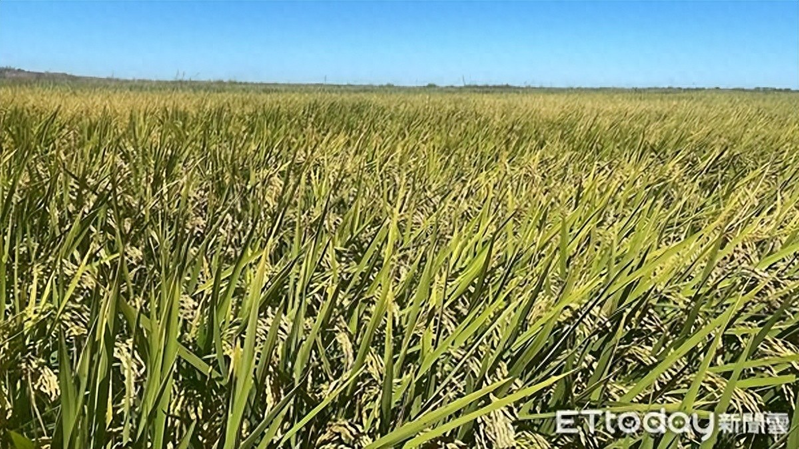
“salin lands” are washed and organic rice is grown. (charts/journalist )
Reporter yvonne/gilin
Zhang shijun, the "land regulator" from taiwan, used his own experience to salinize the grass and make a major "land-washing" transition. In 2014, a long trip to the north-east, where it was centred on "global land governance", helped to modulate the land through a combination of microbiological agents and organic fertilizers. In the first year, the abandoned salin lands were improved to arable land standards, with rice acre production reaching 14,000 pounds, which was close to black land levels。
Can you imagine a saline that grows fat rice? The journalist easton new media ettoday travelled to the city of gilingon, which used to be a large waste of saline, but is now looking out at the endless golden paddy fields, shaking in the breeze, and the farmers are proud and securely waiting for the october harvest season to sell their money。
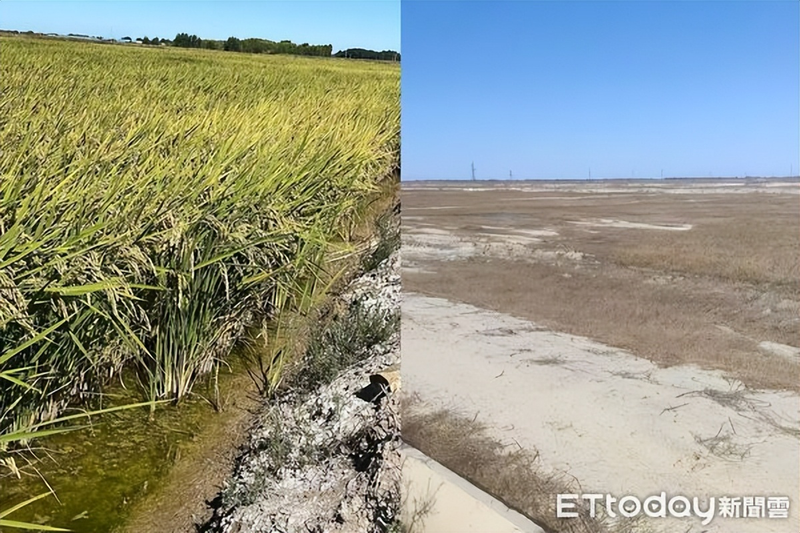
The thai commercials went to jilin to improve the "salin lands" (comparison figure). (charts/journalist )
The "land regulator" has improved the salinity of the northeast
Zhang shih, a successful salinist from taiwan, graduated from china university in taiwan more than 20 years ago, focusing on micro-organisms and prophylactic studies, now applies his knowledge to mainland agriculture, leads teams to promote salinization, and builds a green cycle agricultural system。
Founded in 2014, matsuhara city sinegi agricultural co. Ltd. (formerly sende agricultural co. Ltd.) is a modern agribusiness centred on integrated land management and organic eco-cycle agriculture. The company has six subsidiaries under organic cultivation, integrated application of straw resources and organic fertilizer development, which form an industrial layout centred on organic rice, organic fertilizers, fibre extraction derivatives of straw and four business blocks for saline improvement。
Zhang shih said, "before i didn't come to the northeast gilwood, i studied microbes myself, i was working on the development of intestinal fungi, industrial bioenzymes, when industry and the food industry had done it, and i wanted to challenge the difference between microbes used in agriculture and the idea of integrating the organic cycle with microorganisms to make it waste-free
However, the improvement of salin lands is not easy, and challenges such as the difficulty of weeding as a result of poor seedlings and the need to modulate farmers ' perceptions have been encountered in the process, which will take more than two weeks to wait. Fortunately, in the cold winter of the north-east, most pests and pests are unable to get past the winter, and rice cultivation in the pine plains is relatively southward and more advantageous than green organic agriculture。
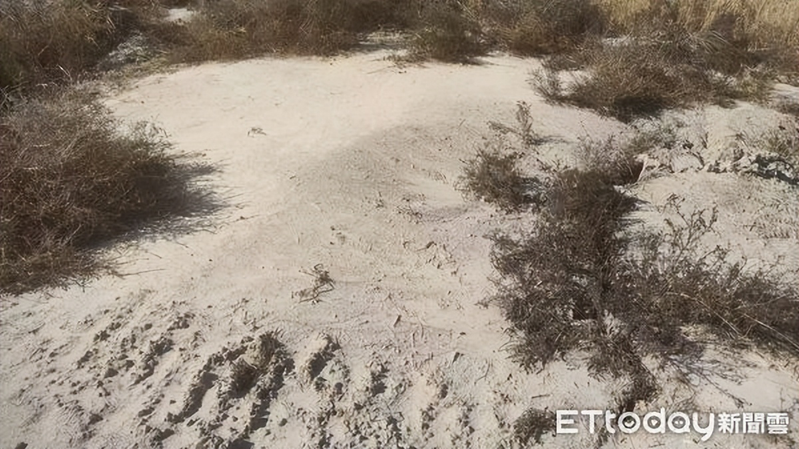
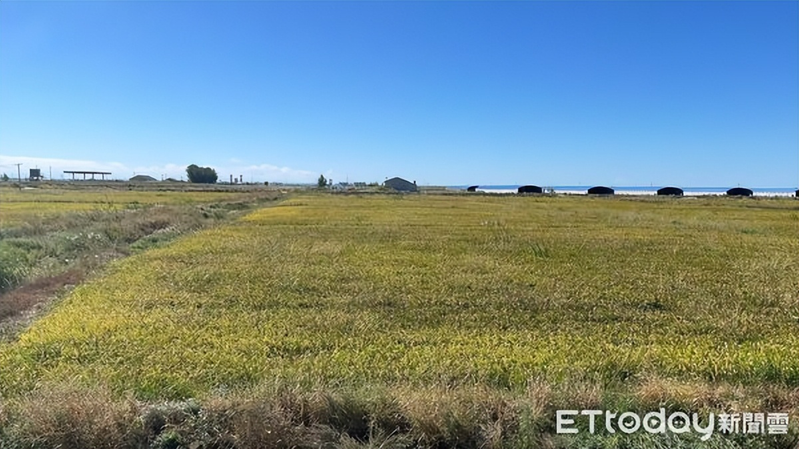
The once-defunct “salin lands” have been fine-tuned and the land has become fertile enough to grow rice. (charts/journalist )
Saltline "improved" circular green organic cultivation
Zhang shijun worked with the company team in a comprehensive overhaul, combining physical, chemical and biological techniques, and working with scientific institutions such as the university of jilin and the north-east university of agriculture to develop a proliferating governance programme。
During his interview, the "land regulator" zhang shiho also explained the three parts of the song "refitting": "in addition to salin improvement, there is organic cultivation of `green rice', which starts with a better salinized rice, known as the primary industry, salinized rice field waste water recovery for natural alkali reuse, and the establishment of secondary industries, including organic fertilizer plants, followed by microbiological formulation plants, organic feed plants, etc."
Zhang shuu added that the most important aspect of recycling agricultural waste was the reuse of rice straw, while 1,500 tons of rice straw were treated annually an integrated utilization plant has also been built, and the fibres are extracted for use in paper meals, membranes and other derivatives to recycle agricultural waste and then revert to natural soil decomposition and become more environmentally friendly. The "mass membrane" is also known as the membrane/farm membrane, which covers agricultural land and is used to increase the temperature of the ground, maintain soil moisture and inhibit weed growth in order to promote crop growth. It is tantamount to putting all agricultural output into utilization and recycling。
“our next larger goal is to establish a management system for smart agriculture, which has been in operation for three years, with the first year moving to level 9. Zhang shih-hyun described the first effort to improve low organic matter and heavy saline soil through the combination of microbiological agents and organic fertilizers, initially centred on "land governance throughout the country". "as a result of many years of testing, in the first year, the desolate saline land was improved to arable land standard, with a rice acre production of 14,000 pounds, close to black land levels."
"our goal is not just to grow good rice, but to make the agricultural chain truly circular and sustainable. He was interviewed and said: unlike traditional monocultures of saline-resistant rice, they advocate a balance between ecological and economic benefits through land management and the cultivation of locally appropriate quality varieties。
It is worth mentioning that local farmers participate in the cultivation on a commission basis after they have become fully aware of the concept of "land washing". The team provides technical guidance to help them transition to green and organic agriculture. As production and quality rise, some organic rice is sold on the market to a high price of 80 yuan per pound, with the economic gains that are visible。
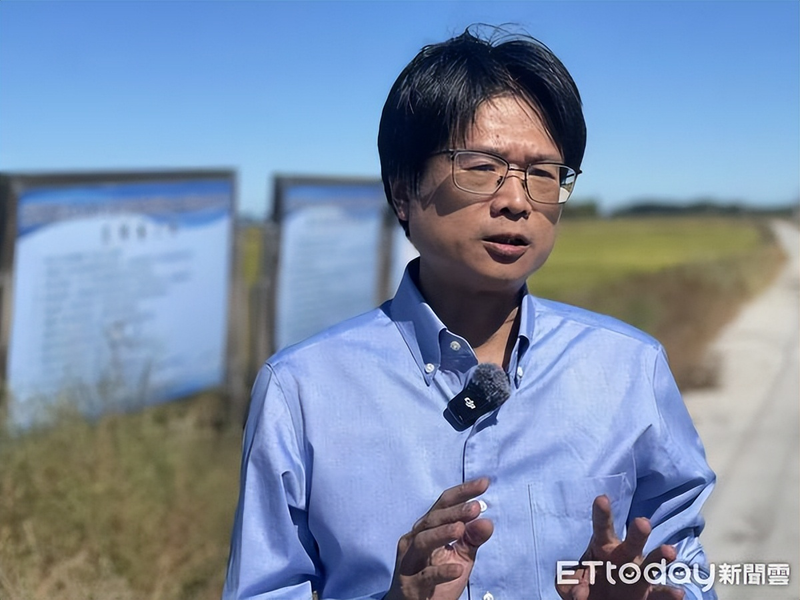
Zhang shih, the general manager of sunsung agricultural co. Ltd., has been working on jilin for many years and is known as the “land regulator”. (charts/journalist )
Agricultural upgrading promotion of the rebirth of saline lands
At present, the organic rice cultivation base in the sung-yung agriculture has become the leading production base in the province of jilin. Its products have been selected as rice for the g20 hangzhou summit, the xiamen brick meeting, and have been awarded a number of honours, such as a demonstration base for high-quality agricultural development in jilin province and a home-grown business base。
Between 2014 and 2017, the soil organic content rose from less than 0. 02 per cent to more than 2. 5 per cent of the high standard agricultural land through technological research and development and practical applications, while sop precision management systems and local production of resources were established to achieve large-scale organic cultivation and effectively reduce production costs. The integrated ecological management of salin lands and the development of organic agriculture not only achieve the sustainable and high quality use of land resources, but also bring sustainable development momentum to local agriculture。
Thinking of the fifth year of coming to the northeast of jilin, and recalling that it was the first time that zhang had seen this desolate land, zhang shuo said, "this land is really vast, and i was moved to see it for the first time, because it was impossible to see this size in taiwan, and it was just in college that i studied agronomy technology, and i had a great vision for agricultural applications and hoped for agricultural improvement
He expressed his regret that the vast fields of jilin and the support of the government had shown him the potential for agricultural upgrading and looked forward to the future, and he hoped that the model of governance would be extended to saline areas such as inner mongolia, xinjiang and other regions to allow for the rebirth of more wasteland. "responding to the continent's 1. 8 billion acres of arable land red line, we can turn uncultivable land into productive land, not only for business, but also for corporate social responsibility. Zhang shih said:。



