In the past weekend, beijing has been at its lowest temperature since winter, with snow not melting in china’s rich technology park in the town of tungzhou, and 65-year-old stingy beauty taking care of a fruit and vegetables in a warm and springing shed. “they, like children, need careful care to thrive.”
Stingy is a staff member of the park who usually handles fruit, vegetables and grass in the sheds, and where citizens choose to buy them, she gives a warm introduction to the characteristics of each fruit and vegetables so that they can be better adapted to the “new home” once they are on the balcony or office building。
In the past few years, more than 300 special packaging seeds have been developed, according to the director of the china farmer-technology and technology park, which have been set up as a “rich garden” and “a rice vegetable garden” for the benefit of citizens. In an interview with the newspaper shinjing, it was reported that products and equipment dedicated to the public balcony were being introduced on farms on the outskirts of kyoto. A garden dream with a small garden at home is becoming simpler and more feasible。
Light 1
Everything from seeds to nutrients
On 15 december, snowstorms flew and journalists drove to the china farmer's science and technology park in the town of tunzhou to explore a “secret kitchen garden” in a large shed. In one of these sheds, a celery, cabbage, leafy leaves, etc., are on a monolithic white pipe, and the accompanying staff, liu sheng kai, picks up a vegetable with his hand, with a very developed root. “the pipes are water and nutrients, and citizens can feed as well as a small water cycle at home.” according to liu sheng kai, all fruit and vegetables, flowers and chinese herbs are self-developed in the park, from seeds, soil to nutrients, management techniques are exclusive to the park, and it is not difficult for citizens to install a water cycle system on the balcony, “a bit like a fish cycling system”
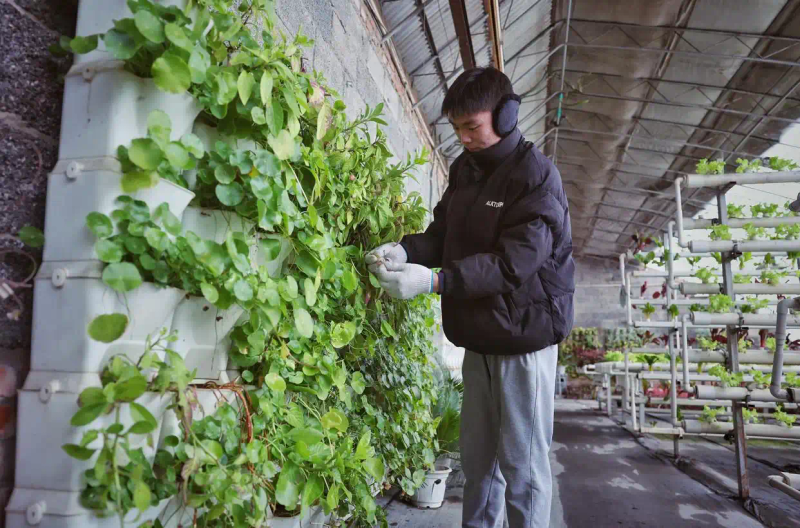
Liu sheng kai is checking the growth of crops in the pipeline at the china-china farmer technology park. The news reporter xue xian
Journalists have seen all kinds of fruit and vegetables that are common or unusual in the sheds, and some even liu sheng kai, who works as a nursery, will need to be careful to give precise answers. “all the species in the park are estimated to be thousands of different species, and they are constantly new, and the pilot cultivation of the varieties has been successful, so that we can grow on a large scale in other sheds to supply the market. Some of these varieties are suitable for planting on balconyes and offices.”
On a wall in the shed, there are different types of green plants, which are well-articulated with free combinations. “where citizens are accustomed to traditional cultivation, they choose this base soil, which contains, inter alia, grass-roots coconuts, leeches, pearl rock, etc., which can provide more abundant and sufficient nutrients to plants and make it easier to manage.” liu sheng kai said that in the park, citizens could choose different crops to dress up as balconys, either as a seed or as a direct feed home。
Lighten 2
More than 30 specialty vegetables constitute “one metre garden”
“young people like fresh varieties, older customers are more traditional, like celery, lettuce, which is common and common.” the stingy side monitors the temperature and humidity in the shed in real time, and “checks” each crop on a case-by-case basis, with dried leaves to be removed in time. Whenever customers visit the sheds and choose to buy, mischievous management experience is given to them without reservation。
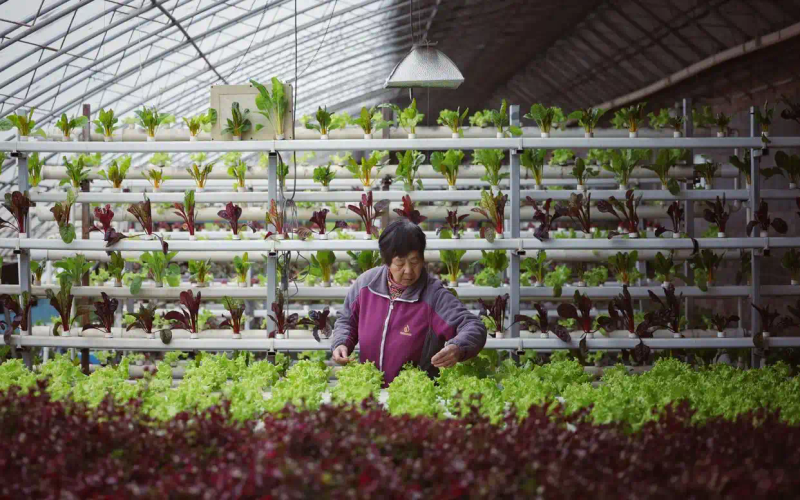
On 15 december, cheeky u. S. A. Checked crop growth in the shed. The news reporter xue xian
“i used to grow food at home, but it's all in daejeon, and it's different, and i'm working with experts in the park, learning, thinking. The most popular temperature of these vegetables in the shed is more than 20 degrees celsius, which is similar to the temperature in our homes, so it's suitable for domestic feeding. In this heavy snow, low temperature weather, the daytime temperature in the shed is typically between 13 and 14°c, with a minimum temperature of not less than 5°c at night.” she has been working in the park for more than three years, almost two years, with parents with children or elderly people living in urban areas, and has come home to buy fruit and vegetables or flowers. " people now live in cities, especially where children have little access to agriculture, where parents have a garden where they experience farming, and where parents are willing to grow on the balcony so that their children can learn about agriculture and know that it is hard to get food.”
"the city that cannot be left, the land that goes back." zeng zheng, the director of the china farmer's science and technology park, told the press that since 2008, the park has been working for citizens' balcony gardens. Research and development services for a number of products, such as the chinese university of agriculture, the chinese academy of agricultural sciences and the beijing city agricultural technology extension station, are all park science and technology support units. More than 300 varieties are now covered by the newly created brand “fullow flowers” for the balcony garden. “we will regularly produce new varieties based on the growth cycle of each fruit and vegetable flower.” if there is no easy access to the park for procurement, citizens can also obtain it at community distribution points or order it on the micro-intelligence line。
In addition to the brand “fullows and flowers” the park has set aside 160 square metres of space in a large shed and has set up more than a dozen types of “one metre garden” with more than 30 specialty vegetables, such as cuisine, pasta, kale, purple sous, autumn and falafana. “the `one-metre garden' uses space more fully than traditional gardens, with a rational planting turn-off that allows every grower to fully feel the pleasure of being close to nature, of working and of harvesting within a small space.” according to zeng, many citizens or businesses would move this “one metre garden” directly to the balcony or the roof。
Lighten 3
I'm gonna grow a foodable purple vegetable at home
New varieties and new equipment for the “plain garden” are also blooming on farms and agricultural parks in the outskirts of kyoto. In another agricultural cooperative, the orient purple garden (beijing), in tunzhou, journalists saw a “vegetable plate”. According to the head of the cooperative, yang sai, in recent years she has found that a number of citizens have begun to grow vegetables on the balcony and that the cooperative has taken advantage of the opportunity to work with a plant factory enterprise to customize a vegetable growing plate. “the farms, which are mainly based on the cultivation of purple vegetables, including purple spinach, purple oil, chrysanthemum, etc., are now yielding fruitfully. The planting of purple vegetable seeds and vegetable seedlings on farms on such plantations will allow citizens to grow high-value, nutritious and rewarding purple vegetables at home.” at present, the park has a growing stock of red celery and wild celery, which are more market-friendly。
"the purple seedlings are on the balcony, and the sun is shining, beautiful." a citizen who purchased the cooperative's purple vegetable growing plate stated that she usually preferred to plant flowers on the balcony, and that for almost two years she had started trying to plant some beautiful vegetables on the balcony with flowers, which were good-looking and food-efficient. “croping doesn't feel the same as planting flowers. They can enjoy them. They can taste the fruits of their labour and have a greater sense of accomplishment.”
According to agricultural expert cao hua, balcony agriculture has more specific requirements for varieties than daejeon agriculture, such as small size, short life cycle, good management, and at the same time attractive. “a few years ago, we made a number of special studies to the effect that, with the upgrading of the garden variety and the refinement of the equipment technology, public acceptance of the garden has increased from 6. 5 per cent to 40 per cent in the first place.”
According to cao hua, the balcony garden has become a culture that allows parents or neighbours to share the topic after the tea meal, while in the fast-paced urban life, the balcony garden has become a living place。