In recent years, our quinoa cropping area has expanded year by year and total production has risen rapidly. In order to guide quinoa scientific production and promote industrial efficiency, the technical guidance for quinoa production in 2023 was issued by the steering group of small food peas specialists of the ministry of agriculture and rural development in collaboration with the national centre for agricultural technology extension。
(i) inversion. Quinoa is not suitable for replanting, and rotation should be actively promoted. The northern spring area can rotate with crops such as potatoes, oats, barley, sorghum, sunflower and oilseed. The western spring area can be used as a front for beans (beans, peas), potatoes, barley, maize, wheat, oil and vegetables。
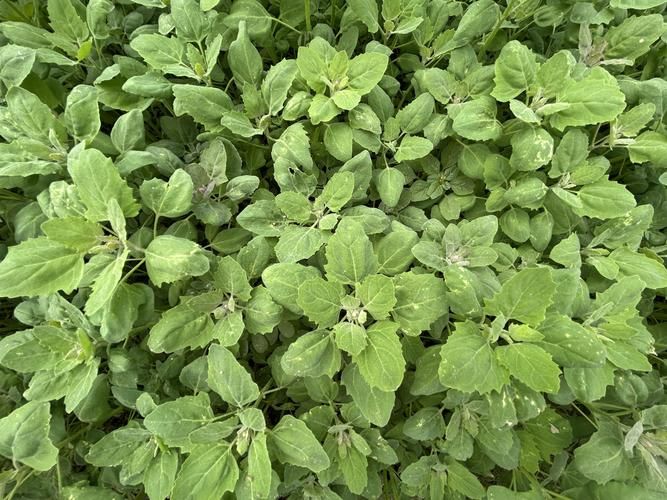
(ii) the preferred species. Quinoa variety areas are less adaptable, and should be adapted to local climatic and soil conditions in order to ensure safe maturity, in accordance with the principle of being able to take full advantage of the conditions of warm light, selecting varieties that are registered or validated and that meet market demand, and avoiding trans-regional seeding without testing. High-yielding, high-yielding, high-yielding species are usually selected in areas with high fertility and production levels, drought-resistant, low-yielding and stable varieties are selected in areas with high mechanized levels, and compact, strong, resistant and dense varieties are selected for feeding, with high biological productivity and resistance. The southern spring/autumn zone can choose more economically efficient varieties such as anti-embracing, anti-emerging, pre-mature red quinoa, black quinoa and white quinoa。
(iii) ready to go. On the basis of the principles of “chronic, flat, pine, shredded, clean, plentiful”, the spring-soiled areas are ploughing 20-30 cm in the autumn or in the spring when the soil is frozen. If herbicides are applied in front crops, the depth of tillage needs to be increased. And in combination with the ground, the fertilization is based on soil formulas. Fees are applied at the bottom, typically 1. 5-3 tons of farm fat, 10-20 kg of urea, 10-20 kg of ammonium phosphate, 3-5 kg of potassium sulphate or 10-20 kg of compound fat. Quinoa seedlings are more dependent on moisture and should be irrigated prior to planting, sowing in unirrigated areas or in rain。
(iv) the planting of seeds at regular intervals. Based on planting patterns, regional climates, mechanized levels, etc., planting can take place at a later stage after the average daily temperature has stabilized at 5°c or above, using membranes to cover planted areas, where planting can occur at an appropriate early stage, with care to avoid the rainy season as much as possible during the flowering and maturity periods. The northern spring area is usually from early april to mid-june, and the western spring area is free of frost. The 100-day airtime period is from late march to late may, usually not later than mid-june, and can be repeated by local adaptations of pre-cooked varieties, with coverage from late june to mid-july. The southern spring/autumn zone determines the range duration based on altitude, climatic conditions, crop layout, etc., with a view to avoiding high temperatures. When seedlings are released, seedlings are identified in a timely manner and seedlings are suitable for seedling, and water is distributed or replanted in a timely manner after the rain。
(v) reasonable secrecy. In order to ensure that seeds are more dynamic, it is generally possible to sow 0. 15-0. 4 kg per acre and appropriate 4-6 particles per den. Quinoa is used to produce 4000-12,000 seedlings per acre, depending on the type of strain and soil water fattening conditions, and to feed quinoa is used to increase its density appropriately, generally by 12,000-18,000 seedlings per acre. Seeding can take the form of stripping, membranes or bare ground, and seedlings, which typically range from 30 to 60 centimetres, stretching from 10 to 20 centimetres, spreading at depths of 1 to 3 centimetres, where appropriate, so as to bind the seeds to the soil。
(vi) fertilizer control. Quinoa is more resistant and can be followed by leaf-faced fattening during the first flower. It is recommended that “50 g bot + 100 g potassium phosphate” per acre be applied to water to prevent quinoa from being “fruitful” and that leaf-face application be less fertilized than thick. The number of times and the amount of water per attack during the whole reproductive period are determined on the basis of soil agglomeration and rainfall distribution, and the current charade and flowering periods are sensitive to soil moisture and should be irrigated on demand. Water injections in the later stages should avoid wind weather as much as possible in order to reduce inversion。
(vii) vegetable grass control. In keeping with the principle of “agriculture, physical control, supported by chemical control”, emphasis is placed on the prevention of common pests such as froste, leaf-leaf disease, root (brain) decomposition, pedals, elephants, grassland problems, plasters, aphids, aphids, maggots, beaks, etc. Selection of disease resistant varieties, seed disinfection before seed planting, seed wrapping in areas where endemic diseases or underground pests are prevalent. Quinoa currently does not have a special herbicide and is dominated by artificial weeding, and weed control should be strengthened in conjunction with chinese farming. In general, plowing land 2-3 times, pine soil without damage to the root system, grass pine soil 5-6 (or 20 cm high) in the first sapling period, grass cultivation in the first flowering period (or 40 cm high) in the second, and grass cultivation in the third in the light of quinoa growth and weed conditions. Duplicate cultivation cleans the weeds from the caves in accordance with the above period。
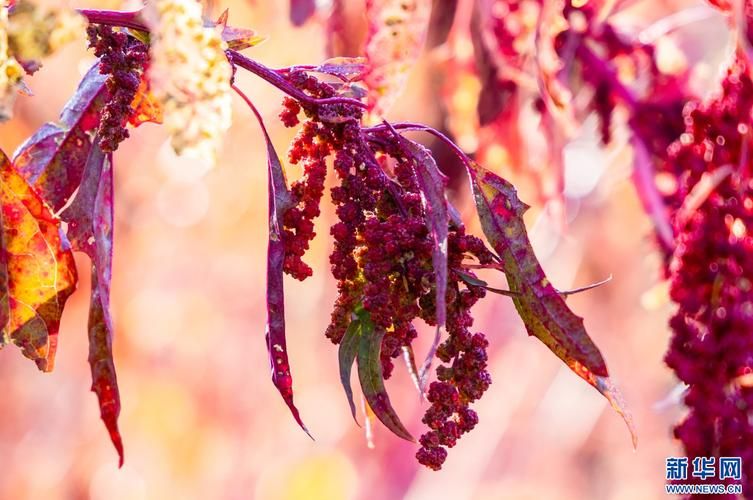
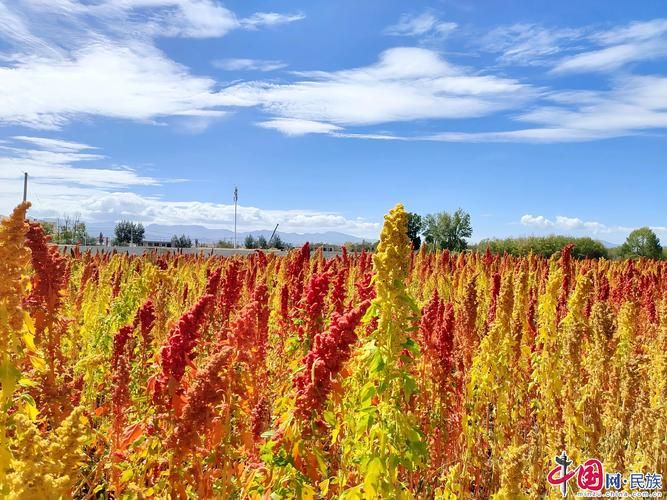
(viii) collect in due time. Quinoa seeds are highly active and have no hibernation, and should be harvested in due course. When the plant leaves turn yellow and red, most of the leaves fall, the straw begins to dry, and the seeds are harvested when the wax is ripe. Artificial harvesting or the use of a combined harvester may be performed. In order to ensure quality, pre-harvest treatment must be provided by removing the disease and the impurity, and after harvest must be carried out in a timely manner in order to prevent deterioration and deterioration. The harvest time should be chosen for early morning and the loss of seed grains should be reduced。