"the wind blows the purple tree, the color and spring twilight." you've probably seen it in spring's park, district green belts -- trees full of purple flowers, twigs, from branches up to the treetops, looking like a pink cloud. But you don't know what this “walk tree” is now everywhere, which was a wild bush in the depths of qin ling a thousand years ago, and on what basis it went from the mountains to the palace of arniya, and on what it was that shocked the whole world。
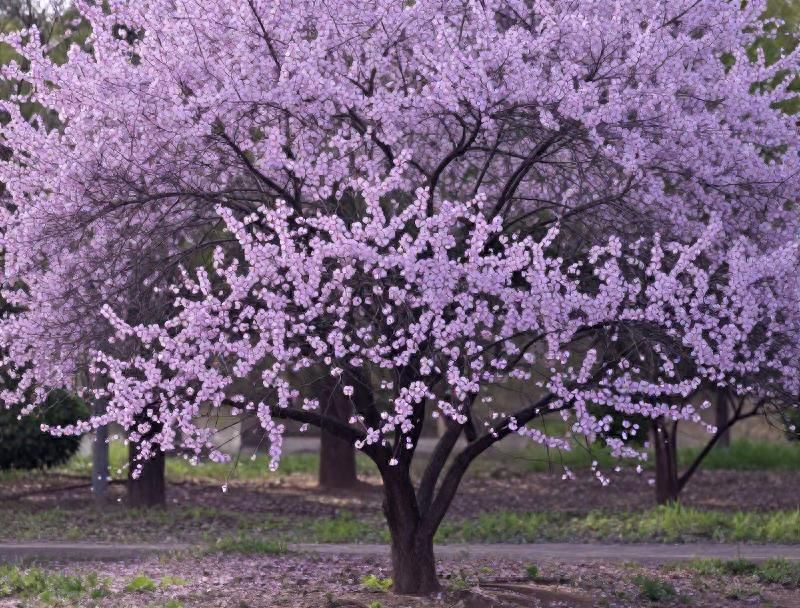
It is still possible to find its wild ancestors in the mountains of the south-central china, in hubei, sichuan and shaanxi. When qin was first, nobody looked at it as a flower. It is written in the book of the mountain and the sea as a "twilight plaster" and says it "is like a lee, eating a strong tooth" — it is potable and hungry, but no one says it looks good. Its branches are soft and bendy, and the villagers cut them to make baskets, fences, and even as firewood. It was called "red with red." it sounded a little dirty, but it was very relevant: on the branches of spring, the plumes fill every inch of old skin, and the whole branch is purple red when the flowers bloom. This is the original fate of the wild purple: self-inflicted in the mountains, occasionally rooted by pharmacists and occasionally cut by hyenas. Its flowers don't smell good, its leaves don't count in the spectrum. Until an accidental opportunity, it was planted in a human courtyard。
For the first time, the purple “right name” was wei jinh-north. At that time, when wars were frequent, the poets began to look for spiritual support in the mountains. The potion writes the curry, and the shealing writes the water of the mountains, while the unknowns begin to grow it in their own estates. The reason is so simple: it's better than the police, it's better than the medicine, it doesn't need to be carefully treated, it can bloom in the corner every year. More importantly, it has a different sense of order — the first flower, the leaves, when the trees are full of flowers, the leaves have yet to grow, the whole tree is like a burning torch, so visible in the light of the early spring. To tang dynasty, twilight officially entered royal vision. In the palaces of changan and the gardens of luoyang, the craftsmen marry wild purples for improvement, with larger flowers, more colours and longer periods. It is no longer just a “firewood tree”, but it is called the “megapolis three” — the pony, the posh sea, and the purple one — alongside the pony and the seagull。
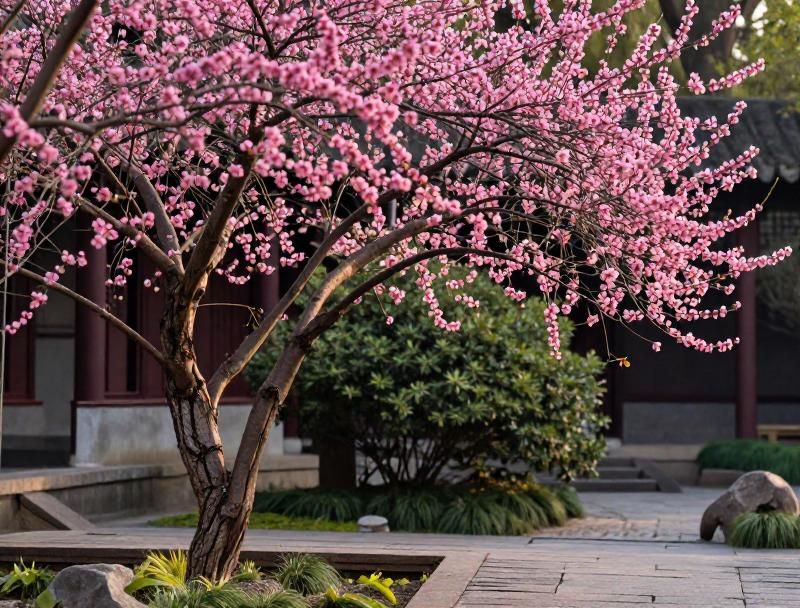
It's song dynasty that really let tsing go into thousands. The northern town of songdu was opened, the city was opened, the boundaries of the neighbourhood were broken and ordinary people began to plant flowers in front of the door and in the alley. The purple is the first choice of the bottom people because it is “liveable, cheap and long”. Find an old alley, a corner of the wall, a side of the road, a well, where you can see a few purple bells, and no one will take care of it. As soon as the spring rain comes, you will be very loud. In southern song, the cultural meaning of purple is further deepened. The man who gave it the meaning of “brother harmony” — the legend is that the three brothers of kyonyda split up, and that the purple tree died overnight in the courtyard, and the brothers were touched, so that they no longer split up and the trees rose again. Since then, purple is often planted in family halls and courtyards, symbolizing family unity and prosperity. It is no longer just a gardening plant, but rather a symbol of ethics, of emotion. There is even a popular saying: "there's purple in the house, there's a brother."
At mingqing, the area under which the purple is grown covers the yangtze basin and the north china plain. It can be seen everywhere in the royal garden of the old palace of beijing, by the curved bridge of suzhou, and in the front yard of chen jiawon, guangzhou. But unlike tang dynasty's "miyagi" flower, it's closer to the city wells. Before and after qingming, the peddlers took the burden and called the twigs along the street; the girls put their bouquets on their hairs and made a happy celebration; a pot of dragon wells with a plate of purple nectar is the most simple enjoyment of gangnam spring. At the end of the day, with the introduction of western botanical science, the purple is reclassified and officially known as cercis chinensis. And at the same time, it was drawn into europe and america to become an eastern element of the western garden. The royal botanical garden of england has so far preserved an 1830 seeded purple cologne, and when each tree blooms, it still sees the harmony between the eastern tree trunk and the western lawn。
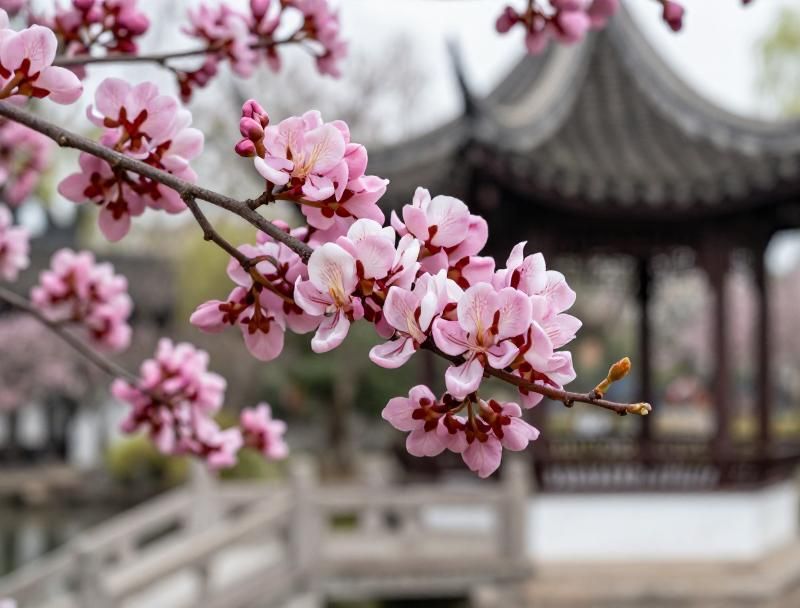
Today, purple is one of your most easily overlooked “fame flowers”. Every spring, when you walk through the bridge, through the district, and wait for a bus, you can wipe your shoulder with it — it's never open, it's only for two weeks, and after the flowers, the green leaves spread slowly, like an actor who's done the job, and leave quietly. It doesn't have the face of a police officer, it doesn't have the height of clubs, it doesn't even have the beauty of a flower. But if you look at it: its flowers grow directly from the old branches, and there are no leaves to hide, and there are no buds to line them up, then it is no sin to open a whole tree. This is the purple attitude — no soil, no water, no climate, just a view in the corner. From the wild shrubs of qin, to the roses of the palace of changan, and to the road that goes down below you every day, it took you 2,000 years to tell you one thing: there is no need to fight, there is no need to shout, there is no need to bloom. Good。