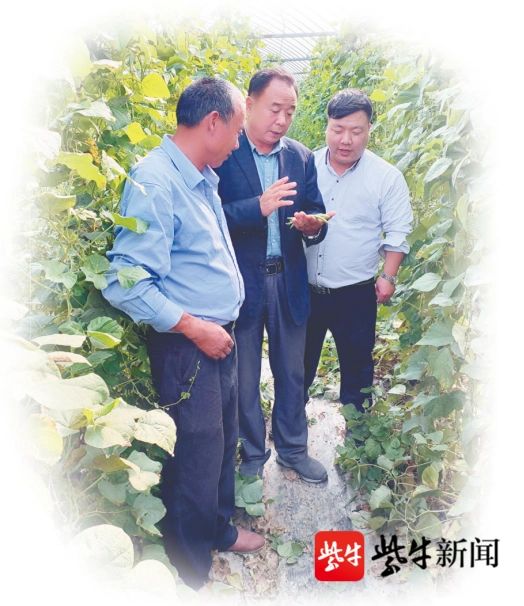
How do watermelons grow
Let's talk about watermelon cultivation and the experience of green plant conservation of watermelon cultivation methods and techniques. Let's follow the story
In the summer, the watermelon must be the most deserving of fruit. Its juicy, cool and high economic value is a necessary fruit for our summer summer。
Watermelon cultivation is now taking place in various parts of the country, and many have been developed using protective facilities such as plastic sheds, in addition to conventional field or membrane cover cultivation, with better economic benefits。
Now, the green-planted mini-codile is introducing you to the watermelon planting technology, hoping it will help
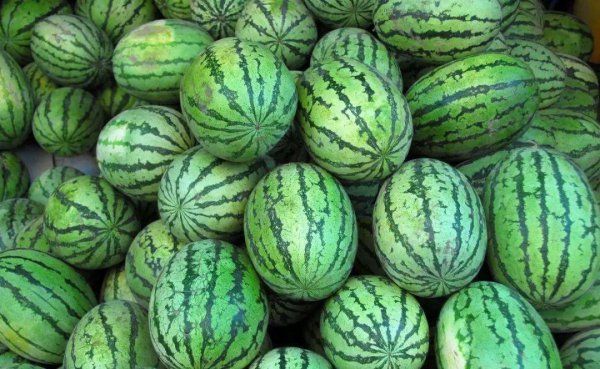
If you want to grow good watermelon, you need to have an overview of its habits
Requirements for environmental conditions for the growth and development of watermelons
(1) temperature
The watermelon is of african savannah origin and is extremely resistant to heat. Seed germishing occurs at temperatures of 26-30°c, 15°c, not germishable at below 15°c, affected by germing above 35°c, and creating cracks
The growth and development temperature is 25-31°c in the daytime and the nutritional growth temperature is lower, slower at 10°c and slower at less than 5°c, which is frozen at more than 35°c, and inhibits growth at more than 35°c, but requires a higher temperature at a minimum of 15°c in the case of sitting and fruit。
At lower temperatures, the fruits are slow to develop, their skin is thick, their emptiness and deformities, their sugar content decreases and their quality is poor。
(2) light
Watermelon is a short-saturation crop with a light saturation point of 8x10lux and a light compensation point of 4x10lux. Watermelon periods are up to 8h and the first female is low; if the sun is above 16h, female formation is inhibited。
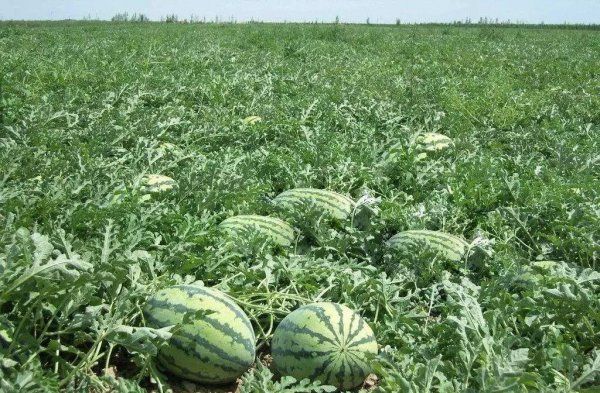
(3) soil
The watermelon is a deep-seated crop with deep and wide roots and a strong absorptive capacity。
Watermelon requirements for soil ph are not stringent and can grow in the range of 5-8 ph. Watermelons need more nitrogen and potassium fertilizer for long-term nutrition, especially during periods of fruit expansion。
(4) humidity
The watermelon is short of water and requires dry air, with a relative humidity of 50-60 per cent. Watermelon needs water throughout its life cycle, the most varied at different stages of growth and development. Seed germinates require a sufficient amount of moisture to decompose nutrients in order to germinate quickly; 65 per cent of the period is appropriate, and 70-75 per cent of the latitude is suitable for the period of chickening and flowering。
It is important to note that the watermelon is afraid of flooding, which is more than 12h and is fatal. Therefore, good drainage plots should be selected for cultivation。
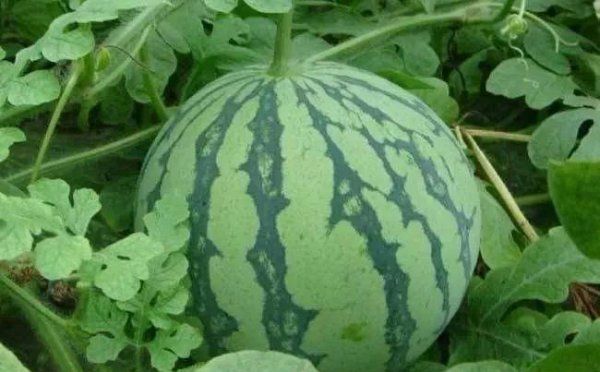
Type and new species
Watermelons are classified in various ways, according to their use, as watermelons for fruit and watermelons for subjugation; as large, medium and small, according to the size of the fruit; and as early, medium and late as maturity。
At present, the production of watermelon varieties is more useful in our country, classified in terms of sophistication, but there are no uniform national criteria for the distinction between early, medium and late-finished varieties, usually determined by the time taken by the female flower to mature。
(1) premature species
The female needs to be within 30 d from flowering to ripening of the fruit, which is the pre-maturized species. This type of species is typically characterized by early female presence, low symmetry, weaker growth and branching, early harvest and high early yield
(2) preserved species
Females require 31-40d from flowering to ripening, which is a medium-preserved species. This type of species is typically characterized by the presence of females at a later stage, a higher symmetry, stronger growth and branching, and the early and well-cooked and high yield characteristics。
(3) late-blended varieties
Females require more than 40 d from flowering to ripening, which is a late-cooked variety. This type of species is generally characterized by the presence of females late, high symmetry, strong growth and branching, large fruit and high yield。
How do watermelons grow
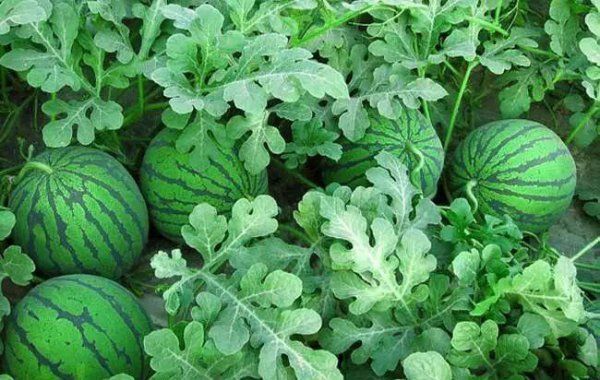
Plantation techniques for watermelon facilities
I. Selection of varieties
Watermelon facilities should be developed with low temperature, weak light and wetness, with low pacing and high yield of pre-cooked varieties with short growth cycles of fruit. The varieties of taiwan farmers and friends, such as lain, are grown extensively in the facility and have yielded better economic benefits。
Ii. Employment
1. Determination of the planting period. Watermelon facilities are grown mainly in early ripening, mainly in plastic sheds and solar greenhouses. Yunnan stereoclimatic climate is clear and can be produced on an anniversary basis according to different climate types。
In zhejiang, jiangsu, shanghai and other areas downstream of the yangtze river, mainly plastic sheds were planted, usually in late january to february, and harvests began in mid-may. In the north, solar greenhouses (e. G. Beijing) are planted, usually in late december to late february. The harvest began in mid-april。
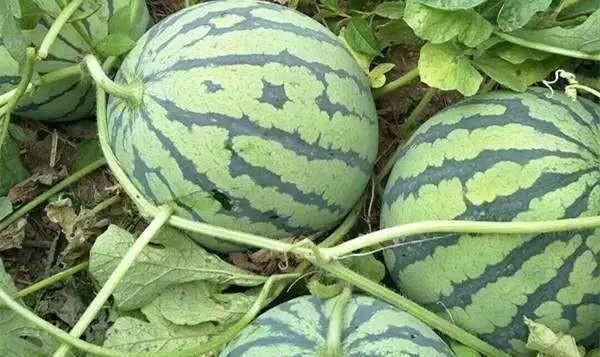
2. Grounding, grounding and bottom fertilization. Watermelon is not allowed. If made, it can be used as an anti-grain microbicide! Watermelon cultivation should be carried out in the form of a backwind to the sun, well-drinked sandy or sandy soil, with the former crop being harvested in time to clear the land and dig deep into the ground so that it can be tanned adequately in the sun, killing parts of the disease and pests in order to reduce their harm。
It is also applied with bottom fertilizers of 2,000-3000 kg per 667 m2, decomposed organic fertilizers of 30-50 kg, potassium fertilizers of 5-15 kg, a flat mix of soil and deep rolls, and reptiles are grown to form 2,000 px wide, 15500 px high luminum; and pyramids are grown into 1,500 px wide, 10-375 px high, covering the membranes and preparing for planting。
Cultivation. Watermelon facilities are developed in two ways: live and nursery. Early ripening is generally done using hotbeds. The watermelon system is poorly regenerated and is prone to strangulation after the injury, and should therefore be protected by, inter alia, nutrient variability。
In the yunnan hot zone, pre-cropping (e. G., western twina) is generally conducted live, with 50 °c warm water being immersed in 12-24h, fused with wet gauze at 25-30 °c, and soaked at 3-4d。
Cultivation is best done with nutrients, with watermelons of 35-40 d of age and 3-4 leafs。
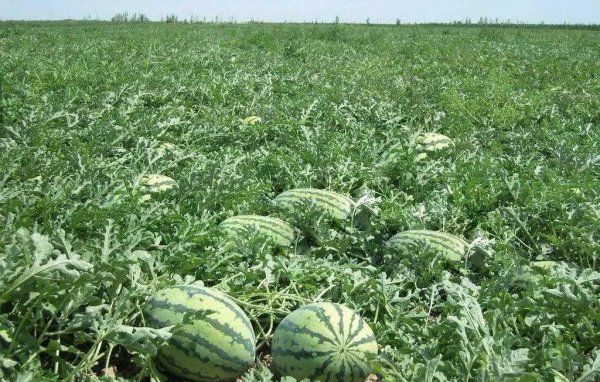
Iii. Premature planting of watermelons
The planting is best done at around 10 a. M., with 300-400 fruit per 667 m2, 400-500 medium fruit and 500-600 small fruit. They are designed to pierce the membrane that has been built with the range required for different varieties, with one per hole and then a tight perimeter。
Iv. The harvest shall be taken in due course to ensure the quality of the watermelon
There are three ways to identify watermelon maturity。
1. Number of days after the opening of the female: 25-30d for the early ripe species to mature; 31-35d for the medium mature species to mature; 35-40d for the late ripe species to mature。
2. In morphological terms, rolls around the fruit must be aging, the shoulder of the fruit is prominent, the tooth of the fruit is dim, the skin of the fruit shines and the stripes are clear。
3. Hearing melons: melons with fingers, hyenas with melons, melons。
How do watermelons grow
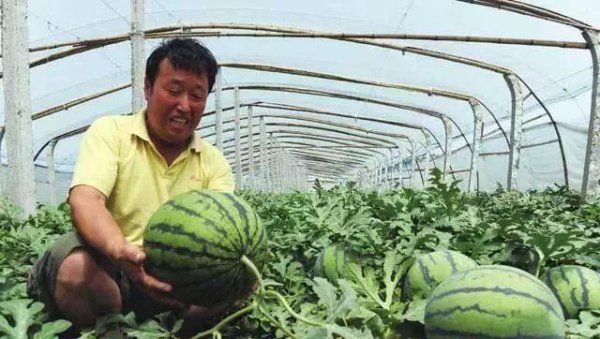
Problems with planting periods
I. Achievements of the throughs
Skin crack
Watermelon seeds are in the process of seeding, sometimes with skin cracks, resulting in slurry, rotten seed, non-extension of embryos, etc. The main reasons are: short impregnation time; drying of the sapling or seed matrix used for seed parcels; temperature exceeding 40°c for short periods of time; and non-emerging
The selected seed has a low capacity to germinate or to store the seed for more than three years; the seed temperature is below 15 °c and causes scavenging after a few years; the temperature is higher than 40 °c and the seed is burned; the leaching time is too short for the seed to absorb sufficient moisture。
Measures:
1 choosing new seeds that have a strong and full capacity。
2 strong sunbaths. Choosing clear weather in the spring and placing seeds on objects such as mats or paper, which expose them to sunlight for four to six hours, can promote seed fertilisation, enhance the vitality of the seeds and increase seed germinate and germinate rates。
Absorption at constant temperatures for 8-10 hours, allowing seeds to suck water。
4 at 28 ~ 32 °c, with greater humidity and sufficient oxygen for some dark time。
Ii. Anomalous periods of seeding
No, it's not
The temperature of the nursery bed is less than 16°c, and the temperature of the nursery bed is low and decompressed; the temperature of the nursery bed is more than 40°c, and the temperature of the nursery is high; the bed is drying up, resulting in the drying of the embryo and loss of seed capacity; the bed is wet and the air is scarce, affecting the seedlings; the nutrition of the soil is irrational, with the use of unmodified organic or numeric fertilizers, and the pesticide is high, resulting in a bad sprouts of the fertilizers; the early spring is too deep to sow more than 3 cm, and the bed is wet and at a low temperature, resulting in a bad seed。
Shelled
In cases of shallow sowing, dry soil, low soil temperatures or poor embryos, it often results in the headen of the leaves, which seriously affects their extension and development。
Highfoot
During the period prior to the seeding of the watermelon to the right leaf, the temperature was too high, it was too wet and the light was insufficient, resulting in an over-extension of the lower axis to form a high seedling。
Measures:
1 rationally formulated trophic soil: 6 fields with unplanted melons, 4 fully decomposed organic fertilizers, 0. 5 kg of urea, 2 kg of calcium phosphate per cubic metre of bed soil, 0. 5 kg of potassium sources of phosphorus, 10 kg of grass-wood ash, 0. 1 kg of more than 50% of the fungus or 70% of the disemboweled manganese, 0. 1 kg of phosphorous phosphorus, which is fully homogenized and suffocated for 7-10 days。
The planting must be preceded by the wetting of nutrients to prevent the drying of nutrients after the planting from affecting the seedlings。
Seeds should be planted flatly to prevent the shell from growing。
It is then covered with nutrient soil thickness of 1 ~ 1. 5 cm and water is sprayed with a canteen, which wets the ground. Hot water can be sprayed with a canteen if the pre-plant beds are too dry. Seymour sprayed water once every three to five days, with no water on the bed for the first two to three days。
5 the pre-sapling temperature is controlled at around 30°c, and the temperature of the bed must be strictly controlled, generally not exceeding 25°c, before the chromium is followed by a single leaf。
After 80 per cent of the seedlings are released in the spring, the vents of the film shall be ventilated to prevent the longing, and the ventilation shall be increased by 7 to 10 days before planting and the temperature shall gradually cool down。