On august 26th, the xinjiang eco-agriculture development summit, organized by basif (china) ltd. And co-sponsored by the american group, was held in urumqi, where basif demonstrated the successful trials of biodegradable membrane cultivation of five crops in xinjiang cotton, maize, beet, pumpkin, tomatoes and potatoes. Basif is now working with xinjiang to promote biodegradable membrane applications and actively promote sustainable agricultural development。
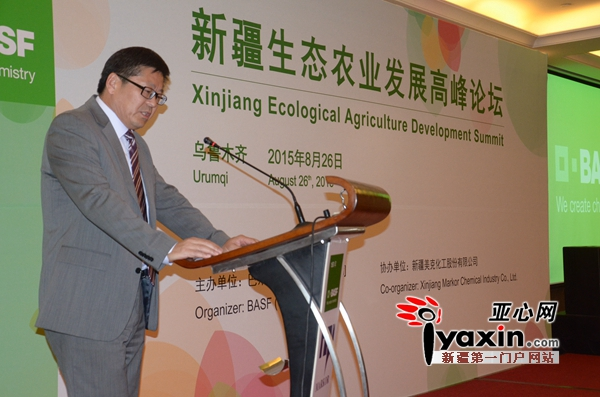
Zheng da qiang, senior vice-president of the basif grand central china district. Reporter wang jianlong
In the past few years, basff has worked closely with stakeholders such as the china plastic processing industry association, the chinese academy of agricultural sciences, the national agricultural technology extension service and the xinjiang cotton association to promote the use of biodegradable membranes for sustainable agricultural development, and has conducted experiments in yunnan, shandong, jiangxi and inner mongolia. At the end of 2014, basif launched a pilot project for five crops for cotton, maize, beet, pumpkin, tomato and potato production in xinjiang. These include 280 acres of cotton, 820 acres of maize, 200 acres of beet, 200 acres of potatoes, 200 acres of pumpkin and 5 acres of tomatoes。
Experimental results indicate that biodegradable membranes are decomposed to water, biomass and carbon dioxide, and that biodegrading agricultural membranes are superior to traditional membranes, especially in adverse environments. It has excellent mechanical, insulated and water-preserving properties, as well as good uv-resistant properties, which, compared to the traditional polyethylene (pe) membrane, not only guarantee crop yields but also do not cause soil pollution。
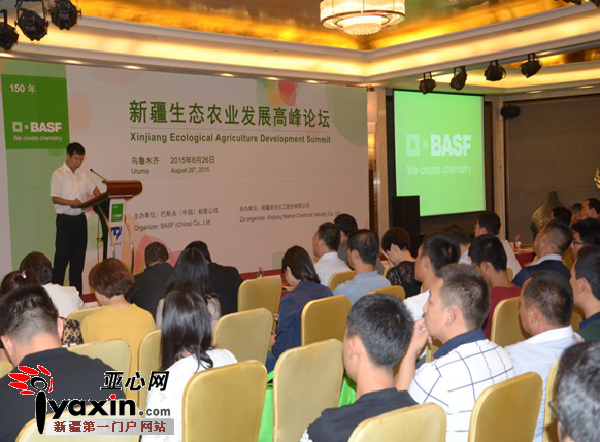
Xinjiang eco-agriculture development summit site. Reporter wang jianlong
Xinjiang is china's largest cotton-growing area. According to data from the national notarial examination of cotton, from 2013 to 2014, xinjiang produced more than 4. 5 million tons of cotton, or over 60 per cent of the country's total. Under the geography and climate of xinjiang, cotton cultivation in xinjiang requires the use of membrane. As of 2014, there were more than 47 million acres of agricultural land in xinjiang, accounting for almost one seventh of the country's membrane use. “in xinjiang, cotton has a longer reproductive period, which requires a slightly longer decomposition period for biodegradable membranes, which is more than 90 days.” according to lu, director of the institute of agricultural science and research in agriculture and sustainable development。
It is known that, in the middle of the twentieth century, with the development of the plastic industry, particularly the emergence of agricultural plastic film, some industrially developed countries have achieved good results in the production of vegetables and other crops using plastic film to cover the ground. Japan began research and use in 1948, and in 1955 it was first used in strawberry-cover production and promoted. In 1961, france began piloting membrane-covered melon crops in the south-eastern part of the country. In italy, ground-covered cultivation of major crops such as vegetables, strawberries, coffee and tobacco was carried out in 1965. In the late 1960s, the united states began to plant cotton with black film cover. In the early 1970s, we used used used used membranes to cover small areas of flat cover, growing crops such as vegetables and cotton. The experiment was carried out in 1978 and began in 1979 to be tested, demonstrated and promoted in some areas of the north-east, north-west and yangtze basins。
Wang lin, chief of the agricultural technology extension station of the xinjiang production corps, said that the xinjiang army was the first unit to use the membrane in the country and the largest modern agricultural demonstration base in the country. In the early 1980s, the regiment introduced membrane cultivation techniques from japan and agricultural productivity increased significantly. In recent years in particular, the successful diffusion and application of underwater drip irrigation has further contributed to the rapid development of membrane cover technologies。
In the absence of effective governance measures, waste membranes are increasing year by year in agricultural soils and pollution continues to increase, and this “white revolution” has gradually become a shocking “white disaster”. According to the data, the use of china's membranes was approximately 1. 42 million tons by 2014. The recovery rate is less than two thirds. Xinjiang has become one of the most “white-polluted” areas of the country, and the results of a survey of agricultural land sampled by xinjiang agricultural agency resources and environmental protection stations in 20 counties across the country show that the average amount of membrane left in local farmland has reached 16. 88 kg, four to five times the national average. The xinjiang army corps is the most heavily “white contaminated” area in xinjiang and, according to incomplete statistics, in 2013 it had more than 9 million acres of film contamination, representing 60 per cent of the army's cultivated land, with an average of 17. 4 kg of membrane residue per acre of cotton field soil. Based on the current usage of 4. 5 kg per acre per year for cotton cultivation, the army cotton field can be covered by four layers in the soil。
“many membranes are buried deep beneath the soil, and some may even rot into fragments that cannot be manually removed. Farmers have had to spend a considerable amount of time cleaning the film, but these tasks have had little effect due to the smaller size of the debris each year. Although the government supports the use of thick membranes, which are easier to clean, farmers consider them expensive and time-consuming. We have been conducting biodegradable membrane studies for many years, with little success, and it can be said that there is no real membrane biodegradation. So many fragments have caused enormous losses and damage to agricultural production and the ecological environment, and if governance is not tightened, they affect seedlings or their deaths, and will affect the sustainable development of military agriculture.” wang lin stressed。
In this regard, the chinese academy of agricultural sciences, professor zhong qian-yung, stated that due to the fact that the main component of the general membrane is polyethylene, it is extremely difficult to decompose in the soil, combined with the application of the ultra-thin membrane membrane, which leads to low membrane recovery rates due to backward technology and machinery, which exacerbates pollution. The large amounts of membranes left in the soil destroy the soil structure, hinder the transfer of moisture and nutrients in the soil and affect crop growth and development, thereby affecting cotton production。
“in order to ensure sustainable agricultural development, land-based membrane residual pollution control techniques require `two steps', on the one hand to expand standard membrane extension and to apply mechanized recycling to control further increase in membrane residual pollution, and, on the other hand, to strengthen biodegradable membrane research to replace the general membrane with biodegradable membrane to contain the occurrence of membrane residual pollution from sources. @ambassah: #jan25。
The deputy secretary-general of the china plastic processing industry association, taniji, said that the “guidelines for the development of the plastics processing industry `135' planning” and for the membrane industry `135' development planning” and the revision of the national membrane standards were about to be issued. For common membrane usage requirements, the revised standard national membrane thickness is 0. 01 mm to facilitate recycling and to complement white pollution remediation. Biodegradable membrane applications are also encouraged and actively promoted, and there is no requirement for the thickness of biodegradable membrane。
“strategic agriculture in xinjiang plays a key role in sustainable textile and food supply chains in china and globally, and basff will work with xinjiang to promote sustainable agricultural development.” zheng zheng dynasty, senior vice-president of the basif region of china, said: “the world's 500 largest company, basff europe, is a german chemical company and the world's largest chemical company. In recent years, basif has been active in the xinjiang market and, in addition to its strong cooperation with xinjiang in agriculture, has been actively investing in the chemical industry. Xinjiang american chemical corporation, inc. And basouf have jointly invested in the establishment of the american-european chemical corporation (xinjiang) limited liability corporation and the basif american chemical manufacturing company (xinjiang). The mexican-european chemical (xinjiang) llc, which mainly produces 1,4 butadiol, and the basfmeque chemical manufacturing (xinjiang) llc, which mainly produces and operates tetrahydrofurans, is scheduled to start production by the end of 2015
At the forum on the same day, leaders and experts from the xinjiang agricultural department, the corps agricultural department and representatives of relevant enterprises and units agreed that biodegradable membranes were a good alternative to common membranes to combat white pollution in agriculture. Large-scale expansion would be a “revolution” to combat white agricultural pollution and promote cross-border development of xinjiang agriculture. However, there are also leaders and experts, as well as representatives of relevant businesses and units, who are concerned that biodegradable membranes are more expensive than traditional membranes, increasing the costs of farming and making it more difficult to promote. The basff indicated that biodegradability over the life cycle was not more costly than the normal membrane, and that, as biodegradable membranes were promoted and applied on a large scale, the price would be reduced, thereby reducing the price gap with the general membrane。
Background:
Basif
For 150 years, basif has worked to create new chemical roles. Companies produce chemicals, plastics, characteristic products, crop protection products, and crude oil and natural gas. Product and systemic solutions contribute to the protection of resources, the provision of healthy food and nutrition and the improvement of quality of life. The aim of the enterprise is “to create a new chemical role — to pursue a sustainable future”. Basif's global sales in 2014 amounted to approximately €74 billion, with approximately 112,000 employees as at the end of 2014. Basif's shares are listed on the frankfurt, london (bfa) and zurich (an) stock exchanges。
The origin of basif and the grand china market dates back to 1885, when basif was china's faithful partner. Basif is one of china's largest foreign investors in the chemical industry, with major investment projects in nanjing, shanghai and chongqing. The basif asia-pacific innovation park, located in shanghai, will serve as a research and development hub for the asia-pacific region. In 2014, sales in the basif grand central china amounted to more than €5. 5 billion, with approximately 8033 employees at the end of the year。
On august 26th, the xinjiang eco-agriculture development summit, organized by basif (china) ltd. And co-sponsored by the american group, was held in urumqi, where basif demonstrated the successful trials of biodegradable membrane cultivation of five crops in xinjiang cotton, maize, beet, pumpkin, tomatoes and potatoes. Basif is now working with xinjiang to promote biodegradable membrane applications and actively promote sustainable agricultural development。
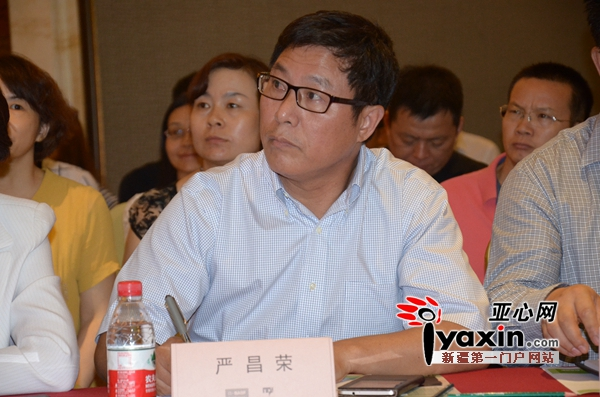
The chinese academy of agricultural sciences showed up and spoke on the occasion. Reporter wang jianlong
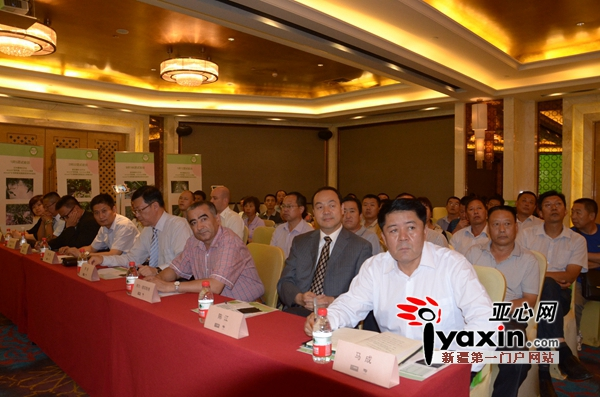
Xinjiang eco-agriculture development summit site. Reporter wang jianlong
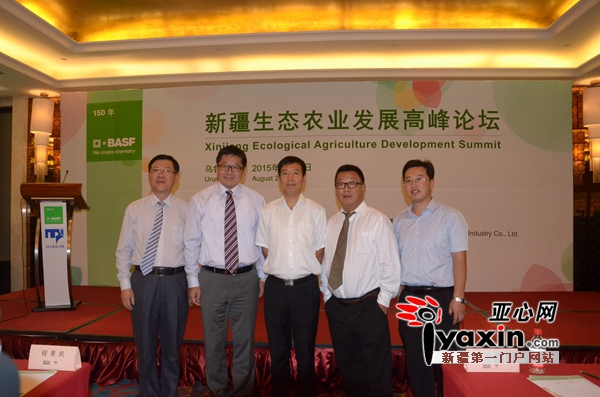
The leadership of basif (china) ltd. Is with the leadership of the american group. Reporter wang jianlong
On august 26th, the xinjiang eco-agriculture development summit, organized by basif (china) ltd. And co-sponsored by the american group, was held in urumqi, where basif demonstrated the successful trials of biodegradable membrane cultivation of five crops in xinjiang cotton, maize, beet, pumpkin, tomatoes and potatoes. Basif is now working with xinjiang to promote biodegradable membrane applications and actively promote sustainable agricultural development。
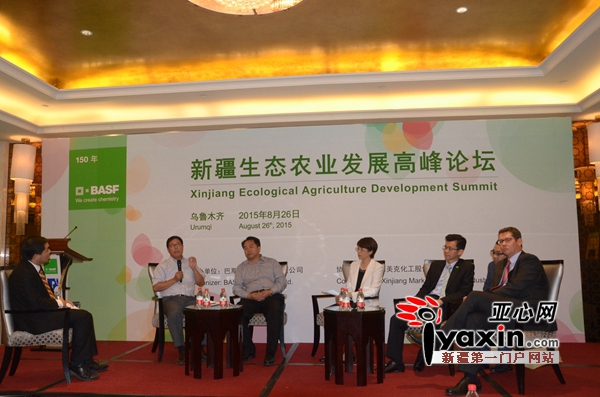
Experts interacted with guests on the ground. Reporter wang jianlong
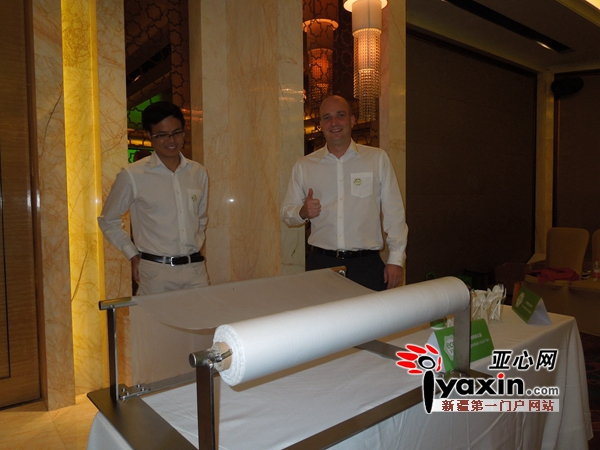
Biodegradable membrane at the basif site. Reporter wang jianlong
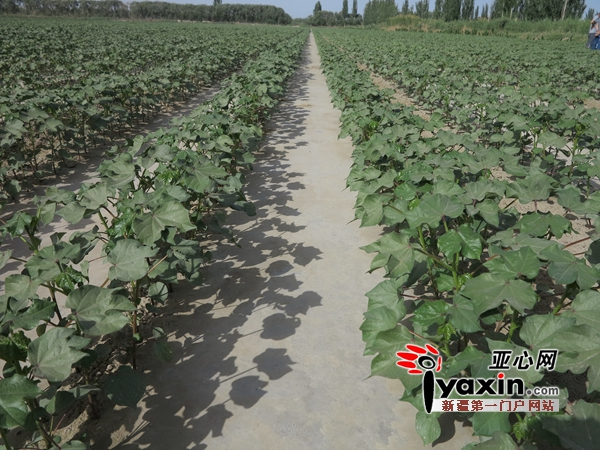
Test fields using biodegradable membranes in basif. Reporter wang jianlong