Wei water: once known as china's north east east and west market, the dilemma: yellow dragon disease is devastating
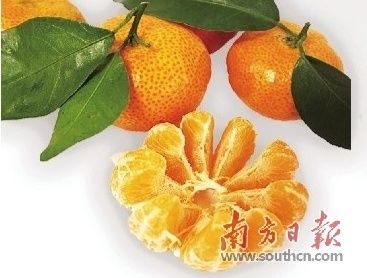
Sugar oranges, which used to be a business card for distant agriculture, peaked at one of guangdong's largest sugar orange-producing areas, but with yellow dragon disease, they had gone downhill in previous years。
At its seventh plenary session, the zhongqing city council noted that, in the context of excellence and quality enhancement, the cultivation of the three dominant industries, namely, qingxiang, citrus and tea, should be scaled up proportionately and that efforts should be made to create a new “3+x” farming system throughout the city. Today, important strategic deployments have been made for the “regeneration” of the citrus industry, which, together with tea and distant chickens, has been included in the “three-product project” programme for distant agriculture, which was created as an important pillar of the rural renewal strategy。
The industry is booming. Rural renewal and industrial boom are the foundation. In this new opportunity, how can the qingying orange industry be “reborn”
Hydra
He's known as the east china north market
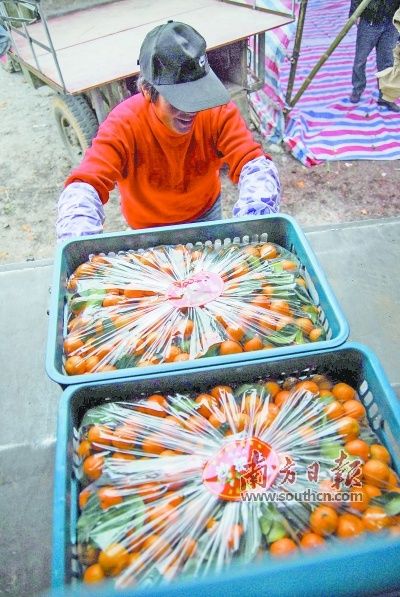
In 2012, 750,000 acres of sugar oranges were grown in remote cities, yielding 910,000 tons, with a value of about $5 billion, or 40 per cent of the total sugar oranges produced in guangdong province. At the time, the media was fighting over the peak of sugar orange cultivation and sales
Higher elevations, abundant sunlight and rain, and natural conditions with high temperature differentials between day and night give distant citrus a unique growth advantage and hence a high quality of fruit. In the case of long-distance sugar oranges, the skin is orange red, bright and bright, and the fruit and meat is fresh, less nucleotide, more juicy and more nutritious, and the consumers love it。
The citrus used to be a business card for distant agriculture, and most of the region of the city was a suitable plantation for citrus (mainly sugar), especially in the far south and centre of the country, such as indeh, fukuoka, qingxing and yangshan, with a long history of cultivation。
In the 1990s, the window of opportunity for economic reform in forestry was seized, with a strong promotion and seeding of citrus crops based on the unique nature of the distance, and with the encouragement of the sugar and orange markets, the enthusiasm of agricultural contractors rose. By the year 2000, sugar oranges had gradually become the main fruit species, and by 2006 the city had a total of 400,000 acres of sandy oranges, with an annual output of 1. 25 billion yuan, and the citrus cultivation industry had begun to grow。
To increase the visibility and influence of qingying citrus in the market, in 2010, 2011 and 2012, the city of qingying visited beijing, shenyang and xi'an, respectively, for a number of sugar orange promotion sessions, which significantly expanded the distribution of sugar oranges。
In 2012, at the launch of the largest agricultural by-products market in sian, distributors from shaanxi, henan and anhui contested the purchase order of 1. 53 million tons, for a total of 765 million yuan, with large farmers from far away。
At that time, 750,000 acres of sugar oranges were grown in the city, yielding 910,000 tons, representing approximately 5 billion yuan, or 40 per cent of the total sugar oranges produced in guangdong province, and were sold in large numbers to beijing, tianjin, liaoning, shandong, jiangsu, zhejiang and hong kong, south-east asia and central asia. At that time, the media was in great competition, culminating in the cultivation and sale of sugar oranges from far away。
In order to better promote the sale of sugar oranges, “green lights” have also been added to policy support, such as the annual festival of cultures for the expedition of sugar orange, held since 2009, which provides an exhibition platform for sugar oranges to expand their export and internal marketing, and even coordinates the road sector to open “green corridors for fresh produce” on national roads, highways, etc. To ensure better sales of sugar oranges。
As a distant agricultural business card, sugar oranges have also earned a lot of face for the distance, producing a large number of “fruit brands” over the years, with 20 registrations for sugar oranges, such as the “cleaning honey” card, and seven of them, such as the “flying isthmus” card, have been dubbed “china's name fruit”. Official data show that in 2012, there were 15 distant sugar units certified for export (export) and 7 green green sugar brands。
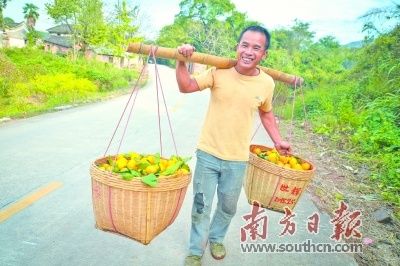
Behind the dividend is the fruit farmers, some of whom rely on citrus for their wealth. There are extensive citrus cultivations in indeh, fukuoka, qingxiang, yangshan, etc. A fruit farmer with more than a dozen acres of citrus, with a steady income of 10,000 to 100,000 yuan a year after the birth of the fruit, provided that it is well developed. Cultivation of sugar oranges has even once been considered a “no choice” for poor households to escape poverty and become rich。
The growing area of citrus cultivation has been accompanied by an increase in the number of species imported, and some townships have even spontaneously formed a mass market, such as the town of kowloon in indeh city, yangmei in yangshan county, the town of yinzhou city, the town of saigang, and the town of qing xinxiang district。
Difficulty
Yellow dragon disease is devastating
Consistency with yellow dragon disease is a problem of various types of “diseases” in farming, such as sympathosis (homogenization), lack of branding, poor industrialization, lack of precision and low levels of scientific cultivation
Over the past five years, in contrast to previous years, the clearing citrus industry has been walking down the slope, and in the fight against yellow dragon disease, many places have begun to systematically cut down seriously ill fruit trees and grow other crops。
Concurrent with yellow dragon disease is the variety of “advanced diseases” faced by the farming industry, which inevitably emerges from the disappearance of “mythical” garments from the distant citrus industry, such as tactile (same), lack of branding, poor industrialization, poor precision, low levels of scientific cultivation, poor prevention, asymmetrical production and market information, and de-sale of agricultural products。
The survey of journalists found that the lack of brand names, de-sale sales and ill-preparedness are major factors that have plagued the development of the distant citrus industry, as well as the “principal drivers” that have led to the cyclical evolution of the distant citrus industry, making it difficult to sustain it。
Although sugar oranges are grown extensively in the distance, the farmer's brand is still not well-intended, the long-distance sugar oranges are sold to the northern market, most of them considered to be four-squad oranges, and the hot sale of the long-square oranges has not been effective in raising the visibility of the distant agricultural brand。
Mr. Zhang, the fruit wholesaler in henan, buys a quantity of sugar oranges from yang mei town, yangshan county each year. Mr. Zhang, speaking frankly, from the fruit, says that the sugar oranges of the four clubs are not as far away as they are, but he will still have the “four mets” brand on the packaging, “because the market recognizes the 4 mets”。
As sugar oranges grow more and more, the market for distant citrus industries is gradually becoming more abundant than demand, traditional wholesale channels are difficult to absorb excessive yields, new distribution channels (e. G. Electric operators) are not yet mature, and the media have even pointed out that distant sales of citrus are “partially stagnating every other year”。
According to mr. Dao ha, who is growing citrus in lianzhou, there is a pattern of “a bad harvest this year, a good harvest next year” and, in the years when the harvest is high, the total volume of acquisitions by wholesalers remains constant。
Mr. Ha's headache was that the problem of “low prices” followed the debarment, and mr. Ha said to journalists that in order to sell large quantities of compacted sugar oranges “must be sold at half or even one third of the normal price”。
For the collectors, “happiness” is not necessarily good. “although low-priced acquisitions are beneficial to wholesalers, the fact that secondary wholesale prices are low, logistics transport costs are high, and market terminals fall short of expectations discourage many buyers。
“the terrible thing about yellow dragon disease is that, without a cure, it is always possible to occur at any time, regardless of season, climate, and is contagious and widespread.” mr. Ha said that, once an orchard had contracted yellow dragon disease, “he might have to consider cutting off the whole orchard”, which was a devastating blow to the farmers。
In the face of yellow dragon disease, workers from the qingyu city department of agriculture told journalists that ordinary farmers would initially cut down several infected trees and, when the whole orchard was infected, abandoned the garden and turned to other crops for production, but the slow cut-off of the sick fruit tree could threaten other orchards nearby, thereby affecting the prevention and treatment of yellow dragon disease throughout the region。
Renaissance
Policy escorts for the global citrus industry
The ministry of agriculture has now settled the national orange plantation plantation project in the province, which is of great importance for the development of the citrus industry into a rich one
At the 7th plenary session of the qingqiao city commission, it was revealed that 5 to 10 years of effort had been made to achieve an area of about 1 million acres of olive cultivation, further enhancing the brand influence and market competitiveness of distant agricultural products。
It was noted that the citrus industry would need to be included in the “three-product” development plan for distance agriculture and as an important initiative for a vigorous rural renewal strategy. This has undoubtedly been the result of the distant citrus-growing industry, which has been overshadowed by the haze of yellow dragon disease。
On 18 january this year, more substantial progress was made in the rehabilitation of the qingyuan citrus industry. Four units, namely, the qingqingqing city agricultural authority, the government of the prefectural district of virginia, the qingqinghumi agricultural science and technology corporation and the qingxiang union supply chain corporation in beijing, have jointly signed the quadripartite framework agreement on cooperation for the innovative development of the orange industry. The quartet will work together to form a platform for the development of the citrus industry, which will cooperate in the fields of orange breeding, planting and marketing。
The specific plan is to minimize the threat of yellow dragon disease to citrus oranges by introducing a virus-free seedling technique. By 2020, 100,000 acres of seedlings will have been grown, 300,000 acres by 2022 and 1 million acres by 2027。
The relevant technical staff of the qingqing city agricultural department explained to the journalists that the so-called “poll-free sapling”, i. E. The planting of fruit seedlings in a concentrated and closed setting in the greenhouses, which were bred for two to three years, were then distributed to the farmers and then planted.” the advantage is that oranges have not been infected with yellow dragon disease since their infancy (which is most likely to be affected by yellow dragon disease) and are cultivated through greenhouses while enhancing their pest resistance.”
The deputy mayor of qingyuan said, “the yellow dragon disease has had a devastating impact on the qingying sugar and orange industry, and it is hoped that the plan will bring the qingy sugar and orange industry back to life and create a global citrus industry.”
It was also revealed that the department of agriculture of the state council has now settled the national orange plantation plantation project in the province, which is of great importance for the long-term development of the citrus industry into a rich one。
Water test
It was the first time that the industrial culture program was introduced
Nearly 50,000 new sugar seedlings are being cultivated in the base to supply healthy sugar oranges from the village to the county. Need for seedlings
With regard to the development of the citrus industry, the canton of vergon has taken the lead in introducing the industrial sugar orange free packer large sapling project throughout the city. In collaboration with a team of specialists from the agricultural college of guangdong province, the district's agricultural sector has opened seedling bases in fukumura, the entrance to yongshan town, and inoka village, the top town。
At present, the construction of two bases and nursery work are proceeding in an orderly manner. Journalists conducted visits to the nursery base of the village of iioka, head of the town. Originally, the village had thousands of acres of sugar oranges, while in recent years it had been infected with yellow dragon disease, few of the orange trees left in the village of wellaoka, and the farmers in the village abandoned their sugar oranges and turned to other agricultural products。
Wellsang village is flat and fertile and has good environmental advantages in setting up greenhouses to cultivate seedlings. In january, after the virus-free container seedlings project landed in the wells field village, the wells village integrated more than 1,300 acres of water fields through land flow for the construction of seeding bases。
The village's first secretary for poverty alleviation, wong jun long, described the initial plan for the nursery base as 400 acres, with 10 acres of greenhouses, nearly 50,000 sugar oranges. The new seedlings are entering the base for cultivation to supply future demand for healthy orange seedlings throughout the village and county。
Peace, the secretary of the board of the canton of fukuoka, has very good prospects for the development of the iioka village gravel seedling project, which has been established to effectively prevent and control yellow dragon disease and to significantly improve the supply capacity of healthy sugar orange trees。
According to chen hobin, dean of the horticulture school of the university of agriculture of china, the plan to plant millions of acres of citrus is intended to revive the sandy orange industry. It is an ambitious plan, but it must be implemented slowly and without undue delay。
As the nearest agricultural city in guangzhou, with its extensive and integrated development, has facilitated access to the country's agricultural science and technology resources, as well as the climatic, soil, terrain, the subtropical and temperate fruits, and the variety of varieties that can be cultivated, which is a good place for the development of the fruit industry and agricultural leisure tourism, it is important that the diversity of varieties in the planning of a million acres of citrus base be diversified in order to minimize the risks associated with the development of a single product。
Achieving this goal will require a concerted effort by the relevant government departments, technology enterprises and citrus growers to build consensus on technology pathways, priorities and safeguards。
Press watch
It's a long way to go to revive the citrus industry
It is time to take stock of the successes and shortcomings of the distant citrus industry. “successful experience” is a marketing tool for relevant government departments to assist in developing orange marketing channels, such as marketing fairs, fairs, green corridors, etc. Less than enough, crude production patterns (i. E., lack of size and intensification), lack of brand identity, asymmetrical market information, lack of voice in fruit farmers, lack of scientific and technical support, etc., constrain to varying degrees the development of the distant orange industry。
To analyse the objective conditions that exist for the development of the outer citrus industry: first, the importance of policy; secondly, the achievements and experience accumulated in the integrated rural reform process, in particular the gradual completion of the integration of land and agro-related finance, so that the rural cultivation of oranges will facilitate the transition to “scaling, intensification”; thirdly, the continued refinement of key transport routes in the open market, which will significantly save the transport costs of citrus; fourthly, the development of integration into the wider market space for the distant citrus, where the fruit products themselves have great advantages; and fifthly, the maturity of the platform of the distant agricultural utility, which will strengthen support and guidance and will be an important channel for the future sale of oranges。
Market openings, which used to take the form of “money-shattering” market fairs, fairs, cultural tourism programmes, cannot be overheated, after all, because they are too costly and have little effect. Work should be done on branding and dissemination, with a focus on raising the profile and impact of distant sugar oranges。
The development of the citrus industry, the ultimate goal of which is also the “few-farmer”, regardless of the path to be followed in the revival and development of the distant citrus industry, it is the farmers who are the main players and stakeholders in the development of the citrus industry that always put farmers' interests first and the key to winning the war。
Yao shuu bo
Wei jin-seon